
Used ASIC Lot Data: Freight, Condition and Repair Costs From One Dealer’s Shelf
Freight is the line most people get wrong on a used ASIC lot, and on this store you can no longer work it out from the listing at all. The shipping settings still carry a rate card — a hundred used Antminer S19s at $34.50 a machine, five at $60.00 a machine, which is more than moving one — but all 11 multi-machine listings now publish no price and no add-to-cart button, so no checkout can charge any of it. A freight rate that cannot be charged is a setting, not a price, and freight as a share of what a machine costs is therefore uncomputable for a lot today. That is the finding, and it is the first thing this dataset would have hidden if it had simply reprinted last week’s numbers. The size steps themselves — where parcels become freight and freight becomes a project — are on what changes at each lot size.
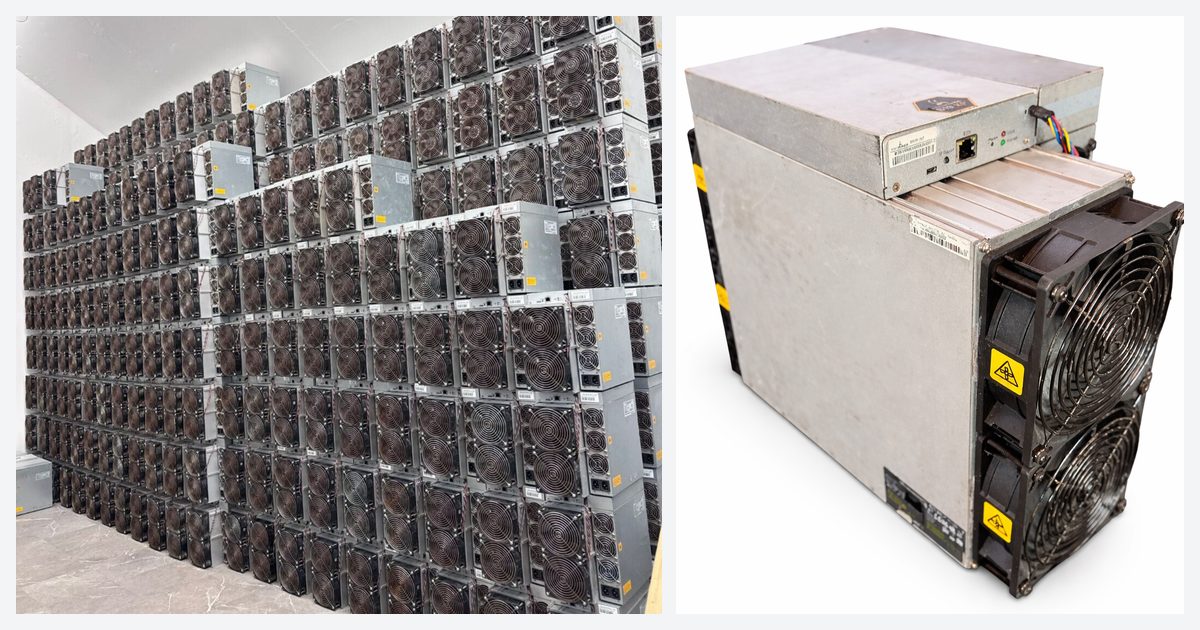
This is the data behind that figure and seven other datasets, counted from one dealer’s live inventory on 17 August 2026: 145 published listings, 19 of them used mining machines representing 658 machines, 11 multi-machine lots covering 650 machines, the shipping carton and gross weight of every listing that publishes one, 39 repair-shelf SKUs joined to the 14 model families they do and do not cover, and every freight rate the checkout is configured to charge. It is a reference rather than an argument. Where a number needs interpreting, the section links the page that does the interpreting instead of re-running it here.
This page counts one dealer’s shelf. Its companion counts the open market: what used ASIC miners actually sold for on eBay, by model, with the sample size on every figure and the same rule about never carrying a number forward.
Method, sample and date
Every figure below was counted on 17 August 2026 from the same live source a buyer sees: the published product listings, the spec table inside each listing, and the store’s own shipping configuration. Nothing is modelled, averaged across sellers or carried forward from an earlier version of this page — every figure edition 1 published was re-derived for this one, and where it moved, the last section says so. Two reading rules matter enough to state: specs come from the listing’s own first spec table, because a second table is usually a comparison machine or a lot total; and a cell holding a range is compared as a range rather than by pairing one end against the other.
| Dataset | What it counts | n | Source |
|---|---|---|---|
| Freight rate card | Domestic flat rates the checkout is configured to charge, by lot size | 4 rates | WooCommerce shipping zone and class settings |
| Used-inventory census | Every published listing in the used category, and what it does and does not state | 19 listings / 658 machines | Listing titles, bodies and spec tables |
| Repair shelf | Every published SKU in the parts category, priced and classified | 39 SKUs | Listing titles and prices |
| Efficiency pairs | Listings publishing both a wall-power figure and an efficiency figure, so the two can be checked against each other | 57 listings | Spec tables |
| Unit weight | Per-machine shipping weight for the S19 family | 14.2 kg net / 16 kg gross | Spec tables (not the WooCommerce weight field — only 3 of 145 listings populate it) |
Excluded on purpose: anything sold as a lot but not a mining machine, anything unpublished or out of stock at the time of counting, and any figure a listing does not state. A blank in the tables below means the listing is silent, and a blank is never filled in from a manufacturer datasheet or from a comparable listing.
Freight: what it costs to move a lot of used miners
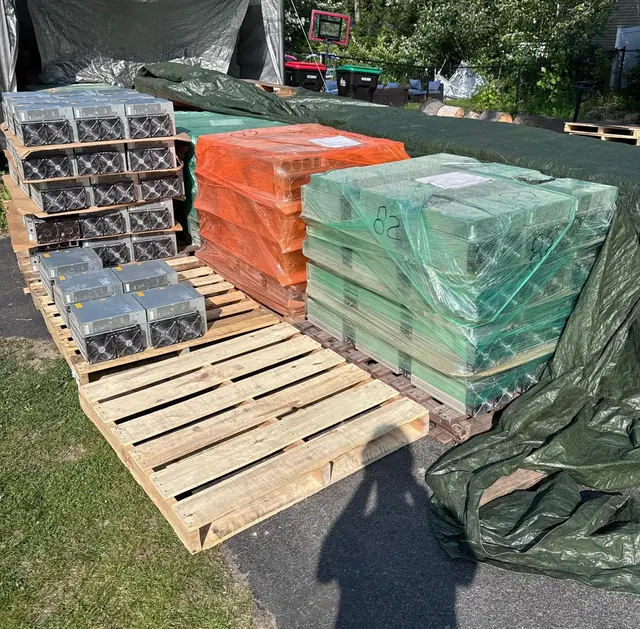
These are the domestic rates the store is configured to charge, not carrier quotes and not estimates. The flat base is $49.99 and each lot shipping class adds its own cost on top of it.
Configured is not the same as chargeable, and on this shelf the difference is the whole row. Since 11 August 2026 every multi-machine listing on this store is quoted rather than sold through the cart, so the single-unit rate is the only one an order can currently trigger; the three lot rates are what the settings hold. They are published here because a configured rate card is a real, checkable artefact and because the per-machine shape below is the finding — not because a checkout will bill one today.
| Machines | Freight rate, as configured | Per machine | Against a single unit |
|---|---|---|---|
| 1 | $49.99 | $49.99 | — |
| 5 | $299.99 | $60.00 | $10.01 more per machine |
| 10 | $549.99 | $55.00 | $5.01 more per machine |
| 100 | $3,449.99 | $34.50 | $15.49 less per machine |
Per-machine freight does not fall smoothly with lot size. A five-machine lot ships at $60.00 a machine and a ten at $55.00, both of which are worse than the $49.99 a single unit pays; only at a hundred does it drop, to $34.50. That is what a rate card built one class at a time looks like from the outside, and it is worth knowing before anyone assumes volume buys cheaper freight per box.
Freight as a share of what the machine costs
The rate only means something next to the price of the thing being moved. Below is every used listing where both a per-unit asking price and a configured freight rate exist — 8 of the 19 used listings.
| Listing | Sold as | Machines | Per unit | Freight per unit | Freight as % of unit price |
|---|---|---|---|---|---|
| Used Antminer S19 95TH/s Bitcoin Miner – 2,800W Low-Power VNish Tune | Single | 1 | $159.99 | $49.99 | 31.2% |
| Bitmain Antminer S19 110TH/s Bitcoin Miner – Refurbished and Boosted | Single | 1 | $249.99 | $49.99 | 20.0% |
| Antminer S19 95TH/s ASIC – Boost to 105TH/s (Braiins OS) – Refurbished | Single | 1 | $249.99 | $49.99 | 20.0% |
| Used Antminer KS5 Pro 21TH/s Kaspa Miner – Tested KHeavyHash ASIC | Single | 1 | $329.99 | $49.99 | 15.1% |
| Used Antminer S19k Pro 120TH Bitcoin Miner – VNish 130TH Tune | Single | 1 | $379.99 | $49.99 | 13.2% |
| Used Antminer S19k Pro 115TH/s – Tested, Braiins OS Boost to ~125TH/s | Single | 1 | $379.99 | $49.99 | 13.2% |
| Refurbished Bitmain Antminer S19 XP 141TH/s Bitcoin Miner – BraiinsOS | Single | 1 | $699.99 | $49.99 | 7.1% |
| Antminer S19 95TH/s ASIC – Boost to 105TH/s (Braiins OS) – Refurbished | Single | 1 | $3,499.99 | $49.99 | 1.4% |
Every row above is a single machine, because there is no longer a lot row to print. All 11 multi-machine listings publish no price, so a freight share cannot be divided out of one; the table is what remains, and the gap is the more useful half of it. The 8 singles run 1.4% to 31.2% — a range that says more about the price of the machine than about freight, since the same flat $49.99 is divided into a $159.99 machine and a $3,499.99 one. Ask for freight in the same sentence as the per-machine price, and treat any lot number quoted without it as incomplete.
For the physical side of the same question, our listings put a single S19 at Bitmain’s own specification of 14.2 kg net and 16 kg gross, so a hundred of them is about 1,420 kg bare and about 1,600 kg boxed, before pallets or banding — more than one pallet in any configuration. Only 3 of 145 published listings populate the WooCommerce weight field, so that figure comes from the spec tables rather than the shipping fields, and it is a manufacturer weight rather than a scale reading. Our shipping guide covers palletising and what a freight carrier needs to know.
Condition: how 19 used listings describe themselves
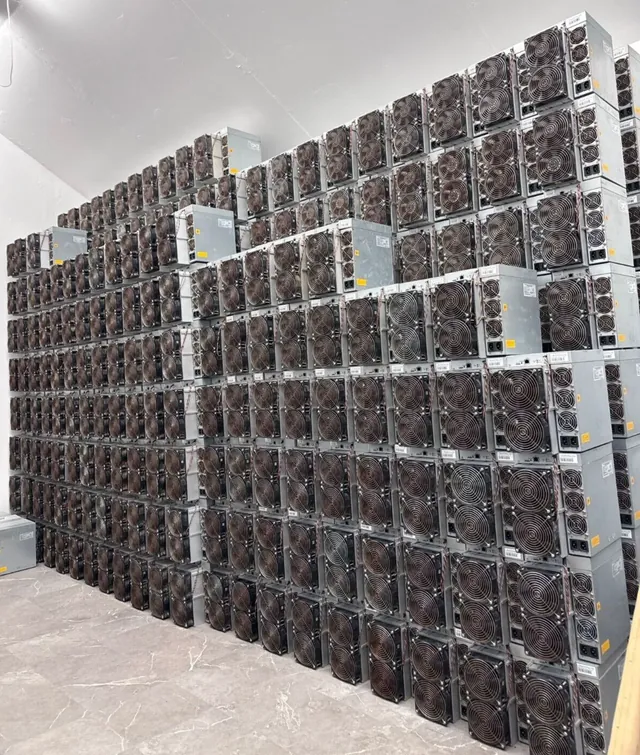
This is a census of our own listings, including where they are silent. It is published because the silences are the interesting part and because a buyer wiring five figures is entitled to know which questions the listing does not answer.
Counted down the columns, on 17 August 2026:
- 0 of 19 listings assign a letter grade, even though this site publishes a definition of what A, B and C grades mean. That is deliberate, not an oversight: a letter means something different at every seller, so ours describe the state of the machine in words instead. If a lot is quoted to you with a grade letter and no definition attached, the letter is worth nothing.
- 0 of 19 state a warranty term. One listing says so in as many words rather than leaving it to be inferred. What a warranty on used mining hardware can and cannot cover is a separate subject; the datum here is that the listings do not claim one.
- All 19 define their terms and only 4 carry a Condition row. Every one of the 19 listings carries the same sentence setting out what “tested working” and “refurbished” commit us to, which is the right way round: the vocabulary is fixed and published rather than left to the reader. But only 4 then state, in the spec table, what was done to that machine. The definition is universal; the per-listing claim is not, and that gap is a fair thing to hold any dealer to, including this one.
- 8 of 19 state whether power supplies are included. Three say it in as many words, and five more carry a spec-table row for the S19’s integrated APW12 — a model fact that reads as inclusion, not a per-lot packing list. Of the other 11, 9 — including both hundred-machine lots — now state explicitly that PSU inclusion is not stated and not claimed; that wording was added to the listings after edition 1 logged the silence here as a defect. 2 say nothing either way. On a hundred-machine lot this is a five-figure question: get the answer in writing before you order.
The sample is also lopsided, and that matters more than any single count: 14 of the 19 used listings are the same machine, an Antminer S19 rated at 95 TH/s. This is a census of one dealer’s shelf in one week, not a survey of the used market. What to ask a seller who is not us is covered in how to vet an ASIC seller and in how to buy a used ASIC miner without getting burned.
The repair shelf: 39 SKUs, and what they cost
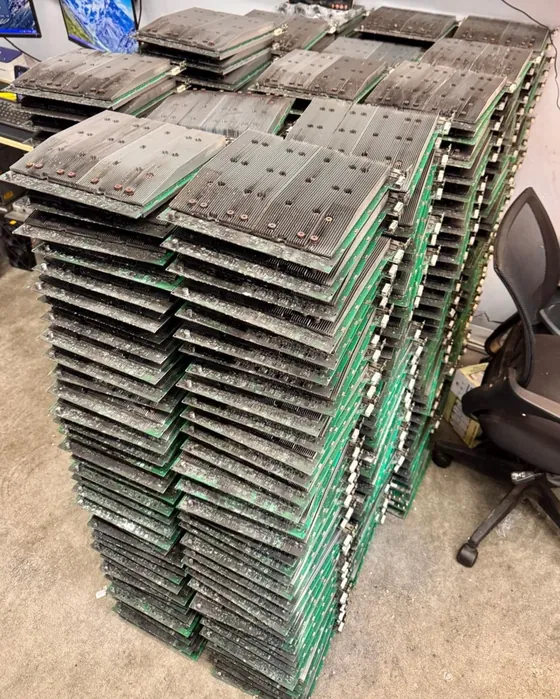
What a dealer stocks to keep machines running is a price list nobody publishes. Here is ours, split by what the item is for. The distinction that matters to anyone sizing a fleet is between a spare, which is consumed per machine, and the bench, which is bought once however many machines you own.
| Category | SKUs | Cheapest | Dearest |
|---|---|---|---|
| Fitted spare (consumed per machine) | 17 | $16.50 | $849.99 |
| Bench and test equipment (bought once) | 18 | $59.99 | $1,399.99 |
| Firmware | 2 | $19.99 | $29.99 |
| Cooling | 2 | $999.99 | $999.99 |
Spare parts, in full
Every item below is a part that goes into a machine, at the price it is listed at today. What fits what is set out in the parts compatibility guide.
This shelf is a purchasing record, not a failure rate. It says what we buy and hold; it does not say what proportion of machines need each part, because we do not record units received against units failed in a way that would produce an honest denominator. What actually fails and why and what refurbishment fixes and what it cannot are written from the bench, not from this table.
Efficiency: the models we hold, and whether the published figures agree
These are the machines in the used census, at the hashrate, wall power and efficiency our listings publish for them. The derived column is simply watts divided by terahashes, which is what J/TH means.
| Model | Listings | Hashrate | Wall power | Published J/TH | Watts ÷ TH/s |
|---|---|---|---|---|---|
| Antminer S19 XP | 1 | 141 TH/s | 3,010 W | 21.35 | 21.35 |
| Antminer S19k Pro | 1 | 120 TH/s | 2,760 W | 23 | 23.00 |
| Antminer S19k Pro | 1 | 115 TH/s | 2,645 W | 23 | 23.00 |
| Antminer S19 | 14 | 95 TH/s | 3,250 W | 34.2 | 34.21 |
| Antminer KS5 Pro | 1 | 21 TH/s | 3,150 W | 150 | 150.00 |
Two honest qualifications. The KS5 Pro figure is kHeavyHash, not SHA-256, and a joule per terahash on one algorithm cannot be compared with a joule per terahash on another — it is in the table because the machine is in the census, not because the number belongs next to the others. And these are manufacturer ratings as our listings publish them. We do not bench-measure efficiency unit by unit, so this page cannot tell you what a six-year-old S19 draws on your floor; it can only tell you what the machine is rated at and let you do the division.
Across the whole catalogue, 134 of 145 listings carry a spec table, and 57 of those publish both a wall-power figure and an efficiency figure — enough to check each against the other. 53 of the 57 agree within 1%, and all 57 agree within 2%. The widest gap in the sample is 1.9%, on the WhatsMiner M60S+ 206 TH/s. That is a statement about internal consistency only: two manufacturer figures that reconcile can still both be optimistic, and a rating measured at 25 °C is not a promise about a hot shed.
The lots themselves: 11 listings, 650 machines
Edition 1 counted the used shelf. It did not count the lots as objects in their own right, which is what a buyer is actually being sold. There are 11 multi-machine listings on this store today, covering 650 machines. 0 of them carry a price. All 11 are quoted, which is why the freight percentages this page used to publish were withdrawn rather than updated.
The pallet and weight columns are derived in the next section from the carton each listing publishes; they are not quoted rates, and the one lot whose listing publishes no carton shows a dash rather than an estimate. Two things in that table are worth taking away. The first is that every lot on this shelf is the same machine family — an Antminer S19 at 95 or 110 TH/s, plus one lot of S19k Pro. A dataset drawn from it describes S19-class hardware and nothing else.
The second is that 6 of the 11 lots carry a freight class at all. The other 5 — 420 of the 650 machines — have none assigned, so the configured rate card does not describe them; they fall through to the base rate of $49.99. There is also a lot-20 class configured at $999.80 a lot, $49.99 a machine, and it is assigned to no listing, including the lot of 20. None of this is chargeable while the lots are quote-only, which is the point: a rate card is a setting until an order can hit it, and on this store no order can. Freight on a lot here is quoted against a real address, and this page publishes the settings so that the gap between the two is visible rather than implied.
What a pallet of these machines actually is
Freight is billed on the carton and on gross weight, so the useful measurement is not the machine, it is the box. This is the axis edition 1 did not publish at all, and it is the one a farm operator books a truck against.
Start with what is actually there to measure. 43 of the 145 listings publish a dimension at all, and only 19 publish a shipping carton as opposed to the bare chassis a spec sheet quotes. Between those 19 there are exactly two distinct cartons, because the shelf is concentrated in one machine family. That is the whole basis of the table below, and it is a narrow one.
| Shipping carton | Listings using it | Example machine | Per layer | Layers | Per pallet | Gross each | Pallet gross |
|---|---|---|---|---|---|---|---|
| 570 × 316 × 430 mm | 18 | Antminer S19 95TH/s ASIC | 6 | 4 | 24 | 16 kg | 409 kg |
| 640 × 360 × 450 mm | 1 | Bitmain Antminer S21 XP 270T | 3 | 4 | 12 | 21.5 kg | 283 kg |
The fit is a plain grid on a 1219 × 1016 mm GMA pallet (48 × 40 in), no overhang and no pinwheeling, stacked to a 2134 mm height limit over a 146 mm deck, with 25 kg allowed for the pallet itself. An S19 carton takes 6 to a layer and 4 layers, so 24 machines a pallet at 409 kg gross. The S21 XP carton is bigger in every axis and takes 12. A packer who pinwheels or straps two layers of a smaller box will beat these numbers; nobody will beat them by much, and they are the right figure for a first freight estimate.
That gives the lots as freight, which is the number a buyer needs before they can price a truck: the lot of 300 is 13 pallets and about 5,125 kg gross, and the lot of 100 is 5 pallets and about 1,725 kg. Those figures are in the lot table above.
Which weight, though
A weight that does not say whether it is net or gross cannot be freighted on, and this is where our own catalogue is only partly clean. 50 listings publish a weight. 26 publish a labelled net and gross for the unit itself. 22 publish a single figure that does not say which it is, one publishes a labelled net only, and one publishes neither. Since gross runs 11–15% above net across the pairs we do publish, a pallet costed off an unlabelled figure can be a pallet under-declared. Every pallet weight above uses the gross.
One listing publishes neither, and says so at length. On the Antminer S21+ Hyd 358T the weight cell reads, in full: “Bitmain publishes no S21+ Hyd specification page; the nearest published model, the S21 Hyd 335T, is 12.3 kg net and 13.6 kg gross, and we are not going to borrow a sibling model’s number and present it as this one’s. Ask us and we will weigh the actual unit before you book freight.” That is what a missing figure should look like on a listing, and the reason this page can publish a carton census at all is that the ones that are stated are sourced.
Spares: if a machine in the lot is dead, is the part on the shelf?
Edition 1 published the repair shelf as a price list. A price list answers the wrong question. The question a fleet buyer asks is narrower and harder: for the machine I am about to buy 650 of, does a fitted spare exist, and what does it cost? This section joins the two shelves to answer it, and the answer is mostly no.
Across the catalogue there are 94 miner listings in 14 model families and 39 SKUs on the repair shelf. Splitting those SKUs by what they are for: 17 are fitted spares — a part that goes into a machine and is consumed per machine — and 22 are bought once however many machines you run (18 bench and test tools, 2 firmware cards, 2 cooling units). The count that matters is the join:
| Model family | Listings we sell | Hashboard | PSU | Control board | Fan | ASIC chip |
|---|---|---|---|---|---|---|
| Antminer S19 (air, non-Pro) | 14 | — | — | — | $24.99 | — |
| Antminer L7 / L9 / L11 (Scrypt) | 14 | — | — | — | — | — |
| WhatsMiner M-series | 13 | — | — | — | — | — |
| Antminer S21 family (S21, +, Pro, XP, Hyd) | 8 | — | $59.99 | — | $24.99 | $55.00 |
| Antminer K7 / KS7 / D9 | 6 | — | — | — | — | — |
| Canaan Avalon | 6 | — | — | $159.99 | — | — |
| Antminer S19j Pro / S19k Pro | 5 | — | — | — | — | — |
| IceRiver KS-series | 5 | — | — | — | — | — |
| Bitdeer SealMiner | 5 | — | — | — | — | — |
| Antminer S19 XP (air and hydro) | 4 | $24.99 | — | — | — | — |
| Goldshell / box miners | 4 | — | $79.99 | — | — | — |
| ElphaPex DG | 4 | — | — | — | — | — |
| Fluminer | 3 | — | — | — | — | — |
| Antminer S23 | 2 | — | — | — | — | — |
Read that table as a floor, not a ceiling, because the join is deliberately strict: a part counts for a family only when the part’s own title names that family. Real coverage is somewhat better than the table shows and we would rather understate it than overstate it. Two concrete examples of the understatement: the Bitmain ctrl_C55 control board on the shelf names no model in its title, so every Bitmain row shows a dash under Control board even though a Bitmain control board is sitting there; and the 18 bench tools, several of which cover dozens of models, are excluded entirely because a tester is not a spare.
The gap that is not an artefact is the one that lands on this store’s own inventory. Every lot on the shelf is an S19 or an S19k Pro — 650 machines — and no fitted hashboard on the repair shelf names either. The hashboards in stock are for the S19 Pro, a different board in a machine we do not currently list, and for the S19 XP. So the honest answer to “a unit in my lot has a dead board, can you supply one” is that today the shelf cannot, and the buyer is looking at a $59.99–$1,399.99 bench and a board sourced elsewhere. That is worth knowing before the pallet ships, not after.
One more detail that belongs on a page like this: the cheapest hashboard we list, at $24.99, is the S19 XP Pro 141TH/s hashboard — sold explicitly as-is, for parts. It is on the shelf as a donor board, not a repair. A spares price list that quietly counted it as a working spare would read better and be false.
What is not in this dataset
The omissions are the part of a reference page worth reading, so they are listed rather than left for someone to discover after they have cited it.
- No DOA or dead-on-arrival rate. We have not measured one. Producing an honest DOA rate needs units received counted against units that failed acceptance testing, over a defined window, and we do not keep that record in a form that would survive being published. A DOA rate invented from impressions would be the single most damaging number on this page, so there is not one. What to do about it as a buyer is to test on arrival and to agree in writing what happens to a dead unit before you pay — the first 48 hours sets out the procedure.
- No component failure rate. The repair shelf above says what we stock, not what proportion of machines consume it.
- No measured efficiency. Every J/TH here is a manufacturer rating, not a meter reading.
- No transaction prices. Everything in the price columns is an asking price on a live listing. It is not a record of what a lot sold for, and it should not be read as a market index.
- No lead time, no minimum order and no stock forecast. Those are commercial answers that depend on what is on the floor in a given week, and a reference page is the wrong place to fix them in print.
- No carrier freight class and no dimensional weight. An LTL carrier bills on an NMFC class and on whichever is greater of actual and dimensional weight. This page publishes the carton and the gross weight, which are the inputs; it does not publish a class or a density calculation, and a quote built from these figures alone will not match a carrier’s.
- No pallet rate. The pallet figures are geometry and arithmetic. They say how many machines fit and what the stack weighs, not what moving it costs.
- No repair success rate. The spares table says whether a part exists and what it costs. It does not say how often a board comes back working, and we do not publish a figure we have not measured.
- No hosting, power or resale-value figures. Different datasets, not measured here.
Limitations
- n is small and it is one seller. 19 used listings covering 658 machines, 39 repair SKUs, 4 freight rates, all from one dealer on one date. It is a census of a shelf, not a sample of a market, and it should never be described as industry-wide.
- The sample is concentrated. 14 of 19 used listings are the same machine at the same rating.
- Freight rates are configured flat rates, not carrier quotes. They are what the shipping settings hold, and on a lot they are currently unchargeable: every multi-machine listing is quoted rather than sold through the cart, so no order can trigger one. A real pallet moving to a real address can cost more or less, and 5 of the 11 lot listings are quoted rather than rated.
- The carton census rests on two boxes. 18 of the 19 listings that publish a shipping carton publish the same one. Pallet counts for any machine outside those two cartons are not in this dataset, because the listing does not state the box.
- Pallet fit is a plain grid, not a packing plan. No pinwheeling, no overhang, no mixed layers, one height limit. A real packer beats it; a carrier with a lower trailer does not reach it.
- Spares coverage is a floor. A part counts for a model family only when the part’s own title names that family, so parts that fit without saying so are counted as absent. The table understates what is actually on the shelf, deliberately.
- Counts come from listing text. If a listing is wrong, this page inherits the error — which is the argument for the correction route below rather than a reason to round anything.
- Prices move. Every dollar figure was read from the live store on 17 August 2026. Re-read the listing before you rely on one.
How to check this yourself
Nothing here comes from a private system. The listings are public: the used category is at bulk used ASIC miners and the full catalogue at all miners, and every count above can be reproduced by opening them and counting. The freight figures come out of the store’s own shipping zones and classes, which while the lots are quote-only is the only place they exist at all. If you recount and get a different answer, tell us. The used-listing census is downloadable as a CSV — used-asic-lot-data census, 17 August 2026 — and if you want any other table in a machine-readable form for something you are writing, ask — we would rather send it than be paraphrased. This page will be rebuilt from the live store rather than edited in place, so a figure that changes will change with a new date on it.
Editions and corrections
A reference page that is never re-counted becomes a rumour with a date on it. This is edition 2.1. Every figure was re-derived from the live store again on 17 August 2026; the two that moved are the first items below, and the rest is edition 2’s record, re-checked and standing — the figures that do not move are the ones most worth re-checking, because nothing prompts you to.
- Edition 2.1 (17 August 2026) — the PSU silence this page logged was worked. Between the editions the used listings themselves were edited: 9 of the 12 that said nothing about power supplies now say in as many words that inclusion is not stated and not claimed, and the S19k Pro 120TH now states the supply ships with the machine. The census reads 8 of 19 stating PSU inclusion, 9 explicitly declining to claim it, 2 silent.
- Edition 2.1 — more labelled weights. 50 listings now publish a weight (was 44) and 26 publish a labelled net-and-gross pair (was 19), most of the new pairs being Antminer L7/L9 listings adding Bitmain’s published net and gross to their spec tables. The gross premium across the pairs now runs 11–15% (was 13–15%). The pallet arithmetic always used gross and is unchanged.
- Edition 2.1 — re-counted and unchanged: the freight rate card, 19 used listings covering 658 machines, 0 letter grades and 0 warranty terms, 39 repair SKUs splitting 17 fitted / 18 bench / 2 firmware / 2 cooling, 5 of 14 model families with a named fitted spare, 43 listings publishing a dimension and 19 a carton in the same two boxes, 24 S19 cartons to a pallet at 409 kg gross, and 35 of 36 single-valued efficiency figures reconciling within 1%, widest +1.7% on the same Bitdeer listing. The used-listing census is now also downloadable as a CSV, linked below.
- New in edition 2: the lot census, the pallet and carton section, and the spares-coverage join. None of the three existed in edition 1.
- Re-counted and unchanged: 19 used listings covering 658 machines; 0 assigning a letter grade; 0 stating a warranty term; 39 repair SKUs; and the freight rate card, still $49.99 for a single machine, $60.00 a machine at five and $34.50 a machine at a hundred.
- Method corrected — spec tables. Edition 1 read every table in a listing as one table. A listing’s second table is often a comparison machine, and on a lot listing it is the fleet total, so merged reading made a lot of 100 look like a single 9,500 TH/s machine. Edition 2 reads only the listing’s own first table.
- Method corrected — ranges. A cell reading “420T / 428T” against “7,140–7,276 W” is not one number against another. Pairing the top of one range with the bottom of the other manufactured a discrepancy the listing does not contain. Ranges are now reconciled as ranges. On the strict reading, 57 listings publish hashrate, wall power and efficiency; 36 state a single value for all three; 35 of those 36 reconcile within 1%, and the widest gap is +1.7% on the Bitdeer SealMiner A2 Pro Hyd 516/518T. That is the same listing and the same figure edition 1 named: the headline did not move, but the method under it is now stated.
- Correction — two repair SKUs were in the wrong category. An overclocking PSU was counted as firmware because its title contains the word “overclocking”, and a control-board unlock kit was counted as a fitted spare when it is a bench tool. Corrected, the shelf splits 17 fitted spares / 18 bench and test / 2 firmware / 2 cooling. The fitted-spare total is unchanged at 17; two rows swapped places.
- Withdrawn in the previous revision and still withdrawn: freight as a percentage of per-unit price. All 11 lot listings are quote-only, so there is no per-unit price to take a percentage of.
Edition 1 was published 10 August 2026 and re-dated 15 August 2026; edition 2 followed on 15 August and edition 2.1 on 17 August 2026. If you cited an earlier edition, the figures above are the ones that changed.