
How many used ASIC miners to buy at once, and what each size proves
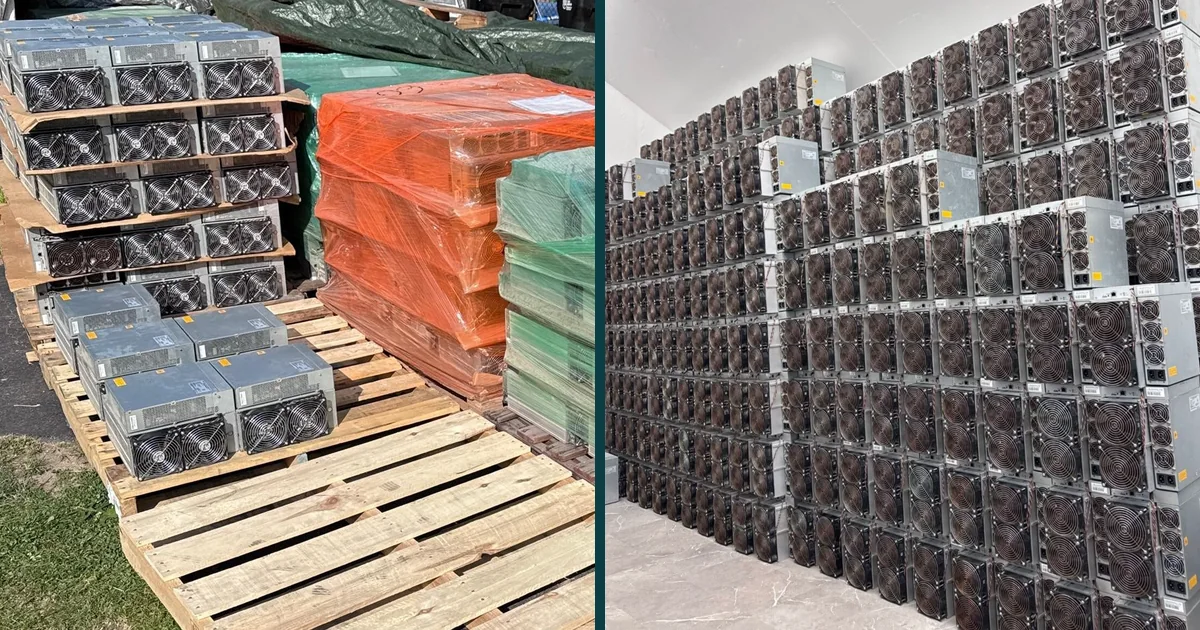
How many used ASIC miners to buy in one order is a question about evidence, not about price. Buy the smallest quantity that settles the thing you are least sure about, run it, then buy again against numbers you measured yourself instead of numbers we published. For most first orders on this shelf that is five or ten machines.
Recommending the small one is not us protecting stock. It is the expensive end for you: on the freight rates this store has configured, five machines work out at $60.00 a machine to move against $34.50 a machine at a hundred, and $49.99 to move a single unit — settings rather than charges, because no lot here reaches a cart. The counts are on our lot data page. We would make more money telling you to buy the pallet.
How many used ASIC miners to buy, by what you are least sure about
There is no right number in the abstract. There is a right number for the specific thing you cannot yet answer, and four different unknowns point at four different order sizes.
| What you are unsure about | Machines | What that order settles | What it does not settle |
|---|---|---|---|
| The seller | 5 | That the serials, the paperwork, the freight booking and the person answering the phone are all real | Anything statistical about the rest of the stock — see the next section |
| Your power | 5 to 10 | The metered draw at your voltage, on your service, in your ambient temperature, on the firmware they actually ship | What a hundred machines do to a building |
| Your bench and your people | 10 to 20 | How long commissioning really takes per machine, and whether you can fix one yourself | The economics |
| Your delivered power cost and uptime | 10 to 20, run for a month | The two numbers every spreadsheet gets wrong | The hardware — a month is not a lifetime test |
| Nothing — you have already run all four | Whatever your service carries | It is a procurement exercise at that point, not a learning one | Nothing. Read fleet economics per megawatt instead |
The order those unknowns come in matters more than the number. Settling the seller is cheap and fast; settling your own economics takes a month of real electricity bills. Doing them in the other order is how people end up with a hundred machines and a power contract that does not work.
Buying to resell rather than to run changes which unknown binds first: the constraint stops being your service and becomes how fast you can move machines and what you are allowed to say about them when you re-list. That is a different decision and it has its own page — reselling used ASIC miners.
What a lot arriving clean actually proves
This is the part nobody writes down, and it is the reason a trial lot is worth buying for a reason other than the one people buy it for. We do not publish a measured DOA or failure rate — we have not measured one we would defend, and the bulk used miner page says so in as many words. But you can still ask what a clean delivery would be worth as evidence if some true rate existed, and that is arithmetic anyone can check: the chance that every machine in a lot of n works is (1 − p)n.
| Machines | If the true rate were 2% | If it were 5% | If it were 10% |
|---|---|---|---|
| 5 | 90.4% | 77.4% | 59.0% |
| 10 | 81.7% | 59.9% | 34.9% |
| 20 | 66.8% | 35.8% | 12.2% |
| 40 | 44.6% | 12.9% | 1.5% |
| 50 | 36.4% | 7.7% | 0.5% |
| 100 | 13.3% | 0.6% | 0.0% |
| 300 | 0.2% | 0.0% | 0.0% |
Chance that every machine in the lot arrives working, for three hypothetical rates. The rates are illustrations, not measurements of our stock.
Read the five-machine row. Even on a seller whose stock genuinely fails one time in twenty, a lot of five arrives perfect 77.4% of the time. A clean five is close to no evidence at all about the rest of the shelf. At a hypothetical 5% rate you need 14 machines before seeing at least one dead unit is more likely than not, and 35 at 2%. Fourteen is already past a trial and thirty-five is a real order, which is the point: no lot small enough to be a trial can measure a rate.
So stop buying five to measure a failure rate; it cannot do that job. Buy five to measure the things a sample of five does settle completely, because they are either true or they are not: the serial numbers on the machines match the ones you were sent beforehand, the condition matches the grade in the listing, the freight arrived when and how it was described, the invoice matched the quote, and somebody picked up the phone when one of those went wrong. Those are counterparty facts, and one delivery settles them. The checks worth running are in how to vet an ASIC seller, and we would rather you ran them on us than skipped them.
The corollary is the part that costs us money to write: a first order of a hundred machines from a dealer you have never traded with is a bad trade at any price. If you ask us for one, we will ask what you have already run and where it is running. If the answer is nothing, we will suggest a smaller first lot, and you should hear that as a reason to trust the quote rather than a reason to shop elsewhere.
What changes at each step on this shelf
These are the sizes that actually exist here — 11 lot listings covering 650 machines, from 5 to 300. All of them have been quote-only since 11 August 2026: no listed price and no add-to-cart button on any of them. 10 of the 11 are Antminer S19 family and one is an S19k Pro, so the model axis is one family deep and this page will not pretend otherwise.
| Machines | Connected load | Hashrate | Pallets | Gross weight | What changes at this size |
|---|---|---|---|---|---|
| 5 | 16.2 kW | 0.47 PH/s | 1 | 105 kg | A trial. One person, one afternoon, ordinary circuits |
| 10 | 32.5 kW | 0.95 PH/s | 1 | 185 kg | Freight, not parcels. The first order that needs a delivery plan |
| 20 | 65.0 kW | 1.90 PH/s | 1 | 345 kg | The last size one person can hold in their head |
| 40 | 130.0 kW | 3.80 PH/s | 2 | 690 kg | An electrical project with a drawing and an electrician |
| 50 | 162.5 kW | 4.75 PH/s | 3 | 875 kg | Multiple pallets and a spares shelf you have to own |
| 100 | 325.0 kW | 9.50 PH/s | 5 | 1,725 kg | The building is the purchase, not the hardware |
| 300 | 975.0 kW | 28.50 PH/s | 13 | 5,125 kg | A site. Substation-scale service and a power contract |
Load and hashrate at Bitmain’s factory rating for the base Antminer S19 — 95 TH/s at 3,250 W, 34.2 J/TH. The firmware-boosted 110 TH/s lots draw more than this. Holding factory efficiency constant, 110 TH/s needs about 3,763 W a machine, and overclocking makes efficiency worse rather than holding it, so treat that as a floor. Each boosted listing says so on its own page, and the trade-off is argued out on used versus new ASIC miners. Pallet counts follow the carton census on our lot data page at 24 cartons a pallet.
Five machines: you are buying an audit, not a farm
16.25 kW, about 13.5 A a machine at 240 V, and five separate circuits rather than one shared run. Our own lot of five 95 TH/s machines puts it plainly: this size exists to answer a question rather than to build anything. There is also a boosted 110 TH/s five if what you need to test is the tune rather than the machine. What you get for the money is a complete, honest look at a supplier for a four-figure commitment instead of a five-figure one — and a month of your own electricity bill, which is the number that decides everything else. If you have never bought a used machine at all, read how to buy a used ASIC miner before you read any of this.
Ten: the first order that is freight rather than parcels
32.5 kW at the factory rating, and buying ASIC miners by the pallet argues that ten is the honest ceiling for most non-industrial services — we agree with it and are not going to restate its arithmetic here. Three listings sit at this size: ten 95 TH/s on Braiins OS, ten boosted to 110 TH/s, and ten S19k Pro with power supplies included — which is, as the shelf stands today, the only one of the 11 lot titles that states a power-supply position at all, and the only one that is not an S19. On the other 10 you have to ask, and you should. At ten machines the delivery also stops being something a courier hands you and starts being freight you have to receive properly: the rates are on shipping and delivery and the day itself is on receiving a used miner lot.
Twenty: the last size one person can hold in their head
Our lot of twenty calls this the sweet spot where a serious operator can still hand-manage a fleet — one service, one switch, one afternoon. It is also the size at which the failure arithmetic starts to work for you rather than against you: twenty machines is enough that a genuinely bad batch shows itself, and few enough that you can bench every unit yourself using our six-step bench procedure. If you are going to buy once and learn everything, twenty is the number, and it is the size we would pick ourselves.
Forty and fifty: an electrical project with a drawing on it
130 kW and 162.5 kW respectively. The lot of forty says it in its own copy: this is the size where a hobby stops being a hobby. Neither the forty nor the fifty on VNish OS is a decision about hardware any more — it is a decision about service capacity, and the sizing rules are on ASIC miner power requirements. Buying at this size before you have run ten is buying two problems at once and being unable to tell which one is which when something is wrong.
One hundred: the building is the purchase
325 kW at the factory rating, 5 pallets, about 1,725 kg gross. The hundred boosted to 110 TH/s opens on power rather than hashrate for a reason: specify that site from the stock 3,250 W figure and you are about 51 kW short before you start. The hundred at stock 95 TH/s is the calmer buy. At this size your electricity contract decides whether any of it works and the hardware price is close to a rounding error against it — which is the whole argument on fleet economics per megawatt.
Three hundred: the ceiling of this shelf, and we will say so
975 kW and 13 pallets. The lot of 300 is the largest thing we have, there is one of it, and we are not going to imply we can assemble a thousand. If you need more than this shelf holds, say the number in the enquiry and we will tell you honestly whether we can source it, including when the answer is no.
Price cannot pick the size here, and that is not a dodge
Every one of the 11 lots carries no price and no add-to-cart button, and has done since 11 August 2026. There is no ladder to read off, so nobody can choose an order size by scrolling for the best per-machine number. Even when there were prices, the per-unit figure did not fall smoothly with quantity — buying ASIC miners by the pallet owns that argument under its heading on the per-unit curve, and the instruction there is still the right one: divide the quoted lot price by the machine count yourself, on every quote, before you compare anything.
Freight behaves the same way. 5 of the 11 lots carry no shipping class at all, so their freight is quoted against a real address rather than read off a rate card, and the configured rates that do exist do not descend in a clean line either. The counted version of all of that is on our lot data page. The practical rule: ask for the machine price and the freight in the same sentence, and treat a lot number quoted without freight as incomplete.
If what you actually want is an outside check on whether a quote is sane, the open market is a better yardstick than any tier table we could print, and what used miners actually sold for publishes ninety days of it. Bring that to the conversation. A supplier who cannot explain the gap between their number and the comps is telling you something.
The second order is where the size question gets easy
Almost everything written about buying miners in quantity treats the first order as the whole decision. It is not. It is the cheapest way to buy the four numbers that make the second order arithmetic instead of guesswork, and after it you are no longer using anybody else’s figures — including ours.
- Metered wall draw at your voltage, on the firmware the machines actually shipped with, not the number on a specification sheet.
- Commissioning hours per machine, measured by you, including the ones that did not come up first time.
- Your own arrival experience — how many machines needed work, what the work was, and what it cost you in parts and bench time.
- Delivered power cost, off a real bill, including demand charges that no model ever includes.
Two things make the second order cheaper to place, and neither of them is a discount. We already know your address, your dock or lack of one, and whether a liftgate is needed; and you can specify rather than describe — name the board revision and the firmware state you accepted last time and the quote comes back against that. Ask for both in writing on the first order, alongside the serial numbers; the bulk used miner page explains what to ask for and why serials are the thing that ties a chassis to any claim later.
What does not change is worth saying too, because plenty of suppliers imply otherwise. There is no repeat-buyer discount schedule here, no reserved stock on the strength of a first order, and no standing quantity terms — none of those exist, so none of them are being offered. A second order is quoted like the first, against what is on the shelf that week.
When to skip the trial and buy the size you need
The staged approach is advice for a buyer with an unknown in front of them. If you do not have one, staging is just a delay that costs you a month of hashing. Skip it when four of these five are already true:
- You already run this exact model, so the failure modes and the spares list are known quantities rather than things to discover.
- Your service is metered and has headroom above the connected load, not equal to it.
- You have a bench, a hashboard tester and somebody who can use both — the fixture question is costed on fleet economics per megawatt, and what fits which machine is on Antminer parts compatibility.
- You have bought from this supplier before and the paperwork was clean.
- You can inspect and acceptance-test the whole delivery inside the freight claim window, which is short — the procedure is on acceptance-testing a miner you just received.
The one that is never optional, at any size: the written specification before the money moves. Grade and what test produced it, the sampling rate if the lot was sampled, the firmware state, the board revision, what happens to a machine that arrives dead, who books the freight and who carries the risk in transit. That list is not ours — it is the standard one on buying ASIC miners by the pallet — and a buyer who has it does not need a trial lot to feel safe. A buyer who does not have it will not be made safe by one either.
What this page will not tell you about order size
- A minimum order quantity. We do not operate one and are not going to invent one to make a page look decisive. It is answered directly on the bulk used miner page.
- A volume discount ladder. None is published because none exists; each lot is priced against what that batch cost us.
- A DOA or failure rate. Not measured, so not published — on this page, on receiving a used miner lot, or anywhere else. The table above is what a rate would imply, not what ours is.
- A lead time in days. It depends on the specific batch and where it is going, and a number here would be a guess dressed as a commitment.
- That your order is too small. Five is a real order and gets a real quote.
Ask for a quote on the quantity you actually want
Say the number you have in mind, the voltage and service you are putting it on, and the condition you can accept, and the quote comes back against that rather than against a tier. If the number is bigger than this shelf, say it anyway. The form is on request a quote, or call +1 (781) 577-0377 or email ns@ingmining.com. Browsing first is fine too — the individual machines are on the used shelf, the grade definitions are on what each grade on our listings means, and if you are selling rather than buying, we buy used miners.
Questions about used miner order sizes
Is five used miners enough to judge a supplier?
Yes for the things that matter about a supplier, and no for anything statistical. One delivery of five settles whether the serials match, whether the condition matches the grade in the listing, whether the freight was booked and described honestly, whether the invoice matched the quote, and whether somebody answers when one of those goes wrong. It settles nothing about the failure rate of the rest of the stock: even on a seller failing one machine in twenty, five arrive perfect about 77% of the time.
If every machine in a small lot works, what does that prove about a bigger one?
Less than people assume. The chance that a lot of n arrives with everything working is (1 − p) to the power of n, so a clean small lot is consistent with a wide range of true rates. Use the small order to judge the counterparty and the paperwork, and use your own acceptance testing on every later delivery rather than treating a good first experience as a guarantee.
Can I buy a lot of ten now and a lot of fifty later on the same terms?
You can buy both, but the terms are quoted fresh each time. Every lot here is priced against what that specific batch cost us, so there is no standing price, no reserved stock and no repeat-buyer schedule. What a first order genuinely buys you is a faster, more specific second quote, because we know your delivery situation and you can name the board revision and firmware state you accepted.
Do you break a lot up, or is it all or nothing?
The lot listings are whole lots — each one says so on its own page — and single machines are listed separately on the used shelf. Anything between those two, including a part lot or a mixed order across sizes, is a question for the quote rather than something the listings can answer. Ask, and the answer will be a yes or a no rather than a maybe.
Should a first order be all one model?
For a first order, yes. One model means one spare parts kit, one firmware to learn, one power figure to design around and one set of failure modes, which is the whole point of a small first order. Mixing models means a blended efficiency figure across the fleet before you have measured a single one, and that arithmetic belongs on a later order, not the first.
Which lot size is cheapest per machine on this shelf?
Nobody can answer that from the listings today, including us, because no lot carries a published price and none has since 11 August 2026. When they did carry prices, the per-machine figure did not fall in a clean line with quantity, and on at least one pair a smaller lot worked out cheaper per machine than a larger one. Divide each quote by its machine count yourself.
Does a trial order come off the price of a bigger order later?
No. There is no credit, rebate or roll-forward arrangement on this store, and inventing one to close a deal would be a promise nothing here could keep. A trial lot is worth buying for what it teaches you about the supplier and about your own site, not for a discount later.
Do you recommend buying the biggest lot a buyer can afford?
No, and it is usually the wrong rule. The constraint that should decide the size is whichever of these binds first: continuous amps available at your service, bench capacity to commission and repair, and the loss you could absorb if the economics turn out worse than modelled. Budget is rarely the tightest of the three, and buyers who size on budget alone are the ones who end up rewiring a building.