Home » ASIC » Air Cooling » Used Antminer S19k Pro 115TH/s – Tested, Braiins OS Boost to ~125TH/s
Used Antminer S19k Pro 115TH/s – Tested, Braiins OS Boost to ~125TH/s
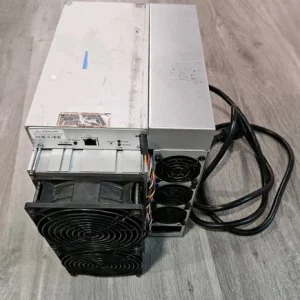
Antminer S19k Pro 115TH/s Bitcoin miner designed for SHA-256 mining. Boosted performance up to 125TH/s with optimized firmware. Includes PSU and fully tested for stable, efficient Bitcoin mining.
Price:
$379.99
- Condition graded per unit: new, tested working, refurbished or as-is
- Warranty and returns stated per unit, not per store
- Ships UPS Ground within 7 business days
Description
The Antminer S19k Pro 115TH/s is a high-performance ASIC designed for SHA-256 mining. It delivers a stable 115TH/s hashrate and carries a firmware tune advertised at up to 125TH/s. Worth being precise about what that buys you: overclocking raises power faster than it raises hashrate, so a boosted unit is less efficient per terahash than the stock 23 J/TH, not more. You are buying hashrate, not efficiency. This S19k Pro miner 115TH/s is fully tested and ready for deployment in professional mining environments. It includes a PSU and is suitable for long-term Bitcoin mining operations.
What’s in the box
- 1x S19k Pro Bitcoin miner 115TH/s
- Braiins OS installed for optimization
- Boosted performance up to ~125TH/s (at a worse J/TH than stock)
- Power Supply Unit (PSU) included
Condition of This Bitcoin Miner
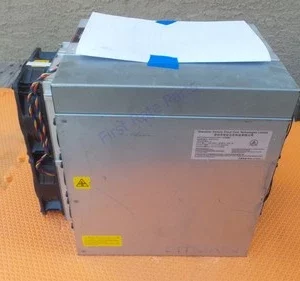
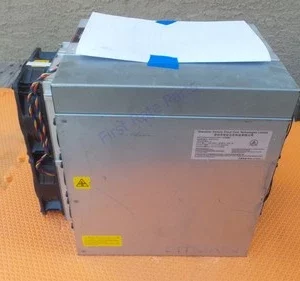
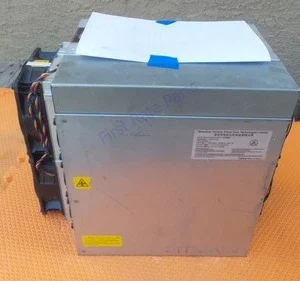
- Used but fully tested S19k Pro unit
- May show cosmetic wear from mining use
- Performance remains stable and reliable
- Ready for immediate mining setup
Antminer S19k Pro Performance Details
| Model | S19k Pro Bitcoin Miner |
|---|---|
| Algorithm | SHA-256 |
| Coins mined | Bitcoin (BTC) |
| Hashrate | 115TH/s (boosted ~125TH/s) |
| Power consumption | 2,645 W ±5% at the stock 115 TH/s; more on the boosted profile |
| Efficiency | 23 J/TH ±5% at stock, worse on the ~125 TH/s tune |
| Input voltage | 200–240 V AC only, 20 A — not a 110 V machine |
| Noise | 75 dB |
| Condition | Used, fully tested on our bench. Cosmetic wear consistent with mining service |
| Power supply | PSU included |
| Size and weight | 400 × 195 × 290 mm bare, 570 × 316 × 430 mm boxed. 12.85 kg net, 14.5 kg gross — Bitmain’s published S19K Pro specification. Bitmain publishes that table against the 120 TH/s bin; the chassis is common to the S19K Pro bins. Freight is quoted on the gross weight, not the net |
Important Mining Information
The S19k Pro is designed for industrial use, is rated at 75 dB, and takes 200–240 V only — it will not run from a North American 110 V household outlet under any configuration. It needs a properly ventilated location and a 240 V circuit. If the machine has to live where people do, read our Avalon Q versus Antminer S19k Pro comparison first; the Avalon Q is the one that runs on household voltage. Performance may vary depending on power supply, cooling system, and firmware configuration of the S19k Pro ASIC miner.
Shipping & Delivery
Each S19k Pro unit is securely packed and shipped with tracking. Please ensure correct delivery details before ordering.
Useful Resources
Learn about Bitcoin mining: Bitcoin Official Website Explore more mining hardware: ASIC Miner Collection Firmware optimization tool: Braiins OS Official
Final Note
The S19k Pro Bitcoin miner is a reliable choice for miners looking for strong performance, tested hardware, and optimized efficiency for long-term mining operations.
Questions buyers ask about this machine
What can I mine with it?
It mines Bitcoin (BTC). The algorithm is SHA-256, and ASIC silicon is single-purpose: it will mine coins on that algorithm and nothing else, whatever the price of anything else does.
What condition is it in, and what does that grade mean?
This is second-hand stock. We describe it the way we found it: tested working means it ran on our bench at the stated hashrate, refurbished means it was also cleaned, re-pasted or had parts replaced, and as-is means it is sold without a working claim. The grade for this unit is stated in the description above; where a listing states no grade, it says so rather than implying one. Cosmetic wear — dust, scratches, label marks — is normal on hardware that has been mining and is not a fault.
What should I check the day it arrives?
Photograph the pallet or box before you open it, keep the packaging, and run the 48-hour acceptance test straight away. Freight claim windows are short, and a fault found on day two is a conversation while a fault found on day thirty is an argument. Our own six-step bench procedure is published in full, so you can repeat exactly what we did.
Shipping cost for this exact item, and how warranty and returns work here, are answered in the Shipping & buying tab on this page. Anything else, ask a person on +1 (781) 577-0377 or ns@ingmining.com — we would rather talk before you buy.
The other S19k Pro on this shelf costs the same $379.99 — the honest comparison
We have two used Antminer S19k Pros on the floor at the same price. This one, at 115 TH/s with Braiins OS installed, and a 120 TH/s unit running VNish — same model, same 23 J/TH, same $379.99. Neither the price tag nor the spec sheet separates them, so here is what actually does.
| 115 TH/s, Braiins OS | 120 TH/s, VNish | |
|---|---|---|
| Price | $379.99 | $379.99 |
| Factory rating | 115 TH/s at 2,645 W | 120 TH/s at 2,760 W |
| Efficiency, stock | 23 J/TH | 23 J/TH |
| Firmware as it ships | Braiins OS+ | VNish |
| Tune advertised on the listing | ~125 TH/s | 130 TH/s |
| Condition grade stated | Used, tested working on our bench | None stated — ask us in writing before you pay |
| Gross at 2026-08-09 | $3.68/day | $3.84/day |
| Break-even power price | 5.80¢/kWh | 5.80¢/kWh |
| Voltage / noise | 200–240 V only, 75 dB — identical machines in this respect, and neither belongs in a house | |
Both machines stop earning at exactly the same electricity price
At BTC $64,927 and network difficulty 127,479,855,693,691 (2026-08-09, block subsidy only —
transaction fees were adding about 0.3% on the day and are left out to keep this
conservative), a terahash of SHA-256 grosses $0.0320 a day. Run that
against each machine’s own wall draw and both land on the same number:
5.80¢/kWh. They land there because they are the same silicon at the
same 23 J/TH — the break-even rate is efficiency divided into hashprice, and the
hashrate cancels out. These figures move every day with price and difficulty.
Re-run them against your own rate before you buy anything.
The 120 TH/s unit earns about $58 a year more, for the same money
Five extra terahash at today’s hashprice is $0.16 a day, and
because the efficiency is identical those terahash cost the same to run. On the
arithmetic alone, at an identical $379.99, the VNish 120 TH unit is the better buy
and we are not going to pretend otherwise on our own shelf. What the 115 TH/s
listing has instead is a stated condition grade: it is described as
used and tested working on our bench, and the 120 TH listing says plainly that it
states no grade. At the same price that is the whole trade — $58 a year
against a written test result.
Braiins OS or VNish: the part that is actually about firmware
Both are real, both arrive on these units already installed and configured,
and both take a cut. Braiins publishes a 2–2.5% dev fee depending on
model, collected by pointing that share of your hashing power at their pool; Braiins
also states that mining on Braiins Pool with Braiins OS gives a 0% effective pool
fee instead of their standard 2.5%, so on that pool the fee is offset rather than
paid twice. It is the only firmware here with native Stratum V2.
VNish does not publish a single fee figure on its own site; the
independent firmware guides put the S19-family dev fee at 2–2.8%. Ask us to confirm
the installed version and its fee setting on the actual unit before you pay — on a
used machine that arrives pre-flashed, that setting is a running cost you inherit,
and roughly 2.5% off the top is about 0.15¢/kWh of your break-even headroom gone.
No listing on this site said that before today, ours included.
The difference that decides the purchase is not the fee, it is the direction each
one tunes. Braiins OS+ autotunes to a power target you set — you tell it
a wattage ceiling and it finds the best hashrate inside it. VNish tunes to a
hashrate target, with per-domain voltage and per-chip frequency control and
more aggressive overclock profiles. One is built to push a machine down, the other
to push it up.
When the boost is worth running, in one line
Overclocking never improves efficiency — power climbs faster than hashrate on the
voltage-frequency curve of every ASIC ever made, so a boosted unit is worse
than 23 J/TH, not better. Both of our listings already say so. What neither said is
where the line falls, and it is one division: any terahash an overclock adds
has to clear the same J/TH bar the whole machine has to clear — hashprice
divided by 24 hours times your rate.
| Your all-in power rate | Bar the added terahash must beat |
|---|---|
| 3.0¢ | 44.5 J/TH |
| 4.0¢ | 33.4 J/TH |
| 5.0¢ | 26.7 J/TH |
| 5.8¢ | 23.0 J/TH — your break-even; the bar is now the machine itself |
| 7.0¢ | 19.1 J/TH |
| 12.0¢ | 11.1 J/TH |
Read the bottom of that table carefully. At your break-even rate the bar
is the machine’s own stock 23 J/TH, so above it an overclock would have to
be more efficient than the machine is at stock — which is arithmetically impossible.
Below about 4¢ there is real headroom and the boost pays; above about 5¢ it
cannot. That is the whole case for each firmware: if you are paying under
roughly 3.5¢ — comfortably inside that headroom — you want the machine tuned up, and
if you are paying more than that you want it tuned down.
The gate that applies to both: 612 days
The next Bitcoin halving is block 1,050,000. The chain was at block 961,818 on
2026-08-09, which is 88,182 blocks — about 612 days, roughly 20
months at ten minutes a block. Block revenue halves that day; the power bill
does not. Holding price and difficulty still, the break-even on both of these
machines goes 5.80¢ → 2.90¢/kWh. So the real question is not what
either machine earns, it is whether it returns $429.98 — $379.99 plus $49.99
US freight — before that date.
Payback on this unit, after its dev fee, at today’s numbers:
| Your power rate | Time to return $429.98 |
|---|---|
| 3¢/kWh | 255 days (8 months) |
| 4¢/kWh | 409 days (13 months) |
| 5¢/kWh | 1033 days (34 months) — past the halving |
| 6¢/kWh | never — it runs at a loss |
So which one should you buy?
- Under about 3.5¢/kWh, and you want maximum hashrate: take the
120 TH/s VNish unit. Five more terahash for the same money at the
same efficiency, and its firmware is the one built to push. Ask us in writing for its
condition grade first — that listing does not state one, deliberately. - Between about 3.5¢ and 5¢/kWh: take the
115 TH/s Braiins unit. At that rate you will be tuning the machine
down, not up, and a power-target autotuner is the right tool for it. The stated
test result is worth more than $58 a year of gross when margins are that thin. - Above about 5¢/kWh: buy neither. Payback runs to 34 months, which
is well past the halving that cuts the revenue in half, and after it a 23 J/TH machine
needs 2.90¢ power to break even at all. That is not a machine purchase, it is a
donation. Spend the money on a current-generation miner instead, or don’t spend it. - If it has to live where people live: neither. Both are 75 dB and
200–240 V only, and no adapter changes that. The
Avalon Q versus S19k Pro
comparison is the one to read — the Avalon Q runs on household voltage at about
45 dB.
Everything above is arithmetic on public numbers, and you can redo it: the
used-miner buying guide
carries the same break-even method for every used S19 variant we stock, and the
used ASIC miner shelf
lists what else is on the floor. If you want the measured draw and the measured hashrate
on the specific unit rather than the number in the title, ask — we bench them, so we have
it. +1 (781) 577-0377 or
ns@ingmining.com.
There is a $249.99 S19 on the same shelf — here is when it beats this one
We stock a refurbished Antminer S19 boosted to 110 TH/s for $249.99, and it is $130 cheaper than this machine for almost the same headline hashrate. On our own numbers it is the better buy in exactly one situation, and we would rather set that out than let the price tag decide it for you.
This S19k Pro makes 115 TH/s on 2,645 W, which is 23 J/TH and a break-even of 5.86¢/kWh. The boosted S19 makes 110 TH/s on at least 3,763 W — 34.2 J/TH at absolute best, and a break-even of 3.94¢/kWh. Nearly two cents of headroom is the difference between a machine that survives a hosting contract and one that only works behind your own meter.
The crossover is 2.04¢/kWh. Below it the cheaper machine returns its purchase price first. Above it, this one pays back sooner at every single rate — 250 days against 396 at 3¢/kWh — and clears more money in total at every rate, including below the crossover. This one also ships with its PSU and sits comfortably on a 20 A circuit at 240 V, where the S19 wants 30 A and its listing does not state whether a PSU is included at all.
At $32.33/PH/day, BTC $65,231, difficulty 127,479,855,693,691, 10 August 2026, after a 2.5% firmware dev fee, landed cost including $49.99 US freight. These move daily.
Both machines and the full payback tables are in Antminer S19 vs S19k Pro.
And the $699.99 S19 XP above it — when paying double is right
The machine one step up our used shelf is a refurbished Antminer S19 XP at $699.99, 141 TH/s at 21.35 J/TH. It is 7% more efficient than this one and costs 84% more, and that trade is worse than it sounds: per terahash you would be paying $4.96 against $3.30 here. Buy the same total hashrate either way and the two fleets earn exactly the same revenue, so the price of Bitcoin drops out of the comparison entirely and what is left is $1.66 more capital per TH/s against 1.21 kWh per TH/s per month saved — roughly 46 months to break even at 3¢/kWh.
The XP earns its premium in exactly two situations. If your machine positions are fixed rather than your budget, it puts 22.6% more hashrate on the same 20 A, 240 V circuit. And if your power sits between about 2.8 and 3.0¢/kWh, the halving in roughly 608 days takes this machine below its break-even and leaves the XP above its own. Outside those two cases, this is the machine to buy. The full comparison is in Antminer S19k Pro vs S19 XP.
The $4,200 question: nine of these, or one new S21 Pro?
The most common cross-shop on this machine is not another used unit — it is a new Antminer S21 Pro 245T at $4,200. Worked as a fixed budget rather than as a spec sheet, that is what the two really cost:
| Nine of these | One new S21 Pro 245T | |
|---|---|---|
| Goods | $3,419.91 | $4,200.00 |
| Freight at $49.99 a unit | $449.91 | $49.99 |
| Landed | $3,869.82 | $4,249.99 |
| Hashrate | 1,035 TH/s | 245 TH/s |
| Landed cost per TH/s | $3.74 | $17.35 |
| Wall power | 23.8 kW | 3.7 kW |
| 20 A / 240 V circuits | 9 | 1 |
| Hashboards in service | 27, used | 3, new |
Two things that table does not say out loud. Freight eats two machines: eleven of these at the sticker price becomes nine once the pallet is paid for, which is why the honest capital cost of this miner is $3.74 per terahash and not the $3.30 the price tag implies. And the verdict flips on electricity rather than on hardware — under roughly 5.1 cents a kilowatt-hour the nine win on net dollars as well as on hashrate; above this machine’s own break-even the nine are not the cheaper option, they are not an option at all. We work the whole thing through, with the crossover, the freight and the spares shelf costed.
Buying more than one or two? The ten-machine lot of this exact unit is quoted rather than listed — on condition, quantity and freight to your address.
Related hardware and where this sits in the store
Other used and refurbished units currently on the floor:
- Used Antminer S19k Pro 120TH Bitcoin Miner – VNish 130TH Tune
- Lot of 10 Used Bitmain Antminer S19k Pro 115TH/s Miners – Tested, Braiins OS, PSUs Included
- Bitmain Antminer S19K Pro 120T – Efficient Bitcoin Miner
Categories: Bitmain Antminer, Bitcoin miner, Used ASIC miners and Air Cooling.
At 23 J/TH this is one of the few used machines that still clears realistic hosting rates, which is the test that matters more than the terahash figure. The used-miner buying guide has the break-even table for every used S19 variant.
Where this listing sits
This one is on the used and refurbished shelf. It is second-hand hardware. The grade for this specific unit is stated in the description on this page — and where a listing states no grade, it says so rather than implying one.
What our grades mean
These are the only words we use, and each one means a specific thing. They are not interchangeable and we do not soften them to move stock.
| New | Unused stock. Factory sealed unless the listing says otherwise — “new, open box” means exactly that, and the listing will say it. |
|---|---|
| Tested working | Second-hand, and it ran on our bench at the hashrate the listing states. We measured it; we are not repeating what the last owner told us. Expect cosmetic wear. |
| Refurbished | Tested working, plus work done: cleaned, thermal paste and fans dealt with, failed components replaced. The listing says what was actually done to that unit rather than using the word as decoration. |
| As-is / for parts | Sold with no working claim at all, at a price that reflects it. Buy these to repair or to harvest. If a listing says as-is, assume it does not hash until you have proved otherwise. |
| Untested | We have it, we have not powered it, and we are not going to pretend we did. Rarer than as-is and always stated explicitly. |
What a grade here does not mean
- Cosmetic wear is not a fault. Dust, scratches, scuffed labels and discoloured plastics are normal on hardware that has been earning. We photograph what we have; if the pictures matter to you, ask for more and we will take them.
- A grade is not a warranty. Warranty terms are stated per listing, never per store — see the Shipping & buying tab. A tested-working grade describes what the machine did on our bench, not what we owe you in six months.
- A boosted hashrate is not a spec. Where a unit ships on tuned firmware we say so and we give the factory figures too, because overclocking raises power faster than it raises hashrate — a tuned machine is less efficient per terahash than stock, not more.
- We will not invent a grade to fill a field. If a unit came in without history and has not been through the bench, its listing says that.
How the grade gets decided
A used-hardware seller who will not tell you how they test is asking you to take the grade on trust. Ours is published: the six-step bench procedure every machine goes through, and the five measurements that get recorded — per-board hashrate, chip count, measured wall power rather than the nameplate figure, hardware error rate, and temperature under sustained load. When it reaches you, run the 48-hour acceptance test straight away, while the freight claim window is still open.
Buying second-hand for the first time? How to buy a used ASIC miner without getting burned is the long version, written from the repair bench rather than from a spec sheet.
Shipping
Shipping this item inside the United States costs $49.99 by UPS Ground — that is the rate the checkout will charge, read from the store’s own shipping settings, not an estimate. Orders ship within 7 business days.
Outside the United States the checkout quotes a flat international rate. On multi-unit or pallet orders, contact us before ordering so freight to your destination can be confirmed properly. What to check when the pallet arrives, and how a freight claim works, is covered in the mining hardware shipping guide.
What to do the day it arrives
Photograph the pallet or the box before you open it, and keep the packaging until you are satisfied. Freight claim windows are short, and damage found on day two is a conversation while damage found on day thirty is an argument.
Then run the 48-hour acceptance test straight away, while that window is still open. It is the same ground our own bench covers, so you can compare like for like: how the grade on this listing was arrived at, and the five measurements we record, are set out in the Condition & grading tab on this page.
Condition, warranty and returns
Condition: Used — second-hand stock. The grade for this unit is on the listing above, and where a listing states no grade it says so.
Warranty is stated per listing, not across the catalogue. Some units carry a manufacturer term and say so above, naming the term and the date it runs from. Many units, particularly used and AS-IS stock, carry none, and those listings do not claim one. There is no blanket warranty covering a catalogue that runs from sealed factory stock to a hashboard sold for parts. For what a mining warranty normally covers, see ASIC miner warranty explained.
Returns: ask for the terms on this unit before you pay. No single returns window is published for the whole store, because the sensible terms on a tested working machine and on a board sold AS-IS for parts are not the same terms. Email or call and ask what applies to this exact item — it is a two-minute conversation and a great deal cheaper than a dispute.
Where you are going to run it
Two questions decide whether a machine like this works where you live, and neither of them is about the miner: can the circuit carry it, and what does your electricity cost? Most full-size machines here want a dedicated 240 V circuit and run at 70–75 dB continuously. A few do not — the Avalon Q publishes 45–65 dB and runs on 110–240 V — so read the voltage and noise figures on this listing rather than assuming. ASIC miner power requirements covers breaker sizing and what the install actually involves; cooling covers where the heat and the noise end up.
If your power is not genuinely cheap, hosting is the question to be asking instead of which miner to buy. Break-even electricity rate is hashprice divided by (24 × J/TH), and hashrate cancels out of it entirely — which is why a cheap old machine on expensive power loses money faster than an expensive new one does. The buying guide has the arithmetic; work out your own number before you buy anything.
If hosting is the answer, get written answers on three things before you sign: who pays for repairs, what the uptime commitment actually pays out when it is missed, and how curtailment is handled. A flat per-machine monthly rate is where most of the unpleasant surprises live. Types of mining farm compares the models and hosting versus cloud mining covers why owning the hardware is the better end of that trade. Ask us before you commit — it is a five-minute call and a great deal cheaper than a contract you cannot get out of.
What we do once it is racked, wherever that is. Deployment, firmware and monitoring are a service we run rather than a line on a page: pool and network setup, Braiins OS or VNish tuning, offline alerts, and board-level fault-finding when a machine stops hashing — ASIC mining consulting sets out what that covers. The hosting agreement itself is between you and the facility. What we can give you is the number most hosting disputes turn on: what this machine measured at the wall on our bench, so a shortfall on site is a figure to compare against rather than an argument about what it should have been doing.
Who you are buying from
ING Mining LLC, Hanson, Massachusetts. ING MINING® is a registered U.S. trademark; our marketplace feedback is on the reviews page and the longer version of who we are is on about. Reach a person on +1 (781) 577-0377 or ns@ingmining.com.
Our Related Products
Related products
-
Add to WishlistAdd to Wishlist
-
Add to WishlistAdd to Wishlist
-
Add to WishlistAdd to Wishlist
-
Add to WishlistAdd to Wishlist