
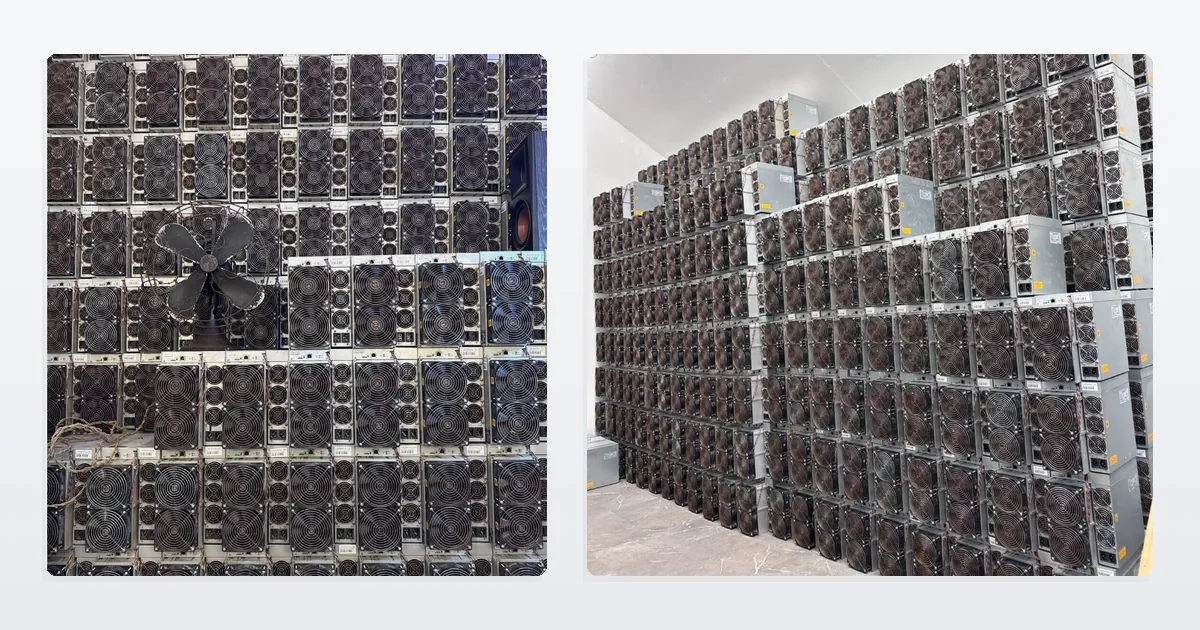
There is no industry standard for ASIC grading. No body defines grade A, no certification sits behind it, and two sellers using the same letter can be describing very different machines — which is exactly why the word is worth understanding before you pay for it. A grade is a seller’s summary of cosmetic condition and test result, and its usefulness depends entirely on who is issuing it and whether they will show you the measurement behind it.
This page is about reading a grade and verifying it. For how a machine is actually tested before it gets one, see the measurements that matter; for the wider used purchase, see how to buy a used ASIC miner. The three words this store uses instead of letter grades are defined, and counted against live stock, on bulk used ASIC miners.
What a grade on a used miner is supposed to describe
A grade is trying to compress two independent things into one character, and that is the root of the problem.
The first is cosmetic condition: dust, scratches, label residue, bent fins, corrosion on the chassis, whether the case has been opened. The second is test result: did it power up, what did it hash at, for how long, how many hashboards reported, what did it draw at the wall. These do not correlate. A machine pulled from a clean hosted facility can look immaculate and have a dead board; a filthy machine out of a shipping container can hash at full rate for a week straight. Any scheme that gives both a single letter has thrown away the half you actually needed.
There is a third thing a grade almost never covers and it is the one that costs money: the power supply. An APW12 that has been running at 3,250 W for four years is a consumable, and a machine graded on its hashboards can arrive with a PSU at the end of its life. Ask about it separately, every time.
The A, B and C scales other sellers use, and what each band claims
In practice the letters are used two incompatible ways, and the seller rarely tells you which one they mean.
Cosmetic scales use A for near-new appearance, B for visible wear, C for heavy wear or damaged casing — and say nothing at all about whether the machine hashes. This is the convention borrowed from used-phone and IT-refurb marketplaces, and it is the more common of the two.
Functional scales use A for full rated hashrate, B for a machine hashing below spec or with one board down, C for non-functional or parts-only. Here a C is not a scratched machine, it is a dead one.
Those two systems assign opposite meanings to the same letter for the same machine. A dusty unit hashing at full rate is a C on one scale and an A on the other. Because no standards body owns either convention, there is no way to tell from the letter alone which you were sold, and no recourse when it turns out to have been the other one. Some sellers add A+, B- and F bands on top, which increases the precision of the notation without adding a single measurement behind it.
The practical test: ask the seller to state, in writing, what their grade letter measured. If the answer is a sentence about appearance, you have learned nothing about whether it hashes. If there is no answer, the letter was decorative.
The three words this store uses instead
We do not issue letter grades, because we would have to invent the scale. Every listing on this site uses one of the following, the same way every time:
- Tested working — the machine was powered up on our bench and hashed at the rate the listing states. Nothing was replaced and nothing was rebuilt. Expect the cosmetic condition of hardware that has been mining for years: dust, scratches, fan wear. None of that is hidden and none of it is a fault.
- Refurbished — tested working, and then worked on: deep-cleaned, thermal paste renewed, fan assemblies or other parts replaced where they needed to be, then run again before it shipped. It is not a factory rebuild and it does not make a 2020 machine new. Ask what was actually replaced on your specific lot; that question has a real answer.
- As-is / Need Parts — sold with no working claim at all. A $24.99 as-is hashboard is worth money to somebody with a repair bench and nothing to somebody without one. It is not a cheap working miner.
- No grade stated — some listings say in as many words that they state no condition grade, because that batch has not been through the bench yet or is mixed. We would rather print that than pick a word.
The live count of how many listings currently sit under each of those words is on the bulk used page, which counts them against the catalogue rather than quoting a number that goes stale.
The four things to verify yourself, whatever the grade says
A grade is a claim. These four are the evidence, and all four are things a seller can supply in writing without much effort. If they will not, that is your answer.
- Measured hashrate, and for how long. Not the model’s rated figure — what this unit did, and over what period. A five-minute power-up proves the machine boots. An hour of stable hashing proves rather more. Ask which one happened.
- Wall draw at that hashrate. Hashrate without power is half a spec. A machine hashing at rate while drawing 15% over its rated wattage has a problem, and the pair of numbers is what tells you your real J/TH — which is the only figure that decides whether it earns anything. Our buying guide covers what to do with the pair once you have it.
- Hashboard and chip status. An S19 is three boards of 76 chips. A machine can hash and still be down chips, and a board running several degrees hotter than its neighbours is the one that will fail first. Ask for the board temperatures, not just the total.
- Firmware, and whether it is stock. Vendor firmware such as VNish or Braiins can be tuned, and a tuned hashrate is not a specification — a 115 TH/s S19k Pro boosted to ~125 TH/s is running at a worse J/TH than stock to get there. Know which number you are being quoted, and check the firmware is not locked to someone else’s pool.
How a batch is actually sampled at lot scale
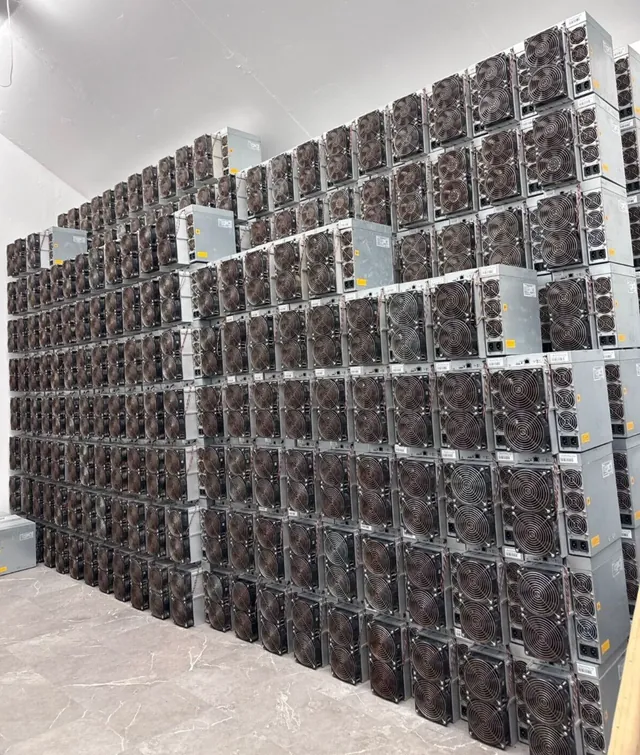
On a single machine, grading means testing that machine. On a lot of 50 it necessarily means something looser, and the honest version of the process is worth stating plainly.
Sampling means a subset gets bench time and the rest are inspected, powered and confirmed to hash. What the buyer needs to know is the ratio: how many out of the fifty went on the bench for a full run, and how many were confirmed only to boot. That is a question with a specific numeric answer for any given lot, and any seller who has actually done the work can give it to you.
We will not publish a blanket DOA rate, and you should treat any seller who does with suspicion. A percentage quoted across all used hardware is not a measurement of the lot you are buying — it is a marketing number, and the batches vary far too much for an average to mean anything. What is worth having instead is the policy in writing before you pay: what happens if a unit in the lot does not hash on arrival, how long you have to tell us, and whether the remedy is replacement, credit or refund. Ask for that. It is more useful than any percentage.
What that looks like counted rather than asserted, on the shelf this page is written from: across the 19 used listings published here on 14 August 2026, not one of them carries a letter grade, and not one states a warranty term. Four carry a condition row in the spec table. That census is published with its own omissions listed, which is the standard worth holding any seller to, including this one.
Where buyers get caught by a grade nobody ever defined
Four traps, in the order we see them:
The letter with no measurement behind it. Covered above, and it remains the most common. A grade the seller cannot explain is a grade the seller did not derive.
The ambiguous hashrate. “110 TH/s S19” describes two completely different machines — a stock S19 Pro, or a 95 TH/s S19 tuned up to 110. They have different chip counts, different efficiency and different value. This one catches experienced buyers, and it is why the used-buying guide spends a section on it.
The grade that covers the machine but not what it needs to run. PSU condition, PSU inclusion, and whether the unit takes 200–240 V only. A tested KS5 Pro is still a machine that will not run on a household outlet, and that is not a grading question at all — but it is the one that stops the machine earning on day one.
Total cost of ownership after the grade. A cheap C-grade machine that draws 34 J/TH is not cheap at 12¢/kWh; it is a monthly loss with a purchase price attached. The grade tells you about the hardware’s condition, and if the underlying economics are new to you mining 101 is the place to start. It tells you nothing about whether that hardware makes money at your electricity rate, and that arithmetic is the one that decides it. Common failure modes on the buyer’s side are catalogued in this survey of failed mining ventures.
Grades are a seller’s shorthand, not a standard — which is why our listings describe the actual unit and state condition and warranty per listing instead of assigning it a letter. If a grade is all a seller will give you, ask for the hashrate and wall draw measured on the bench instead. Ours are on the used ASIC miner shelf.
Frequently Asked Questions
Is there an official grading standard for used ASIC miners?
No. No standards body defines grade A, B or C for mining hardware, and no certification sits behind the letters. Each seller sets their own scale, so the same letter from two dealers can describe very different machines. A grade is only worth what the seller will tell you about how they derived it.
What does grade A mean on a used miner?
It depends entirely on whether the seller is using a cosmetic scale or a functional one. On a cosmetic scale, A means near-new appearance and says nothing about whether the machine hashes. On a functional scale, A means full rated hashrate regardless of how it looks. Ask which one they mean before you pay.
What should I ask for instead of a grade?
Four things: the measured hashrate and how long it ran, the wall draw at that hashrate, hashboard and chip status including board temperatures, and which firmware is installed and whether it is tuned. All four are things a seller who has bench-tested the machine can supply in writing.
What DOA rate should I expect on a used lot?
We will not publish one, and we would treat a seller who quotes a blanket percentage with suspicion, because batches vary far too much for an average to describe the lot you are buying. Ask instead for the sampling ratio on your specific lot and the written policy on what happens if a unit does not hash on arrival.
Does a condition grade cover the power supply?
Usually not, and this is a common gap. A PSU that has run at full load for several years is a consumable, so a machine graded on its hashboards can still arrive with a power supply near the end of its life. Ask about the PSU separately, and confirm whether one is included at all.
Stock you can check this against
- Used Antminer S19k Pro 115TH/s – Tested, Braiins OS
- Lot of 50 Refurbished Antminer S19 95TH/s
- Used Antminer KS5 Pro 21TH/s – Tested
- Used S19 XP Pro Hashboard – AS-IS for parts
The whole used ASIC miner shelf, or the full inventory. Lot pricing and the bench process are on bulk used ASIC miners.