
Used and Refurbished ASIC Miners
Used and refurbished ASIC miners — single units and fleet lots from 1 to 3,000 machines, mostly Antminer S19-class hardware running Braiins OS or VNish firmware. This is the part of the catalogue we know best, because we buy, test, repair and redeploy these machines ourselves rather than drop-shipping them.
-
-
Add to WishlistAdd to Wishlist
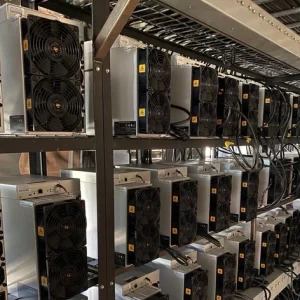
-
Add to WishlistAdd to Wishlist
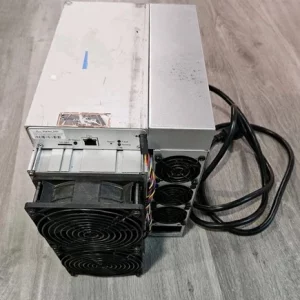
-
Add to WishlistAdd to Wishlist
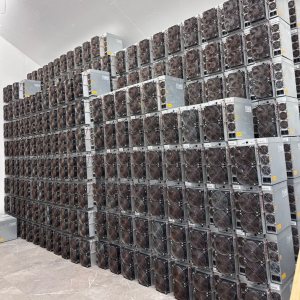
-
Add to WishlistAdd to Wishlist
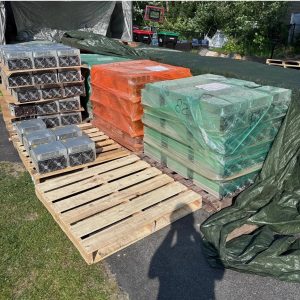
-
Add to WishlistAdd to Wishlist
-
Add to WishlistAdd to Wishlist
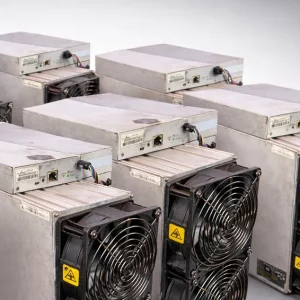
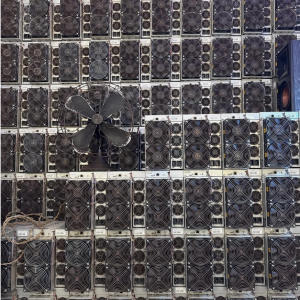
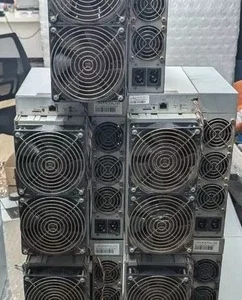
When used beats new
When your power is cheap. That is the whole answer. A used S19 at roughly 34 J/TH costs a fraction of a current-generation machine per terahash, and if you are paying a low enough rate per kWh it will out-earn its purchase price long before efficiency catches up with it. At retail residential power rates, it will not — buy new instead, or do not buy at all.
The second case is scale. If you are filling a site and your constraint is capital rather than power capacity, used hardware buys you far more hashrate per dollar deployed. The trade is maintenance: budget for spare PSUs, spare fans and a hashboard tester from day one.
Your break-even electricity rate, machine by machine
“When your power is cheap” is only useful if you know how cheap, so here is the number and the arithmetic behind it. A miner stops earning the moment the electricity it burns per terahash-day costs more than a terahash-day pays, which makes the whole thing one division: break-even rate = hashprice ÷ (24 × the machine’s J/TH). Hashrate cancels straight out of it. Against a hashprice of $32.18/PH/day — derived on 9 August 2026 from the last 144 blocks, at a Bitcoin price of $64,959, difficulty 127.48 T and a network near 912 EH/s — for the machines actually on this page:
Every 95 TH/s S19 here runs at 34.2 J/TH and stops earning at 3.9¢/kWh — single unit or hundred-machine lot, identically. A machine bought in volume burns exactly as much power as the same machine bought on its own, so fleet pricing changes how fast you get your capital back and changes nothing about whether the machine earns at all. That is the thing to understand about a cheap miner: the discount lands on the wrong side of the equation.
The 110 TH/s S19s stop earning at 3.9¢ or below it, never above. Those are factory 95 TH/s machines pushed on firmware, not S19 Pros, and overclocking costs efficiency rather than adding it. Treat 34.2 J/TH as a floor and the 110 in the title as output, never as economy.
The S19k Pro at 23 J/TH runs to 5.8¢, and the S19 XP at 21.35 J/TH to 6.3¢. Those are the only two used SHA-256 machines here with real headroom, and headroom matters more than it looks: two extra cents of break-even is what survives the next difficulty rise.
For contrast, a current-generation machine from our new catalogue at 15 J/TH runs to about 8.9¢. That gap — 3.9¢ against 8.9¢ — is the entire used-versus-new argument. Used hardware is cheaper to buy and more expensive to run, and which of those dominates is decided by your power contract, not by the listing price.
Which one to buy at the rate you actually pay
Break-even tells you whether a machine earns. It does not tell you which machine returns your capital soonest, and those two questions have different answers. Ranked on payback across this shelf, at the same dated hashprice:
Below roughly 1.7¢/kWh the cheapest S19 wins, because at that rate power is nearly free and only capital per terahash matters. Between about 1.7¢ and 5.2¢ — where essentially every buyer on sub-retail power actually sits — the S19k Pro returns your capital soonest, ahead of both the cheaper S19 and the more expensive XP. Above 5.2¢ the k Pro is running out of headroom and the S19 XP becomes the last used machine here that pays back at all. Above 6.3¢, none of them do.
Fleet lots move those lines down. At ten-machine pricing a plain S19 beats the k Pro below about 3.1¢, and at hundred-machine pricing below about 3.5¢. So genuinely industrial power plus a capital constraint is the case for buying S19s by the pallet — right up to 3.9¢, where they stop earning whatever you paid for them.
Two machines on this page are deliberately outside that arithmetic, and we would rather say so than quietly include them. The KS5 Pro mines Kaspa on kHeavyHash, which is paid at a different rate per terahash entirely, so none of the SHA-256 figures above describe it. And the low-power VNish S19 does not publish a tuned hashrate, so no honest J/TH exists for it — ask us for the as-tested hashrate and the metered wall draw, and do the division yourself before you pay.
One last number, because it disqualifies more buyers than everything above put together: the US residential average is around 18.83¢/kWh. Nothing on this page earns at that rate, and nothing in the new catalogue does either. If that is what you pay, the answer is not a cheaper machine — it is a different power contract, a hosting agreement, or not buying. Hashprice moves daily and every line above moves with it, so re-run the division on the day you commit.
The spares channel behind the machine
Break-even tells you whether a machine earns, and payback tells you which one returns your capital soonest. Neither tells you what happens the first time something inside it dies — and that answer is not the same for every machine on this page.
We run a repair bench, so the honest version of it is a count of our own repair parts shelf. For the Antminer S19 we stock a tested hashboard, a tested control board, a fan assembly, a supply cable and several power supplies: the whole ladder, at once. For the S19 XP and the S19k Pro we stock a board fixture and a BM1366 chip tester and not one tested board or loose chip to fit them. For Whatsminer and IceRiver hardware we stock diagnostic fixtures and no parts whatsoever — we can tell you exactly which chip died and we cannot sell you anything that fixes it.
Hardware is repairable when it is new and when it is old
A new machine is covered by the manufacturer for its first year. An old machine is covered by the aftermarket, because enough of them were built and scrapped that boards, controllers and supplies circulate freely. Between the two sits hardware that is out of warranty and not yet common enough to have a spares channel, and that is the worst place on the curve to own a miner. The 2022 and 2023 generations are sitting in it right now.
That is awkward for us to publish, because the S19k Pro is the machine this page ranks first on payback across most of the realistic range, and it is also the machine deepest in that gap. Both are true. It does not move the ranking; it changes how to buy. Take the tested unit, get the return window in writing, and price it as a machine rather than as three boards you intend to keep swapping. At used-shelf money that is a sound bet. It is not a sound bet on current-generation hardware, which is precisely why a factory warranty matters up there and barely matters here.
If repairability is what you are buying, buy the plain S19
It is the only used machine on this page where every rung of the repair ladder is on our shelf at the same time, and that — not nostalgia for old silicon — is why we keep buying them. The KS5 Pro is the other end of the same scale: a capable machine on a thin channel, which is worth knowing before you pay rather than after. Ask us what we can actually source for any unit on this page and we will tell you straight, including when the answer is nothing.
Ask for the grade in writing
Condition language in this industry is not standardised, so treat any single word as a starting point rather than a spec. Before you buy, get these confirmed for the actual units: measured hashrate at the wall, measured power draw, hashboard revision, firmware and whether it is locked, and what warranty or return window applies. We answer all five. Where a listing does not state a grade, our description says it does not state a grade — we would rather lose the sale than guess.
Firmware, honestly
Most of these run aftermarket firmware. Braiins OS and VNish genuinely add hashrate at a given power level, or hold hashrate at lower power — both are real. What they also do is run silicon harder than Bitmain intended, which shortens life and voids anything resembling a factory warranty. A “110 TH/s” S19 is a factory 95 TH/s machine overclocked, and it draws meaningfully more than the 3,250 W on the sticker. Size your circuits off measured draw, not off the listing title. Anyone planning breaker capacity from the stock number on a 20-unit lot will trip it.
The dev fee nobody quotes
Aftermarket firmware is not free, and a machine that arrives pre-installed and pre-configured carries its fee setting to you. Braiins publishes a 2–2.5% dev fee depending on model, taken by directing that share of your hashing power to their pool, and says that mining on Braiins Pool with Braiins OS gives a 0% effective pool fee instead of the standard 2.5%, so on that pool it is offset rather than paid twice. VNish does not publish a single figure on its own site; the independent firmware guides put the S19-family fee at 2–2.8%. Either way it is roughly 2.5% off the top, which on an S19-class machine is about 0.15¢/kWh of break-even headroom gone. Ask us to confirm the installed version and its fee setting before you pay. The clearest example on this shelf is the pair of used S19k Pros at the same $379.99 — 115 TH/s on Braiins OS and 120 TH/s on VNish — same model, same 23 J/TH, same break-even rate, and both listings now carry the full side-by-side arithmetic and a plain verdict on which buyer takes which.
Buying a lot
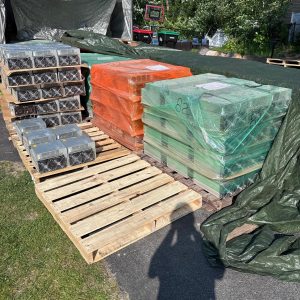
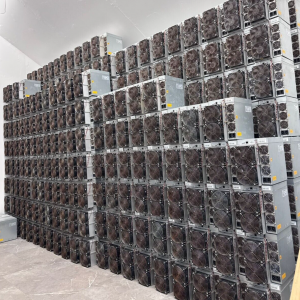
Fleet listings here run to hundreds of units. Ask us for total PH/s, total kW at the wall and palletised freight weight before you commit — the freight on a container of S19s is not a rounding error, and neither is the electrical service.
Plan for repairs
Every used fleet needs a parts shelf. Our repair parts and test fixtures cover the failures we actually see: PSUs, fans, control boards and hashboards.
Who this suits, and who should buy new instead
Used is the right call if your power is genuinely cheap. That is the first filter and it disqualifies more buyers than anything else on this page. An S19-class machine at roughly 34 J/TH converts electricity into hash about two and a half times less efficiently than a current 13.5 J/TH machine, so the gap has to be paid for out of your rate per kWh.
It also suits anyone whose constraint is capital rather than power capacity. If you have the service and the space and you are trying to fill it, used hardware buys far more hashrate per dollar deployed than new does. That is what the fleet lots on this page are for.
And it suits people who are willing to own the maintenance. A used fleet needs a parts shelf and someone prepared to use it. Budget for spare supplies, spare fans and a hashboard fixture from day one — they are in our repair parts and test fixtures, and they are the difference between a dead unit being a repair and being a write-off.
Buy new instead if you are paying retail residential power. At those rates an older machine is a space heater with a payout attached, and no amount of firmware tuning fixes it. New, sealed hardware is the honest answer.
Buy new instead if you need a warranty to point at. Hosted deployments with an uptime commitment, financed builds and anyone who will be answering to somebody else for downtime should be buying sealed hardware with the factory warranty intact. We would rather send you there than sell you a machine that puts you in an argument later.
Buy new instead if you want this to be plug-in-and-forget. Used mining hardware is a hands-on purchase. If nobody in the project wants to open a machine, the maintenance cost is not a discount you are actually receiving.
Selling rather than buying? This shelf exists because we buy machines like these — any quantity, working, partly working, or a pallet you have already written off, broken units included. Sell the batch outright, or list it on consignment at a 60/40 split where the machines stay yours until they sell. Tell us the model, the count and the condition, plus where they are sitting, and you get a number back.
Browse all miners, or call us with your power rate and we will tell you straight whether used makes sense for you.
Before you buy used, work out your break-even electricity rate first — it is the single number that decides whether an older machine earns or bleeds, and it is why used hardware is priced the way it is. Our ASIC miner buying guide gives the formula, a break-even table by model, and the load arithmetic for fleet lots.
Where to start, depending on what you are solving for. The Antminer S19 XP 141TH/s on Braiins OS is the most efficient used machine on this page at 21.5 J/TH. The Antminer S19k Pro 115TH/s is newer silicon at 23 J/TH. If you are filling racks rather than buying one box, the lot of ten S19 110TH/s and the lot of five are sold as fleet units, which is a different purchase with different freight, testing and warranty questions attached.
New to buying used? Start with our guide to buying a used ASIC miner — what the condition grades actually commit a seller to, how to work out landed cost per terahash, and the break-even electricity rate for every used S19 variant.
Landed cost includes the freight and the tax, and both are published here rather than quoted on request: 6.25% Massachusetts sales tax on in-state orders and none at checkout anywhere else in the US, UPS Ground dispatch within 7 business days, and a flat per-unit rate that is separate from the lot pricing on the multi-machine listings above. Work all of it into landed cost per terahash before you compare a single machine against a lot. Shipping and delivery has the rate card and the damage-claim procedure.
Buying a used lot rather than a used machine? Five questions decide a fleet purchase and the sticker price is not one of them. Each is answered in one place.
What actually arrives. Three words do the work on this shelf and they commit us to different things. Tested working means it ran on our bench at the stated hashrate. Refurbished means it was also cleaned, re-pasted or had parts replaced. As-is means it is sold without a working claim. Where a listing states no grade it says so rather than implying one, and you will not find A, B and C grades here because no industry body defines them — ASIC grading explained sets out what to ask for instead. What a batch commits us to, what happens when a unit arrives dead, and what a warranty does and does not cover across a lot are all on bulk used ASIC miners.
We publish no dead-on-arrival rate. Not here and not anywhere else on this site: we have not measured one across enough lots to defend it in writing, and anyone who quotes you a failure rate to two decimal places has measured nothing. Do this instead — settle the DOA window, the remedy and who pays return freight before the order goes in, as three separate answers. Replacement, refund, credit and parts are four different outcomes and only one of them is the one you are picturing.
What fails first, and what it costs. In rough order of how often it takes a machine down on our bench: the power supply, a fan that stopped and let a board cook, a dead or corrupted control board, and only then a genuine hashboard fault. Hashboards are the failure everyone plans for and they are fourth on that list. Of the machines that reach us described as having a dead hashboard, roughly half have a healthy board and a sick supply, control board or ribbon cable — which is the most expensive assumption in used mining. The parts sit on our own shelf at public prices: $16.50 for a supply cable, $24.99 for a dual fan assembly and $59.99 for a tested control board or a tested working S19 hashboard, listed at those figures on 15 August 2026. The whole ladder for an S19 comes in under $180, and used vs new ASIC miners has all of it plus the rule for when a repair stops being worth doing.
Judge a fleet on total J/TH, not on price per machine. Total watts measured at the wall divided by total terahash at the pool — not the average of the listings, which gets it wrong in the direction that flatters you, because the inefficient machines are also most of your hashrate. Used ASIC miner fleet economics works it through a megawatt at a time, with the payback table at three, five and seven cents a kilowatt-hour and the band in which new silicon wins instead. Used ASIC lot data is the dated census underneath it: our own freight, condition and repair-shelf figures, published so you can check the arithmetic rather than take it.
Before you wire five figures — to us or to anyone — run how to vet an ASIC seller, then read receiving a used miner lot, because the freight claim window is short and it closes whether or not you were busy.