ING Mining LLC • Hanson, Massachusetts • Registered U.S. Trademark

About ING Mining

We buy, test, repair and resell ASIC mining hardware — new machines, used machines, hashboards, power supplies and the test fixtures we use on our own bench. This page is what to read before you spend three or four thousand dollars: how a machine is graded before it is listed, what shipping actually costs, and what we will and will not promise.

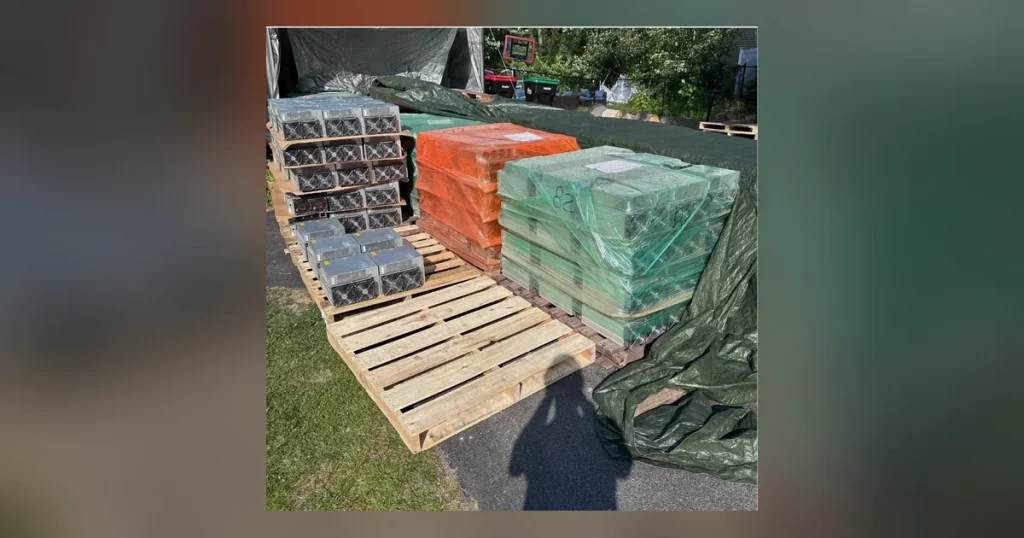
Pallets of ASIC miners shrink-wrapped in orange and green film, stacked on wooden pallets outdoors and ready for freight.

What we actually do

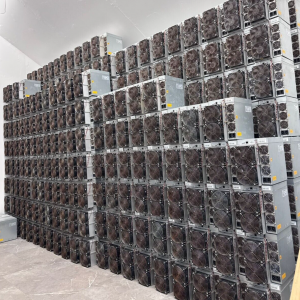
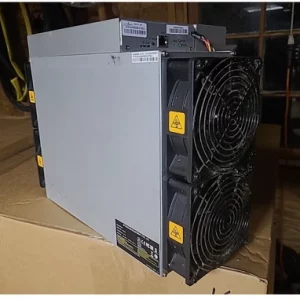
Most of our stock is used ASIC miners — Antminer S19, S19 Pro, S19j Pro and S19 XP through to the current S21 generation, alongside Whatsminer, Avalon, and the scrypt and Kaspa machines. We also carry new hardware, a deep bench of parts and AS-IS units, and the hashboard testers and fixtures that make repair possible in the first place.

Used hardware is the part of this business we are known for, and it is the part that most needs an honest seller. A used S19 is a machine somebody else ran hot for two or three years. Some are worth buying and some are not, and the difference is not visible in a photograph. That is why the condition language on our listings is deliberately blunt: a board that only partly hashes is described as a board that only partly hashes, and a unit sold for parts is filed under Need Parts rather than blurred into “used”.

The same first-hand experience is why the guides on this site take positions instead of listing options. We publish the arithmetic on which machines break even at which electricity price, on buying a used miner without getting burned, and on when a repair is worth doing and when it is not — including the cases where the answer is “do not buy this”.

It produced software as well as guides. Getting a few hundred tested machines onto eBay accurately is its own problem, so we built ING Listing Engine for it — it drafts the listing from a photo or a product link and checks the price against sold comps. It is free, it lives on its own site, and it is worth a look if you sell hardware yourself rather than only buy it.

How a machine is tested before it gets listed

A used-hardware seller who will not tell you how they test is asking you to take the grade on trust. So the procedure is published in full: the six-step bench procedure a machine goes through here before it gets a grade and a listing, step by step, with what each result rules in or out.

What gets recorded is the five measurements that matter: per-board hashrate, chip count per board, measured wall power rather than the nameplate figure, hardware error rate, and intake and board temperature under sustained load. Two of those are the whole game. Real hashrate and real watts are exactly the numbers a seller has an incentive to quote optimistically, which is why they are measured at the wall instead of copied off a spec sheet. Where a figure genuinely is not known for a particular unit, the listing says it is unknown rather than guessing.

When your machine arrives, run the acceptance test for the first 48 hours. Photograph the pallet before you cut the wrap, keep the packaging until it has run a clean 48 hours, and tell us straight away if something is wrong — while the freight claim window is still open.

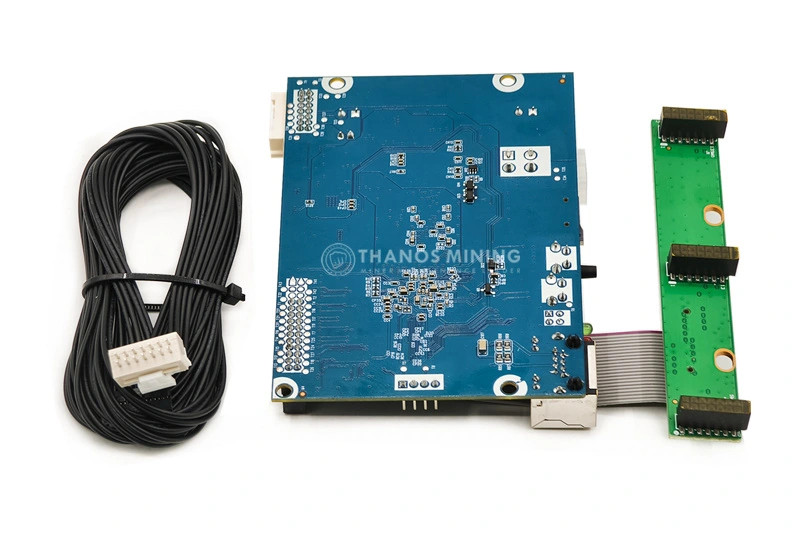
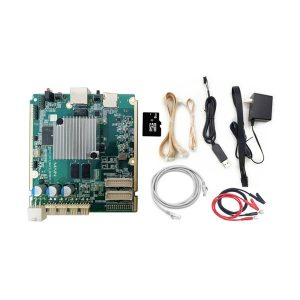
The Whatsminer M20/M30 test fixture: a blue control board with adapter boards and a black data lead.
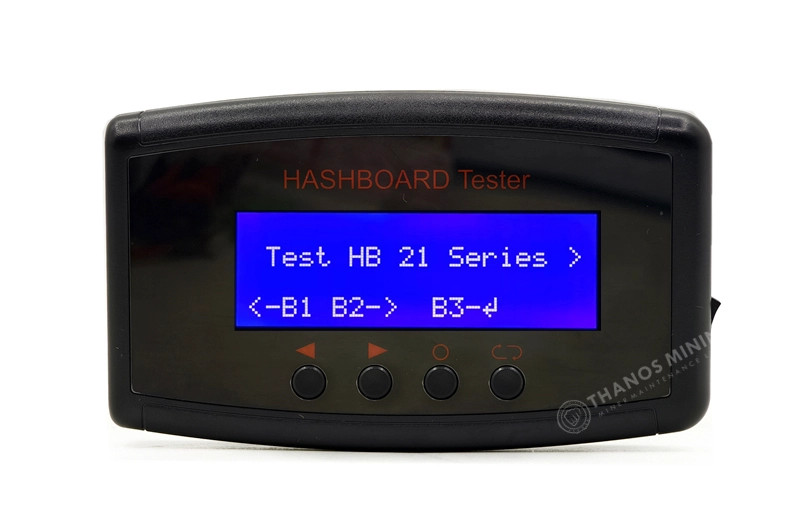
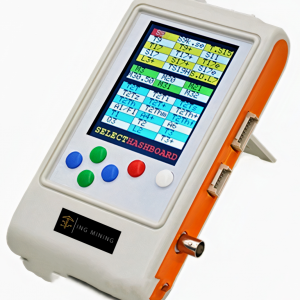
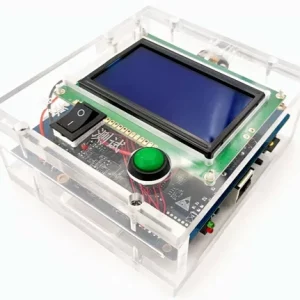
A K3L handheld hashboard tester, its blue LCD reading 'Test HB 21 Series'.

Condition, warranty and returns

Condition is stated on the listing, and it is also the category the product sits in. New, used and Need Parts are separate categories on this store precisely so a parts unit cannot be mistaken for a working one. Where a unit’s condition genuinely is not known to us, the listing says so rather than picking the flattering option.

Warranty is stated per listing, not across the catalogue. Some units carry a manufacturer term — a January-batch machine still inside its 365-day factory warranty, for instance — and where that is so the listing names the term and the date it runs from. Many units, particularly used and AS-IS stock, carry no term at all, and those listings do not claim one. We do not apply one blanket warranty to a catalogue that runs from sealed factory stock to a hashboard sold for parts, because it would not be true at either end. For what a mining warranty normally covers and where the fine print sits, see ASIC miner warranty explained.

Returns: ask for the terms on the specific unit before you pay. There is no single returns window published for the whole store, because the sensible terms on a tested working machine and on a board sold AS-IS for parts are not the same terms. Call or email before you order and ask what applies to the exact unit you are looking at. It is a two-minute conversation and a great deal cheaper than a dispute.

What you get when you buy from ING MINING®

Bench-tested before listing

Six steps, measured at the wall, and the procedure is published in full.

Ships UPS Ground from the US

$49.99 per unit within the US on a priced listing; lots are quoted as freight. Orders ship within 7 business days.

A person answers the phone

+1 (781) 577-0377 or ns@ingmining.com, before the sale as well as after it.

Guides that take a position

Break-even arithmetic, repair economics, and the machines we say not to buy.

Registered U.S. trademark

The ING MINING® registration and our marketplace feedback are both published.

What shipping costs

These are the rates configured in this store’s own checkout, read from the settings rather than estimated. Everything ships from the United States by UPS Ground, and orders ship within 7 business days.

What you are orderingUS shipping
A single machine, hashboard, PSU or part$49.99 per unit
A lot of 5 machines$299.99
A lot of 10 machines$549.99
A lot of 100 machines$3,449.99

The single-unit row is what a checkout will bill you. The three lot rows are configured rates that no order can currently trigger. Since 11 August 2026 every multi-machine lot here is quoted rather than sold through the cart, so freight on a lot comes back on the same quote as the machines. The rows stay because they are what the settings hold and because they show the shape of the saving, not because a checkout will charge one today.

More broadly, and it is worth knowing before you go looking for a price: 70 of the 145 listings on this store carry a price and an add-to-cart button, and the other 75 are quoted — the eleven multi-machine lots and most of the current-generation new stock (read from our own catalogue on 14 August 2026). A listing with no price is not a listing with a problem. It means the number comes back against your quantity, the condition you can accept and where it is going, and you get it by calling or emailing. The full published shipping detail is on shipping and delivery.

Outside the United States the checkout quotes $250.00 per unit, multiplied by quantity rather than flat. On anything larger than a single machine, contact us before you order so freight to your destination can be confirmed properly. If you are working out landed cost, crating, insurance and what to do when a pallet arrives damaged, the mining hardware shipping guide covers all of it.

Hosting, and whether the machine pays where you live

The most useful thing we can tell a first-time buyer is that the machine is usually not the problem — the electricity price is. Break-even electricity rate is hashprice divided by (24 × J/TH), and hashrate cancels out of that entirely, which is why a cheap old machine on expensive power loses money faster than an expensive new one. Work out your own number before you buy anything; the buying guide has the arithmetic and a section on hosting versus running it yourself.

If your power is not genuinely cheap, hosting is the question to be asking. Ask for the all-in rate in dollars per kWh and put it straight next to your own electricity price. Retail US hosting tends to be quoted somewhere around $0.065–$0.09/kWh — that is the band hosts publish on their own rate cards, read on 16 August 2026, rather than an industry benchmark, so treat it as a sanity check and not a target. “All-in” is supposed to cover power, rack space, network, basic monitoring and hands-on-site, and it is worth having that spelled out rather than assumed. Before signing anything, get written answers on repair costs, on the uptime guarantee and its remedy, and on curtailment — a flat per-machine monthly rate is where most of the unpleasant surprises live. Types of mining farm compares the models, and cloud mining versus owning the machine covers the option most people should be comparing instead.

Whoever ends up hosting them, the work either side of that contract is ours. Deployment, pool and network setup, Braiins OS or VNish tuning, offline alerts and board-level fault-finding when a machine stops hashing are a service we run rather than a line on a page — ASIC mining consulting sets out what it covers. The hosting agreement itself is between you and the facility, and this page is not going to pick one for you. What we can hand you going into it is what your machine measured at the wall on our own bench, because a hosting dispute turns on exactly that number.

Checking us out before you send money

You should, and we would rather you did it properly.

  • The trademark. ING MINING® is a registered U.S. trademark and the registration is verifiable at source — see trademark verification.
  • The feedback trail, and the part of it that is not flattering. Four independent platforms publish a record for this account and not one of them asks us first. eBay: 100% positive across 1,438 ratings, 0 negative in the last 12 months, 4.8 for accurate description. Amazon: 4.8 out of 5 across 214 lifetime ratings, 96% positive — 87% five-star and 3% one-star, and those one-stars are readable on the seller profile with what happened next. Google: 5.0 out of 5 across 12 reviews on the business profile. Trustpilot: 3.8 out of 5 across 4 reviews — three five-star, one one-star, and our reply is public under the one-star. All four read 14 August 2026; all four move. The screenshots and the full breakdown are on the reviews page.
  • The technical writing. Everything here about testing, repair economics and break-even is written from our own bench and our own stock. Read a couple of the guides and judge whether whoever wrote them has actually held the hardware.
  • Ask an awkward question. Measured wall draw on a specific unit, batch and shipment date, what a hashboard repair on that model really costs. A dealer who cannot answer those has not tested the machine.

Talk to a person before you buy

On a purchase this size, ask first. We answer questions about specific units, bulk and fleet pricing, freight, and what is realistic at your electricity price. Fleet quantities from five machines to three hundred are covered on bulk mining hardware, and the full catalogue is at all miners.


Trademark notice: ING MINING® is a trademark of Nicholas Squires. External references: Bitcoin.org | Bitmain | Braiins OS.

Positive feedback on eBay
0 %
Items sold on eBay
0 K
Positive ratings, 12 months
0

eBay buyer feedback

Those figures and the reviews below are published by eBay, not by us. Our storefront ingmining shows 100% positive feedback and 5,600+ items sold, and over the last 12 months 231 positive, 7 neutral and 0 negative ratings out of 1,438 published buyer ratings in total, with detailed seller ratings of 4.8 for accurate description, 4.9 for shipping cost, 5.0 for shipping speed and 5.0 for communication. Read from eBay on 14 August 2026 — they move, so check them yourself rather than taking our word for it.

Free Consultations – Learn Bitcoin & Crypto Mining with Experts