
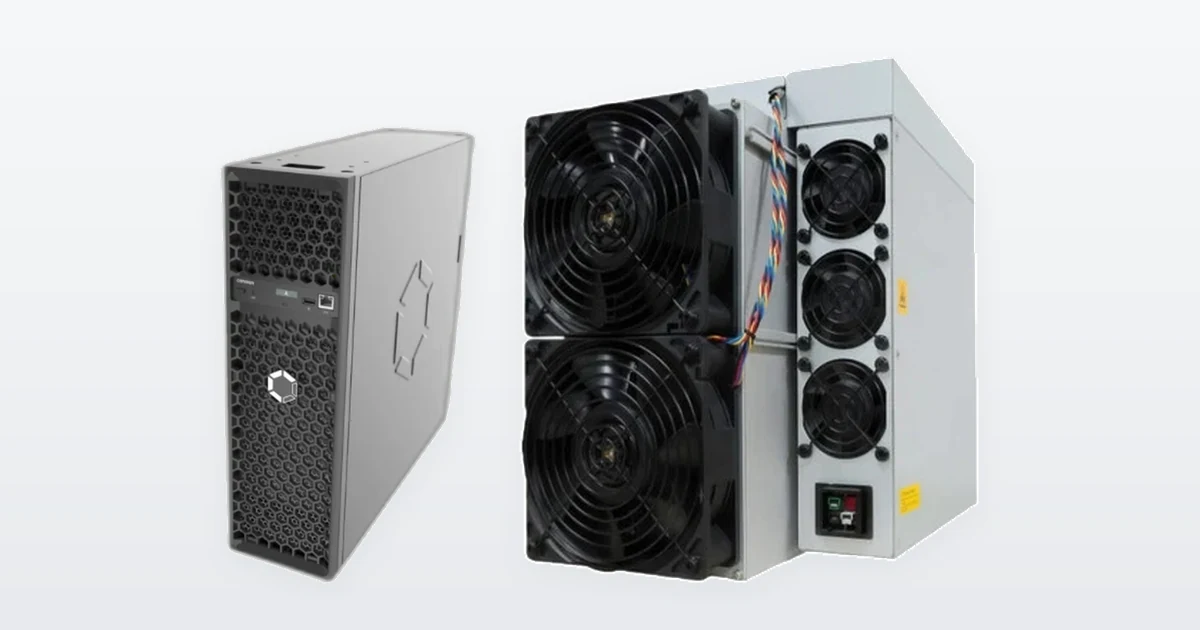
The machine is the easy part. The part that costs people money is who they paid, and what they can prove afterwards. A used S19 is a $300–$900 mistake; a pallet of ten is a $3,000–$9,000 one, and by the time it does not arrive you are arguing with a payment processor rather than a seller.
Run every check below on us. What we can and cannot tell you about payment terms and escrow on a five-figure order is stated plainly on bulk used ASIC miners.
We sell this hardware, so treat this as a page written by an interested party — and then use it on us. Everything below is a question you should be able to ask any dealer, including this one, and get an answer to before you pay. If you want the specifications rather than the transaction, that is the ASIC miner buying guide; if you want to know which machine your electricity rate can carry, that is how to choose an ASIC miner.
Ask for the serial number of the actual unit
Every Bitmain, MicroBT and Canaan machine carries a serial on a chassis label, and the same string appears in the miner’s own web interface once it is powered up. That gives you two things a stock photograph cannot: proof the seller is holding a specific machine, and a string you can quote in a dispute.
So ask for a photograph of the label on the unit you are buying — not a catalogue shot, not “a photo of the same model”. A seller who has the machine can take that picture in thirty seconds. A seller who is drop-shipping from a listing they found somewhere else cannot, and the delay before the answer arrives is usually the answer.
For a lot, ask for the serial list as a file. Ten machines means ten serials. If a bulk seller cannot produce that, they are describing an order they intend to place, not stock they hold.
Ask for the miner’s own status page, not a photo of the box
A powered ASIC serves a status page showing its measured hashrate, the chip count on each hashboard, and per-board temperatures. That screen is the only cheap evidence that a machine works, and it is evidence of a very specific kind: it shows chips found. A hashboard with dead chips reports fewer than the full complement, and it will still boot, still make noise, and still photograph perfectly.
What to ask for, in order of how much it tells you:
- A status screenshot — hashrate, chip count per board, board temperatures. Costs the seller nothing if the unit is on the bench.
- How long it ran for. A thirty-second boot proves the PSU works. Hashrate that held for hours proves rather more.
- Which firmware it is on. Stock, Braiins, VNish and the rest behave differently, and a tuned machine’s headline number is not its stock number.
We publish our own six-step bench procedure in full for exactly this reason: it is a standard you can hold any seller to, including us. If you would rather run the checks yourself after it lands, we publish the 48-hour acceptance test as its own procedure.
Get the condition grade in writing — and notice when there isn’t one
“Tested working”, “refurbished” and “as-is” are not interchangeable, and no authority defines them. They mean whatever the seller’s own published definition says they mean, which is why the definition matters more than the word.
On our listings, tested working means the unit ran on our bench at the stated hashrate; refurbished means it was also cleaned, re-pasted or had parts replaced. A good number of our listings state no grade at all, and they say so in those words rather than implying one — claiming a grade nobody measured would be the easiest lie on this site to tell. Ask any seller for their equivalent sentence. If they do not have one, the grade is decoration.
The same applies to warranty. Any manufacturer term that survives resale should be stated in the listing; where none is stated, none is claimed. What an ASIC warranty actually covers goes through what voids it, and what A, B and C grades mean covers the grading vocabulary in more detail.
Pay in a way that can be reversed
This is the single decision on the page that you cannot revisit. Payment methods differ in exactly one respect that matters here: whether a third party can claw the money back for you.
| Method | If the machine never arrives, or arrives dead |
|---|---|
| Card, or PayPal Goods & Services | Chargeback / buyer protection. Slow, but a real route. |
| Marketplace checkout (eBay, Amazon) | Platform dispute process, and the seller’s trading record is on the line. |
| Invoice from a registered business | Enforceable, but you are the one doing the enforcing. |
| Bank wire, Zelle, Cash App, crypto | None. Once it is sent, it is sent. |
Sellers legitimately prefer wires on large orders, because card fees on a $30,000 pallet are real money. That is a negotiation, not a red flag. What is a red flag is a seller who will accept only irreversible payment on a first transaction, or who asks you to switch to one after you have agreed terms.
Whatever you use, get the terms in writing first: what happens if it arrives dead, who pays return freight, and how long you have to say something. An answer you have in an email is worth more than a policy you were told about.
Check the trading record, not the website
Anyone can build a hardware storefront in an afternoon. What takes years is a transaction history with strangers attached to it.
Look for a record that is independently published — a marketplace feedback profile, a business registration, a phone number that a person answers. Ours is ebay.com/str/ingmining: 100% positive feedback and 5,600+ items sold, and over the last 12 months 231 positive, 7 neutral and 0 negative ratings out of 1,438 published buyer ratings in total, read from eBay on 14 August 2026. Those figures are published by eBay, not by us, which is the only reason they are worth anything to you — and they move, so check them yourself rather than taking our word for it. Apply the same test to every other dealer you are considering, and treat testimonials that live only on the seller’s own site as marketing copy, because that is what they are.
Two more things worth a minute: search the company name with the word “reddit” attached, and call the phone number before you order. Ours is +1 (781) 577-0377. Whether anyone picks up tells you what support will be like the week something breaks.
Settle freight before you pay, not after
A single miner ships in a box. Anything above about four goes on a pallet, and pallets introduce a second set of ways to lose money that has nothing to do with the hardware.
- Who is the shipper of record, and whose account is the freight on? That decides who can file a claim.
- What value is declared, and is it insured for that? Carrier default liability is per pound, not per dollar, and a 33 kg miner weighs far less than it costs.
- Residential or commercial delivery, and is there a lift gate? A pallet arriving at a house without one is a problem you solve on the driveway.
- The claim window, which is short. Photograph the pallet before you cut the wrap, keep the packaging, and run the acceptance test immediately — a fault found on day two is a conversation, a fault found on day thirty is an argument.
The full cost and logistics breakdown is in the mining hardware shipping guide. If you are buying by the pallet, buying ASIC miners by the lot covers the pre-wire due diligence that goes with it.
The checklist, in one place
Print this, or paste it into the message you are about to send a seller:
- Photograph of the serial label on the actual unit — and the full serial list for a lot.
- Status-page screenshot: hashrate, chip count per board, temperatures. How long did it run?
- Which firmware, stock or tuned?
- The seller’s own written definition of the condition grade they are claiming.
- Warranty term, if any, in writing — or an explicit “none”.
- A payment method with a dispute route, unless you have traded with them before.
- What happens if it arrives dead: who pays return freight, and within how many days.
- Independently published trading history, not on-site testimonials.
- Freight: shipper of record, declared value, insurance, lift gate, claim window.
Nine questions. A dealer who deals in this hardware every day can answer all nine without checking, and none of them are rude to ask. If you would like to test that, ask us on +1 (781) 577-0377 or ns@ingmining.com — we would rather talk before you buy.
Frequently Asked Questions
How do I check that an ASIC seller actually has the machine?
Ask for a photograph of the serial label on that specific unit, plus a screenshot of the miner’s own status page showing hashrate and chip count. Both take a seller with the machine on a bench under a minute. For a lot, ask for the serial list as a file — one line per unit.
What is the safest way to pay for a used ASIC miner?
Anything that gives a third party the power to reverse the payment: a card, PayPal Goods & Services, or a marketplace checkout. Bank wires, Zelle, Cash App and crypto have no dispute route at all. Sellers may reasonably prefer a wire on a large order, but being pushed to one on a first transaction is a warning.
What does “tested working” mean when buying an ASIC?
Only what the seller’s own published definition says it means — no standards body defines it. Ask for that definition in writing. On our listings it means the unit ran on our bench at the stated hashrate; refurbished means it was also cleaned, re-pasted or had parts replaced.
Should I buy a miner that has no condition grade stated?
You can, as long as the listing says plainly that no grade is stated rather than implying one. Price it as untested and budget for a repair. What you should not accept is a grade with no definition behind it.
How quickly do I need to inspect a miner after it arrives?
Immediately. Photograph the pallet or box before you open it, keep the packaging, and run the acceptance test the same day — freight claim windows are short, and a fault found on day two is a conversation while a fault found on day thirty is an argument.
Is it rude to ask a dealer for serials, screenshots and payment terms?
No. A dealer who handles this hardware daily answers all of it without checking, and would rather answer the question than take a return. Reluctance to answer is itself information.
Tested stock, condition stated on the listing
Machines we have powered on ourselves, with the condition written on the listing:
- Used Antminer S19 95TH/s Bitcoin Miner – 2,800W Low-Power VNish Tune
- Used Antminer S19k Pro 115TH/s – Tested, Braiins OS Boost to ~125TH/s
- Used Antminer KS5 Pro 21TH/s Kaspa Miner – Tested KHeavyHash ASIC
More in Used ASIC miners, or the full ASIC miner inventory.