
Home » ASIC » Air Cooling » Lot of 10 Refurbished Bitmain Antminer S19 110TH/s Miners – Boosted, Braiins OS
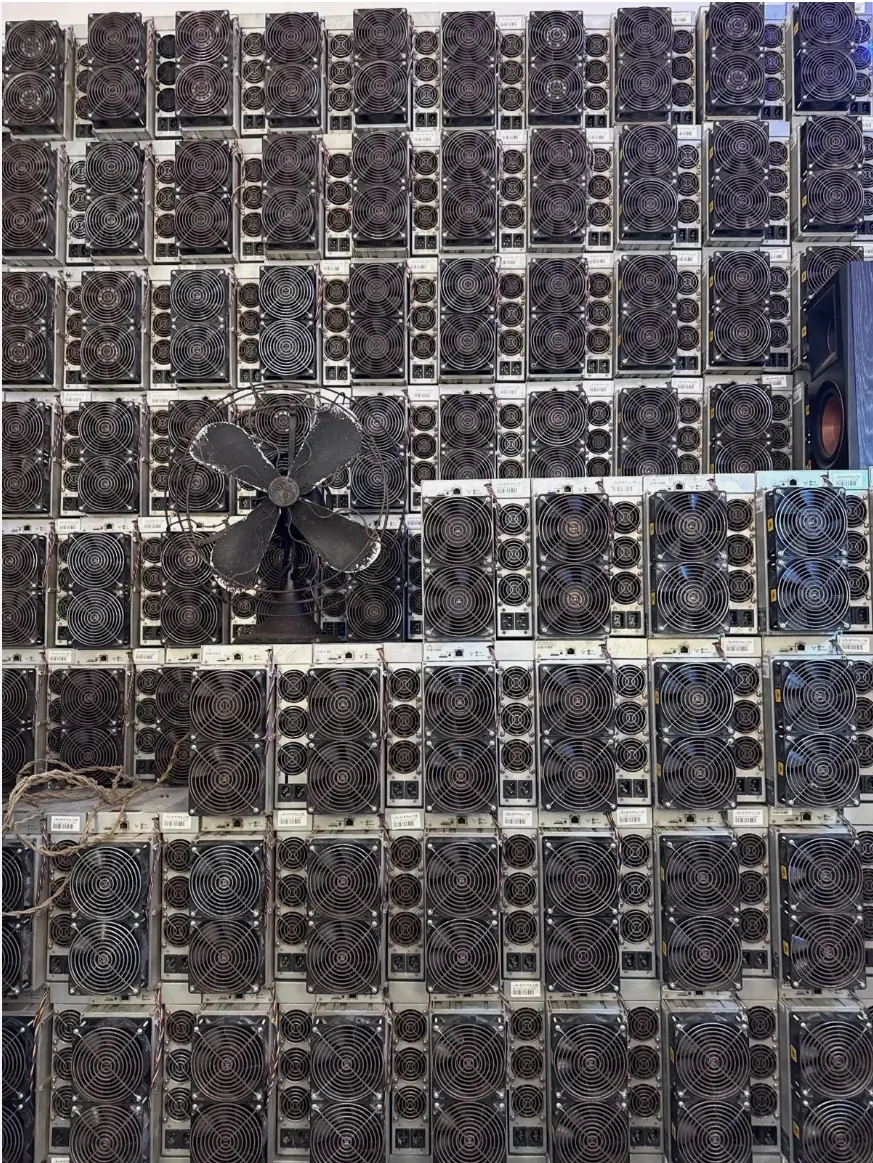
Lot of 10 Refurbished Bitmain Antminer S19 110TH/s Miners – Boosted, Braiins OS
Bulk pricing is by quote.
Tell us the quantity and where it is going and we will price this lot for your site — condition grade, freight, palletising and lead time included. No fixed sticker on a five-figure order that depends on all of the above.
💬 Get a bulk quote on WhatsApp or email ns@ingmining.com · +1 781-363-1595
Lot of 10 refurbished Antminer S19 miners at 110 TH/s on Braiins OS — 1.1 PH/s. Firmware-boosted base S19s rather than factory S19 Pros, so plan on at least 37.6 kW instead of 32.5 kW. Bitmain’s published specs and the four things to have measured before you order.
Key specifications
- Total lot power draw
- at least 37.6 kW, against 32.5 kW sized from stock. Build to the larger figure and confirm by measurement
- Hashrate (per machine)
- 95 TH/s ±5%, SHA-256
- Power draw (per machine)
- 3,250 W ±5%
- Efficiency (per machine)
- 34.2 J/TH by arithmetic (3,250 W ÷ 95 TH/s); Bitmain publishes 34.5 J/TH ±5%
- Input voltage (per machine)
- 200–277 V AC. This is not a 110 V machine and no adapter makes it one
- Noise (per machine)
- ~75 dB from 4 fans
Buying from ING Mining
- PriceQuoted, not listedWe price this on condition, quantity and freight to your address. Call or email for current price and availability.
- FreightQuoted with the unitFreight to your address is confirmed with the price, before you pay — multi-unit and pallet orders included.
- ConditionUsed — second-hand stockThe grade for this unit is on the listing above, and where a listing states no grade it says so.
- GradingGraded before listingThis unit’s own grade is in the description above — where a listing states none, it says so. The six-step bench procedure behind a grade is published in full.
- WarrantyStated per unit, not per storeAny term for this machine is in the description above. Ask for the return terms on this exact unit before you pay — full terms are in the Shipping & buying tab below.
Sold by ING Mining LLC — ING MINING® is a registered U.S. trademark.
Price:
- Condition graded per unit: new, tested working, refurbished or as-is
- Warranty and returns stated per unit, not per store
- Ships UPS Ground within 7 business days
Description
Ten refurbished Antminer S19 units running 110 TH/s each on Braiins OS — 1.1 PH/s in total. The decisive number on this page is not the hashrate, it is the load. These are firmware-boosted base S19s, and an install specified from Bitmain’s 3,250 W figure comes up at least 5 kW short across the lot.
Where the extra 5 kW comes from
No metered figure for these units at 110 TH/s appears in the listing, and inventing one would be worse than useless to anyone sizing a panel. The arithmetic gives a floor you can rely on: at the factory efficiency of 34.2 J/TH, 110 TH/s would demand 3,250 W × (110 ÷ 95) = about 3,763 W. Overclocking pushes efficiency the wrong way, so treat 3,763 W as a minimum and not an estimate. Ten units therefore need at least 37.6 kW where the stock specification suggested 32.5 kW. Heat scales with the same ratio, so budget roughly 15% more extraction than a stock ten would need.
This is a tuned S19, not an S19 Pro
Both reach 110 TH/s and there the similarity ends. Bitmain’s S19 Pro carries 114 chips per hashboard versus 76 on the base S19 and hits 110 TH/s at 3,250 W for 29.5 J/TH. Getting a base S19 to the same hashrate through firmware costs efficiency instead of adding silicon. These are the boosted base machines. Want the factory Pro instead? Tell us before you order and we will confirm the model and board revision in writing.
Antminer S19 (base model) — Bitmain's published specification
| Stock hashrate | 95 TH/s ±5%, SHA-256 |
|---|---|
| Stock power at the wall | 3,250 W ±5% |
| Stock efficiency | 34.2 J/TH by arithmetic (3,250 W ÷ 95 TH/s); Bitmain publishes 34.5 J/TH ±5% |
| Input voltage | 200–277 V AC. This is not a 110 V machine and no adapter makes it one |
| ASIC chip | BM1398BB, 7 nm — 76 chips per hashboard, 228 per machine |
| Noise | ~75 dB from 4 fans |
| Dimensions and weight | 400 × 195.5 × 290 mm bare, 570 × 316 × 430 mm boxed. 14.2 kg net, 16 kg gross per unit — Bitmain’s published S19 specification (model 240-Ca). Freight is billed on the gross weight, not the net |
| Operating temperature | 5–40 °C · Network: Ethernet RJ45 |
| Generation | launched May 2020, so a unit sold today is around six years old |
Ten boosted units, in site terms
| Hashrate | 1,100 TH/s = 1.1 PH/s at the tuned rate |
|---|---|
| Connected load | at least 37.6 kW, against 32.5 kW sized from stock. Build to the larger figure and confirm by measurement |
| Circuits | ten machines at 15.7 A or more each at 240 V, before continuous-load derate. A panel, not a pair of spare breakers |
| Freight | about 142 kg of miners net and about 160 kg gross once boxed (10 × Bitmain’s published 14.2 kg net / 16 kg gross) — palletised |
| Input voltage | 200–277 V AC. Not a 110 V machine at any hashrate |
The four things to have us measure before you order
For a lot this size, useful questions are narrow. One: the metered wall draw per unit at the tuned rate. Two: the pool-side hashrate over a real window, not the self-reported firmware number. Three: the hashboard revision. Four: whether all ten are tuned to the same profile or the lot is mixed, because a mixed lot makes your per-unit power planning guesswork. We will answer all four in writing.
Firmware, stated plainly
Braiins OS tunes chips individually rather than running a board at its weakest chip’s voltage, and near the factory rating that genuinely improves J/TH. Used to exceed the factory rating, as here, it converts efficiency into output. Both statements are true and only the second one applies to this lot. Any listing claiming a boost that simultaneously reduces consumption is describing a machine that does not exist.
What’s in the box
The listing states no PSU inclusion, no condition grade and no warranty term, so this page asserts none of the three. Get all of them in writing before ordering: whether supplies and cords ship with the miners, what the refurbishment consisted of, and what happens if a unit arrives dead. We will confirm each in writing on request.
Who should buy this
Operators buying hashrate density on cheap power, with the panel capacity to feed it. On expensive power the stock 95 TH/s lots earn more per dollar of electricity — fewer terahashes, better J/TH, smaller bill.
Questions buyers ask about this lot
Will this run on a normal household outlet?
No. This lot needs a dedicated 200–277 V circuit. A North American 120 V household outlet will not run it under any adapter or configuration. Have an electrician confirm the supply before the pallet arrives.
How loud is it?
~75 dB from 4 fans — about as loud as a household vacuum cleaner running continuously, and it does not stop. This is a garage, workshop, outbuilding or hosted-facility machine, not something to put in a room where people live or sleep.
What condition is it in, and what does that grade mean?
This is second-hand stock. We describe it the way we found it: tested working means it ran on our bench at the stated hashrate, refurbished means it was also cleaned, re-pasted or had parts replaced, and as-is means it is sold without a working claim. The grade for this unit is stated in the description above; where a listing states no grade, it says so rather than implying one. Cosmetic wear — dust, scratches, label marks — is normal on hardware that has been mining and is not a fault.
What should I check the day it arrives?
Photograph the pallet or box before you open it, keep the packaging, and run the 48-hour acceptance test straight away. Freight claim windows are short, and a fault found on day two is a conversation while a fault found on day thirty is an argument. Our own six-step bench procedure is published in full, so you can repeat exactly what we did.
Shipping cost for this exact item, and how warranty and returns work here, are answered in the Shipping & buying tab on this page. Anything else, ask a person on +1 (781) 577-0377 or ns@ingmining.com — we would rather talk before you buy.
The four things to have measured before ten boosted machines ship
These are base S19s tuned up to 110 TH/s, and the tuning is exactly why you want measurements rather than a datasheet. A 200 W per-machine error is 2 kW across ten, which is survivable; the same mistake at a hundred is 20 kW and the difference between a service that carries the site and one that trips. Ten machines is the size at which being wrong is still cheap, so this is the order to build the habit on.
Four questions, and they belong in the written quote rather than in a phone call. The measured wall draw of these machines at the firmware they ship on. Whether power supplies and cords are included, in writing, for this lot specifically. The dead-on-arrival window, the remedy and who pays return freight, as three separate answers rather than one word. And the board revision read off the BHB silkscreen rather than the model name — ordering parts by model name is the single most common mistake we see, because one nominal family covers several incompatible boards.
The longer version of that list is deliberately split in two, because the hardware questions and the seller questions are different jobs: the fleet-scale hardware list is on used ASIC miner fleet economics and the counterparty list is a guide of its own. Run both, and run both on us. A seller who resents the questions has told you something worth knowing before the money moves.
Related hardware and where this sits in the store
Other fleet lots and single units from the same family:
- Lot of 100 Refurbished Bitmain Antminer S19 110TH/s Miners – Boosted, Braiins OS
- Lot of 5 Refurbished Bitmain Antminer S19 110TH/s Miners – Boosted, Braiins OS
- Lot of 20 Refurbished Bitmain Antminer S19 110TH/s Miners – Boosted, VNish OS
Categories: Bitmain Antminer, Bitcoin miner, Used ASIC miners and Air Cooling.
This lot is listed at 110 TH/s on Braiins firmware, which is a boosted 95 TH/s machine rather than a factory S19 Pro — a distinction that changes both the efficiency and the breaker sizing. The used-miner buying guide explains the difference and what to ask us to measure.
Delivery day on a lot this size is its own procedure — what to write on the freight receipt before you sign, reconciling the count and the serial numbers, why the machines come up in groups rather than together, and how to sort the ones that do not: receiving a used miner lot.
Where this listing sits
This one is on the used and refurbished shelf. It is second-hand hardware. The grade for this specific unit is stated in the description on this page — and where a listing states no grade, it says so rather than implying one.
What our grades mean
These are the only words we use, and each one means a specific thing. They are not interchangeable and we do not soften them to move stock.
| New | Unused stock. Factory sealed unless the listing says otherwise — “new, open box” means exactly that, and the listing will say it. |
|---|---|
| Tested working | Second-hand, and it ran on our bench at the hashrate the listing states. We measured it; we are not repeating what the last owner told us. Expect cosmetic wear. |
| Refurbished | Tested working, plus work done: cleaned, thermal paste and fans dealt with, failed components replaced. The listing says what was actually done to that unit rather than using the word as decoration. |
| As-is / for parts | Sold with no working claim at all, at a price that reflects it. Buy these to repair or to harvest. If a listing says as-is, assume it does not hash until you have proved otherwise. |
| Untested | We have it, we have not powered it, and we are not going to pretend we did. Rarer than as-is and always stated explicitly. |
What a grade here does not mean
- Cosmetic wear is not a fault. Dust, scratches, scuffed labels and discoloured plastics are normal on hardware that has been earning. We photograph what we have; if the pictures matter to you, ask for more and we will take them.
- A grade is not a warranty. Warranty terms are stated per listing, never per store — see the Shipping & buying tab. A tested-working grade describes what the machine did on our bench, not what we owe you in six months.
- A boosted hashrate is not a spec. Where a unit ships on tuned firmware we say so and we give the factory figures too, because overclocking raises power faster than it raises hashrate — a tuned machine is less efficient per terahash than stock, not more.
- We will not invent a grade to fill a field. If a unit came in without history and has not been through the bench, its listing says that.
How the grade gets decided
A used-hardware seller who will not tell you how they test is asking you to take the grade on trust. Ours is published: the six-step bench procedure every machine goes through, and the five measurements that get recorded — per-board hashrate, chip count, measured wall power rather than the nameplate figure, hardware error rate, and temperature under sustained load. When it reaches you, run the 48-hour acceptance test straight away, while the freight claim window is still open.
Buying second-hand for the first time? How to buy a used ASIC miner without getting burned is the long version, written from the repair bench rather than from a spec sheet.
Shipping
This listing is quoted rather than priced, and freight is quoted with it. Tell us where it is going and we will confirm the shipping cost to that address with the price, before you pay — on a multi-unit or pallet order that is the only honest way to do it.
Outside the United States the checkout quotes a flat international rate. On multi-unit or pallet orders, contact us before ordering so freight to your destination can be confirmed properly. What to check when the pallet arrives, and how a freight claim works, is covered in the mining hardware shipping guide.
What to do the day it arrives
Photograph the pallet or the box before you open it, and keep the packaging until you are satisfied. Freight claim windows are short, and damage found on day two is a conversation while damage found on day thirty is an argument.
Then run the 48-hour acceptance test straight away, while that window is still open. It is the same ground our own bench covers, so you can compare like for like: how the grade on this listing was arrived at, and the five measurements we record, are set out in the Condition & grading tab on this page.
Condition, warranty and returns
Condition: Used — second-hand stock. The grade for this unit is on the listing above, and where a listing states no grade it says so.
Warranty is stated per listing, not across the catalogue. Some units carry a manufacturer term and say so above, naming the term and the date it runs from. Many units, particularly used and AS-IS stock, carry none, and those listings do not claim one. There is no blanket warranty covering a catalogue that runs from sealed factory stock to a hashboard sold for parts. For what a mining warranty normally covers, see ASIC miner warranty explained.
Returns: ask for the terms on this unit before you pay. No single returns window is published for the whole store, because the sensible terms on a tested working machine and on a board sold AS-IS for parts are not the same terms. Email or call and ask what applies to this exact item — it is a two-minute conversation and a great deal cheaper than a dispute.
Where you are going to run it
Two questions decide whether a machine like this works where you live, and neither of them is about the miner: can the circuit carry it, and what does your electricity cost? Most full-size machines here want a dedicated 240 V circuit and run at 70–75 dB continuously. A few do not — the Avalon Q publishes 45–65 dB and runs on 110–240 V — so read the voltage and noise figures on this listing rather than assuming. ASIC miner power requirements covers breaker sizing and what the install actually involves; cooling covers where the heat and the noise end up.
If your power is not genuinely cheap, hosting is the question to be asking instead of which miner to buy. Break-even electricity rate is hashprice divided by (24 × J/TH), and hashrate cancels out of it entirely — which is why a cheap old machine on expensive power loses money faster than an expensive new one does. The buying guide has the arithmetic; work out your own number before you buy anything.
If hosting is the answer, get written answers on three things before you sign: who pays for repairs, what the uptime commitment actually pays out when it is missed, and how curtailment is handled. A flat per-machine monthly rate is where most of the unpleasant surprises live. Types of mining farm compares the models and hosting versus cloud mining covers why owning the hardware is the better end of that trade. Ask us before you commit — it is a five-minute call and a great deal cheaper than a contract you cannot get out of.
What we do once it is racked, wherever that is. Deployment, firmware and monitoring are a service we run rather than a line on a page: pool and network setup, Braiins OS or VNish tuning, offline alerts, and board-level fault-finding when a machine stops hashing — ASIC mining consulting sets out what that covers. The hosting agreement itself is between you and the facility. What we can give you is the number most hosting disputes turn on: what this machine measured at the wall on our bench, so a shortfall on site is a figure to compare against rather than an argument about what it should have been doing.
Who you are buying from
ING Mining LLC, Hanson, Massachusetts. ING MINING® is a registered U.S. trademark; our marketplace feedback is on the reviews page and the longer version of who we are is on about. Reach a person on +1 (781) 577-0377 or ns@ingmining.com.
Our Related Products
Related products
-
Add to WishlistAdd to Wishlist
-
Add to WishlistAdd to Wishlist
-
Add to WishlistAdd to Wishlist
-
Add to WishlistAdd to Wishlist