
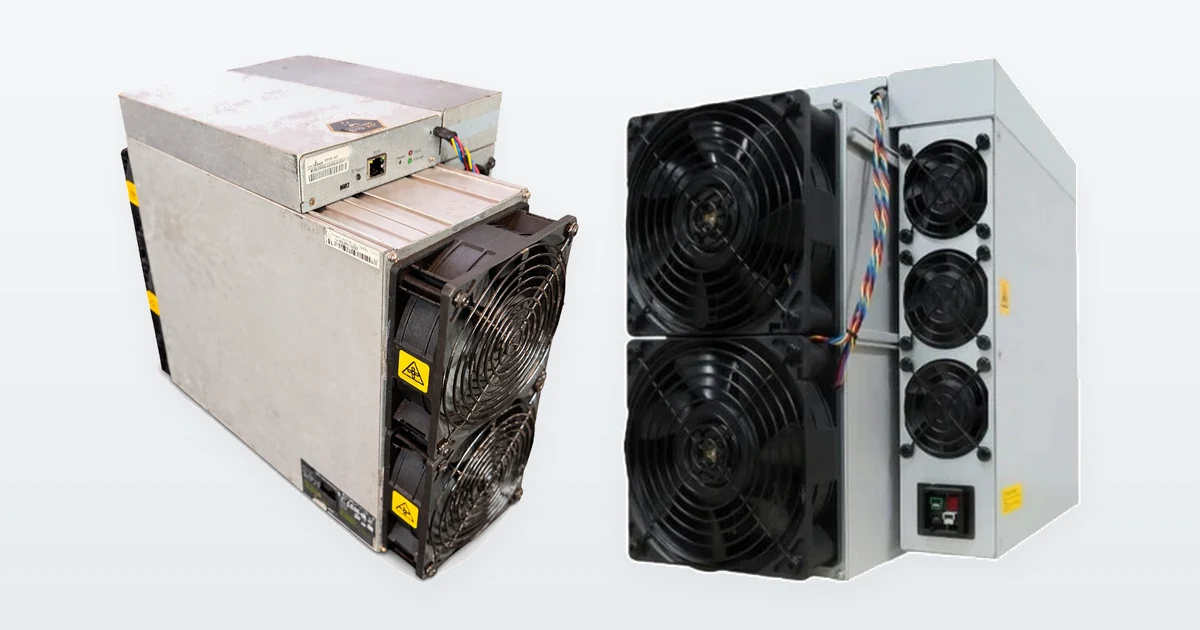
An ASIC miner is a machine whose job was decided before it was
boxed. The silicon does one algorithm, at one efficiency, and no firmware,
tuning or repair changes any of that. That is where the efficiency comes from,
and it is also the part nobody prices: buying one commits you to
one algorithm, one parts channel and one resale market, and
none of the three is reversible. This page puts a number on each commitment off
our own shelf, so you can decide whether you want to make it — especially
if you are about to make it fifty times over in a single lot.
If what you want is the ASIC-versus-GPU argument on the numbers, that is a
different page and it is settled: ASIC vs GPU
mining, and which actually pays.
The commitment is made in the fab, not in your rack
Inside a Bitcoin miner there is no general-purpose processor doing mining as
one of its jobs. There is a hashboard carrying dozens of identical chips that
can compute one hash function and nothing else. A used Antminer
S19 95TH/s carries 228 of them — three boards of 76 BM1398BB chips,
7 nm. The S19 XP
uses BM1366AL; the S21 Pro 245T
and the desk-sized NerdQAxe++
both run BM1370, which is why a 4.8 TH/s hobby board and a 245 TH/s
production machine sit at roughly the same J/TH.
Two consequences follow, and they are the whole page. The chip decides the
algorithm, so the machine cannot be pointed at a different one. And the chip
decides the efficiency, so the machine cannot be tuned into a newer generation.
Everything else — firmware, cooling, the PSU, your electrician —
moves the answer by single-digit percentages around a number that was fixed at
the foundry.
Commitment one: one algorithm, and chains do end
The clearest illustration of this is sitting on our own parts shelf. We stock
a Bitmain
Antminer E9 / E9 Pro hashboard test fixture at $599.99 — a diagnostic
rig for a machine built to mine Ethash. Ethereum moved to proof of stake on
15 September 2022 and stopped being mineable on any hardware at all. Every
E9 ever sold became, that day, a very heavy object with a working fan. Ethereum
Classic still uses Ethash and absorbed some of them, at a fraction of the
revenue. Nothing about those machines was faulty. Their chain simply left.
So the question to ask about an algorithm is not what it pays this week. It
is how likely it is to still be there, on the same proof of work, when the
machine has finished paying for itself. Ranked by that, and by what we actually
sell against:
| Algorithm | What we stock for it | How settled the commitment is |
|---|---|---|
| SHA-256 (Bitcoin, Bitcoin Cash) | S19 family, S21 Pro and S21+ 216T, SealMiner, Avalon Q | Seventeen years, the deepest used and parts market of any algorithm. The safest bet available, and the reason most of this catalogue is SHA-256. |
| Scrypt (Litecoin + Dogecoin, merged) | Antminer L7, L9, L11; ElphaPex DG; Fluminer | A decade of merged mining, with about nine-tenths of the revenue coming from Dogecoin rather than Litecoin. Two chains have to fail, not one. |
| kHeavyHash (Kaspa) | Used Antminer KS5 Pro 21TH/s, $329.99; IceRiver KS7 | The chain works, but the block reward decays roughly 5.6% every month by design. The machine is fine; the revenue schedule is the risk. |
| Eaglesong (CKB), X11 (Dash), SHA3x | Antminer K7, D9; Goldshell XT Box | Small chains with thin hardware markets. Resale is whoever else already owns one. |
| zkSNARK proving (Aleo), InitVerse | IceRiver AE3, $7,999.99; Goldshell AE-BOX II; Pinecone INI Box | Newest and least settled. Published prover throughput figures for Aleo hardware disagree by a factor of six depending on the source, so we quote the manufacturer figure and say plainly that it is unverified. |
This is also why comparing efficiency across algorithms is meaningless.
A KS5 Pro does 21 TH/s on kHeavyHash at 3,150 W —
150 J/TH. An Antminer
L9 16G does 16 GH/s on Scrypt at 3,360 W —
210 J/GH. Beside a 14.9 J/TH Bitcoin miner the Kaspa
machine looks ten times worse and it is not: different algorithms have different
difficulty, different rewards and different coin prices. J/TH only
compares machines running the same algorithm. Which chain you are
buying into is decided first, and it decides which machines are even comparable
— the detail is in what a mining
algorithm decides when you buy an ASIC and, for the chains themselves, altcoin mining
risks: algorithm changes and dead chains.
Commitment two: one parts channel
A hashboard is not a generic component. It has to match the chip family and
usually the board revision, which means the day a board fails you are shopping
in exactly one market: other people who own the same machine. Whether that
market exists is a purchase decision, and it is worth more than most of the spec
sheet.
What that looks like when the market does exist — every one of
these is current stock, priced against a whole $159.99 used S19:
- Tested
S19 Pro 95TH/s hashboard — $59.99, against $159.99 for the entire
machine. One dead board out of three is a $60 repair, not a write-off. - S19
XP Pro hashboard, as-is for parts — $24.99. - Tested
Antminer control board — $59.99, and a dual
fan assembly — $24.99. - Five
BM1368AA chips — $55.00, if you have a bench and a fixture.
That is the real reason a six-year-old S19 is still a defensible purchase and
a rarer machine of the same age is not. It is not that the S19 is good; it is
that the S19 is reparable, indefinitely, cheaply, by anyone. Match the
part to the machine before you order it — the traps are in the Antminer parts
compatibility guide — and see why mining hardware
fails for what actually breaks and in what order.
Commitment three: one resale market, priced by efficiency and not by age
When you are done with the machine, what it fetches is not set by how old it
is or how well you looked after it. It is set by the electricity price at which
it stops earning, because that decides how many people are still able to run it.
Our own shelf on 16 August 2026, sorted by efficiency:
| Machine | Efficiency | Break-even power price | Price | $ per TH/s |
|---|---|---|---|---|
| Antminer S21 Pro 245T (new) | 15.0 J/TH | 8.7¢/kWh | $4,200 | $17.14 |
| Canaan Avalon Q 90T (new) | 18.6 J/TH | 7.0¢/kWh | $1,999 | $22.21 |
| Antminer S19 XP 141T (refurbished) | 21.35 J/TH | 6.1¢/kWh | $699.99 | $4.96 |
| Antminer S19k Pro 115T (used) | 23.0 J/TH | 5.7¢/kWh | $379.99 | $3.30 |
| Antminer S19 95T (used) | 34.2 J/TH | 3.8¢/kWh | $159.99 | $1.68 |
Read the last two columns together. The S19 is a tenth of the price per
terahash of the S21 Pro, and it dies at 3.8¢ where the S21 Pro survives to
8.7¢. That gap is the entire used-hardware trade, and it is why price
tracks the efficiency column and not the year of manufacture. The rest of the used shelf reads the same way, including the two other S19-family bins — a refurbished 95TH/s boosted to 105 and a 120TH/s S19k Pro on a VNish tune, both of which move on efficiency rather than on age. The
depreciation
and US tax page works the curve properly.
The Avalon Q is the deliberate exception in that table: at $22.21 per
terahash it is the most expensive hashrate on this list, because what you are
buying is 45–65 dB and a plug that fits a normal outlet rather than
cheap terahash. That is a legitimate reason to overpay, and it is the only one
on the list.
For context, the US residential average is 18.44¢/kWh
(EIA, May 2026, the latest month published). Nothing in that table clears it.
Mining at a residential rate loses money on every machine we sell, which is a
sentence most hardware sellers will not write down.
What actually differentiates two ASICs
Once the algorithm is fixed, only four things separate one machine from
another, and only the first two survive contact with a spreadsheet:
- Efficiency (J/TH). The only spec that compounds. It sets
your break-even power price and therefore whether the machine is an asset or a
liability — each of those terms is defined in mining profitability metrics. - Purchase price against remaining life. A cheap old machine
and an expensive new one are opposite ends of one trade — the table above
is that trade, in two columns. - Voltage and noise. Not performance specs, but they decide
whether the machine can physically go where you intend to put it. Most Bitcoin
ASICs need 200–277 V and run near 75 dB; the exceptions are
home-class units like the Avalon Q. What that means in a house is in ASIC mining at home. - Parts availability. Covered above, and worth more than
whichever of two machines is 3% faster.
Raw hashrate is not on that list, deliberately. Hashrate tells you the size
of the machine and nothing about whether it earns.
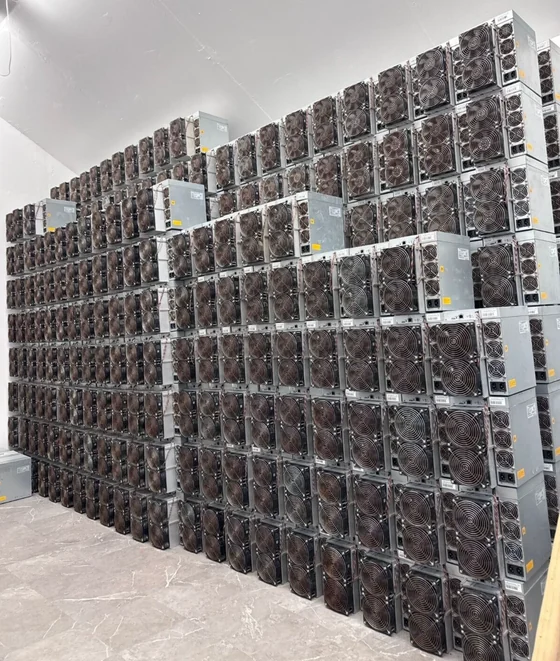
What changes when you buy fifty of them
Everything above concentrates. A lot of fifty identical machines is fifty
copies of the same commitment: one algorithm, one board revision, one PSU model,
one firmware image. That cuts both ways and the direction is worth being
explicit about.
In your favour: one spares kit covers the whole fleet, one bench procedure
tests every unit, and one failure teaches you about forty-nine other machines — which is most of what cutting the cost of running ASIC miners is about at fleet scale.
Mixed lots are the opposite — every board revision you own is another
spare you have to stock, which is manageable at ten machines and a real overhead
at three hundred.
Against you: there is no diversification left. If that algorithm’s revenue
halves, it halves fifty times on the same day, and the resale market you would
sell into is made of people who just watched the same thing happen. The
mitigation is not to buy a mixed lot — it is to buy the algorithm you
believe survives, at a landed cost per working unit low enough that a bad year
does not end the position. That arithmetic, including freight and a dead-on-
arrival allowance, is worked through in does a lot of used
miners pay for itself.
Four things to establish in writing before money moves on any lot, all of
which follow directly from the three commitments above: the exact model and
board revision spread across the units, which firmware they arrive on, which
PSU model is included, and whether spares come with the lot or have to be
sourced separately. What the grade
words actually mean and how to buy a used
ASIC miner without getting burned cover the rest. Our own lots are
quote-only, so tell us the algorithm, the count and the power price you are
working to and we will price it against what is actually on the floor.
Frequently Asked Questions
Can an ASIC miner be switched to a different coin?
Only to another coin using the same algorithm. A SHA-256 machine can mine
Bitcoin or Bitcoin Cash and nothing else; a Scrypt machine mines Litecoin and
Dogecoin together. Switching algorithms is not a firmware option, because the
hash function is built into the chip. Anything advertised as switching between
unrelated algorithms is a GPU rig, not an ASIC.
What happens to an ASIC if its chain dies or moves off proof of work?
It stops earning and there is no fallback use. Ethereum’s move to proof of
stake on 15 September 2022 is the worked example: every Ethash ASIC lost its
chain overnight, with only Ethereum Classic left to absorb some of them at much
lower revenue. This is the single largest risk in owning specialised mining
hardware, and it is why algorithm choice matters more than any spec on the
sheet.
Why can’t I compare J/TH between machines on different algorithms?
Because a terahash of kHeavyHash and a terahash of SHA-256 earn completely
different amounts. A KS5 Pro at 150 J/TH is not ten times worse than a 14.9 J/TH
Bitcoin miner — the two numbers are in different units of value. Compare
efficiency only within one algorithm, and compare across algorithms using
revenue per day against power cost per day.
Does buying fifty of one model reduce risk or concentrate it?
Operationally it reduces it: one spares kit, one test procedure, one firmware
image across the fleet. Commercially it concentrates it, because every unit is
exposed to the same algorithm, the same revenue schedule and the same resale
market. Manage that with landed cost per working unit rather than with model
variety — a mixed lot multiplies your spares problem without reducing your
exposure to the hardware market as a whole.
More on what you are buying
- ASIC vs GPU Mining: Which Actually Pays
- Mining Rig Parts: What Each Component Actually Does
- What a Mining Algorithm Decides When You Buy an ASIC
- How to Choose an ASIC Miner: A Five-Step Checklist
The machines these numbers get run against
The machines these numbers actually get run against:
- IceRiver AE3 2 GH/s Aleo Miner – 3,400W zkSNARK Prover
- Pinecone INI Box 850M – 850 MH/s InitVerse Miner, 480W, No PSU
- Bitmain Antminer S19K Pro 120T – Efficient Bitcoin Miner
More in Bitcoin miner, or the full ASIC miner inventory. The arithmetic behind all of this — break-even electricity price from J/TH — is set out in our ASIC miner buying guide.