
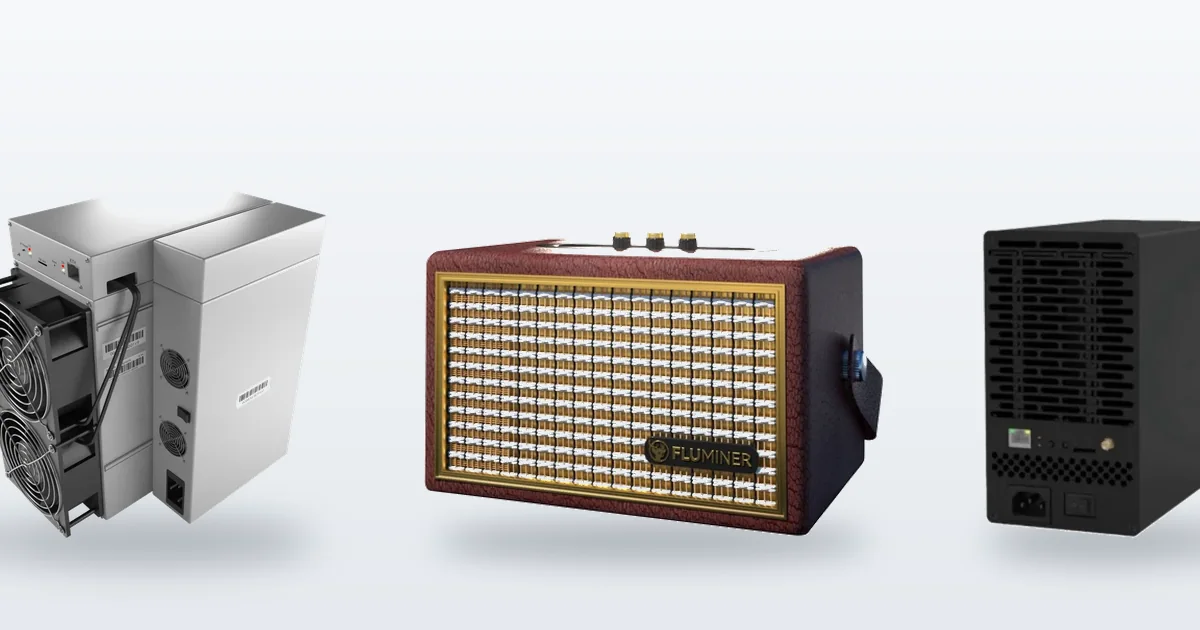
The mining algorithm is the one specification you can never change after the purchase. An ASIC is fabricated for a single algorithm; it cannot be reprogrammed, reflashed or repurposed onto another one, so choosing SHA-256 hardware is choosing Bitcoin for that machine’s entire working life. Everything else — firmware, pool, even the power supply — is reversible. This is not.
So the practical question is not which algorithm is most profitable this week. It is which algorithm still has hardware you can buy, parts you can get and a resale market you can exit through in three years. Below: what the major algorithms are, what hardware each one binds you to, and the switching mistakes that strand equipment.
Defining Mining Algorithms and Common Myths
A mining algorithm is the mathematical ruleset that governs how computational work gets performed to validate blockchain transactions and create new blocks. Think of it as the instruction manual your ASIC miner follows when solving cryptographic puzzles. Different blockchains use different algorithms because each one balances security, scalability, and decentralization differently. When you’re running miners, understanding what algorithm you’re actually hashing against determines everything about your hardware compatibility, power consumption, and profitability. Mining algorithms impact security, scalability, and decentralization in ways that directly affect your operational strategy and long-term returns.
Here’s where confusion usually starts. Many operators conflate mining algorithms with hash functions, or they assume that because one ASIC performs well on SHA-256, it will automatically perform well on any other algorithm. That’s not how it works in reality. An algorithm dictates the computational task miners must complete to find valid hashes. A hash function is the cryptographic tool used within that algorithm. They’re related but distinct. You might also hear operators claim that more compute power always equals better efficiency, but that’s oversimplified. Efficiency depends on how well your specific hardware matches the algorithm’s requirements, your cooling setup, your electrical costs in your region, and dozens of operational factors. A Bitmain miner might be legitimately powerful, but if you’re mining in an area with expensive electricity and poor cooling infrastructure, that raw hashpower doesn’t translate to profitability. Another common myth suggests that mining algorithms are static and unchanging. Wrong. Cryptocurrencies periodically upgrade their algorithms to address security vulnerabilities, adjust difficulty, or improve performance. Bitcoin’s algorithm has remained SHA-256, but the network adjusts difficulty every 2016 blocks based on average block time. Other projects make more substantial algorithm changes. This directly affects your bottom line because difficulty adjustments can shift your expected daily revenue within weeks.
Some operators believe that choosing an algorithm is like picking a lottery ticket based on current profitability rankings. You’ll hear conversations like “SHA-256 is paying well this month, so let’s switch to that.” The reality is more nuanced. Switching algorithms requires different hardware entirely. You can’t reprogram an Antminer S19 Pro to mine Scrypt or Ethash. You either own the hardware for that algorithm or you don’t. Strategic algorithm selection happens at the purchasing stage when you decide which ASICs to source and deploy. Understanding algorithm differences before you buy equipment saves you from expensive mistakes down the line. A common misconception among newer operators is that all mining algorithms require identical electrical infrastructure. Different algorithms create different computational demands. SHA-256 mining on Bitcoin tends to generate consistent, predictable load patterns. Proof-of-Work algorithms with memory-hard requirements might spike your power consumption differently. Your facility’s power delivery, cooling capacity, and electrical costs must align with the algorithm you’ve chosen, not the other way around. And yes, I’ve learned this the hard way after watching operations struggle with inadequate cooling when they scaled up Scrypt or memory-intensive miners without upgrading their HVAC systems.
Before purchasing any ASIC miner, research the algorithm’s current difficulty, network hash rate trends over the past 90 days, and your local electricity cost per kilowatt hour. Run these numbers against the miner’s published hash rate and power consumption specifications to calculate realistic weekly revenue. This prevents you from buying equipment optimized for an algorithm where difficulty has climbed faster than profitability can sustain.
Major Types of Cryptocurrency Mining Algorithms
SHA-256 is the foundational algorithm behind Bitcoin and remains the most widely deployed mining algorithm globally. It takes input data and produces a fixed-length 256-bit hash output. Your ASIC miner runs this algorithm repeatedly, adjusting a nonce value until the hash meets the network’s difficulty target. SHA-256 is computationally intensive but straightforward, making it ideal for purpose-built hardware. Miners like the Antminer S19 Pro and S21 Pro are optimized specifically for SHA-256, delivering hashrates in the terahash range. Because SHA-256 has dominated mining for over a decade, the competitive landscape is mature. You’ll find abundant supply of used and refurbished equipment, which can significantly reduce your capital expenditure if you’re sourcing from reputable vendors like ING Mining. Scrypt powers Litecoin and Dogecoin and differs fundamentally from SHA-256 in its memory requirements. Scrypt algorithms demand substantial RAM during computation, which makes them resistant to ASIC domination in their early years. However, specialized Scrypt ASICs eventually emerged, creating a two-tier market of older GPU-friendly equipment and newer ASIC-specific miners. If you’re considering Scrypt mining, understand that the hardware is less abundant than SHA-256 equipment, and your options for sourcing reliable used units are more limited. Equihash is used by Zcash and relies on a different cryptographic approach involving the Generalized Birthday Problem. It’s memory-intensive and was designed to resist ASIC implementation, though ASIC manufacturers have since developed competitive hardware. Equihash mining requires different cooling and power delivery considerations than SHA-256 because the computational load pattern differs.
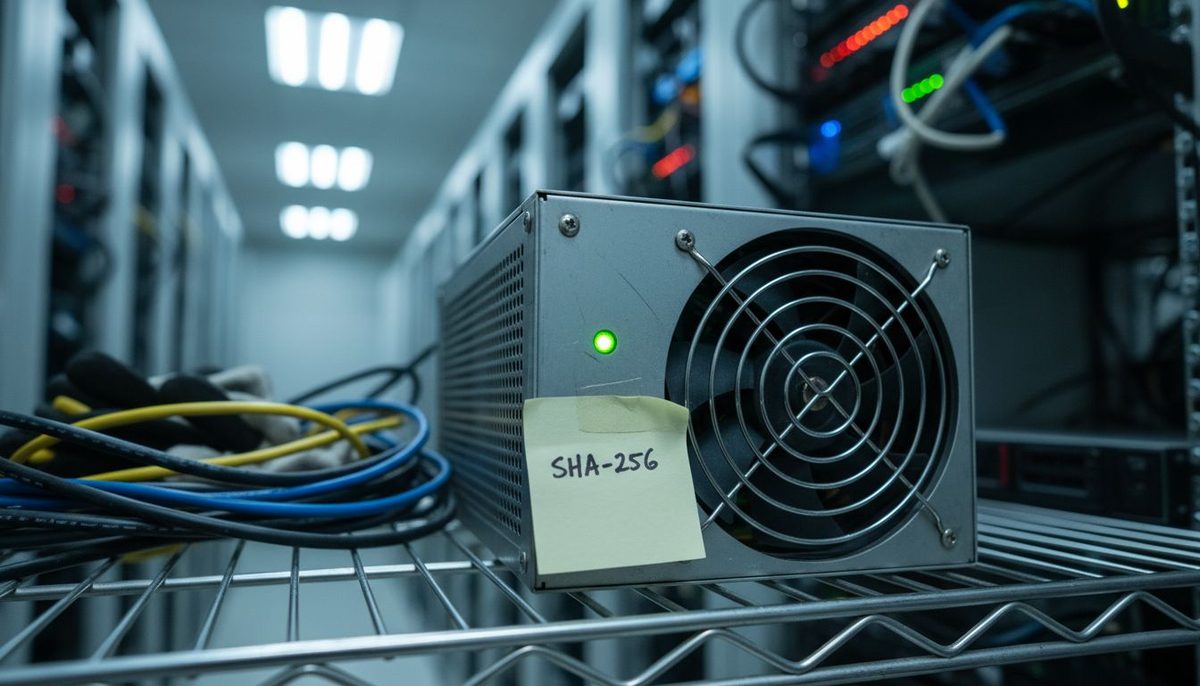
Ethash, originally used by Ethereum before its transition to proof-of-stake in September 2022, deserves attention because it shaped GPU mining culture and equipment availability. Ethash required substantial GPU memory (4GB minimum, 6GB practical), which meant consumer graphics cards remained competitive longer than on other algorithms. Now that Ethereum no longer uses Ethash, the algorithm has migrated to other chains like Ethereum Classic. Common cryptocurrency mining algorithms each present distinct hardware and efficiency tradeoffs that directly impact your purchasing decisions and operational costs. RandomX powers Monero and stands apart because it was specifically designed to be CPU-mineable and resist ASIC manufacturing. RandomX uses complex memory access patterns and instructions that don’t translate well to specialized hardware, preserving decentralization by keeping mining accessible to ordinary computers. If you’re mining Monero, you could theoretically use server-grade CPUs or even refurbished enterprise processors, which opens different sourcing opportunities than traditional ASIC markets. However, CPU mining generates significantly lower absolute hashrates, so profitability depends heavily on electricity costs and hardware acquisition expenses.
Understanding these algorithm types matters operationally because each one dictates your hardware ecosystem, capital requirements, and facility constraints. SHA-256 mining demands the most raw electrical power but offers the most mature used equipment market and predictable difficulty adjustments. Scrypt and Equihash occupy middle ground with moderate hardware availability. RandomX represents the most accessible entry point in terms of capital expenditure but sacrifices hashrate. Your facility’s electrical capacity, cooling infrastructure, and local electricity rates must align with the algorithm you’ve chosen. A data center built for SHA-256 mining with high-amperage power delivery and industrial cooling systems might not be optimal for RandomX CPU mining. Conversely, a small facility with limited power infrastructure might find Scrypt or CPU mining more manageable than scaling to SHA-256 ASICs. When evaluating algorithm selection, research the current network hashrate, difficulty adjustment schedule, and block reward structure for each candidate chain. These factors determine your expected daily revenue. Some operators chase profitability spikes by switching algorithms, but that only works if you already own hardware for multiple algorithms. Most operations succeed by selecting one algorithm that matches their infrastructure and committing to optimization within that niche.
Before committing to any algorithm, map out your facility’s electrical service specifications, available cooling capacity, and monthly electricity cost per kilowatt hour. Cross reference these against the power consumption and hashrate specs of equipment available in that algorithm’s market. Calculate your payback period (hardware cost divided by weekly revenue) realistically. If the payback exceeds 18 months under current conditions, the algorithm likely isn’t suited to your operation at this stage.
Here’s a summary of key mining algorithm types and their operational implications:
| Algorithm | Hardware Used | Main Hardware Challenge | Typical Efficiency | Decentralization Impact |
|---|---|---|---|---|
| SHA-256 | ASICs | High electricity demand | Very efficient | Promotes centralization |
| Scrypt | ASICs, GPUs | Significant cooling needs | Moderate | Some decentralization |
| Equihash | ASICs, GPUs | Memory bandwidth limits | Moderate | Some decentralization |
| Ethash | GPUs | High GPU RAM requirement | Lower than ASICs | Higher decentralization |
| RandomX | CPUs | Low hashrate, electricity cost | Least efficient | Maximum decentralization |
Two chains sharing an algorithm is also what makes merged mining possible. How multi-coin mining actually works sets out the difference between earning two rewards from one piece of work and a pool that simply keeps repointing your hashrate at whatever pays best this hour.
Hardware Compatibility: ASICs, GPUs, CPUs
ASICs (Application-Specific Integrated Circuits) are purpose-built mining machines designed to solve one specific algorithm with maximum efficiency. When you buy an Antminer S19 Pro, you’re buying hardware engineered exclusively for SHA-256. That specificity is both its greatest strength and its primary limitation. An ASIC cannot switch algorithms. You cannot reprogram it. You cannot update its firmware to mine Scrypt one month and Equihash the next. This means your hardware capital is tied directly to one blockchain’s long-term viability. On the positive side, ASICs deliver unmatched hashrate per watt of electricity consumed. A single S19 Pro generates roughly 110 terahashes per second while consuming around 3,250 watts, or 29.5 joules per terahash. No GPU or CPU can match that efficiency ratio. This is why serious operations deploying significant capital choose ASICs for SHA-256 mining. The tradeoff is that your equipment depreciates rapidly as network difficulty climbs and newer ASIC models enter the market. You’re also competing against large industrial operations with cheaper electricity costs, which constrains profitability for smaller players operating in high-electricity regions. GPUs (Graphics Processing Units) offer flexibility that ASICs cannot provide. A modern GPU like an Nvidia RTX 4090 can theoretically mine multiple different algorithms by switching software. In practice, GPU mining is less common today than it was during the Ethereum Ethash era because most profitable chains have either moved to proof-of-stake (like Ethereum) or established ASIC monopolies. However, certain algorithms designed to be ASIC-resistant maintain GPU competitiveness to preserve network decentralization and prevent hardware monopolization. GPU mining generates lower absolute hashrates than ASICs but consumes less electricity per unit of hashpower than CPUs. A GPU miner might generate several hundred megahashes per second on an ASIC-resistant algorithm while drawing 300 to 450 watts.
CPUs (Central Processing Units) represent the most accessible entry point for new miners but deliver the slowest hashrates and lowest profitability. Mining on a standard server processor or even a consumer-grade CPU is technically possible on algorithms like RandomX (Monero), but you’re generating hashrates measured in kiloherashes or perhaps low megahashes per second. The advantage is that CPU mining requires minimal specialized capital. You can source refurbished enterprise server CPUs at reasonable prices, set up mining software, and begin generating revenue immediately, albeit in tiny increments. For home miners in high-electricity-cost regions, CPU mining might be the only algorithm where electricity costs don’t completely exceed expected revenue. Your operational decision tree should start with algorithm selection, then work backward to compatible hardware. If you commit to SHA-256 Bitcoin mining, ASICs are mandatory. No GPU or CPU can compete on that algorithm anymore. If you’re exploring ASIC-resistant algorithms, GPU and CPU options remain viable but require realistic expectations about hashrate and profitability. Understanding your facility’s constraints matters enormously. An ASIC SHA-256 setup requires robust electrical infrastructure, industrial cooling capacity, and noise tolerance. A GPU mining rig demands less power and cooling but still needs adequate ventilation and power delivery. CPU mining requires minimal infrastructure, making it suitable for small home setups or operations with limited electrical service. The centralization versus decentralization tradeoff also matters philosophically and strategically. Mining exclusively on ASIC algorithms consolidates power to operators with abundant capital and cheap electricity. ASIC-resistant algorithms preserve competitive opportunity for smaller miners with GPUs or CPUs. From a pure profitability standpoint, larger ASICs deployed at scale in low-electricity regions typically win. But if you’re a mid-sized operator in a standard commercial location, GPU mining on ASIC-resistant chains might deliver more sustainable returns than competing on ASIC algorithms where you face insurmountable cost disadvantages.
Before purchasing any hardware, research the specific algorithm’s current network hashrate and trace its trajectory over the past six months. If difficulty is climbing faster than your potential equipment’s hashrate improvements, you’re entering a declining profitability environment. Cross-reference three separate profitability calculators using realistic assumptions about your hardware, electricity costs, and a worst-case 10 percent monthly difficulty increase. If your equipment doesn’t pay for itself within 14 to 18 months under those conservative conditions, the hardware-algorithm combination isn’t suited to your operation.
Compare common mining hardware types and their strategic business impacts:
Mining Algorithm Effects on Costs and Profitability
The algorithm you choose determines your operational cost structure from day one. Different algorithms demand vastly different hardware investments, electricity consumption patterns, and facility requirements. SHA-256 mining requires massive upfront capital for ASIC equipment but delivers predictable efficiency metrics. A used S19 Pro is one of the cheapest ways to buy SHA-256 hashrate, and its running cost is what decides whether that is a bargain. It draws 3,250 W continuously at 110 TH/s, which is 29.5 J/TH. Over 30 days at $0.12 per kilowatt hour that is 2,340 kWh and about $281 in electricity per machine. Its break-even electricity rate — hashprice divided by 24 times J/TH — is roughly 4.5¢/kWh at a hashprice of $31.8 per PH/s per day measured 28 July 2026, so at $0.12 that machine is losing money every day it runs. That’s before facility rent, cooling costs, maintenance, or equipment depreciation. Now multiply that by 10, 50, or 100 units in a mid-sized operation, and your monthly electricity bill climbs into five figures quickly. Memory-intensive algorithms like Equihash or Ethash created different cost profiles. They demanded less raw electricity than SHA-256 but required substantial GPU hardware investment and created cooling challenges because GPUs generate more heat relative to their hashpower. CPU-based algorithms like RandomX present the opposite scenario: minimal hardware capital, lower electricity consumption, but dramatically lower hashrates that compress profitability margins. Algorithms compatible with ASICs often yield higher efficiency but come with greater initial costs and concentration of mining power among well-capitalized operators.
Difficulty adjustment cycles create cascading effects on profitability that new operators consistently underestimate. Bitcoin’s difficulty adjusts every 2016 blocks, roughly every two weeks. When network hashrate climbs because new miners enter the market, difficulty increases proportionally. Your hardware produces the same absolute hashrate, but difficulty inflation means you earn fewer bitcoin per day. If difficulty increases by 15 percent and your hardware is identical, your daily revenue drops by approximately 13 percent. This compounds over time. An operation that calculated 18-month payback periods during low-difficulty environments might face 24-month or 30-month timelines once difficulty stabilizes at higher levels. The window between purchasing equipment and achieving profitability is compressed constantly. Scrypt and other algorithms with smaller networks experience even more volatile difficulty swings because fewer miners participate. A sudden influx of Scrypt ASICs can push difficulty up 40 percent in weeks, devastating profitability assumptions. This is why understanding historical difficulty trends matters operationally. If difficulty has climbed 200 percent over the past six months, you’re entering a mature mining environment where payback periods stretch dangerously long. Conversely, newly launched or lesser-known algorithms with stable or declining difficulty might offer better short-term profitability, though they carry higher risk if the blockchain fails or adoption stalls.
Electricity costs vary dramatically by geography, creating regional profitability disparities that reshape the mining landscape. Large industrial operations concentrate in jurisdictions with cheap power: Iceland, El Salvador, parts of Kazakhstan, and rural regions of North America with hydroelectric surplus. A mining operation paying $0.04 per kilowatt hour in Iceland can mine profitably at difficulty levels that bankrupt competitors paying $0.15 per kilowatt hour in dense urban areas. Consider two identical 100-unit S19 Pro operations. At 3,250 W each that is 325 kW continuous, or about 234,000 kWh a month. At $0.04 per kilowatt hour the power bill is roughly $9,400 a month; at $0.15 it is roughly $35,100. That gap of about $25,700 a month compounds to roughly $309,000 a year on identical hardware doing identical work. Over the equipment’s useful lifespan, geography determines viability entirely. Small to mid-sized operators without access to cheap electricity must accept lower margins or focus on algorithms with better efficiency ratios. This explains why GPU and CPU mining persist despite lower absolute hashrates. If you’re operating in California, Texas, or the Northeast where electricity costs $0.12 to $0.18 per kilowatt hour, SHA-256 ASIC mining is economically marginal. RandomX CPU mining or small-scale GPU operations might deliver better risk-adjusted returns because your capital requirements are lower and your break-even electricity costs are more forgiving. Your facility location decision impacts profitability more than equipment selection in many cases.
Market price volatility adds another profitability layer that algorithms cannot isolate you from. Bitcoin’s price swings directly affect SHA-256 mining revenue. The coin price is only half of it, though. What a machine earns is hashprice — block subsidy plus fees, times the coin price, divided by total network hashrate — which was around $31.8 per PH/s per day on 28 July 2026 with Bitcoin near $63,378. Bitcoin can rise while your machine earns less, if network hashrate rises faster, so model hashprice rather than price. Litecoin and Dogecoin price movements affect Scrypt profitability similarly. You cannot predict or control blockchain token prices, but you can model realistic scenarios. Conservative operators run profitability projections assuming prices decline 20 to 30 percent from current levels. If equipment still achieves payback under those conservative conditions, the operation is sound. If profitability depends on prices climbing or staying elevated, you’re speculating rather than operating. This distinction matters operationally. Speculation creates risk exposure you cannot manage. Operations that price in conservative scenarios remain solvent even during market downturns. They might generate less revenue, but they sustain operations and maintain equipment through cyclical declines.
Build your profitability model using conservative assumptions: assume electricity rates 20 percent higher than your negotiated rate, algorithm difficulty increasing 8 to 10 percent monthly, and cryptocurrency prices 25 percent below current market values. If your operation still achieves positive monthly cash flow and equipment payback within 18 months under these worst-case conditions, you have a defensible operation. If profitability collapses under conservative scenarios, the operation is too risky for the capital deployment.
Mistakes to Avoid in Algorithm Selection
The most expensive mistake operators make is purchasing hardware before fully understanding algorithm compatibility. You cannot mine SHA-256 on a Scrypt ASIC. You cannot switch a Litecoin miner to Bitcoin mid-operation. Hardware and algorithm are locked together permanently. Yet new operators routinely buy equipment based on current profitability rankings without verifying that the hardware actually supports their target algorithm. They discover too late that their expensive equipment is incompatible with the blockchain they intended to mine. This sounds obvious, but it happens regularly in smaller operations where due diligence is rushed. The fix is straightforward: before spending a dollar on equipment, document the exact algorithm name, verify multiple sources confirming that your prospective hardware supports it, and confirm the hardware specifications against independent benchmarks. If you cannot find credible third-party reviews or specification sheets for your target equipment mining your target algorithm, stop. Do not proceed until you have clear verification. Common mistakes include ignoring hardware compatibility and misunderstanding hashrate comparisons that lead to suboptimal purchasing decisions and operational failures. Another critical error is confusing hashrate with profitability. A miner with 100 terahashes per second is not automatically twice as profitable as a 50 terahash miner. Profitability depends on difficulty, electricity cost, equipment capital cost, and blockchain token price. A 50 terahash miner operating at $0.04 electricity costs in Iceland might generate more monthly profit than a 100 terahash miner consuming twice the power in an expensive U.S. location. Operators who chase the highest hashrate numbers often purchase oversized equipment that destroys profitability because their facility infrastructure cannot support the power and cooling demands efficiently.
Underestimating electricity costs is perhaps the most common fatal error. Operators calculate monthly electricity expenses then forget about facility rent, HVAC system upgrades, power distribution infrastructure, battery backup systems, and ongoing maintenance. A 50-unit ASIC operation requires reliable three-phase electrical service, which often demands facility investment beyond raw kilowatt hour costs. If your prospective facility needs $40,000 in electrical upgrades to support your equipment, that cost must be amortized across your profitability timeline. New operators frequently omit these hidden costs, then discover their operation breaks even after 24 months instead of the projected 12 months. By then, equipment has depreciated significantly and newer ASICs have entered the market. The solution is conducting a comprehensive facility audit before equipment purchase. Document your current electrical service specs, get quotes for any required upgrades, measure existing cooling capacity, and project total monthly facility costs including rent, power, cooling, and maintenance. If total monthly costs exceed projected monthly revenue by a comfortable margin of safety, that algorithm-facility combination is not viable. Walk away and reconsider your options.
Neglecting algorithm complexity and future network upgrades creates tail risk that catches operators unprepared. Some blockchains plan algorithm changes, difficulty adjustments, or mining reward reductions that reshape profitability completely. Ethereum transitioned to proof-of-stake, eliminating GPU mining revenue for thousands of operators overnight. Monero periodically adjusts RandomX to prevent ASIC dominance, occasionally rendering specialized hardware temporarily unprofitable. Operators who did not track these announcements lost months of profitability planning. You must actively monitor the blockchain’s development roadmap and network governance discussions. Join community forums, follow core development announcements, and understand what changes are planned for the next 18 to 24 months. If substantial algorithm or mining reward changes are scheduled, factor that into your equipment payback timeline. If payback depends on mining conditions remaining constant for 24 months but the blockchain is planning significant changes in 12 months, your operation is risky. Diversification across multiple algorithms reduces this risk, but it requires capital to purchase hardware for different chains.
Another subtle mistake is ignoring the distinction between network difficulty stability and blockchain viability. A small-cap blockchain might have stable difficulty temporarily because it attracts few miners, creating the illusion of opportunity. Then a sudden influx of mining competition or a price crash can push difficulty up 50 percent in weeks. Simultaneously, if token price declines sharply, profitability collapses even before difficulty adjusts. You need historical data spanning at least six months, ideally 12 months, of difficulty trends and price movement. If both metrics are volatile or on sharp upward slopes, that algorithm is becoming more competitive and less suitable for new entrants. Stable, gradually increasing difficulty in mature blockchains like Bitcoin offers more predictable conditions for planning. Volatile smaller chains might deliver higher short-term returns but carry higher risk of sudden profitability collapse. Failing to consider algorithm complexity impact on costs and mining speed leads to underestimated expenses and overestimated revenue projections. Operations that ignore these risks often find themselves unable to cover monthly facility costs when reality diverges from initial assumptions.
Finally, operators frequently make algorithm selection decisions in isolation without considering their entire capital portfolio and risk tolerance. You might have $50,000 available but deploy it entirely into SHA-256 ASICs. If that single algorithm’s profitability collapses, your entire operation fails. Conservative operators allocate capital across multiple algorithms, diversifying their revenue streams. If SHA-256 profitability becomes marginal, RandomX or Scrypt mining continues generating revenue. This reduces catastrophic risk but requires deeper operational expertise because you’re managing multiple hardware ecosystems simultaneously. Smaller operations sometimes make the opposite error: deploying minimal capital into multiple algorithms, spreading resources so thinly that no single operation achieves efficiency. The middle ground is allocating capital intentionally based on your facility constraints, expertise, and risk tolerance. Understand your constraints clearly, then make algorithm decisions that align with those constraints and your capital availability.
Before finalizing algorithm selection, create a detailed risk matrix documenting potential failure scenarios: difficulty increasing 20 percent monthly, electricity rates rising 25 percent annually, blockchain implementing algorithm changes, token prices declining 40 percent, and equipment hardware failures requiring replacements. For each scenario, calculate whether your operation remains profitable or cash flow positive. If your operation survives at least three of these five negative scenarios, you have a defensible plan. If it collapses under most scenarios, reconsider your algorithm choice and facility allocation.
What this means when you actually buy something
The algorithm decision is really a decision about which hardware you can ever own, because an ASIC is welded to one algorithm for life. That makes it the least reversible choice in the whole operation, and the one worth spending the most time on.
In practice, for almost everyone reading this, it resolves to SHA-256. It has the deepest hardware market, the widest spares channel and the only meaningful resale liquidity — all of which matter more than a favourable difficulty snapshot on a smaller chain, because you will be selling or repairing this machine long before the chain’s economics change. Our used SHA-256 machines and the wider ASIC miner inventory are where that market actually sits.
The honest exceptions are narrow. Scrypt, through the Antminer L9, mines Litecoin and Dogecoin merged — two rewards for one piece of work, which is a genuine structural advantage rather than a marketing one. KHeavyHash on Kaspa has real ASICs and a real market. Beyond those, an ASIC-resistant algorithm means exactly what it says: your machine has no edge there, and buying hardware for it is buying into a chain’s promise rather than into a specification. Whichever you pick, run the break-even arithmetic in our ASIC miner buying guide before the purchase, not after.
Frequently Asked Questions
What is a mining algorithm?
A mining algorithm is a set of mathematical rules that dictate how computational work is performed to validate blockchain transactions and create new blocks. Each algorithm is tailored to balance security, scalability, and decentralization for its specific blockchain.
How do different mining algorithms affect ASIC efficiency?
Different mining algorithms require specific hardware configurations to operate efficiently. An ASIC miner optimized for SHA-256 cannot be reprogrammed for another algorithm like Scrypt or Ethash, impacting profitability based on how well hardware matches the algorithm’s requirements.
What should I consider when selecting a mining algorithm?
When selecting a mining algorithm, consider the algorithm’s difficulty, network hash rate trends, the compatibility of your existing hardware, and your local electricity costs. Understanding these factors can help avoid costly mistakes and align your operational strategy with profitability.
Can mining algorithms change over time?
Yes, mining algorithms can change as cryptocurrencies upgrade to address security issues, adjust difficulty, or improve performance. Keeping informed about these changes is crucial for maintaining profitability in mining operations.
More on algorithms and efficiency
- What Is Mining Algorithm? Impact on Crypto Mining Profits
- 7 Effective Ways to Maximize Mining Profit for Miners
- Power Consumption in Mining – Maximizing ASIC Efficiency
- Mining Rig Parts Explained: Maximizing Efficiency
Scrypt hardware for LTC and DOGE
Every L9 bin runs at the same 210 J/GH, so the choice between them is a price-per-gigahash question rather than an efficiency one — Antminer L9 16G vs 17G works it through.
The Scrypt hardware we stock for merged LTC and DOGE:
- Antminer L9 16.5G Scrypt ASIC Miner | 16.5 GH/s Multi-Coin
- Bitmain Antminer L9 16.5G Oct | Litecoin and Dogecoin Mine
- Bitmain Antminer L9 17G Oct – Scrypt Miner for LTC & DOGE
More in LTC+Doge+Bel Miner, or the full ASIC miner inventory.