
Bitcoin Miners: SHA-256 ASIC Machines
Bitcoin mining hardware — SHA-256 machines and nothing else. Single machines, refurbished S19-class units and fleet lots from 5 to 300 miners, from Bitmain, MicroBT, Canaan and Bitdeer. If you want to filter by manufacturer instead, go to Antminer, Whatsminer, Avalon or Bitdeer.
-
-
Add to WishlistAdd to Wishlist
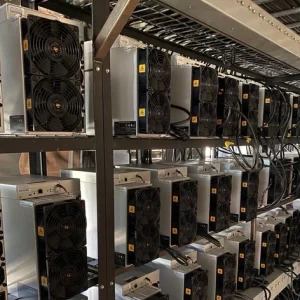
-
Add to WishlistAdd to Wishlist
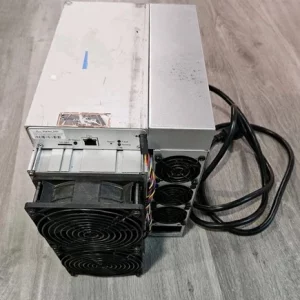
-
Add to WishlistAdd to Wishlist
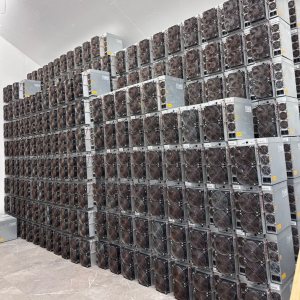
-
Add to WishlistAdd to Wishlist
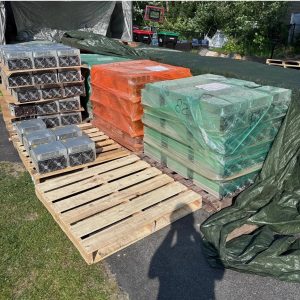
-
Add to WishlistAdd to Wishlist
-
Add to WishlistAdd to Wishlist
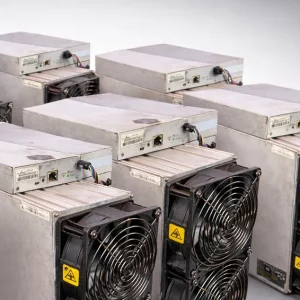
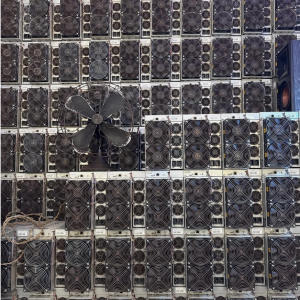
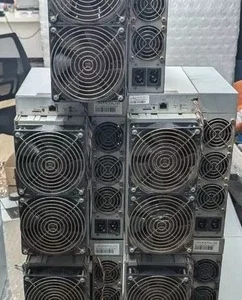
What actually determines whether a Bitcoin miner is worth buying
Your power rate, before anything else. Bitcoin mining is an energy conversion business with a public, rising difficulty. The machine only decides how efficiently you convert. Work out your rate per kWh first; it tells you which generation of hardware you are allowed to consider.
Then efficiency in J/TH. Current air-cooled flagships are 13–15 J/TH. The S19 generation is 30–35 J/TH. Cheap power makes the second group viable and sometimes optimal; expensive power makes it a space heater.
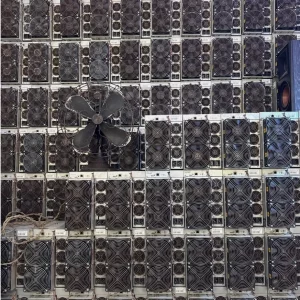
Then infrastructure. Nearly everything here wants a 200–240V circuit and runs around 75 dB. That rules out most living spaces. If the machine is going in a house, look at the quiet, low-power home units in Avalon and Fluminer home miners instead.
Buying single units versus lots
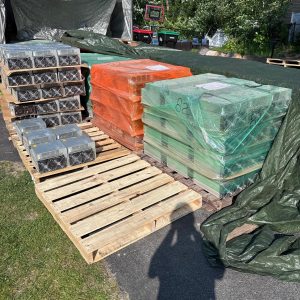
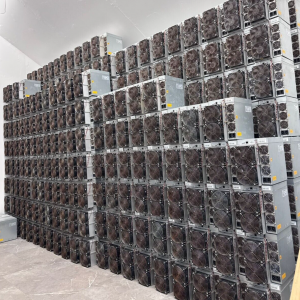
A single machine is a way to learn the hardware, run a real payout and find out what your site actually does under load. Do that before you buy twenty. Fleet lots are priced per unit far below singles and are the right move once you have power, space and a parts shelf sorted — ask us for total PH/s, total kW and freight weight before you commit.
On profitability claims
We do not publish earnings figures on these pages, and you should be sceptical of sellers who do. Mining revenue moves with network difficulty, the Bitcoin price, your power rate and pool fees, all of which change constantly. Any number quoted without those four assumptions stated is marketing. Tell us your power rate and we will do the arithmetic with you.
The one number we will publish
Since we will not quote earnings, here is the figure that is honest to publish and that decides the purchase anyway: the electricity price above which a machine cannot pay for itself, whatever else the market does.
It starts with hashprice — what one PH/s of hashrate earns in a day, block subsidy plus fees, at the current difficulty and Bitcoin price. On 9 August 2026 that came to $32.18/PH/day: 452.11 BTC paid to miners across the last 144 blocks, only 0.47 per cent of it in fees, valued at a Bitcoin price of $64,959, against difficulty 127.48 T and a network running near 912 EH/s. Tomorrow it is a different number. Set what a machine burns against what its work is worth and the threshold falls straight out: break-even rate = hashprice ÷ (24 × the machine’s J/TH).
Two things fall out of that division and they are worth separating. Hashrate cancels — two machines of equal J/TH share a threshold however far apart their headline numbers are, which is why buying more terahash never rescues a poor efficiency figure. The Bitcoin price does not cancel; it scales every line together. So the order of the machines below never changes, and the level changes daily.
The SHA-256 machines on this page, in that order. The S21+ Hyd 358T at 13.4 J/TH runs to 10.0¢/kWh. The Bitdeer SealMiner A2 Pro Air 255T at 14.9 runs to 9.0¢, the S21 Pro 245T and its 234T sibling at 15.0 to 8.9¢, the S21+ 216T and 235T at 16.5 to 8.1¢, and the Canaan A1566HA 480T at 16.8 to 8.0¢. Then the quiet end: the Avalon Q 90T at 18.6 to 7.2¢. Then the older generations — the S19 XP Hyd 257T at 20.8 to 6.4¢, the S19K Pro 115T and 120T at 23.0 to 5.8¢, and a factory-spec S19 95T at 34.2 to 3.9¢.
What that ladder is actually telling you. Retail residential electricity in the United States averages around 18.8¢/kWh, which is above every line on it. No machine we sell, new or used, earns at a normal household tariff, and no change of model fixes that — it is a power contract problem, a hosting problem, or a reason not to buy. And the spread from 3.9¢ to 10.0¢ is what you are really paying for when you pay more for a newer machine. Not hashrate: headroom. The machine with six cents of headroom survives difficulty rises that the machine with none does not.
The S23 machines listed here are preorders, and Bitmain announces 11 and 9.5 J/TH for them. On those figures the thresholds would be 12.2¢ and 14.1¢ — but nobody here has put a wattmeter on one yet, and the network gets harder while you wait for the crate.
Repairs and tooling
Testers, PSUs, control boards and firmware cards are in repair parts; tested second-hand machines are in used ASIC miners.
Who each part of this category is for
One machine, in a house you live in. Almost nothing here belongs indoors: a 3 kW air-cooled machine at around 75 dB is a shop vacuum that never switches off. The exceptions are the quiet, low-draw home units in Canaan Avalon and Fluminer, and they are the only honest answer to this question.
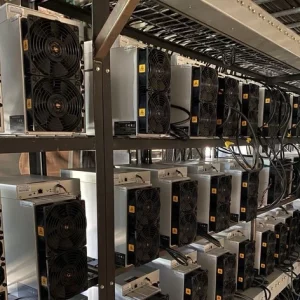
One machine, in a garage, shop or outbuilding on a 240 V circuit. This is where most first real purchases land. An air-cooled machine will run there provided the circuit and the airflow are real, and that shelf holds every manufacturer we carry — Bitmain and MicroBT included. Confirm the breaker before you order, not after.
Filling a site where you already have cheap power. Then the arithmetic points at used and refurbished machines and the fleet lots, not at current-generation efficiency. Ask us for total PH/s, total kW at the wall and palletised freight weight before you commit to a lot.
A new build, hosted, or anything with an uptime commitment. Buy new. The warranty and the known history are what you are paying the premium for, and on a financed or hosted deployment they are usually worth it.
You already have a loop, a dry cooler or a tank. Then you can reach efficiency air cannot, in hydro and immersion. If those things do not exist yet, buy the infrastructure first — a hydro machine on a bare floor is hardware you cannot switch on.
You are adding a second manufacturer on purpose. A sensible instinct at scale, and MicroBT is the usual second name: it means one firmware or supply problem cannot take out the whole site.
Mining something other than Bitcoin? Scrypt hardware for Litecoin and Dogecoin is in LTC and DOGE miners, and single-chain machines for Kaspa, Aleo, Dash, CKB and Tari are in altcoin ASICs. Everything we stock is in all miners.
Your power price decides this category more than your choice of model does. The ASIC miner buying guide shows how to turn a machine’s J/TH into the electricity rate above which it simply cannot pay for itself.
Three machines mark out the range in here. The Canaan Avalon Q 90T is the quiet, low-draw end at 18.6 J/TH. The Bitdeer SealMiner A2 Pro Air is current-generation air cooling at 14.9 J/TH. A lot of three hundred used S19s is the fleet end of the same market. For machines that mine other coins, use the XTM, ALEO, KAS, DASH and CKB category instead.
To see these SHA-256 machines next to each other rather than one at a time, the ASIC miner comparison table lists hashrate, wall power, J/TH and running cost for every unit in stock.