
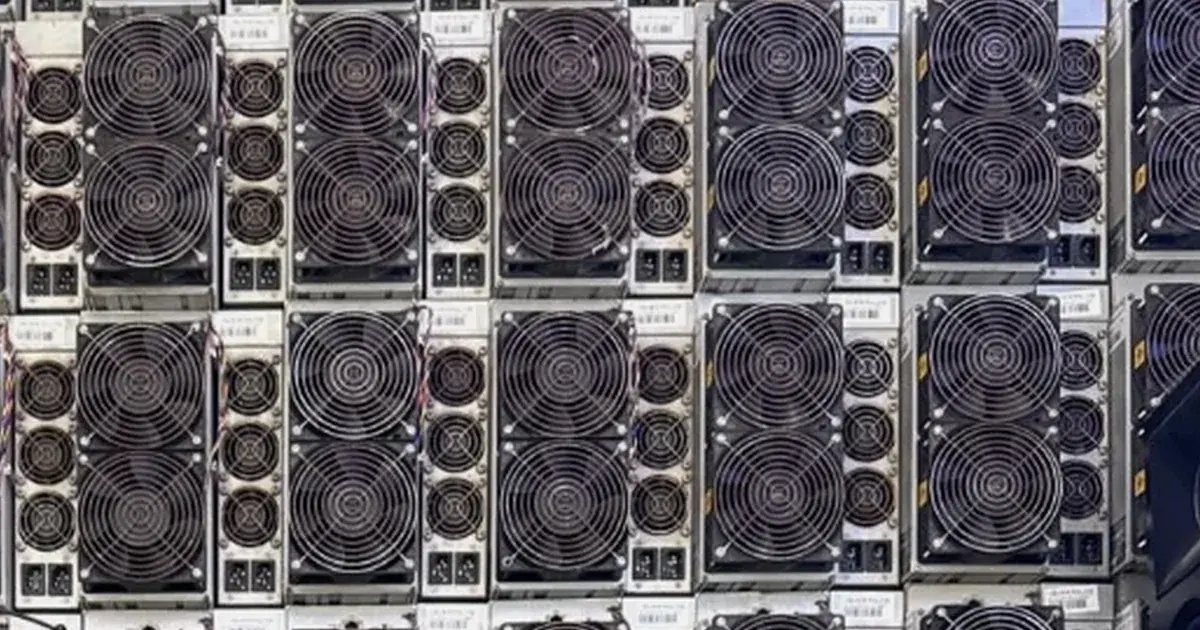
Many new miners assume cryptocurrency mining farms are only for giant corporations with massive budgets. The reality is far more practical. Small mining farms with 10–100 machines can reach positive ROI within 12–18 months under typical market conditions when power costs and uptime are managed correctly. This guide explains what mining farms actually are, what infrastructure they require, and how understanding farm design can improve both performance and long-term profitability.
What a mining farm actually is
A mining farm is not a bigger version of a home setup. It is a different business, and the difference is who owns the power problem. At home you take the utility rate you are given — 18.44¢/kWh on the US residential average. A farm exists because someone negotiated, generated or co-located their way to a fraction of that, and every machine in it breaks even at exactly the same J/TH as the one in your garage. Scale buys the rate. It does not buy the physics.
Definition and Characteristics of a Mining Farm
A mining farm is a centralized facility built to operate cryptocurrency mining hardware at scale. These locations typically run dozens to thousands of ASIC miners under one roof using shared power distribution, cooling, networking, and monitoring systems. Instead of scattered home rigs with inconsistent conditions, mining farms consolidate hash power in a controlled environment optimized for uptime and operating cost.
The defining advantage of a mining farm is control. Centralized operations allow better maintenance routines, stable temperatures, cleaner airflow, and more efficient power delivery. Farms range from small setups with 10–50 machines to industrial facilities running thousands of units consuming megawatts of power.
Key characteristics include:
- Dedicated infrastructure: Electrical systems, cooling, and rack/space layout designed specifically for ASIC miners
- Operational monitoring: Central dashboards and alerts for temperature, hash rate, fan performance, and fault detection
- Scalability: A modular layout that supports adding miners in phases as capital and profitability allow
- Commercial-grade power planning: Load balancing, safer wiring, and electrical design built for continuous high draw
Understanding mining basics helps explain why centralization matters. Profitability depends on stable uptime, consistent temperatures, and reliable power. Farms are designed to meet those requirements at lower cost per machine than most home setups.
Power and Infrastructure Requirements for Mining Farms
Mining farms can draw anywhere from ~100 kW to 10+ MW depending on scale and miner count. As a reference, a small farm running 50 Antminer S19-class units may require roughly 150–200 kW of continuous power depending on tuning and model. Medium-sized operations hosting 200–500 machines often demand capacity measured in the high hundreds of kilowatts to multiple megawatts.
Stable power delivery is foundational. Voltage instability can cause hardware errors, increased reject rates, and premature component wear. Many farms install commercial-grade distribution panels, proper load balancing, surge protection, and (where appropriate) backup systems to reduce downtime and protect equipment.
Cooling is equally important. High temperatures reduce performance, increase failure rates, and shorten hardware lifespan. Proper airflow design, filtration, and temperature management keep miners operating consistently and reduce avoidable downtime.
Essential infrastructure components include:
- Three-phase power distribution: More efficient load handling for larger deployments
- Cooling strategy: HVAC, filtered airflow design, or engineered ventilation depending on climate and budget
- Power protection: Surge protection, grounding, and safety margins in electrical planning
- Network reliability: Stable internet and redundancy to reduce stale shares and pool disconnects
Estimate power capacity by multiplying total miner wattage by 1.15 to account for PSU loss, fans, and real-world overhead. Undersizing power is one of the fastest ways to create instability and forced throttling.
Infrastructure investment pays back through lower failure rates, higher uptime, and more predictable performance. Review mining operational setup guidance before equipment arrives so layout, wiring, and airflow are planned correctly.
Comparison Between Mining Farms and Individual Mining Setups
Home miners face built-in disadvantages that farms are designed to solve. Residential electricity rates are often higher, and home environments are harder to cool and keep clean. Mining farms can reduce per-unit energy costs by securing better rates, choosing lower-cost locations, and operating with more efficient infrastructure.
Over time, small differences in power cost and uptime compound significantly. Farms also benefit from consistent maintenance routines—cleaning, firmware management, and preventative inspection across all units—which reduces downtime compared to reactive “fix it when it breaks” home setups.
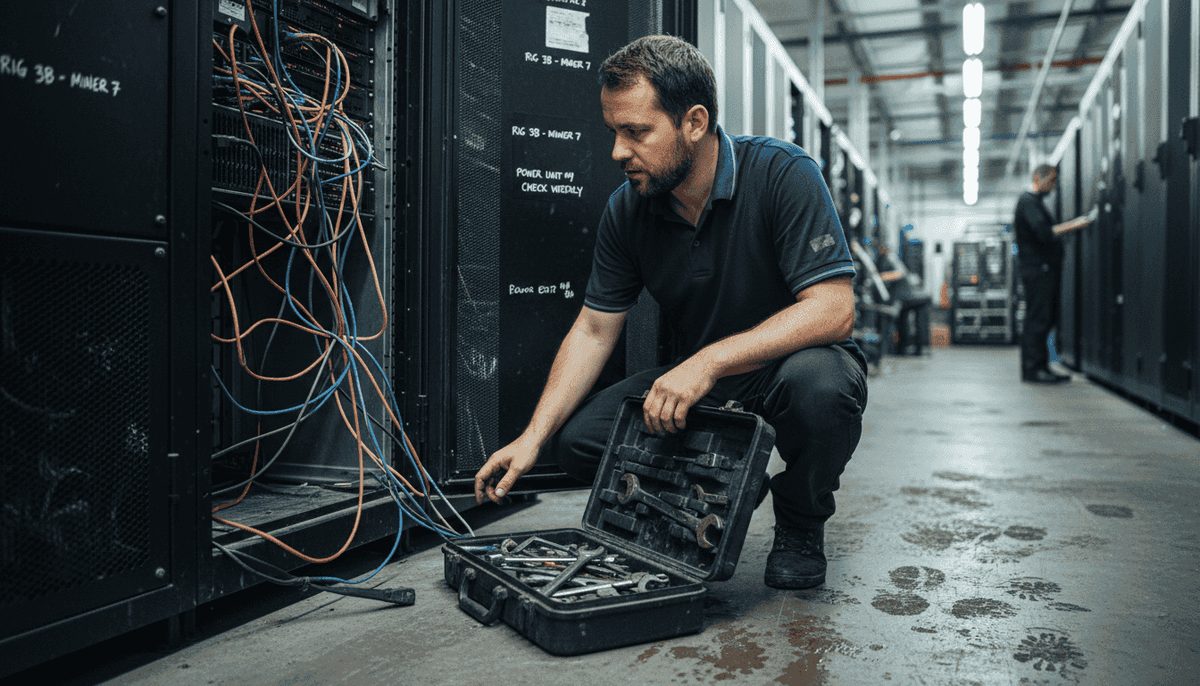
Mining farms also stabilize operations by running more units, using better monitoring, and keeping spare parts on hand. More machines means less revenue impact when a single unit fails.
| Factor | Individual Mining | Mining Farm |
|---|---|---|
| Electricity Cost | Often higher retail rates and limited negotiating power | More flexibility via location choice, scale, and commercial planning |
| Cooling Efficiency | Basic fans and ambient air with inconsistent temperatures | Designed airflow, filtration, and stable operating conditions |
| Maintenance | Sporadic and usually reactive | Scheduled preventive routines with standardized processes |
| Uptime | Varies based on home conditions and troubleshooting speed | Typically higher due to monitoring, redundancy, and faster repair cycles |
| Revenue Stability | More sensitive to single-unit failures and setup issues | Smoother due to scale, better monitoring, and stronger processes |
Key operational differences:
- Technical support: Farms usually centralize troubleshooting and repair processes
- Spare parts: Farms often stock replacement components to reduce downtime
- Monitoring: Central dashboards track the entire fleet in real time
- Expansion: Farms scale in phases; home panels and circuits often limit growth
Explore home mining hardware comparison to understand where home setups make sense and where scaling starts to favor a farm approach.
Common Misconceptions About Mining Farms
Myth: Mining farms require huge capital and can only be run by corporations. This belief stops a lot of capable operators before they even begin. In practice, small and medium mining farms with 10–100 machines can target ROI within 12–18 months when power costs, uptime, and hardware selection are handled correctly.
Many operators start by building a small farm and expanding gradually. Used and refurbished ASIC miners can reduce capital requirements while still delivering strong performance when properly tested and maintained.
Myth: Mining farms are too technically complex for smaller operators. For small farms, the basics are manageable: safe electrical planning, ventilation/cooling, networking, and monitoring. Modern management tools reduce complexity and make fleet monitoring easier than ever.
Myth: Solo/home mining performs about the same as a farm. Scale, cheaper power options, better cooling, and predictable maintenance processes usually shift the advantage toward farms—especially over a 12–24 month timeframe.
Before buying equipment, estimate total cost of ownership over 24 months: electricity, cooling, maintenance, downtime risk, and hardware depreciation. Compare those costs to conservative revenue projections to avoid overestimating ROI.
Common misconceptions debunked:
-
- Capital requirements: Starting with 10–20 machines can be far more accessible than most people assume
- Technical complexity: Small farm operations mostly require solid planning and basic execution
- Location restrictions: Affordable power + reliable internet are the real requirements
- Noise concerns: Facility selection and acoustic planning can make noise manageable
When you replace myths with accurate assumptions, mining decisions become business decisions—not guesses.
Farm is a broad word. A hosted rack, a shipping container and a behind-the-meter site next to stranded generation have little in common beyond the machines inside them. The breakdown of mining farm types compares them on power access, capital required and who carries the operational risk.
Cost Structure and Profitability Drivers of Mining Farms
Electricity and hardware depreciation are typically the biggest cost components influencing mining farm profitability. Understanding these drivers helps you focus effort where it matters most instead of chasing minor optimizations.
Electricity often consumes a major portion of gross revenue, so power cost and efficiency become strategic advantages. Hardware depreciation is the second major driver: ASICs lose value as new generations improve efficiency and as network difficulty increases. Treat depreciation as a real cost so ROI estimates stay realistic.
Efficient cooling reduces both operating costs and failure risk. Stable temperatures protect chips, reduce error rates, and extend lifespan. Better cooling also improves consistency, which improves real-world returns compared to “paper profitability.”
Key profitability optimization areas:
- Lower electricity cost through location, contracts, or operational efficiency
- Preventive maintenance to reduce failures and avoid extended downtime
- Cooling and airflow design to keep stable temperatures and protect hardware
- Profitability monitoring so you can react when conditions change
- Refresh planning so aging hardware doesn’t silently drag down margins
| Cost | Who it is paid to | What moves it |
|---|---|---|
| Electricity | your utility or your host | your rate, and the machine’s J/TH — nothing else comes close |
| Hardware | the seller, once | when you buy relative to the halving, and whether you buy new or tested used |
| Cooling and airflow | whoever builds the room | air, hydro or immersion, which the machine chooses for you |
| Repair and spares | parts suppliers, continuously | how deep the secondhand board market is for that model |
| Pool fees | the pool | typically 1–2% of revenue, plus any firmware dev fee |
Higher uptime directly increases effective hash rate and monthly revenue. Even small uptime improvements compound across a fleet, making monitoring and reliability upgrades some of the highest-ROI investments you can make. Setting up that monitoring, and the S19 farm layout it sits on, is what our ASIC mining consulting does.
Detailed mining profitability calculations help you identify which variables move your bottom line the most. External resources like this step-by-step mining profitability guide can also help with benchmarking.
Role of Hardware Quality and Supplier Reliability
Hardware quality has a direct impact on uptime, repair costs, and long-term performance. Using tested and refurbished ASIC miners from reputable suppliers can reduce failure risk, minimize downtime, and improve predictability—especially in multi-unit farms.
Professional refurbishment typically includes cleaning heat sinks, replacing worn components when needed, inspecting and testing hash boards, updating firmware, and verifying hashrate and stability. This makes used hardware far less risky than “as-is” units and can deliver strong value per dollar.
Reliable suppliers also matter because support and warranty coverage reduce operational risk. Cheap, unverified sources often disappear when problems show up, leaving operators stuck during downtime when revenue is halted.
Criteria for selecting quality mining hardware suppliers:
- Testing verification: Documentation showing each unit was tested under load
- Warranty coverage: Clear terms that protect against early failures
- Technical support: Responsive help when hardware issues arise
- Reputation and reviews: A visible track record and consistent customer feedback
- Parts availability: Access to replacements for hash boards, PSUs, and control boards
- Transparent pricing: No hidden fees, vague conditions, or bait-and-switch listings
Understanding testing mining hardware helps you evaluate whether a supplier is actually doing quality control or simply reselling inventory without verification.
Scale changes what you pay for power and almost nothing else, which is the whole of the difference between a farm and the machine in how cryptocurrency mining works — the same J/TH decides the same break-even at one machine or a thousand. If you are sizing a room rather than a rack, the power requirements and cooling pages are the two that decide what you actually have to build, and Best ASIC Miners 2026 ranks the machines by the power price they break even at.
What Is a Mining Farm? Frequently Asked Questions
Can I start a mining farm with less than 50 machines?
Absolutely. Many operators start with 10–20 machines and scale over time. Starting smaller reduces risk, helps you learn the workflow, and allows expansion using real operational results instead of assumptions.
How much power is needed for a small mining farm?
A small farm with 20 Antminer S19-class units may require roughly 60–80 kW depending on tuning and model. Add 15–20% overhead for cooling, PSU loss, and safety margin. Use electricians familiar with continuous commercial loads and design for safe expansion.
What is the expected ROI timeframe for a medium mining farm?
Medium farms with 50–100 machines often target ROI within 12–18 months under typical conditions, but results depend heavily on power cost, Bitcoin price, difficulty, uptime, and hardware efficiency. Conservative projections are usually the safest approach.
Are refurbished ASIC miners reliable for long-term use?
When refurbished professionally and sold by a reputable supplier, refurbished ASIC miners can be extremely reliable. The key is verified testing, proper refurbishment processes, and clear warranty terms. Always confirm what testing is performed before buying.
How does cooling impact mining hardware lifespan?
Cooling directly affects stability and lifespan. Stable temperatures reduce chip stress, lower error rates, and help hardware maintain consistent output. Maintaining controlled operating temperatures can meaningfully extend hardware life and reduce failure frequency. Explore cryptocurrency mining basics for operating condition and thermal management guidance.
More on scale and power
- 7 Effective Ways to Maximize Mining Profit for Miners
- Mining Setup Costs: What New Miners Must Know
- Mining Profitability Explained: Key Metrics and Pitfalls
- Cryptocurrency Mining Profitability Explained: Key Decisions
Hardware built for hosted and farm deployment
The hardware most commonly deployed into hosted racks right now:
- Bitmain Antminer S21 XP Hyd 473T – 473 TH/s Hydro-Cooled Bitcoin Miner
- 12kW Radiator Auto Temperature Control – Smart Cooling for Mining & Industrial Systems
- Bitmain Antminer S21 Pro 234T – Efficient SHA-256 ASIC Miner
More in New ASIC miners, or the full ASIC miner inventory. Sizing total load before you commit to freight is covered in the ASIC miner buying guide.