
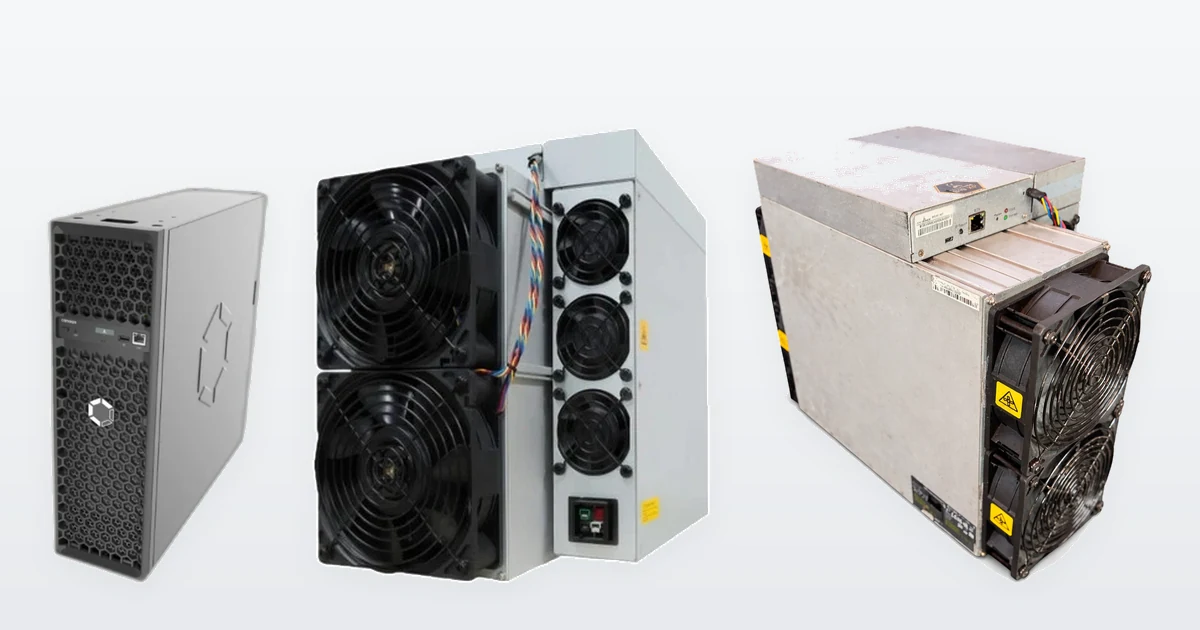
The best ASIC miner in 2026 is whichever one breaks even at a rate below what you actually pay for electricity. That is the whole ranking. Hashrate is marketing, price is a distraction, and the machine at the top of most “best of” lists is one almost nobody can run profitably. Below is every machine class worth considering, sorted by the only number that decides the question — and an honest note about which of them we stock, which we do not, and which we would tell you not to buy.
We buy, repair, host and resell this hardware. This page ranks machines, not shops, and it does not link you to anyone else’s storefront.
The numbers this ranking uses, and when they were true
- Hashprice: ~$32.7 per PH/s per day (27 July 2026)
- Network difficulty: 126.23 T; network hashrate ~866 EH/s
- BTC: $65,247; transaction fees ~0.7% of the block reward
- US average residential electricity: 18.44 ¢/kWh (EIA, May 2026)
- US retail hosting: $0.065–$0.09/kWh all-in (published host rate cards, read 16 August 2026)
All of it moves daily, and difficulty moves against you between order and delivery. Re-run the arithmetic on the day you buy — the method is in our ASIC miner buying guide.
The best ASIC miners of 2026, ranked by the rate at which they stop making money
One formula does all the work, and hashrate cancels out of it completely:
Break-even electricity rate ($/kWh) = hashprice ($/PH/day) ÷ (24 × J/TH)
A higher break-even rate is better — it means the machine can tolerate more expensive power before it starts losing money. At 27 July 2026 hashprice:
| Machine | Hashrate | Power | Efficiency | Break-even $/kWh |
|---|---|---|---|---|
| Antminer S21 XP 270T | 270 TH/s | 3,645 W | 13.5 J/TH | $0.101 |
| Bitdeer SealMiner A2 Pro Air | 255 TH/s ±5% | 3,790 W | 14.86 J/TH | $0.092 |
| Antminer S21 Pro (245T / 234T / 220T) | 245 / 234 / 220 TH/s | 3,675 / 3,510 W | 15.0 J/TH | $0.091 |
| Antminer S21+ 216T | 216 TH/s | 3,564 W | 16.5 J/TH | $0.083 |
| Canaan Avalon Q 90T | 90 TH/s | 1,674 W | 18.6 J/TH | $0.073 |
| Antminer S19 XP 141T | 141 TH/s | 3,010 W | 21.5 J/TH | $0.063 |
| Antminer S19k Pro 120T | 120 TH/s | 2,760 W | 23.0 J/TH | $0.059 |
| Antminer S19 95TH/s | 95 TH/s ±5% | 3,250 W | 34.2 J/TH | $0.040 |
The uncomfortable thing this table says
Not one machine on that list breaks even at the US average residential rate of 18.44 ¢/kWh. The efficiency leader clears about ten cents. If you are paying eighteen and a half, no ASIC on the market makes money for you at July 2026 hashprice, and the correct purchase is none of them.
That is bad for impulse sales and we publish it anyway, because the alternative is selling someone a $4,000 space heater. If your power is expensive, your options are hosting at 5.5–8.5 ¢/kWh, finding genuinely cheap power, or waiting. All three are better than buying the wrong machine.
The second thing it says: the efficiency race has flattened
Look at the spread. The gap between the best machine you can buy and one two generations old is a factor of about 2.5 in J/TH — but the gap between the top three current-generation air-cooled machines is under 12%, and between the S21 Pro and the SealMiner A2 Pro Air it is under 1%. There was a period when each generation roughly halved J/TH. That period is over.
The practical consequence: on current-gen hardware, efficiency has stopped being the deciding factor, because a 1% efficiency difference is noise next to parts availability, warranty mechanics, resale liquidity and what you actually pay for power. We took that argument apart machine by machine in Antminer S21 Pro vs SealMiner A2 Pro Air.
Best current-generation air-cooled miner: it is a tie, and that is the finding
The Antminer S21 Pro 245T and the Bitdeer SealMiner A2 Pro Air land at 15.0 and 14.86 J/TH. That is a break-even difference of eight ten-thousandths of a dollar per kWh. Anyone telling you one is meaningfully more efficient than the other is reading a spec sheet, not doing the arithmetic.
So decide on the things that are genuinely far apart:
- Parts and repair. The S21 Pro uses the BM1370 and sits in an enormous installed base with a mature third-party repair economy — hashboards, control boards, chips, testers. We could not find an independent SEAL02 chip supply or a third-party A2 hashboard repair path. That is not a criticism of the hardware; it is a statement about what happens in year three.
- Warranty mechanics. Both makers count warranty from shipment date, not from your delivery, and both run to the original direct purchaser. On any resold machine, a large part of that clock is already spent. Ask us for the shipment date on the specific unit.
- Resale liquidity. Antminers have the deepest secondary market of any brand. When you sell in two years, that matters.
- Ambient headroom. The S21 Pro is rated to a higher maximum ambient than the A2 Pro Air. In a hot shed in August that is a real difference.
Also stocked at the same efficiency tier: the S21 Pro 234T and the S21+ 216T. All three S21 Pro bins run the same 15.0 J/TH — if a listing anywhere claims 13.8 or 14 J/TH for an S21 Pro, that number was back-computed from an invented efficiency figure. Ours used to say exactly that, and we corrected it.
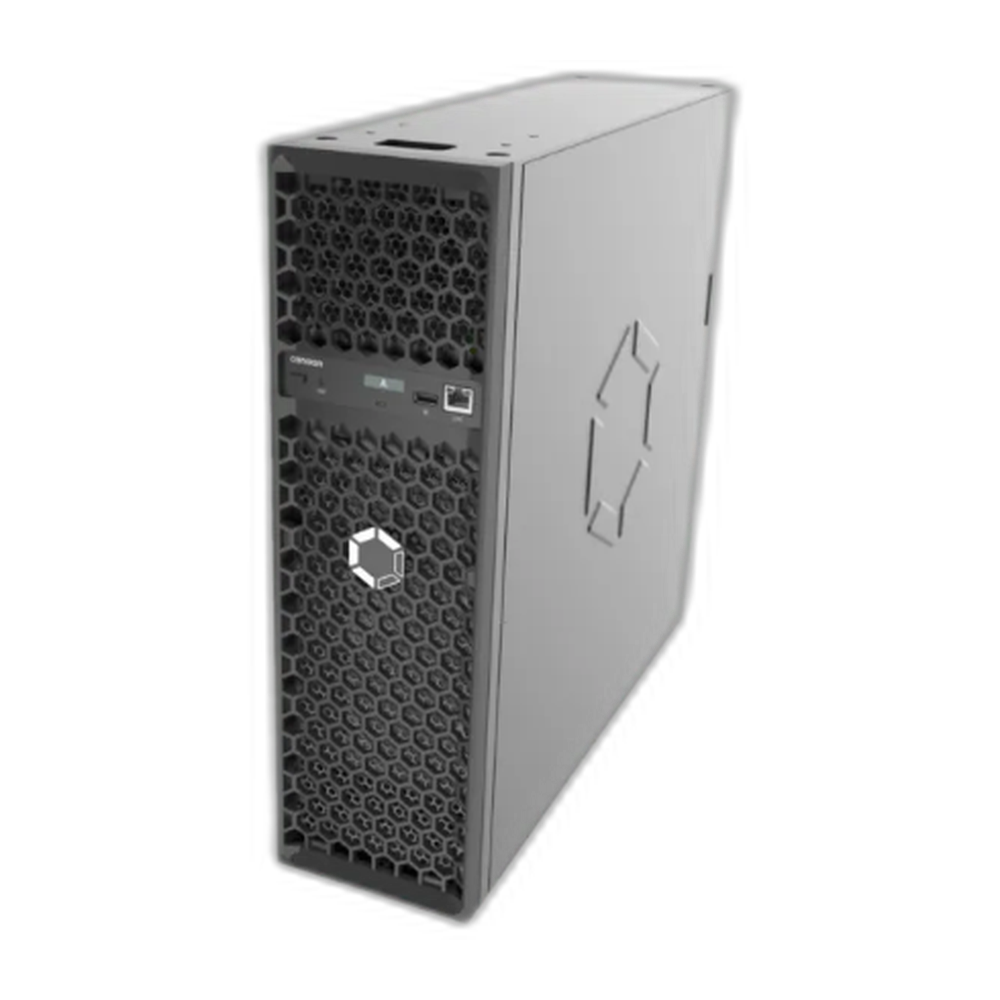
Best home and low-noise miner: Canaan Avalon Q
The Avalon Q 90T is the machine we actually recommend to people mining at home, and it wins on the two specs the S21 class cannot touch:
- 110–240 V input. It runs on an ordinary North American outlet. Every S21 and S19 is a 200–277 V machine and needs a dedicated circuit installed.
- ~45 dB and 1,674 W. That is a loud dishwasher, not a leaf blower. An S19 is around 75 dB, which is roughly 1,000× the sound intensity and completely unliveable indoors.
It is also the largest machine on this list that a big residential solar array could carry on its own, at 1,674 W — about 11 kW of array for round-the-clock running. The array each miner needs has the arithmetic and the figure for every other machine here.
At 18.6 J/TH it breaks even near 7.3 ¢/kWh, so it is not immune to the residential-power problem — but it is the only machine on this list you can plug in without an electrician. We compared it head to head against the used S19k Pro in Avalon Q vs Antminer S19k Pro.
Best hashrate per dollar: the used S19 family, with one condition
A used S19-class machine costs a fraction of a current-gen unit per terahash. It is also a 34.2 J/TH machine that breaks even at 4.0 ¢/kWh. Both of those statements are true at once, and which one dominates depends entirely on your power contract.
Used S19s are the right buy in exactly one situation: you have genuinely cheap power — flared gas, curtailment, behind-the-meter generation, stranded hydro, a heat-reuse application where the heat has value. That is why they trade near scrap, and it is also why they are the highest-margin thing on this site for the buyer who has that power.
If that is you, the efficient step up is the S19k Pro 120TH at 23 J/TH, which breaks even near 5.9 ¢/kWh for a modest premium over a plain S19, or the S19 XP 141TH at 21.5 J/TH. Buying at volume changes the freight and power arithmetic substantially — that is covered in buying ASIC miners by the pallet, and grading and inspection in how to buy a used ASIC miner.
Best non-Bitcoin ASICs we actually stock
The break-even formula above is SHA-256 specific — it uses Bitcoin hashprice. Altcoin machines need their own coin-specific arithmetic, and that arithmetic is far more volatile because the coins are smaller. Treat everything in this section as higher risk by default.
- Litecoin and Dogecoin (Scrypt): the Antminer L9 16G and L9 17G. Merged mining LTC and DOGE is the one altcoin case with a long, boring track record. The 16G and 17G are bins of the same machine at ~0.21 J/MH; buy on price per GH, not on the headline number.
- Kaspa (kHeavyHash): the Antminer KS5 Pro 21TH/s, tested.
- Aleo: the IceRiver AE3 2GH/s, a 3,400 W machine. Aleo is early and its economics can change faster than you can resell the hardware.
- Solo mining as a hobby, not an investment: the NerdQAxe++ at ~4.8 TH/s. It is a genuinely lovely object and a lottery ticket. Do not model it as income.
Everything else is in the Scrypt and altcoin ASIC categories.
What we are not recommending, and why
A round-up that recommends everything is an advertisement. Three exclusions, with reasons:
- The S21 XP 270T tops the efficiency table and we are still not pointing you at our listing for it. That page was publishing 4,509 W and 16.7 J/TH — a wattage back-computed from an invented efficiency figure. We corrected it to Bitmain’s published 3,645 W and 13.5 J/TH while writing this page, and we are saying so rather than quietly editing it. The listed price still does not match the rest of the S21 line, so if you want one, ask us directly and we will confirm the specification, the price and the batch before anything ships.
- Hydro and immersion machines. The S21 Hyd and immersion-cooled hardware are more efficient than anything air-cooled, and they are useless without the infrastructure. If you do not already have a loop, a dry cooler and somewhere for the heat to go, this is not a hardware purchase, it is a construction project.
- Anything sold on a profitability screenshot. A dashboard showing daily earnings tells you what a machine did under someone else’s power price, on a day with a different difficulty. Ask for J/TH and measured wall draw. Then use the formula.
So what would we buy today?
Three honest answers, depending on the only variable that matters:
- Power under 4 ¢/kWh: used S19s, in quantity. The economics are better than anything current-gen and it is not close. Buy spares with them.
- Power between 4 and 9 ¢/kWh: an S21 Pro or a SealMiner A2 Pro Air. Pick on parts availability and resale, not on the 1% efficiency gap. If you are toward the top of that band, the S19k Pro tier stops working and current-gen is the only thing left.
- Power above 9 ¢/kWh: host the machines or do not buy them. At the US residential average, nothing on this page is profitable.
Browse everything in the full miner inventory, or tell us your power rate and we will tell you which of these is right — including when the answer is none of them.
Related: seven rig types, from a single home unit to an immersion deployment, if you are still deciding what shape the operation should be rather than which model to buy. Esta comparativa también existe en español.
Everything above is a ranking, and a ranking is a set of judgements about a shortlist, made on one day. If you would rather see the numbers and draw your own line, the full ASIC miner comparison table puts the 49 machines we hold complete specifications for in one place — hashrate, wall draw, J/TH, the cost of the electricity alone per day and the current price — sorted by efficiency rather than by opinion. On the SHA-256 list alone that is a spread from 9.5 J/TH to 34.2 J/TH, which is the argument on this page laid out as rows.
Frequently Asked Questions
What is the best ASIC miner in 2026?
Measured by efficiency, the Antminer S21 XP 270T at 13.5 J/TH, which breaks even at about 10.1 ¢/kWh at 27 July 2026 hashprice. Measured by what most buyers should actually purchase, the Antminer S21 Pro or the Bitdeer SealMiner A2 Pro Air, which are within 1% of each other on efficiency and differ far more on parts availability and resale liquidity. If your electricity costs more than about 10 ¢/kWh, the honest answer is that no ASIC on the market is profitable for you right now.
How do I compare ASIC miners properly?
Use break-even electricity rate = hashprice ÷ (24 × J/TH). Hashrate cancels out entirely, so the comparison reduces to one number in dollars per kWh that you can hold against your actual power bill. A machine with a higher break-even rate tolerates more expensive electricity. Ignore headline terahash figures when comparing across models — they tell you the size of the machine, not whether it earns.
Is an Antminer S19 still worth buying in 2026?
Only if your electricity costs under about 4 ¢/kWh. At 34.2 J/TH the S19 breaks even near $0.040/kWh at 27 July 2026 hashprice, which in practice means flared gas, curtailment, behind-the-meter generation or heat reuse. For anyone on a normal commercial or residential tariff it is not worth buying at any price, because the purchase price is not what makes it unprofitable — the power is.
Which ASIC miner is best for mining at home?
The Canaan Avalon Q 90T, because it takes 110–240 V and runs at roughly 45 dB and 1,674 W. Every S19 and S21 is a 200–277 V machine at around 75 dB, which needs a dedicated circuit and is unliveable indoors. The Avalon Q still breaks even near 7.3 ¢/kWh, so cheap power still matters — it is just the only machine here you can plug into an existing outlet.
Are new ASIC miners more profitable than used ones?
Per machine, yes at most power prices; per dollar spent, often no. A current-generation machine tolerates roughly twice the electricity price of a used S19 before it stops earning, so above about 5 ¢/kWh new hardware is the only thing that works. Below about 4 ¢/kWh the used machine’s far lower cost per terahash usually wins. The crossover is set by your power rate, not by the age of the hardware.
How much electricity does an ASIC miner use?
Between about 1,674 W for a Canaan Avalon Q and around 3,800 W for a current-generation air-cooled machine such as the SealMiner A2 Pro Air. A single 3,250 W Antminer S19 running continuously draws about 2,340 kWh a month. Because it is a continuous load, size breakers and conductors at about 125% of the machine’s draw.
Do these rankings change?
The order changes slowly; the break-even numbers change daily. Efficiency in J/TH is a fixed property of the hardware, so the ranking by efficiency is stable. The dollar figures depend on hashprice, which moves with difficulty, the Bitcoin price and transaction fees, and difficulty has risen over the long run. Treat every $/kWh figure on this page as correct on 27 July 2026 and re-run the formula on the day you buy.
Why does this page not link to other mining hardware shops?
Because it is our shop, and sending our own readers to competitors while claiming to give impartial advice would be dishonest in both directions. This page ranks machines by an arithmetic anyone can reproduce, states plainly when the answer is to buy nothing, and tells you which of our own listings we would not sell you off the page. Check the numbers against any source you like — they are all published specifications.