
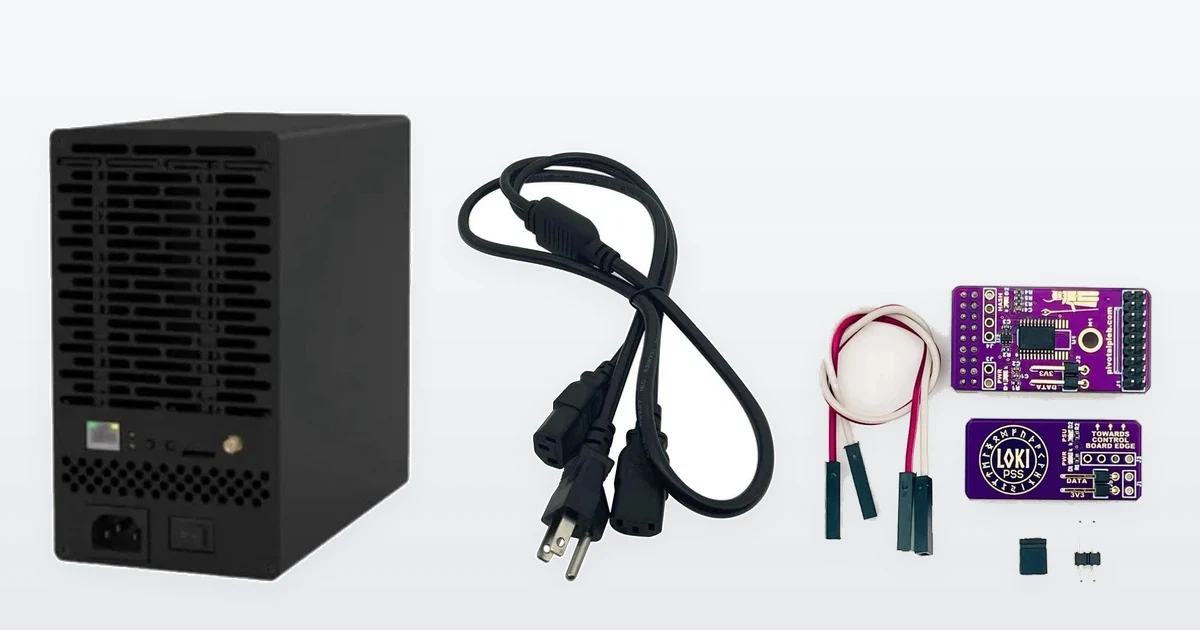
You need four things to mine Bitcoin: a machine, a circuit big enough to feed it, somewhere the noise will not ruin your life, and a pool account. The hardware is the easy part and the electrical work is where most first purchases go wrong. This is the shopping list, in the order it actually matters.
If the mechanism itself is still unclear, start with how cryptocurrency mining works. This page assumes you know what a hash is and want to know what to buy.
1. The machine: an ASIC, and only an ASIC
Bitcoin is mined with application-specific chips. Not graphics cards, not a gaming PC, not a laptop. That stopped being true around 2013, and the gap is now so wide that a GPU would spend more on electricity in a day than it earns in a year. Ethereum is not an alternative either — it moved to proof-of-stake in September 2022 and cannot be mined on anything.
What actually differs between machines is efficiency, in joules per terahash. Three broad choices:
- A used S19-class machine (95–120 TH/s, 23–34 J/TH). Cheapest way in. Only works on genuinely cheap power. See used ASIC miners.
- A current-generation machine (S21 Pro, SealMiner A2 Pro Air — around 15 J/TH). Costs several times more, survives a much higher electricity price.
- A quiet, low-power machine — the Canaan Avalon Q at 90 TH/s, 1,674 W and about 45 dB, on 110–240 V. This is the one that fits in a house without rebuilding it.
That last distinction matters more than the spec sheet suggests, because of the next section.
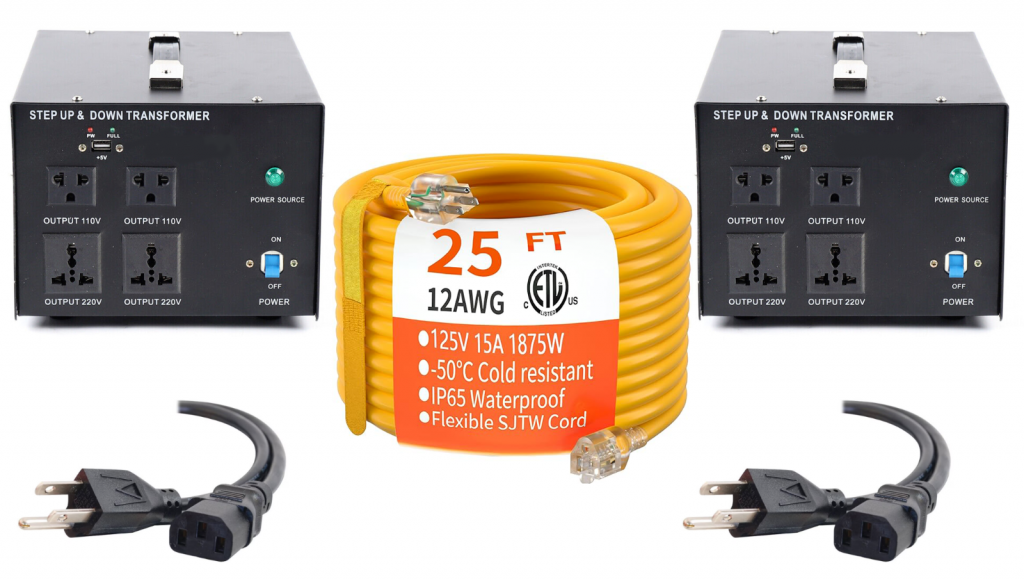
2. The circuit: this is the part people get wrong
An Antminer S19 draws about 3,250 W continuously. Not at peak — continuously, every hour of every day. Work out what that means before you buy anything.
On a 240 V circuit, 3,250 W is roughly 13.5 A. Electrical code treats anything running more than three hours as a continuous load and limits it to 80% of the breaker rating, so 13.5 A needs a 20 A, 240 V circuit with nothing else on it. That is a dedicated run from the panel, the same class of job as wiring an electric dryer or a car charger.
On a standard 120 V household outlet the same machine would want about 27 A. A typical circuit is 15 A. It is not a question of tripping the breaker occasionally — you cannot do it at all, and the adapters sold to make it look possible are how fires start.
Two consequences worth internalising:
- Get an electrician’s quote before you buy the miner. A dedicated 240 V circuit can cost more than a used machine. It is part of the purchase price, not an afterthought.
- Voltage converters do not reduce consumption. They solve a wiring problem. If a listing implies a converter makes a machine cheaper to run, it does not — the watts are set by the silicon. You can run derated in firmware, but then you get proportionally less hashrate.
Measuring it
A consumer plug-in power meter of the Kill-A-Watt type is a 120 V device rated for household loads. It will not measure a 240 V miner and should not be asked to. If you want real numbers, meter at the panel or use a clamp meter on the feed.
3. The room: noise and heat are not minor details
Most full-size miners run around 75 dB at a metre. That is a shop vacuum that never switches off. It carries through floors, and it is the single most common reason a home mining experiment ends after three weeks. A garage or outbuilding is realistic; a spare bedroom is not, unless you have chosen a quiet machine deliberately.
Heat is the same arithmetic in a different unit. Essentially all 3,250 W comes back out as heat — about 11,000 BTU/hr, comparable to a small space heater left on permanently. In winter in a cold climate that is a genuine benefit and some people mine specifically for it. In an enclosed room in summer it will cook the machine, and hot machines throttle, then fail.
Machines also need to breathe front-to-back. Cold air in one end, hot air out the other, and the two must not mix. Recirculating a miner’s own exhaust into its intake is the fastest way to kill it.
4. Software and a pool account
Modern ASICs are self-contained computers. The firmware is already on the machine — stock Bitmain, or an aftermarket build like Braiins OS+ or VNish — and you configure it through a web page in your browser after finding the miner’s IP address on your network.
You do not install CGMiner, BFGMiner or EasyMiner. Those are desktop programs from the GPU era, largely unmaintained, and they have nothing to do with running an ASIC. Guides that tell you to download them are recycling advice from a decade ago.
What you do need is a pool account. Solo mining a single machine against a network of roughly 866 EH/s means winning a block about once every 90 years. A pool aggregates thousands of machines and pays you a share proportional to the work you contributed. Set a backup pool too, at a different provider — pools go down, and an idle miner earns nothing while still drawing full power. The trade-offs between payout models are covered in how to choose a mining pool, and the step-by-step configuration is in our Antminer setup guide.
What it will actually earn
Work this out before you spend anything. The formula is short:
Break-even electricity rate ($/kWh) = hashprice ÷ (24 × J/TH)
At a hashprice of about $32.7/PH/day on 27 July 2026, with difficulty at 126.23 T and Bitcoin near $65,247:
- Antminer S19, 95 TH/s, 3,250 W, 34.2 J/TH → breaks even at about $0.040/kWh
- Antminer S19k Pro, 120 TH/s, 2,760 W, 23.0 J/TH → about $0.059/kWh
- Avalon Q, 90 TH/s, 1,674 W, 18.6 J/TH → about $0.073/kWh
- Antminer S21 Pro, 245 TH/s, 3,675 W, 15.0 J/TH → about $0.091/kWh
Those are the rates at which the machine earns exactly what its electricity costs — before hardware, freight, repairs or your time. The US residential average was 18.44 ¢/kWh in May 2026 (EIA). Every figure above is below it.
Stated plainly: at typical household electricity prices, none of these machines makes money at today’s hashprice. That is not a reason nobody should mine — it is the reason serious miners chase cheap power, hosting contracts, flared gas or heat reuse rather than better hardware. All of these numbers move daily, so re-run them on the day you buy.
A realistic first purchase
If you have cheap power and space, a used S19-class lot is the most hashrate per dollar you will find, and the used category is where it lives. If you are mining at home on ordinary power and want to learn without rebuilding your electrical panel, a low-noise machine like the Avalon Q is the honest recommendation even though it is not the cheapest per terahash. If you are buying second-hand from anyone, including us, read how to buy a used ASIC miner without getting burned first — and budget for a spare power supply, because that is the part that fails.
Browse the full ASIC miner inventory, or the spec-by-spec breakdown in the ASIC miner buying guide.
Two pages carry on from here: the beginner mistakes that cost the most money, and which machines are actually sensible for a first purchase. Both assume the circuit and the electricity arithmetic above are already settled.
Frequently Asked Questions
What do I actually need to start mining Bitcoin?
An ASIC miner, a dedicated electrical circuit sized for a continuous load, somewhere that tolerates roughly 75 dB of noise and constant heat, and a mining pool account. The machine is usually the simplest part to arrange. The electrical work and the location are what determine whether the setup survives past the first month.
Can I plug a miner into a normal wall outlet?
Generally no. A full-size machine drawing 3,250 W would need about 27 A at 120 V, and a standard household circuit is rated 15 A. On 240 V the same load is roughly 13.5 A and needs a dedicated 20 A circuit because continuous loads are limited to 80% of breaker rating. Lower-power machines such as the Avalon Q at 1,674 W are the exception worth looking at.
What mining software do I install?
None on your computer. A modern ASIC runs its own firmware and is configured through a web interface at the miner’s IP address on your local network. CGMiner, BFGMiner and EasyMiner are desktop applications from the GPU mining era and are not used to run ASIC hardware.
How loud is a Bitcoin miner really?
Around 75 dB at a metre for a full-size machine, continuously, which is comparable to a shop vacuum running permanently. It travels through walls and floors. Quieter machines exist — the Avalon Q is rated near 45 dB — and the difference decides whether a home installation is tolerable.
Do I need a dedicated circuit for one miner?
Yes, for any full-size machine. Electrical code treats loads running more than three hours as continuous and limits them to 80% of the breaker rating, so a 3,250 W miner on 240 V needs its own 20 A circuit with nothing else sharing it. Get the quote for that circuit before buying the machine, because it can cost more than a used miner.
Will one miner pay for itself?
Only if your electricity is cheap enough. Divide hashprice by 24 times the machine’s J/TH to get the rate at which it breaks even on power alone. At roughly $32.7/PH/day in late July 2026, that is about $0.040/kWh for a used S19 and about $0.091/kWh for an S21 Pro — all below the US residential average of 18.44 cents. Hardware, freight and repairs come on top, and every one of these figures moves daily.