
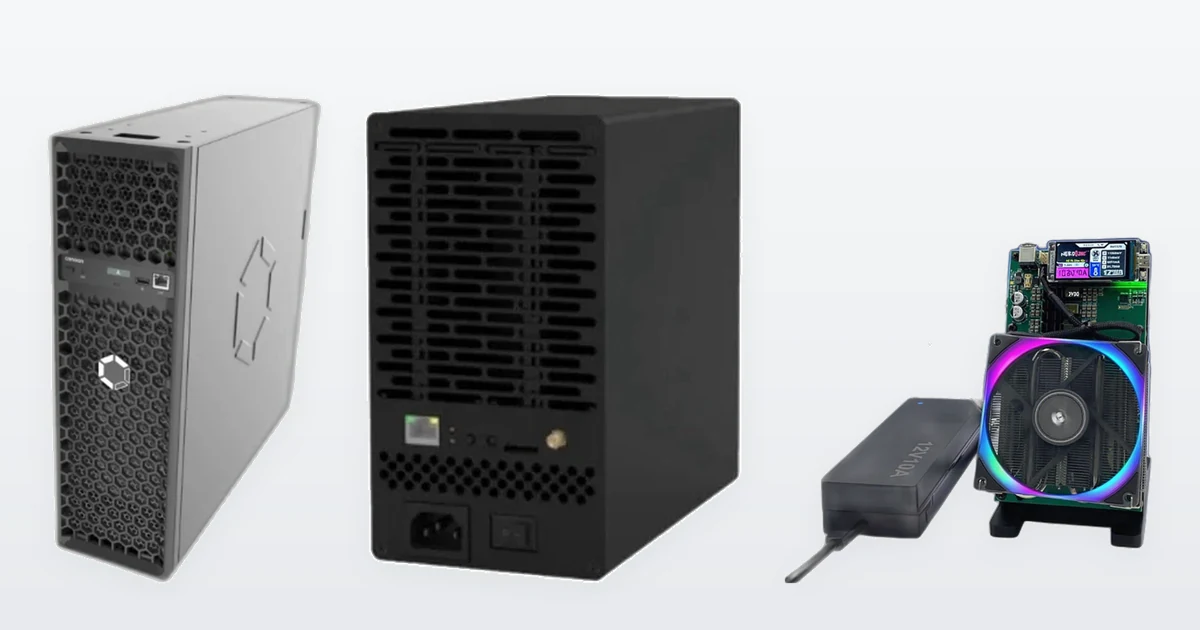
The best mining hardware for a home is decided by three things a spec sheet does not lead with: input voltage, noise, and where 1,700 watts of heat is going to go. Efficiency matters — but the most efficient machine on the market is a 200–277 V, 75 dB appliance that you cannot legally plug into a house outlet and cannot live next to. Get the domestic constraints right first, then optimise. This page is what actually works at home, and what to do with the heat.
We buy, repair, host and resell this hardware. This page recommends machines, not shops, and it does not send you to anyone else’s storefront.
The numbers this page uses, and when they were true
- Hashprice: ~$32.7 per PH/s per day (27 July 2026)
- Network difficulty: 126.23 T; network hashrate ~866 EH/s
- US average residential electricity: 18.44 ¢/kWh (EIA, May 2026)
These move daily. Re-run the arithmetic on the day you buy.
The three constraints that decide home mining hardware
1. Voltage: almost every ASIC is a 240 V machine
Every Antminer S19 and S21 is specified for 200–277 V. There is no 120 V mode. A standard North American house outlet is 120 V, so putting an S19 in a spare room means an electrician, a dedicated 240 V circuit and a permit — realistically a four-figure job before the miner arrives.
The Canaan Avalon Q 90T accepts 110–240 V. That single line is why it is the machine we recommend to almost everyone mining at home, and it beats a better efficiency figure on a machine you cannot plug in.
A warning about the alternative: converters exist. Our own Loki Kit lets an S19-class miner run from 110 V, and it is honest hardware — but understand what it does. It solves a wiring problem. It does not reduce the machine’s energy demand. You run the miner derated in firmware and get proportionally less hashrate, on a circuit that was never designed for a continuous multi-kilowatt load. Anyone selling a converter as a way to “save power” is selling you a fire.
2. Noise: 75 dB is not a background noise
An Antminer S19 runs at roughly 75 dB. The Avalon Q runs at about 45 dB. Because the decibel scale is logarithmic, that 30 dB gap is about a thousandfold difference in sound intensity — the difference between a dishwasher in the next room and standing beside a running shop vac, permanently, day and night.
People underestimate this more than any other spec, and it is the number one reason a home miner gets switched off and resold within three months. If the machine will share a building with anyone who sleeps, 45 dB is the ceiling and there are very few machines under it.
3. Heat: every watt in comes back out as heat
An Avalon Q dumps about 1,674 W of heat into the room continuously. That is a large electric space heater that never turns off. An S19 is roughly double it. In winter in a cold climate that is genuinely useful and displaces heating you were going to buy anyway. In July, in a closed room, it is a machine that will thermally throttle and a room nobody can enter.
Decide the heat path before you buy: a garage or outbuilding with real airflow, a duct to outside, or a deliberate heat-reuse plan. “I’ll open a window” is not a plan.
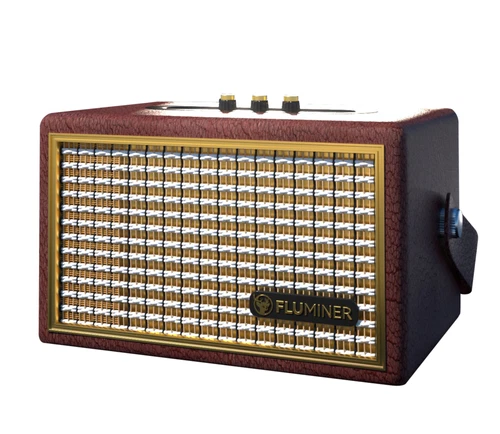
The best home mining hardware in 2026
Canaan Avalon Q 90T — the actual answer for most people
90 TH/s, 1,674 W, 18.6 J/TH, 110–240 V, about 45 dB, 455×130×440 mm and 10.5 kg. It is stocked as the Avalon Q 90T and as the Avalon Q 90T 90TH/s listing.
Using break-even $/kWh = hashprice ÷ (24 × J/TH), it stops earning at about 7.0 ¢/kWh at 27 July 2026 hashprice. That is the honest headline: at the US residential average of 18.44 ¢/kWh it does not make money. It is the best home machine on the market and it still needs cheap power, and we would rather tell you that now than have you work it out in month two.
It is worth buying anyway if you have sub-7-cent power, if you are running it as a heat source you were going to pay for regardless, or if you want to actually learn this rather than read about it. It is not worth buying as an income plan on a normal residential tariff. We put it head to head with a used machine in Avalon Q vs Antminer S19k Pro.
NerdQAxe++ — the hobby machine, and be clear that is what it is
The NerdQAxe++ runs four BM1370 chips for roughly 4.8 TH/s on a 12 V supply, drawing on the order of 76–80 W measured. It is silent enough for a desk, costs less than an electrician’s call-out fee, and uses the same chip generation as an S21 Pro.
It is a genuinely lovely object and an excellent way to understand pools, stratum, tuning and thermals with nothing at stake. It is a lottery ticket, not income. Solo mining at 4.8 TH/s against ~866 EH/s of network hashrate has odds you should not model as revenue. Buy it to learn or for the thrill. Do not buy it expecting a return.
Used S19-class machines — only in a detached building
A used S19-class miner gives you far more hashrate per dollar than anything else. It is also 3,250 W, 75 dB, 240 V and breaks even at about 4.0 ¢/kWh. In a detached garage, a barn, or a shop with cheap power, that is a strong buy and the reason people put up with the noise. In a house, it is a mistake, and we will tell you so before you order. If you are going that route, read how to buy a used ASIC miner first — grading and inspection matter far more on used hardware than the model number does.
Scrypt and altcoin machines at home
The Antminer L9 merged-mines Litecoin and Dogecoin, which is a real and long-running use case — but at 3,360 W and industrial noise levels it belongs in the same building category as an S19, not in a house. The full range is in Scrypt miners and altcoin ASICs.
What we would tell a friend
- Work out your real power rate first — the all-in number on the bill including delivery and fees, not the headline energy rate. Almost everyone quotes the wrong one, and it is usually the delivery charges that decide this.
- If that number is above about 7 ¢/kWh, do not buy a home miner as an investment. Buy one to learn, or host machines somewhere with 5.5–8.5 ¢ power, or do neither.
- Start with one machine. Every real problem — noise, heat, tripped breakers, a family member’s opinion — shows up on machine one and costs nothing to discover there.
- Budget for a spare PSU and fans from the beginning, not after the first failure. They are in repair parts.
- If you are buying it to run off solar, size the array first. A used S19 needs roughly 21.7 kW of panels and 63 kWh of battery to run continuously; the NerdQAxe++ needs about 0.5 kW. The panel and battery figures for every machine whose specification we publish are worked out from the wattage on each listing.
- If the heat has somewhere useful to go, the whole calculation changes. A miner heating a workshop you were heating anyway is displacing a cost, and that is worth more than a fraction of a cent per kWh.
The whole-market ranking by break-even rate is in best ASIC miners 2026, the arithmetic behind it in the ASIC miner buying guide, and everything we stock is in the full inventory. If you would rather just tell us the room and the power rate, ask us and we will tell you what fits — including when nothing does.
This page is deliberately a shortlist, because most mining hardware fails the first home constraint and there is no point ranking machines you cannot plug in. To check a machine that is not on it, the comparison table gives hashrate, wall draw and J/TH for everything we stock. Read it as a reference and not as a recommendation: it has no noise column, and nearly every machine on it is a 200–277 V industrial unit at around 75 dB that belongs in a separate building. Which machine belongs in a house is the question this page answers; the table will not answer it for you.
Frequently Asked Questions
What is the best ASIC miner for home use?
The Canaan Avalon Q 90T, because it accepts 110–240 V and runs at roughly 45 dB and 1,674 W. Every Antminer S19 and S21 needs 200–277 V and runs near 75 dB, which means an electrician, a dedicated circuit and a building nobody sleeps in. The Avalon Q still breaks even near 7.0 ¢/kWh, so it needs cheap power to earn — it is simply the only capable machine you can plug into an existing outlet.
Can I run an ASIC miner on a normal 110 V house outlet?
Only the Avalon Q and small hobby miners such as the NerdQAxe++ natively. Everything in the S19 and S21 families is specified for 200–277 V. Converter kits exist and work, but they solve a wiring problem rather than an energy one — the machine still demands the same power, you run it derated in firmware for proportionally less hashrate, and you are putting a continuous multi-kilowatt load on a circuit not designed for it. A converter is not a way to reduce electricity use.
How loud is a home Bitcoin miner?
An Antminer S19 is about 75 dB and an Avalon Q about 45 dB. Because decibels are logarithmic, that is roughly a thousandfold difference in sound intensity: a dishwasher in the next room versus a shop vacuum running continuously, day and night. Noise is the most underestimated home-mining spec and the most common reason a home miner is switched off and resold within a few months.
Is home Bitcoin mining profitable in 2026?
Not at the US average residential electricity rate of 18.44 ¢/kWh. The most efficient home machine, the Avalon Q at 18.6 J/TH, breaks even near 7.0 ¢/kWh at 14 August 2026 hashprice, and the most efficient industrial machine we list — the hydro-cooled S23 at about 9.5 J/TH, on preorder — clears about 13.7 ¢. Home mining makes money on genuinely cheap power, or when the heat displaces heating you were paying for anyway. Otherwise treat it as a hobby with a hardware cost.
How much heat does a home miner produce?
Essentially all of its power draw comes back out as heat: about 1,674 W continuously for an Avalon Q and around 3,250 W for an Antminer S19. That is a permanently-on electric space heater. Plan the heat path before buying — an outbuilding with airflow, a duct to outside, or a deliberate heat-reuse setup. In summer, in a closed room, the machine will thermally throttle and the room will be unusable.
Should I buy a used miner for home mining?
Only if it is going in a detached garage, barn or workshop. A used S19-class machine gives far more hashrate per dollar than anything else, but it is 3,250 W, around 75 dB, needs 240 V, and breaks even at about 4.0 ¢/kWh. Those constraints rule it out of a house. In a separate building with cheap power it is the strongest value on the market.
How many miners can I run at home?
Usually one, and occasionally a small handful in a detached building with an upgraded service. Each Antminer S19 draws about 13.5 A at 240 V, and because it is a continuous load you size the circuit at roughly 125% of that. Ten machines is 32.5 kW, which is beyond a typical residential service entirely. Start with one, measure the real noise, heat and power cost, then decide.