
Cloud Mining vs Buying Your Own Miner: An Honest Comparison
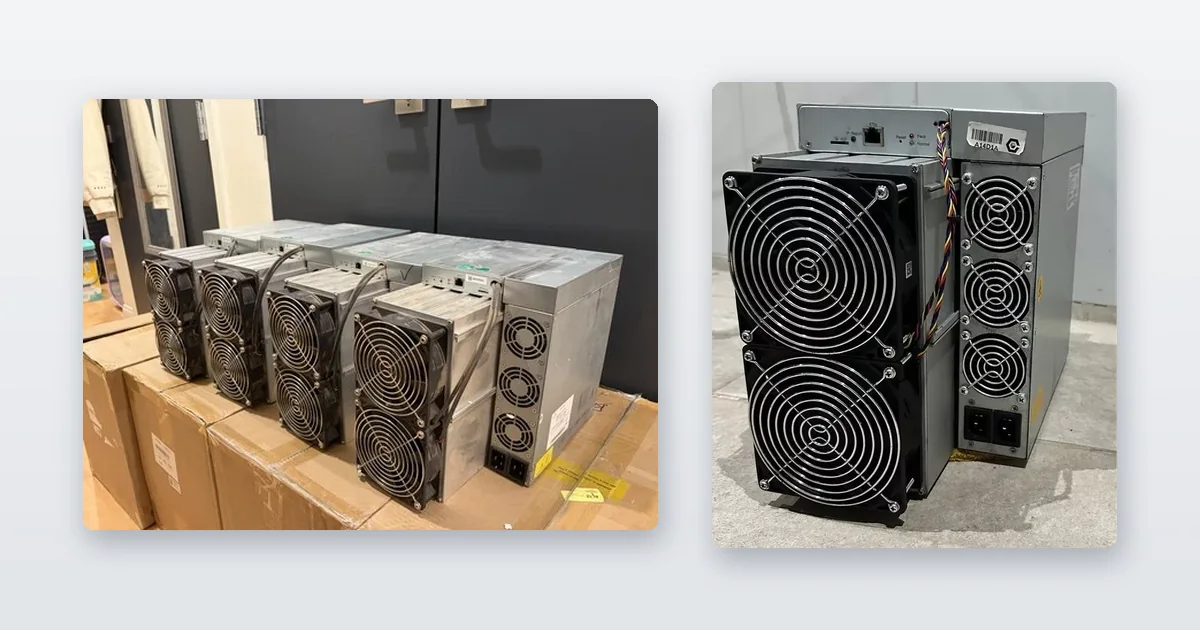
Cloud mining sells you the output of a machine without the machine. That is the whole appeal — no noise, no electrician, no 3,250 W of heat in your garage — and it is also the whole problem, because you end up with no asset, no way to verify the hardware exists, and a counterparty who can change the terms. Here is the honest comparison against owning the hardware, including the cases where cloud genuinely wins.
We sell miners, so treat the conclusion accordingly and check the arithmetic yourself. If you want the mechanics of how cloud contracts are structured rather than the buy-or-rent decision, that is in cloud mining explained.
The structural problem: you are paying someone else’s margin
A cloud mining operator owns machines, pays for power, and sells you the revenue from a slice of them. For that business to work, the price they charge you has to exceed what the hardware earns them. Otherwise they would simply mine it themselves and keep it.
That is not an accusation of fraud — it is arithmetic. It means a cloud contract is, by construction, priced above the return of the underlying hardware. You are buying convenience and paying for it out of the mining revenue. The question is whether the convenience is worth the spread, and how much of the spread you can actually see.
Usually you cannot see it at all. Most contracts quote a hashrate and a maintenance fee without disclosing the machine model, its efficiency, or the electricity rate at the site. Those three numbers determine everything, and their absence is the single biggest difference between a cloud contract and owning a miner.
The maintenance fee is where contracts die
Nearly every cloud contract carries a daily “maintenance” or “electricity” fee deducted from your mined output, and nearly every one reserves the right to suspend the contract if that fee exceeds what your hashrate earns.
That clause is the important one, because it transfers the downside to you and keeps the upside symmetric at best. When hashprice falls — which it does after every difficulty rise and every halving — your revenue drops toward the fee. When it crosses, the contract stops. You do not get the hardware, you do not get a refund, and you have no residual asset. You own nothing that can be switched back on if conditions improve.
Owning a machine in the same downturn leaves you with a machine. You shut it off, it keeps its resale value, and you switch it on again when hashprice recovers. That optionality is worth real money and no cloud contract includes it.
What you can verify, in each case
| Cloud contract | Owning the miner | |
|---|---|---|
| Machine model and efficiency | Usually undisclosed | On the label |
| Electricity rate | Undisclosed, bundled into fees | Your own bill |
| That the hardware exists | Cannot be verified | It is in front of you |
| Asset at end of term | None | The machine, at resale value |
| Ability to stop and restart | Operator’s decision | Yours |
| Upfront capital | Low | High |
| Electrical work required | None | Dedicated circuit |
| Noise and heat | None | ~75 dB, all of the heat |
The top half of that table is why cloud mining has such a long history of failure. The bottom half is why people keep buying it anyway, and those reasons are real.
How to tell a contract apart from a Ponzi
Some cloud mining is legitimate. A great deal of what is marketed as cloud mining has been an investment scheme paying earlier participants out of later deposits, with no hardware anywhere. The distinguishing signs are not subtle:
- A fixed daily return quoted as a percentage. Mining revenue varies with hashprice and difficulty. Nothing about it is fixed. A promised daily percentage is not a mining product.
- Referral commissions. If recruiting other buyers pays better than the mining does, recruitment is the business.
- No named hardware, no site, no operator. A real operation can say what it runs and where.
- Withdrawal minimums that keep rising, or a requirement to reinvest to withdraw.
- Returns that ignore the halving. The block subsidy fell to 3.125 BTC in April 2024 and halves again around 2028. Any projection that does not step down at that point has not been modelled at all.
A useful test: ask which machine model your hashrate runs on and what the site pays per kilowatt-hour. A legitimate operator can answer. The answer also lets you check the contract against the arithmetic below.
If you want to see the pattern above play out end to end, our write-up of the RCO Finance collapse follows one scheme from sponsored press coverage to frozen withdrawals — the presale trap, the “claim your bonus” withdrawal fee, and the regulator warnings that arrived after the money had gone.
Checking a contract against owning
You can price a cloud contract properly with the same formula that governs everything else in mining:
Break-even electricity rate ($/kWh) = hashprice ÷ (24 × J/TH)
At a hashprice of about $32.7/PH/day on 27 July 2026, with difficulty at 126.23 T, network hashrate around 866 EH/s and Bitcoin near $65,247, a 23 J/TH machine such as an Antminer S19k Pro breaks even on power at roughly $0.059/kWh. A 15 J/TH S21 Pro breaks even near $0.091/kWh.
Now compare. Take the contract’s quoted hashrate, work out what it grosses per day at current hashprice, subtract the daily maintenance fee, and you have the contract’s net yield. Compare that against buying the equivalent hashrate outright and paying your own power. If the contract nets less and leaves you with no hardware at the end, it is only worth it for the convenience — which is a legitimate thing to buy, as long as you know that is what you are buying. All these figures move daily, so run them on the day you decide.
Hosting: the option most people should be comparing instead
The middle ground is usually a better fit than either extreme. In a hosting arrangement you buy the machine and someone else runs it in a facility with industrial power rates. You keep the asset, you can see its serial number, you get the hardware back or sell it, and you avoid the noise, heat and electrical work. Retail hosting in the US has typically run in the region of 6–9 ¢/kWh all-in, or a flat monthly rate per machine.
That combines most of cloud mining’s convenience with actual ownership, and it removes the two things that make cloud contracts dangerous: you know what machine you have, and nobody can terminate your position and keep it. It is not free of counterparty risk — a hosting provider can still fail, and you want a written agreement covering what happens to your hardware if it does — but the risk is bounded by the fact that you own something.
Whether hosting makes sense depends on your power rate at home. If you already have sub-5-cent electricity, host nothing and run the machines yourself. If you are on a residential tariff — the US average was 18.44 ¢/kWh in May 2026 per the EIA — no machine on the market currently breaks even at home, and hosting is the difference between mining and not mining.
When cloud mining actually makes sense
Three honest cases:
- You want to understand mining before committing capital. A small short-term contract is a cheaper education than a machine you cannot power. Treat the money as tuition.
- You genuinely cannot host hardware anywhere — apartment, lease restrictions, no access to a facility — and you have exhausted hosting options.
- You want exposure without operations, and you have accepted that you are paying a premium for that and will hold no asset.
In every one of those cases, keep the term short, keep the amount small enough to lose, and re-read the suspension clause before signing.
If you are leaning the other way, the practical starting points are what you actually need to start mining for the electrical reality, how to buy a used ASIC miner without getting burned if you are buying second-hand, and the ASIC miner buying guide for the full break-even table. Stock is in used ASIC miners and the full ASIC miner inventory.
Frequently Asked Questions
Is cloud mining better than buying your own miner?
Usually not on returns, because the operator has to charge more than the hardware earns them for the business to work. Cloud buys convenience — no electrical work, no noise, no heat — at the cost of holding no asset and being unable to verify what hardware you are paying for. Owning leaves you with a machine you can switch off, keep, and resell when conditions turn.
Why do cloud mining contracts get suspended?
Because nearly all of them deduct a daily maintenance or electricity fee from your mined output and allow suspension if that fee exceeds what your hashrate earns. When hashprice falls after a difficulty rise or a halving, revenue drops toward the fee and the contract stops. You typically receive no refund and no hardware, so there is nothing left to restart later.
How can I tell if a cloud mining site is a scam?
Look for a fixed daily percentage return, referral commissions, no named hardware or facility, rising withdrawal minimums, and projections that do not step down at the halving. Mining revenue varies continuously with hashprice and difficulty, so a guaranteed fixed daily rate is not a mining product. Asking which machine model your hashrate runs on and what the site pays per kilowatt-hour is a fast filter.
What is hosting and how is it different from cloud mining?
In hosting you buy the machine yourself and pay a facility to run it, so you keep ownership, know the serial number, and can retrieve or sell the unit. Cloud mining sells you the output of hardware you never own and often cannot identify. Hosting keeps most of the convenience while removing the two risks that make cloud contracts dangerous.
Can I mine profitably at home instead?
Only with cheap electricity. Divide hashprice by 24 times a machine’s J/TH to get its break-even power rate — around $0.059/kWh for a 23 J/TH machine at late-July 2026 hashprice. The US residential average was 18.44 cents in May 2026, well above that, which is why home mining generally needs a below-average tariff, heat reuse, or a hosting arrangement to make sense.
Do I get the hardware at the end of a cloud contract?
No. A cloud contract sells the output of hashrate for a period, not the machine producing it. When the term ends or the contract is suspended you hold nothing, which is the central difference from buying a miner, where the residual resale value of the hardware is a real part of the return.