
Air-Cooled ASIC Miners and Fleet Lots
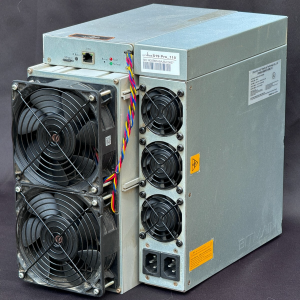
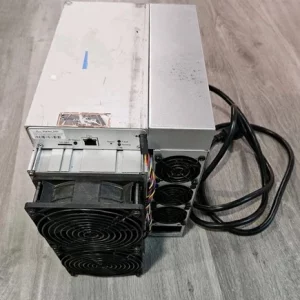
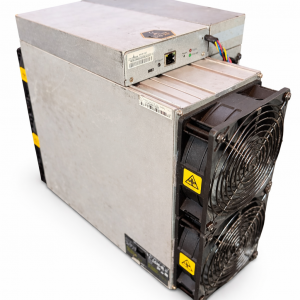
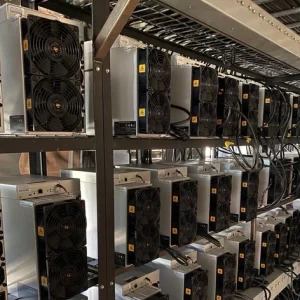
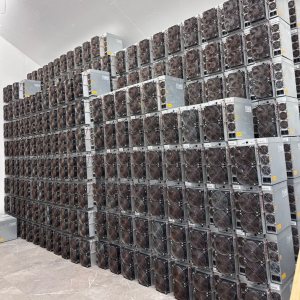
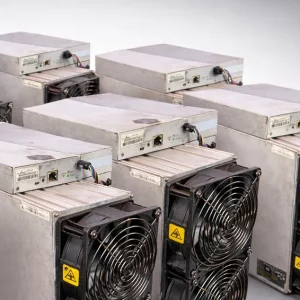
Every miner we stock that runs on air, in one place — 70 listings from eleven manufacturers: Bitmain, MicroBT, Canaan, Bitdeer, IceRiver, Goldshell, ElphaPex, VolcMiner, Fluminer, Pinecone and Bitaxe. Thirty-nine mine Bitcoin, nineteen are Scrypt machines for Litecoin and Dogecoin, and twelve are for Kaspa, Aleo, Dash, CKB and other altcoins. No loop, no tank, no plumbing, no facility retrofit: air in, air out, and they work. Nineteen are used or refurbished, including fleet lots of 5, 10, 20, 40, 50, 100 and 300 Antminer S19s, and used stock is listed first on this shelf deliberately — it is what we know best and it is what operators buying at volume are actually after.
-
Add to WishlistAdd to Wishlist
-
Add to WishlistAdd to Wishlist
-
Add to WishlistAdd to Wishlist
-
-
Add to WishlistAdd to Wishlist
-
Add to WishlistAdd to Wishlist
-
Add to WishlistAdd to Wishlist
-
Add to WishlistAdd to Wishlist
Why most buyers should start here
Hydro and immersion get better efficiency numbers, and those numbers are real. But they are numbers you cannot access without infrastructure that costs more than the miners. Unless you already have a loop and heat rejection built, an air-cooled machine is the only one you can actually earn with this month.
What air cooling costs you
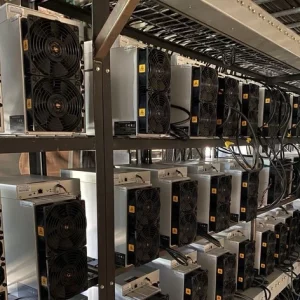
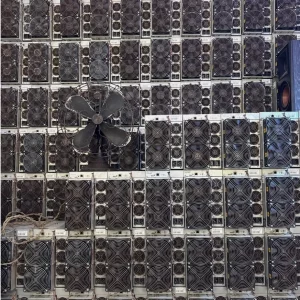
Two things, and both are practical rather than financial. Noise: most of this shelf sits around 75 dB at the machine, continuously. That is not a bedroom, an office or a shared wall — it is a garage, a shed, a barn or a purpose-built room. Heat: a 3.6 kW miner puts 3.6 kW of heat into the room. In summer that has to go somewhere, and ducting it out is not optional in most climates.
Ten machines here are the exception
Air cooling is not one kind of machine, and this is the split that decides where a miner can live. Ten listings on this shelf publish a noise figure of 60 dB or below, each on its own listing: the Goldshell XT Box 580G at ≤35 dB, the Mini DOGE III at 35 dB, the Avalon Nano3s at 33–40 dB, the IceRiver AE0 at 45 dB, the Fluminer L1 Pro at ≤45 dB, the ElphaPex DG Home1 at ≤50 dB, the Fluminer T3 115T at about 50 dB, the Avalon Mini3 at 33–55 dB, the VolcMiner D1 Mini Pre at ≤55 dB and the Pinecone INI Box at ≤60 dB. The Avalon Q 90T is 45–65 dB depending on its power mode.
Voltage splits the same way and it is the harder constraint. Eight of these listings state an AC input that starts at or below 110 V, so they run on an ordinary North American household circuit. Everything else on this shelf is a 200 V-class machine and no adapter changes that. Read the input voltage row on the listing itself before you plan a circuit — where our sources disagree, as they do on the Fluminer L1 Pro, the listing says so rather than picking the convenient number.
Choosing between them
Efficiency is the whole ladder. Among the new air-cooled Bitmain Bitcoin machines here it is a clean one: the S21 XP 270T is 13.5 J/TH at 3,645 W, the S21 Pro models are 15 J/TH, the S21+ is a step behind, and the S19k Pro sits at 23 J/TH — 115 TH/s at 2,645 W or 120 TH/s at 2,760 W.
The honest split: if you pay anything like retail power, buy the S21 XP or S21 Pro and accept the higher entry price, because efficiency is what keeps a machine alive through difficulty rises. The S19k Pro’s appeal is its lower power draw per machine, which makes it easier to fit onto a modest domestic circuit — it is a good first miner and a poor tenth one.
What the new Bitmain machines need from your panel
None of the seven new Bitmain machines runs on a 120 V household outlet. What the page above has not said is that those seven carry two different voltage ratings, and in a commercial building the difference decides the purchase.
Bitmain rates the S21 family — the S21 XP 270T, both S21 Pro bins and both S21+ bins — at 220–277 V. That puts 208 V, the leg-to-leg voltage in the 120/208 V service most US commercial buildings have, below the manufacturer’s rated minimum. The two S19K Pro listings are rated 200–240 V and will take it. If your building is 208 V, that is not a detail, it is the shortlist.
Then the current, which is watts divided by volts and nothing more exotic. At 240 V: the S19K Pro 115T draws about 11 A and the 120T about 11.5 A; the S21 Pro 234T about 14.6 A; the S21+ 216T about 14.9 A; the S21 XP 270T about 15.2 A; the S21 Pro 245T about 15.3 A; the S21+ 235T about 16.2 A. A miner is a continuous load, and a continuous load is allowed 80 per cent of a breaker’s rating — 16 A on a 20 A circuit. Six of those seven fit on a dedicated 20 A, 240 V circuit. The S21+ 235T does not. At 240 V it is already over the line, and at the bottom of its own voltage range it draws nearer 17.6 A, so it wants a 30 A feed.
Those figures are the input to a conversation with an electrician, not a substitute for one: conductor size, breaker type, distance and local code are all theirs to decide. The full method, including why the 80 per cent rule exists, is on ASIC miner power requirements.
Heat and noise, in numbers you can check
An air-cooled miner is a resistive heater that happens to hash, and every watt it draws lands in the room it is standing in. A 3,645 W machine is about 12,400 BTU/hr — more heat than a one-ton portable air conditioner can remove, running continuously, all year. In a garage in January that is a feature. In the same garage in July it is the reason people sell machines at a loss.
Noise does not vary usefully across the Bitmain machines: all seven new ones are rated around 75 dB, and so is every used S19 on this page — each of those listings publishes its own figure of about 75 dB from four fans. That is simply what four high-static-pressure fans sound like, and no Antminer here is the quiet one. If the room in question has a person in it, the answer is further down this same shelf: the Canaan Avalon Q 90T at 45–65 dB and the Nano3s at 33–40 dB, or the Fluminer home range. Less hashrate, and a machine you can live in the same building as.
Who this suits
Home and small-site miners, anyone shipping to a hosting facility that takes air-cooled units, and operators who want machines that can be redeployed anywhere without infrastructure.
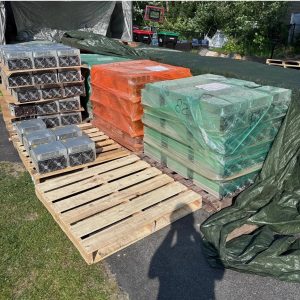
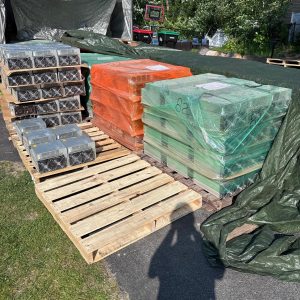
Nineteen of these seventy listings are second-hand, and for anyone buying at volume that is the end of the shelf worth reading: the used S19, S19 XP and S19k Pro listings here are the same air-cooled machines as the new ones, at a fraction of the price per terahash, and every one of them states its own grade on its own listing. The rest of that stock is on the used and refurbished shelf, and if you are buying by the pallet rather than the unit, start at bulk used ASIC miners. If you do have a facility, compare against hydro-cooled and immersion models. The full Bitmain range is in Antminer BTC miners, and everything we stock is in all miners.
If your site cannot take a water loop, this is your category. The Antminer S21+ 216T is the current-generation Bitmain option at 16.5 J/TH. The S19K Pro 120T and the S19K Pro 115T are the previous generation at 23 J/TH — less efficient, cheaper to buy, and still covering their own electricity below 5.8¢/kWh against a hashprice of $32.18/PH/day derived on 9 August 2026. That break-even moves with hashprice, so re-run it on the day you buy.
Re-running that break-even is one division: hashprice ÷ (24 × J/TH). Our ASIC miner buying guide works it through line by line, including why the machine’s hashrate cancels out of it entirely — which is the reason the S21 Pro 234T and the S21 Pro 245T share a break-even electricity price despite being eleven terahash apart. Both are 15 J/TH.