
ASIC miner electricity rates: what a fleet actually pays per kWh
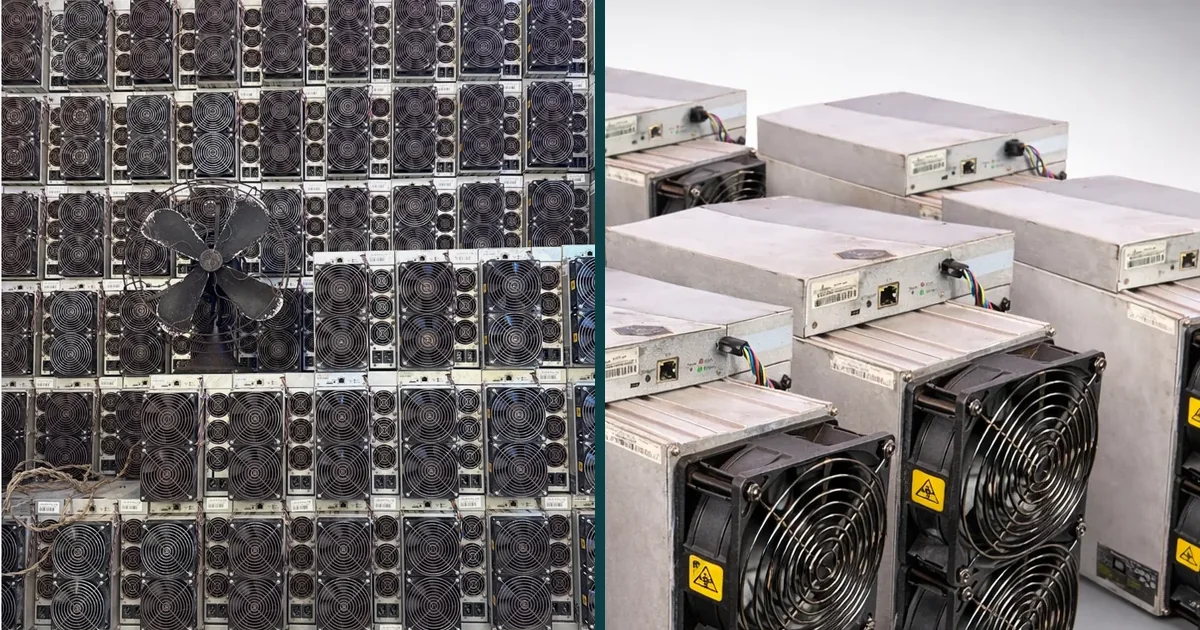
The ASIC miner electricity rate that decides a fleet is the delivered rate: everything on the bill, divided by the kilowatt-hours. It is not the energy line, it is not the figure in the utility’s brochure, and it is not the EIA average. Every break-even number this site publishes — about 3.8¢/kWh for a used Antminer S19 and 8.7¢ for a new S21 Pro at the 16 August 2026 hashprice of $31.21 per PH/s per day — is waiting for that one input, and most buyers hand it the wrong number. This page is about the right one: what a commercial power bill is actually made of, why a 24/7 mining load reads the same tariff cheaper than any other business on it, and what to ask the utility before you wire five figures for a pallet of machines.
Two of our own guides — what to do with a miner that stops paying and the five mistakes that cost first-time buyers — already tell you to use the delivered rate, demand charges included. This page is the one they were pointing at: what those words mean, line by line, at fleet scale.
The delivered rate: the only number a break-even formula accepts
Take a real, recent monthly bill. Divide the total dollars — energy, demand, delivery, riders, taxes, fees, everything — by the total kilowatt-hours. That quotient, in cents per kWh, is your delivered rate, and it is the only number that belongs in break-even arithmetic. On many commercial tariffs the energy line is barely half the bill, so a buyer who plans against it is planning with a rate that can be thirty to fifty percent better than the one their meter will actually produce.
The formula every machine on this site is judged by is: break-even delivered rate = hashprice ÷ (24 × J/TH). At $31.21 per PH/s per day — the 16 August 2026 figure the optimisation ladder runs on — a used S19 at 34.2 J/TH stops earning above 3.8¢/kWh delivered, and a new S21 Pro at 15.0 J/TH above about 8.7¢. Hashprice moves daily, so those thresholds move daily; the formula is the part that keeps. The full machine-by-machine version, held against the power price bands, is which miner is worth buying at each power price.
The four lines on a commercial power bill
Tariffs differ by utility and by state, but a demand-metered commercial or industrial bill in the United States is almost always these four pieces:
- The customer charge. A fixed monthly fee for being connected. Trivial at fleet scale; it only distorts the delivered rate of very small loads.
- The energy charge. Cents per kilowatt-hour, sometimes split by season or by time of day, often carrying a separate fuel or purchased-power rider that moves month to month. This is the line people mistake for their rate.
- The demand charge. Dollars per kilowatt, billed on the highest average draw the meter sees in any interval — typically fifteen or thirty minutes — during the billing month. For a fleet of miners running flat out, that peak is simply the connected load: forty used S19s is 130 kW on the demand line, every month, by arithmetic rather than by bad luck.
- Delivery, transmission and riders. The charges for the wires rather than the energy, plus whatever surcharges the state has approved. Individually small, collectively real cents per kWh.
None of this is exotic — it is how most of the country’s commercial power has been billed for a century. What is unusual about a mining fleet is what it does to the second and third lines, and that is the next section.
Load factor: the one advantage a mining fleet has on any tariff
Load factor is the fraction of the month your billed peak was actually used: kilowatt-hours consumed, divided by peak kilowatts times 730 hours. A restaurant that peaks hard at dinner might run twenty or thirty percent. A mining fleet that never stops runs at essentially one hundred percent — the meter’s peak interval and its average interval are the same interval. Miners are, by this measure, the best load a demand-metered tariff can host, and it is the single honest piece of leverage a fleet buyer has when talking to a utility.
Load factor is what dilutes a demand charge into the delivered rate. Spread over a flat month, dollars per kilowatt become cents per kilowatt-hour: demand ÷ (730 × load factor). What that means side by side:
| Demand charge | Flat mining load (load factor 1.0) |
A 30% load-factor business |
|---|---|---|
| $5 per kW-month | +0.68¢/kWh | +2.28¢/kWh |
| $10 per kW-month | +1.37¢/kWh | +4.57¢/kWh |
| $20 per kW-month | +2.74¢/kWh | +9.13¢/kWh |
The demand-charge levels are illustration points, not a survey of tariffs — real charges vary widely by utility and rate class. The division is the part to take away: the same tariff line costs a flat load a third of what it costs everyone else per kilowatt-hour.
This is also why a miner should be suspicious of one instinct: shutting down for a few expensive hours a day. Done casually it wrecks the load factor while the demand charge stays pinned at the same peak — the meter only needs one fifteen-minute interval at full draw to bill the whole month’s demand at it. Curtailment can absolutely pay, but only inside a tariff built for it, which is the time-of-use section below.
What each machine adds to the bill
The table below prices every machine we stock as a line on a power bill: connected kilowatts — which, for a flat load, is also the billed demand — the energy a 730-hour month meters, and what that energy costs at three delivered rates. Wattages come from the same shared specification array as the comparison table, so this page cannot disagree with the rest of the site about what a machine draws. Prices are deliberately absent: the bill does not care what you paid for the machine, which is precisely why cheap used hardware and expensive new hardware meet the same meter as equals — the argument fleet economics per megawatt makes in full.
Used machines → · Compare every machine on efficiency → · Circuits and breakers for these loads → · Browse everything in stock →
What a lot adds: the fleet sizes on this shelf
The lot listings on this shelf on 17 August 2026 run from 5 machines to 300. Here is each size as its utility will meter it, at Bitmain’s factory rating for the base Antminer S19 — 3,250 W a machine. The arithmetic is printed so you can redo it for any machine and any count.
| Lot | Billed demand | kWh / month | At 4¢ | At 7¢ | At 10¢ |
|---|---|---|---|---|---|
| 5 machines | 5 × 3,250 W = 16.25 kW | 11,862 | $474.50 | $830.38 | $1,186.25 |
| 10 machines | 10 × 3,250 W = 32.50 kW | 23,725 | $949.00 | $1,660.75 | $2,372.50 |
| 20 machines | 20 × 3,250 W = 65.00 kW | 47,450 | $1,898.00 | $3,321.50 | $4,745.00 |
| 40 machines | 40 × 3,250 W = 130.00 kW | 94,900 | $3,796.00 | $6,643.00 | $9,490.00 |
| 50 machines | 50 × 3,250 W = 162.50 kW | 118,625 | $4,745.00 | $8,303.75 | $11,862.50 |
| 100 machines | 100 × 3,250 W = 325.00 kW | 237,250 | $9,490.00 | $16,607.50 | $23,725.00 |
| 300 machines | 300 × 3,250 W = 975.00 kW | 711,750 | $28,470.00 | $49,822.50 | $71,175.00 |
Each lot links its own listing. The firmware-boosted 110 TH/s lots draw more than the factory 3,250 W — holding factory efficiency, about 3,763 W a machine — so read every row as a floor, not a promise. Which sizes exist, and what each one settles for a first order, is how many machines a first order should be.
Two things fall out of that table. First, the demand column is not optional reading: at a hundred machines the meter registers 325 kW, which on many commercial tariffs is past the threshold where the utility moves you to a different rate class, a different metering interval, and sometimes a required service upgrade — the wiring side of that story is ASIC miner power requirements. Second, the spread between the 4¢ and 10¢ columns at any size is the whole game: on a hundred machines it is $14,235.00 a month, every month, for the identical hardware doing identical work.
The ASIC miner electricity rate you actually need, and where it exists
Here is the honest map, using the EIA’s May 2026 national averages — 18.44¢/kWh residential, 13.54¢ commercial, 8.71¢ industrial (Electric Power Monthly, Table 5.3; the residential figure is the same one the rest of this site uses). The averages above are averages of what was billed, not offers — but they set the scale honestly:
- At the residential average, nothing earns. Not one machine we sell covers its power bill at 18.44¢, including the most efficient. Home mining at a normal utility rate is buying heat and a hobby — the ASIC miner buying guide has said so for months, and what the heat is actually worth prices what the heat is honestly worth.
- At the commercial average, exactly one machine on this shelf clears, by about one percent. The threshold at 13.54¢ works out to 9.6 J/TH, and the only machine we stock below it is the Bitmain Antminer S23 Hyd 580T Mix – 580 TH/s Hydro-Cooled Bitcoin Miner at 9.5 J/TH — earning about $0.34 per PH/s per day over its power, a margin one ordinary difficulty adjustment erases.
- At the industrial average, the current generation clears and everything older does not. The threshold at 8.71¢ is 14.9 J/TH. A new S21 Pro at 15.0 J/TH sits about $0.15 per PH/s per day underwater — a coin flip, not a business — and a used S19’s power bill at that rate is $71.49 per PH/s per day against $31.21 of revenue: more than double.
So the rate a used-S19 fleet needs — under about 3.8¢ delivered — is less than half the average American industrial rate. That is not a reason to give up; it is the reason the machines are cheap, and it tells you exactly where they belong: behind the meter of someone who already owns generation, on curtailed or stranded power, on flare gas, in a hosting slot priced at a genuinely industrial rate, or in the handful of utility territories whose published industrial tariffs sit far below the national average. who owns the power problem maps who owns the power problem in each of those arrangements, and the S19 vs S19k Pro comparison says the same thing from the machine’s side: if you are reading your rate off an ordinary utility bill, the cheap end of the used market is not priced for you.
Time-of-use, interruptible and demand response: which discounts fit a flat load
Time-of-use pricing fits a miner badly. A tariff that rewards moving consumption to cheap hours assumes you can move it. A miner cannot shift work to 2 a.m. — it was already running at 2 a.m. Running only off-peak cuts revenue nearly in proportion to the hours kept, and unless the on-peak and off-peak prices straddle the machine’s break-even — earning below it off-peak, losing above it on-peak — part-time running just spreads the same capital over fewer earning hours.
Interruptible and demand-response tariffs fit a miner unusually well, and they are the discount worth chasing. A utility pays or discounts for the right to curtail you during system peaks because most industrial loads suffer real damage when cut — scrapped batches, restarted furnaces, idled crews. A mining fleet loses exactly its own revenue for exactly the curtailed hours, and nothing else. You are selling the utility an option that is cheaper for you to write than for any other customer they have. We are not going to invent the credit — programmes differ per utility and many are negotiated — but if your tariff sheet has an interruptible rider, price it before anything else on the page.
A worked bill: forty used S19s, read backwards
An illustration, not a quote — the tariff numbers here are round figures chosen to show the mechanics. Forty used S19s at 3,250 W is 130 kW connected, 94,900 kWh in a 730-hour month. Put it on a tariff with a 4.5¢ energy charge, a $10/kW demand charge and $300 of fixed charges and riders:
- Energy: 94,900 kWh × 4.5¢ = $4,270.50
- Demand: 130 kW × $10 = $1,300.00
- Fixed and riders: $300.00
- Total: $5,870.50 ÷ 94,900 kWh = 6.19¢/kWh delivered
The energy line said 4.5¢. The meter says 6.19¢ — thirty-seven percent worse, on a bill with nothing unusual on it. Against a used S19’s 3.8¢ break-even, this fleet is not close: at the 16 August 2026 hashprice it earns about $3,607.36 a month and pays $5,870.50 for power, losing roughly $2,263.14 a month before a single fan fails. The buyer who signed this tariff thought they had 4.5¢ power. This arithmetic, run before the order instead of after, is the whole reason this page exists — and it is why what to do with a miner that stops paying lists changing what you pay for electricity as worth more than every other fix combined.
What to ask the utility before you order the lot
One phone call to the utility’s business office, before the machines are ordered, with the connected kilowatts from the tables above in front of you. Ask for:
- The rate class your load lands in at that many kilowatts, and the full published tariff sheet for it — not the summary page. The class is set by the utility’s own rules on service size and voltage, not by what you ask for.
- The demand charge and its measurement: dollars per kW, the interval length, and whether the tariff carries a ratchet — a clause that bills a percentage of your highest recent peak for months afterwards. A ratchet is harmless to a flat load while it runs and expensive to one that shuts down, because the peak keeps billing after the machines stop.
- Every energy-adjacent line: energy charge by season and hour, fuel or purchased-power riders and how much they moved in the last twelve months, delivery and transmission charges, taxes.
- An estimated delivered rate at your load factor. Tell them the load is flat, 24/7, near one hundred percent load factor, and ask them to model the monthly bill at your kilowatts. Most business offices will.
- Interruptible or demand-response options, and what they pay or discount.
- What the service itself can carry: available capacity on the transformer, upgrade cost and lead time if it is short, deposit and contract term for a new commercial account. The circuits on your side of the meter are ASIC miner power requirements.
If you are pricing a lot from us, put the answer in the enquiry: tell us your delivered rate — or the tariff sheet, and we will read it — along with the quantity, and we will tell you plainly which machines on everything in stock clear it and which do not, including when the honest answer is that nothing does. The form is on request a quote, or call +1 (781) 577-0377 or email ns@ingmining.com. Freight for the sizes above is on shipping and delivery and the observed costs are on our lot data page.
What this page will not tell you
- A specific utility’s tariff. We are not going to name a utility’s tariff here: charges differ by territory, class and revision, and a number copied onto this page would be wrong somewhere on the day it was published. Read the tariff sheet for your own rate class — it is public, and the checklist above is how.
- A state ranking for cheap power. Averages flatten exactly the special situations — curtailment, co-op territories, behind-the-meter deals — where mining power actually lives.
- A profitability promise at any rate. Break-evens on this page carry their date and their formula because hashprice moves daily. Run the formula with today’s number before believing anything — ours included.
- Whether your utility will welcome the load. Some court miners, some surcharge them, and policies change faster than pages. Ask; it is one more question on the same call.
Questions buyers ask about mining electricity rates
What is a delivered electricity rate?
The total monthly bill divided by the kilowatt-hours used, in cents per kWh – energy, demand, delivery, riders, taxes and fees all included. It is the only electricity figure that belongs in mining break-even arithmetic, and on many commercial tariffs it is thirty to fifty percent higher than the energy line people usually quote.
What is a demand charge on a commercial power bill?
A charge in dollars per kilowatt, billed on the highest average draw the meter records in any single interval – usually fifteen or thirty minutes – during the month. A fleet of miners running continuously is billed demand equal to its connected load: forty machines at 3,250 W is 130 kW on that line every month.
Do demand charges hurt a Bitcoin mining fleet?
Less than they hurt any other business on the same tariff. Spread over a flat month, a $10 per kilowatt demand charge adds about 1.37 cents per kWh for a load that never stops, against roughly 4.57 cents for a business at thirty percent load factor. The dollars are real, but a miner dilutes them over three times as many kilowatt-hours.
What is a demand ratchet?
A tariff clause that keeps billing a percentage of your highest recent peak – often for eleven or twelve months after it happens. A flat mining load barely notices a ratchet while it runs, because every month looks like the peak month. It matters when you stop: shut the fleet down mid-contract and the ratchet can keep charging for demand no machine is drawing.
Can a mining operation get an industrial electricity rate?
Rate class is assigned by the utility’s tariff rules – service size, voltage and usage – not chosen by the customer, and a few hundred kilowatts of miners often lands in a demand-metered commercial class rather than a true industrial one. Ask which class your connected kilowatts fall into before ordering hardware, because the delivered rate differs between classes on the same street.
Is the EIA average electricity price what a miner will actually pay?
No. The EIA figures are averages of what whole sectors were billed – 18.44 cents residential, 13.54 commercial and 8.71 industrial per kWh in May 2026 – and your tariff, load factor and riders decide where you land against them. They are useful for scale, and this page uses them only for that: at those averages, almost nothing mines profitably, which is why real mining power comes from specific situations rather than average connections.
Where to go next
For the machine choice, which miner is worth buying at each power price ranks the shelf by the delivered rate each machine tolerates, and the comparison table sorts every machine on efficiency next to its live price. For the capital side, fleet economics per megawatt turns this page’s kilowatts into fleet arithmetic, and how many machines a first order should be is the order-size question. The machines themselves are on the used shelf and everything in stock; with your own number from a real bill in hand, request a quote and we will quote against it.