
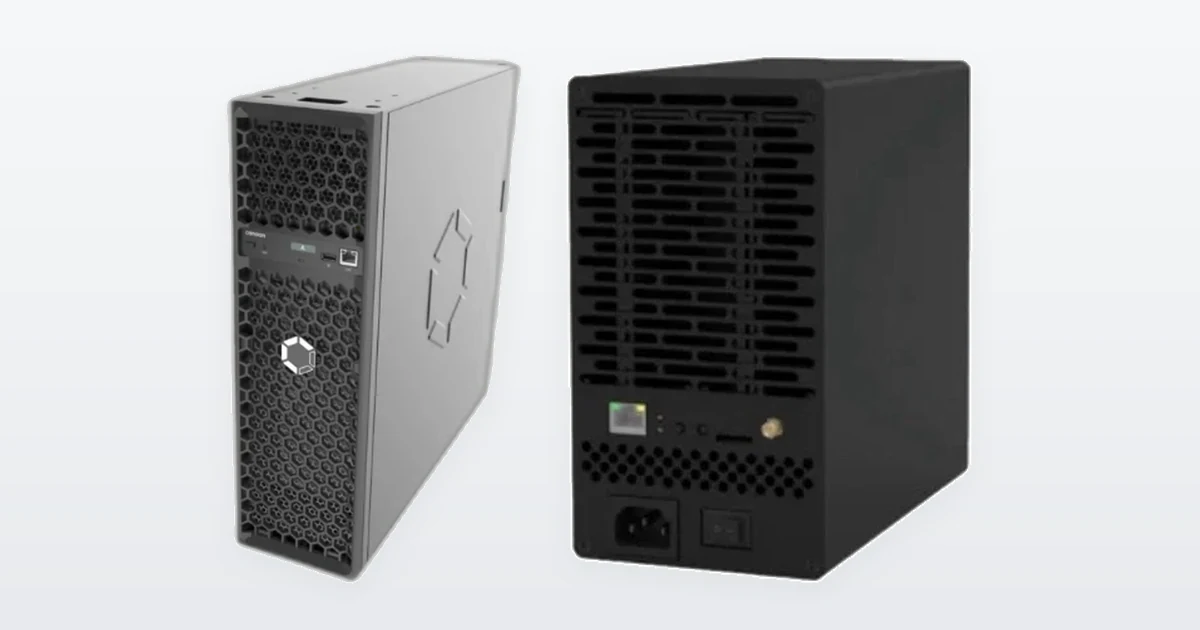
Almost every beginner who loses money on an ASIC miner makes the same mistake: they compare machines on price and terahash, and never work out the electricity rate at which their machine stops earning. That one number decides everything, and it is the number no listing leads with. Here are the five mistakes that actually cost first-time buyers money, in the order they usually happen — written by people who resell the machines when they come back.
This page names the mistakes and links only to our own stock. It does not send you to other marketplaces.
Mistake 1: buying on hashrate instead of break-even electricity rate
Terahash tells you how big a machine is, not whether it earns. The number that decides that is:
Break-even electricity rate ($/kWh) = hashprice ($/PH/day) ÷ (24 × J/TH)
Hashrate cancels out entirely. What is left is a single figure in dollars per kWh that you hold against your actual power bill. At 27 July 2026 hashprice of about $32.7 per PH/s per day:
- A current-generation machine at 15 J/TH breaks even near 9.1 ¢/kWh
- A Canaan Avalon Q at 18.6 J/TH breaks even near 7.0 ¢/kWh
- A used Antminer S19 at 34.2 J/TH breaks even near 4.0 ¢/kWh
The US average residential rate is 18.44 ¢/kWh. Read those two facts together and the uncomfortable conclusion is unavoidable: at average US home power, no ASIC on the market is profitable right now. Beginners who understand this before buying make good decisions. Beginners who learn it in month two sell a barely-used machine at a loss, which is frequently how it reaches us.
The full method is in the ASIC miner buying guide, and every machine ranked by this number is in best ASIC miners 2026.
Mistake 2: using the wrong electricity rate in the calculation
Nearly everyone quotes the energy rate off the top of their bill. The number you need is the all-in delivered rate: total bill divided by total kWh, including delivery, distribution, demand charges, taxes and fees. On many tariffs delivery is close to half the bill, so the honest figure is often far above the one people plan with.
Do this before anything else. Take last month’s bill, divide the dollars by the kilowatt-hours, and use that. If it lands above about 9 ¢, no machine on the market earns for you at home, and the correct next step is hosting or nothing — not a cheaper miner.
Mistake 3: buying a 240 V industrial machine for a house
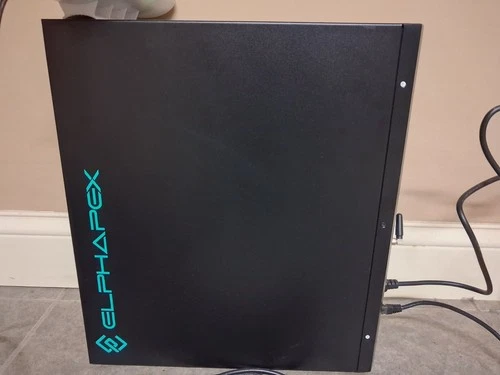
Every Antminer S19 and S21 is specified for 200–277 V and runs at roughly 75 dB. A North American house outlet is 120 V. So an S19 in a spare room means an electrician, a dedicated circuit and a permit before the machine is even plugged in — and then a permanently-running appliance about as loud as a shop vacuum, dumping 3,250 W of heat into the room.
The Canaan Avalon Q 90T exists precisely for this: 110–240 V, about 45 dB, 1,674 W. It is the machine we recommend to nearly everyone buying their first miner for a home, and the reasoning is worked through in the best mining hardware for home.
If the machine is going in a detached garage, barn or workshop, the calculation flips and a used S19-class machine gives far more hashrate per dollar. The building decides the machine, not the other way round.
Mistake 4: believing the listing title
Marketplace listing titles — including some of our own, inherited from imports — routinely overstate. Three patterns to recognise:
- Overclocked hashrate quoted as the machine’s spec. A factory Antminer S19 is 95 TH/s. A listing advertising 110 TH/s is describing a firmware overclock that draws meaningfully more than the datasheet 3,250 W. Size your circuit off the measured draw, not the badge.
- Efficiency figures that were back-computed. All three Antminer S21 Pro bins run the same 15.0 J/TH. If a listing anywhere claims 13.8 or 14 J/TH for an S21 Pro, someone invented an efficiency figure and derived the wattage from it. Ours said exactly that once, and we corrected it publicly.
- Firmware add-ons quoted at best case. We sell a Braiins firmware card whose own title said “adds 10-20 TH/s” until 10 August 2026. The realistic figure is around +10 TH/s on a 95 TH/s S19; treat +20 as a best case on well-binned boards. We renamed it rather than keep a number in a title we would not defend — but the pattern is everywhere in this market, so read every firmware claim as the top of a range.
Ask for two things on any machine: J/TH and measured wall draw. Both are facts about the specific unit. Everything else is marketing.
Mistake 5: buying no spares
Miners are continuously-running machines with fans in a dusty environment. Fans fail first and are trivially cheap; power supplies fail second and are the failure most often mistaken for a dead miner. A first-time buyer with no spare PSU discovers this with the machine offline and a two-week lead time running.
Buy a spare fan assembly and a spare power supply with the machine, not after the first failure. The full range is in repair parts and spares, and what breaks at scale is covered in industrial mining operations.
The honest beginner recommendation
- Work out your all-in delivered power rate first. Everything else follows from it.
- Above ~9 ¢/kWh: do not buy a miner to make money. Host, or buy a small machine to learn on and treat the cost as tuition.
- Under ~7 ¢/kWh, in a house: one Avalon Q. Start with one machine — every real problem shows up on the first unit and costs nothing to discover there.
- Under ~4 ¢/kWh, in a detached building: used S19-class hardware, with spares. Read how to buy a used ASIC miner first.
- Curious rather than committed: a NerdQAxe++ at ~4.8 TH/s teaches you pools, stratum and tuning for the price of a night out. It is a lottery ticket, not income — buy it knowing that.
Everything we stock is in the full miner inventory. Tell us your power rate and where the machine will live and we will tell you what fits, including when the answer is nothing.
Frequently Asked Questions
What ASIC miner should a beginner buy first?
For a home, the Canaan Avalon Q 90T, because it accepts 110–240 V and runs at about 45 dB and 1,674 W, so it needs no electrical work and is liveable indoors. For a detached garage or workshop with cheap power, a used Antminer S19-class machine gives far more hashrate per dollar. In both cases buy one machine first — every real problem with noise, heat and power shows up on unit one.
What is the biggest mistake beginners make buying a miner?
Comparing machines on price and terahash instead of working out the electricity rate at which the machine stops earning. Break-even rate equals hashprice divided by 24 times J/TH, and hashrate cancels out completely, leaving one number to hold against your power bill. Buyers who calculate it first make good decisions; buyers who discover it in month two usually resell at a loss.
Can I make money mining Bitcoin at home in 2026?
Not at the US average residential rate of 18.44 ¢/kWh. At 14 August 2026 hashprice the most efficient machine we list — the hydro-cooled S23 at about 9.5 J/TH, sold on preorder — breaks even near 13.7 ¢/kWh, the best machine we can ship today near 9.6 ¢, and the best home machine near 7.0 ¢. Home mining earns on genuinely cheap power, or where the heat displaces heating you were already paying for. On a normal residential tariff, treat it as a hobby with a hardware cost rather than an investment.
What electricity rate should I use when calculating mining profitability?
The all-in delivered rate: your total bill divided by total kilowatt-hours, including delivery, distribution, demand charges, taxes and fees. Most people use the energy rate printed at the top of the bill, which on many tariffs is roughly half the true cost. Using the wrong rate is the single most common reason a mining plan that looked profitable on paper loses money in practice.
Do I need special wiring for an ASIC miner?
For almost every machine, yes. All Antminer S19 and S21 models are specified for 200–277 V, so in North America they need a dedicated 240 V circuit installed by an electrician, often with a permit. The Canaan Avalon Q is the notable exception at 110–240 V. Converter kits let a 240 V miner run from 110 V, but they solve a wiring problem rather than an energy one — the machine still demands the same power and you run it derated for proportionally less hashrate.
Should I trust the hashrate in a miner listing title?
Verify it. Listing titles often quote firmware overclocks as if they were factory specifications — a stock Antminer S19 is 95 TH/s, so a 110 TH/s listing is an overclock drawing more than the 3,250 W datasheet figure. Efficiency claims are sometimes back-computed from invented numbers too. Ask for J/TH and measured wall draw on the specific unit; those are facts, and everything else is marketing.
What spare parts should a first-time miner buy?
A spare fan assembly and a spare power supply, bought at the same time as the machine. Fans fail most often because they are moving parts in a hot, dusty environment running continuously, and power supplies are the second-most-common failure and the one most frequently mistaken for a dead miner. Buying spares afterwards means discovering the lead time with the machine already offline.