Search

Litecoin and Dogecoin Scrypt Miners

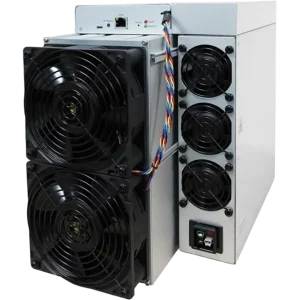
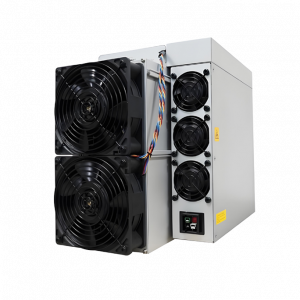
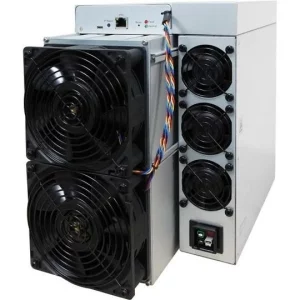
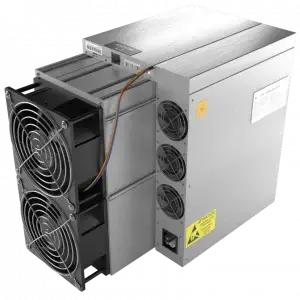
Scrypt ASIC miners for Litecoin and Dogecoin — Bitmain’s Antminer L7, L9 and L11, ElphaPex DG1+ and DG Home1, VolcMiner D1, Fluminer L-series and Goldshell Mini DOGE. Scrypt hardware mines LTC and DOGE at the same time through merged mining, which is the reason this category exists as its own thing rather than sitting under Bitcoin.

Showing 112 of 23 results

Merged mining is the point

Litecoin and Dogecoin share the Scrypt algorithm, and Dogecoin is merge-mined with Litecoin. One machine, one power bill, two coins paid out. That is why the economics of a Scrypt machine cannot be compared against a Bitcoin machine on hashrate — the units are different (GH/s and MH/s here, TH/s there) and so are the revenue streams. Compare Scrypt machines only against other Scrypt machines.

How to choose

Efficiency is measured in J/MH. The generational jump is large and worth knowing. An Antminer L7 9050M is rated 3,260 W ±10% for 9.05 GH/s, which is about 0.36 J/MH. The L9 is a different class: 16 GH/s at 3,360 W or 17 GH/s at 3,570 W, both around 0.21 J/MH. That is roughly 40% less energy per unit of work. If you are paying for power at anything above token rates, the L9 and L11 generation is where to look.

Match the machine to the room. The full-size L7, L9 and L11 units are 3–3.6 kW industrial machines on 200–240V, around 75 dB. They do not belong in a house. The small end of this category — ElphaPex DG Home1, Fluminer L2, Goldshell Mini DOGE III, VolcMiner D1 Mini — is built for domestic power and domestic noise, and is the honest answer for anyone mining Dogecoin at home.

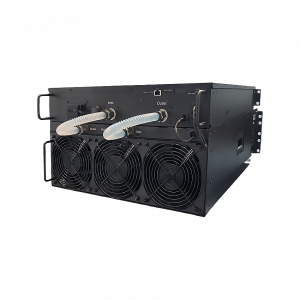
Hydro variants need a loop. The L11 HU2 and HU6, DG Hydro1 and VolcMiner D1 Hydro are water-cooled. They are quieter and denser and they will not run without a loop and a heat rejection plan already in place. See hydro cooling.

The whole shelf on one efficiency axis

Scrypt listings quote efficiency two different ways — J/MH and J/GH — and they are the same number a thousand apart, so 0.21 J/MH and 210 J/GH describe an identical machine. Converted to J/GH throughout, rated at the wall from each listing’s own specification table, the machines here span 3.5 to 1 from top to bottom:

Antminer L11 — 165 to 184 J/GH. The L11 HU2 35G at about 165 and the HU6 33G at about 172 are hydro; the air-cooled L11 20G is 184. This is the efficiency leader in the category, and it is worth correcting a common shorthand here: the L9 and the L11 are not one generation. The air-cooled L11 does the same work for about 12% less energy than any L9.

Antminer L9 — 210 J/GH, every bin. 15G, 16G, 16.5G and 17G all run at the same 210 J/GH, which means efficiency is off the table between them and the only questions left are cost per gigahash and whether the draw fits your circuit.

The middle, 229 to 300 J/GH. VolcMiner D1 Mini Pre 2.2G at 229, Fluminer L2 1.2G and L1 Pro 6G at about 233, VolcMiner D1 Hydro 30G at 253, ElphaPex DG Hydro1 20G at 260, ElphaPex DG1+ 13G and 14G at 280, and DG Home1 2.1G at 300.

Antminer L7 — 360 J/GH. The L7 is the cheap way into Scrypt and the expensive way to run it: about 71% more energy per unit of work than an L9 and very nearly double the air-cooled L11. It earns its place only where power is genuinely cheap.

Goldshell Mini DOGE III — 571 J/GH. The least efficient machine in the category by a wide margin, and that is fine as long as you know it. It draws 400 W over WiFi and exists so you can watch Dogecoin arrive on a desk. Buy it for that, not for the arithmetic.

Which one, at the rate you actually pay

We do not publish a break-even electricity rate for Scrypt, and we will not invent one: the honest input is the merged LTC-plus-DOGE hashprice on the day you buy, and it is more volatile than Bitcoin’s. The method is the same division we use everywhere else — hashprice ÷ (24 × efficiency) — and if you tell us your rate per kWh we will run it with you on the current number rather than a screenshot.

What the ladder above tells you without any hashprice at all is the ordering, and the ordering does not move when the price does. Whatever the merged hashprice is on the day, the L11 tier survives a rise in power costs that the L9 tier does not, the L9 survives one the L7 does not, and the L7 only ever becomes the rational buy when your rate is low enough that capital per gigahash matters more than the power bill. Which of those you are is a question about your electricity contract, not about the hardware.

If the machine has to live in a house

Four units here are genuinely domestic, and they are not equivalent. The Fluminer L2 1.2G is the pick on the numbers: 280 W at about 233 J/GH makes it both the lowest draw and the most efficient of the four. The ElphaPex DG Home1 2.1G is nearly twice the hashrate at 630 W and 300 J/GH. The VolcMiner D1 Mini Pre 2.2G is 500 W at 229 J/GH, which makes it the efficient choice at that size. The Goldshell Mini DOGE III is the least efficient of the four and the easiest to live with. None of the full-size L7, L9 or L11 machines belong indoors: those are 3–3.6 kW industrial units at around 75 dB on a 200–240 V circuit.

Who this suits

People who want exposure to LTC and DOGE rather than BTC, home miners who want a machine they can live with, and operators diversifying off SHA-256. If you would rather mine Bitcoin, see Bitcoin miners; for single-chain altcoin ASICs, see Kaspa, Aleo, Dash, CKB and Tari.

Everything is in all miners.

Scrypt hardware splits cleanly by generation, and the split is efficiency. The Antminer L9 17G and the L9 16G are the current machines at roughly 0.21 J/MH. The Antminer L7 9050M is the older and cheaper one at about 0.36 J/MH — nearly three quarters more energy for the same work, which is why it only makes sense on genuinely cheap power.

The L9 bins are one machine sorted by hashrate — 15G through 17G all run at 210 J/GH. Antminer L9 16G vs 17G works out what is left to decide once efficiency is off the table: cost per gigahash, and whether the unit fits the circuit you have.

The Scrypt machines are listed beside every other miner we stock in the ASIC miner comparison table, which is the quickest way to see what a gigahash costs in watts across the L7, L9 and DG lines.

The five makers on this shelf

Twenty-three Scrypt machines, from Bitmain (the L7, L9 and L11 lines), ElphaPex (the DG range), VolcMiner (the D1 pair), Fluminer and Goldshell (the Mini DOGE III).

The spread between them is larger than on any other algorithm we sell. The Antminer L11 20G is 184 J/GH; an ElphaPex DG1+ is 280; a VolcMiner D1 Mini Pre is 227; the Goldshell Mini DOGE III is 571. The least efficient machine here uses about three times the power of the most efficient one for the same work. That is not a reason to dismiss the small boxes — they run on a household outlet and at a noise level the big ones cannot touch — but it is a reason to know which trade you are making before you buy.