
Fluminer Quiet Home Miners: Bitcoin and Scrypt
Fluminer home miners — machines built for domestic power and domestic tolerance rather than for a data centre. Three of them: the T3 mines Bitcoin on SHA-256, and the L1 Pro and the L2 mine Litecoin and Dogecoin on Scrypt. This is a small, deliberately narrow category for people who want to mine in a house, a garage or a small office without rebuilding the electrical service or annoying everyone in the building.
-
Add to WishlistAdd to Wishlist
-
Add to WishlistAdd to Wishlist
-
Add to WishlistAdd to Wishlist

What “home miner” honestly means
It means the machine is designed around three constraints an industrial miner ignores: the circuit you already have, the noise you can live with, and the heat one room can absorb. Meeting those constraints costs hashrate. A home unit will not out-earn a 3.6 kW industrial machine, and any seller implying otherwise is selling you something.
What it will do is run where an industrial machine cannot run at all, which for most people is the actual choice on the table.
How to decide if this is for you
Check the circuit first. Find out what your outlet and breaker will actually carry continuously — a miner runs at full load 24 hours a day, which is not what domestic wiring is usually sized for. This single check rules more people out than any other.
Be realistic about noise. Even a quiet miner is a constant presence. Listen to a sample of the machine’s rated noise level before you commit, and put it as far from bedrooms as the cabling allows.
Plan the heat. Every watt becomes heat. In winter that is a genuine offset against your heating bill. In summer it is a problem you have to solve.
The three machines here, in numbers
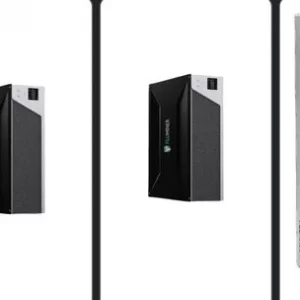
The Fluminer T3 115T is 115 TH/s of SHA-256 out of about 1,700 W, in a 450 × 140 × 300 mm chassis on two fans, rated around 50 dB and accepting 110–240 V. Divide the two numbers that matter and it is 14.78 J/TH — which turns out to be the interesting thing about it.
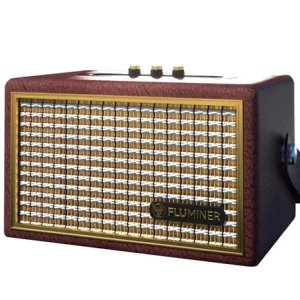
The other two mine a different chain and are quoted in different units, so they do not rank against the T3 and are not meant to. The L1 Pro 6G is about 6 GH/s of Scrypt from roughly 1,400 W at about 0.233 J/MH, rated at or below 45 dB. Its own listing records that published sources disagree about its supply voltage, so do not plan a 110 V circuit around it until you have the sheet for the unit you are buying. The L2 1.2G is the small one and the genuinely domestic one: about 1.2 GH/s from roughly 280 W at about 0.23 J/MH, 40 dB, and 110–240 V AC, which at 280 W is around 2.5 A on a 110 V outlet. That is the only machine in this store you can put on an ordinary household socket without doing any arithmetic first.
The circuit is the whole decision
The section above says to check the circuit first and then does not tell you what to check against, so: 1,700 W drawn continuously is about 7.1 A at 240 V and about 14.2 A at 120 V. A load that runs all day is allowed only 80 per cent of a breaker’s rating — 12 A on a 15 A circuit, 16 A on a 20 A one. So a T3 does not belong on an ordinary 15 A household circuit at all, and on a 20 A circuit it wants that circuit to itself: no space heater, no shop vac, nothing else on the breaker. Put it on 240 V and it stops being a question.
That one check rules out more buyers than noise does, and it costs nothing to do before you shortlist anything. For scale, the Canaan Avalon Q 90T sits in the same place at about 14 A on 120 V, while the Nano3s at 140 W is about 1.2 A and will run off any outlet in the building.
This machine is more efficient than it looks
A home miner usually pays for quiet in efficiency. This one mostly does not. At 14.78 J/TH the T3 is ahead of the Avalon Q’s 18.6 and well ahead of the Nano3s’ 23.3, and is beaten only by current-generation industrial hardware. Run the same division the rest of this site uses — break-even rate = hashprice ÷ (24 × the machine’s J/TH), against the $32.18/PH/day we derived on 9 August 2026 — and the T3 covers its own electricity up to about 9.1¢/kWh, against about 7.2¢ for the Avalon Q and 5.8¢ for the Nano3s.
What you give up for domestic constraints is hashrate and silence, not efficiency. 115 TH/s is a fraction of what a 3.5 kW industrial machine does, and around 50 dB is far quieter than an Antminer but not quiet in the way the Nano3s’ 33–40 dB is quiet. This is a utility room, garage or basement machine. It is not a bedroom or an office machine.
Who this suits, and who it does not
It suits someone with a 240 V outlet or a 20 A circuit to spare, a room where 1.7 kW of continuous heat is welcome in January and removable in July, and an interest in mining at a real hashrate rather than a symbolic one. It does not suit an apartment, a shared wall, or any room that has to stay quiet. For that there are two honest answers and both are small: the Fluminer L2 on this page at 40 dB and 280 W, if Litecoin and Dogecoin are what you want to mine, and the Canaan Nano3s at 33–40 dB and 6 TH/s if it has to be Bitcoin.
It also does not suit anyone expecting a household tariff to pay for it. Retail residential electricity in the United States averages around 18.8¢/kWh, roughly double this machine’s break-even rate. Mining at home on domestic power is something you do because you want the hardware running, not because the arithmetic says to — and a seller who tells you otherwise has not run the arithmetic.
The alternatives worth comparing
Look at the Canaan Avalon range before deciding — the Avalon Q runs 90 TH/s at 1,674 W and around 45 dB on standard household voltage, and the Nano3s is smaller still. For low-power mining on other chains, the small units in Scrypt miners and altcoin ASICs are worth a look.
Tell us your outlet type and where the machine will sit, and we will tell you what will actually work. Full catalogue: all miners.
The Fluminer T3 115T is the Bitcoin machine in this category, alongside the L1 Pro and the L2 on Scrypt. They are home-format miners, so the questions that decide them are noise, heat and what your circuit can carry — not headline hashrate.
What belongs in a house is decided by noise and by what the circuit can carry, not by hashrate. The best mining hardware for home takes the domestic constraints in that order — input voltage, noise, and where the heat is going to go — and only then looks at hashrate. It also explains why a 30 dB gap between two machines is a thousandfold difference in sound power rather than a third more noise.