
Canaan Avalon Bitcoin Miners
Canaan Avalon Bitcoin miners — the Nano3s and Q for home use, the Mini3, and the industrial A15 Pro and A1566 HA. Canaan is the oldest ASIC manufacturer still shipping, and its recent range is the most credible answer on the market to a question Bitmain has largely ignored: what does a Bitcoin miner look like if it has to live in a house?
-
Add to WishlistAdd to Wishlist

-
Add to WishlistAdd to Wishlist
-
Add to WishlistAdd to Wishlist
-
Add to WishlistAdd to Wishlist
-
Add to WishlistAdd to Wishlist
-
Add to WishlistAdd to Wishlist
The home machines are the reason to look here
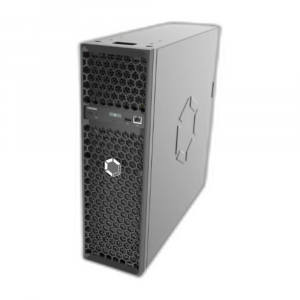
Almost every Bitcoin miner is a 3 kW industrial appliance at around 75 dB. The Avalon Q is a genuine exception: 90 TH/s at 1,674 W, 18.6 J/TH, running on ordinary 110–240V power at about 45 dB. That noise figure is the important one — 45 dB is a quiet dishwasher rather than a shop vacuum, and it is the difference between a machine you can keep in a utility room and one you cannot keep indoors at all.
The Nano3s goes further down the same road at 6 TH/s, small enough to run on a normal outlet as a heater that happens to mine. Neither will out-earn an industrial machine. That is not what they are for.
The industrial end
The A15 Pro at 221 TH/s and the A1566 HA at 480 TH/s are conventional data-centre hardware and compete directly with the Antminer S21 and Whatsminer M60 ranges. Compare them on J/TH and on what your hosting provider will accept, not on brand.
How to choose
Decide where the machine will physically live, then let that pick the model. If the answer is “inside a house someone sleeps in”, the Q or the Nano3s is the only honest option in our whole catalogue apart from the Fluminer home range. If the answer is a shed, garage or hosted rack, you have the full air-cooled catalogue open to you and should buy on efficiency.
Where Canaan lands on efficiency, and where it does not
Taking the figures off their own listings: the A1566HA 480T is 16.8 J/TH, the Q 90T 18.6, the Mini3 37.5T 21.3 and the Nano3s 6T 23.3. Against a hashprice of $32.18/PH/day, derived on 9 August 2026 from the last 144 blocks at a Bitcoin price of $64,959, those stop earning at 8.0¢, 7.2¢, 6.3¢ and 5.8¢/kWh. The A15 Pro 221T we leave off that list on purpose: Canaan publishes 16.8 J/TH and the listing’s own 3,662 W over 221 TH/s gives 16.6, and we would rather show you the disagreement than pick the flattering half of it.
None of that is the argument for buying one. Not one Avalon here beats a current new-generation Bitcoin miner on efficiency, and the two industrial models sit a little behind an S21 Pro at 15 J/TH. Retail residential electricity in the United States averages around 18.8¢/kWh, which is above every threshold in the paragraph above — as it is above every threshold on this site. Buy an Avalon for what it can be installed into, and treat the hashrate as the second question.
Because that is the thing Canaan genuinely has and nobody else on this site does: the Q and the Mini3 run on 110–240 V with the supply built in, and the Nano3s runs off a 28 V DC adapter that plugs into an ordinary household outlet. Every Antminer we sell needs 200–240 V or better, and most of the S21 family will not accept 208 V. On noise the same pattern: 33–40 dB for the Nano3s, 33–55 for the Mini3, 45–65 for the Q depending on power mode, against a flat 75 for every air-cooled Antminer on the site. A quiet dishwasher against a shop vacuum, in the room you were going to put it in.
The Q’s power modes, and the number we will not print
The Avalon Q has three: Super at 1,674 W, Standard at about 1,300 W and Eco at about 800 W. Its published 18.6 J/TH belongs to Super, and our listing does not state the hashrate the machine holds in the other two. Derating an ASIC normally improves joules per terahash and always reduces output, but “normally” is not a figure, so we will not publish an efficiency or a break-even for Eco or Standard. What is safe to say is the direction: Eco cuts the bill, the heat and the noise together, and it is why the Q can live in a utility room at all.
Warranty here is also dated differently from the rest of the catalogue, which is worth a line because it is money. Canaan publishes 360 days from first device registration on the Q rather than from purchase or shipment, so a machine that sits in a box does not burn its coverage — and the clock does not start until you register it, so register it promptly. Compare Bitdeer, which publishes 365 days from the shipment date. On a slow build that difference is a real number of weeks.
Who this suits
First-time miners, people who want to mine without rebuilding their electrical service, and operators who want a manufacturer other than Bitmain in the mix.
See also Bitcoin miners and all miners.
Canaan’s range runs from a desk to a datacentre. The Avalon Nano3s 6T is a genuinely domestic machine. The Avalon Q 90T is the one most people here end up buying, at 18.6 J/TH and around 45 dB. The A1566 HA 480T is the hosted-deployment end of the line. Same manufacturer, three completely different installations.
The Avalon Q is the one machine in this range we have put side by side against a used Bitmain: Avalon Q vs Antminer S19k Pro compares them on efficiency, noise and what each one costs to run rather than on brand.