
HARDWARE FOR YOUR NEXT FLEET
Bulk miners.
Clear terms.
Choose a listed lot or tell us the model and quantity you need. Get the condition, freight and delivery terms confirmed in writing.
Buying one machine? Shop single miners ↗
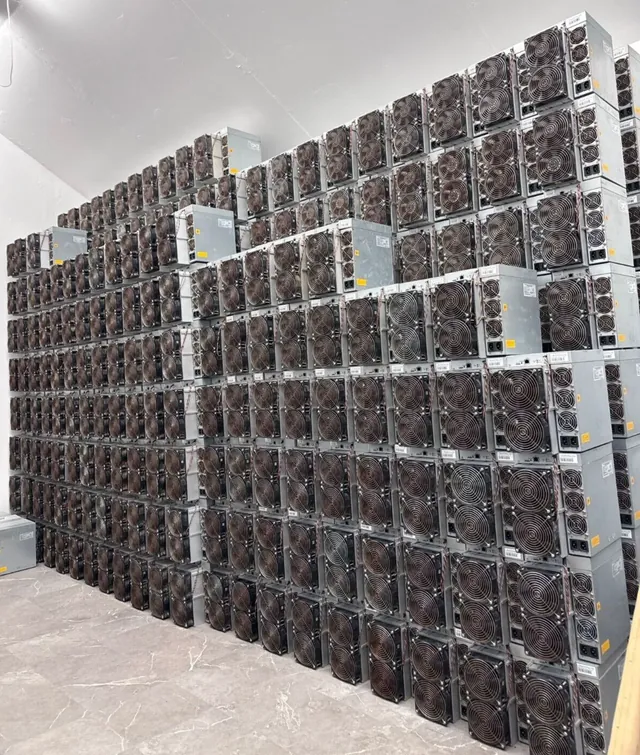
Available bulk lots
11 lots on the shelf as this page loaded - 650 machines in total, in lot sizes from 5 to 300. That is what is listed today, not what we can source: quantities and model mixes that are not on this table are the normal case rather than the exception, and they are what the quote form below is for.
Every lot on this shelf is quoted rather than listed. There is no sticker price on any of them and no add-to-cart button: the price comes back against the specific batch, the condition you can accept and where it is going. Each lot is priced against what we paid for that batch, so per machine they do not descend neatly with quantity - compare the two or three you are actually choosing between rather than reading a trend into the column. Single machines from the same stock are on the used and refurbished shelf, and everything we sell is in one place.
One of these 11 lot titles names power supplies; the other 10 do not say either way. Count them in the table above - that is the number, not a claim about it. Silence is not a hidden yes and it is not a hidden no: it means the listing has not committed, and on a hundred machines a set of power supplies is a five-figure difference in what you are buying. Ask on the specific lot and get the answer in writing before you order, from us or from anybody else.
Need a different quantity or model? Include it in your quote request. Buying to resell? Read what transfers with the lot.
Tell us what you need.
Start with the model, quantity and destination. We’ll confirm the available hardware and terms for your order.
No newsletter, no drip sequence, no automated “a specialist will be in touch”. It goes to the person who buys and grades the hardware. If your answer to half these fields is “I do not know yet”, send it anyway — working out the answers with you is most of what a quote conversation is.
KNOW BEFORE YOU ORDER
The details behind the deal.
How a used batch is tested and graded
This is the section that should decide whether you buy from us, so it is the longest one on the page.
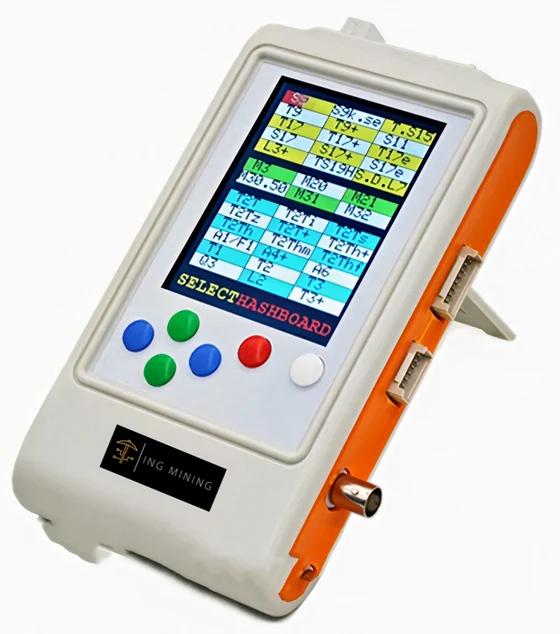
There is no industry standard for ASIC grading. No body defines grade A, no certificate sits behind it, and two sellers using the same letter can be describing wildly different machines — we wrote that up separately in ASIC grading explained. A grade is nothing more than the seller’s summary of what they found, and it is worth precisely as much as the seller’s willingness to say how they found it.
So we use three words, we use them the same way on every listing on this site, and here is what each one commits us to.
Tested working 4 used listings say this
What it means: The machine was powered up on our bench and hashed at the rate the listing states. Nothing was replaced and nothing was rebuilt - it works, and that is the whole claim.
What it does not mean: It is not a refurbishment. Expect the cosmetic condition of hardware that has been mining for years: dust, scratches, label marks, fan wear. None of that is a fault and none of it is hidden.
Refurbished 12 used listings say this
What it means: Tested working, and then worked on: deep-cleaned, thermal paste renewed, fan assemblies or other parts replaced where they needed to be, then run again before it shipped.
What it does not mean: It is not a factory rebuild and it does not make a 2020 machine new. Ask us what was actually replaced on the specific lot - that is a question with a real answer, and "refurbished" without one is a marketing word.
As-is, and Need Parts 39 listings
What it means: Sold with no working claim at all. Hashboards, control boards, power supplies and whole machines that are worth money to somebody with a repair bench and worth nothing to somebody without one.
What it does not mean: It is not a cheap working miner. If a listing sits in Need Parts it is because it belongs there, and buying one expecting it to hash out of the box is the single most common way to be disappointed by this shelf.
No grade stated 3 used listings say this
What it means: Some listings say, in as many words, that they state no condition grade. That is not an oversight and it is not a hedge - it means we have not put that specific batch through the bench yet, or the batch is mixed, and we would rather print that than pick a word.
What it does not mean: It does not mean the machines are bad. It means the grade is a question you have to ask before you order, and we will answer it in writing for the lot you are actually buying.
Why you will not see A, B and C grades here
Because we would have to make them up. A letter scale implies a rubric — that a B is a defined distance from an A, that both mean the same thing next month, that another dealer’s B is comparable. None of that is true anywhere in this industry. A letter is a compression of the information you actually need into one character, and the compression is where the dishonesty lives. “It hashed at 95 TH/s on our bench for an hour, the fans are original, board two runs four degrees hotter than the others” is worth more to you than a B, and it is what we will write down for you.
If a supplier quotes you letter grades, the useful follow-up is not “what is your B?” It is “what did you measure, for how long, and what was the pass mark?”
What tested actually means, step by step
A used-hardware seller who will not tell you how they test is asking you to take the grade on trust, so here is the whole procedure rather than a summary of it — the six steps a machine goes through here, in order, before it gets a grade and a listing.
- Physical inspection, before anything is powered. Connectors and board seating first: a discoloured or melted connector shell is a hard stop and that machine does not get powered up at all. Every fan is turned by hand, and grinding or hub play means the fan is replaced now rather than listed and shipped. Then heatsink fins for impact damage and dust load, and any sign of prior repair — reflow marks, replaced chips, non-original screws — goes on the record. A machine headed for the refurbished shelf is deep-cleaned and re-pasted at this step; one headed for tested working is not, and its listing says so. That is the whole difference between the two words.
- Power delivery, on a metered 240 V bench circuit. The meter is the point. What is being watched is not whether the machine turns on but how it behaves as load comes up — a supply that is losing capacity will bring up one or two boards and then reset when the third comes online, which reads like a hashboard fault and is not one.
- Network and control board. It has to take a DHCP address and answer on its web interface. This is the step that finds dead and dying control boards, because a control board failure has no partial symptom: the machine either answers or it does not.
- Firmware, recorded rather than assumed. What the machine is actually running — stock, VNish, Braiins or otherwise — is recorded and put on the listing, and the previous owner’s pool configuration is cleared.
- Hashrate under sustained load, for at least an hour. Not a spot reading. An hour of hashing, with the five numbers below taken off it, plus the hardware-error rate across the run — a rate that climbs over the hour is chips dropping out under thermal load.
- Board temperatures, and then the write-up. Read per board at the end of the load run rather than the start, because the deltas are what matter: a board sitting several degrees above its neighbours is the one that will fail first, and that is worth knowing whether you are buying the machine or keeping it.
The long version, with what each step disqualifies a machine for, is at bench-testing an ASIC before it ships.
The figures that get recorded are the five measurements that matter: per-board hashrate, chip count per board, measured watts at the wall, pool-side hashrate rather than what the firmware says about itself, and board temperature under load. Two of those are the whole game. Real hashrate and real watts are exactly the two numbers a seller has an incentive to quote optimistically, which is why we take them at the wall and from the pool instead of repeating a spec sheet.
Serial numbers, and what to ask for in writing
A lot of forty is forty serial numbers, and they are the only thing that ties a specific chassis to what you were quoted, to a warranty claim, and later to which unit it actually was that failed. If you want the serials before the lot ships rather than reading them off the labels on your own dock, ask for them in writing when you request the quote. That is a normal request on a used batch and it is answerable.
Ask for the bench write-up on the specific machines while you are at it — what was measured, what was replaced, which boards ran hot. On used hardware that write-up is the thing you are buying, and a seller who will not produce it for the lot in front of you has told you something. What to do with those numbers once the pallet lands, from the freight receipt through the count to the serial reconciliation, is receiving a used miner lot.
What tested does not mean, on a lot
Four honest limits, because each one has cost somebody money somewhere:
- A bench hour is not a month of uptime. A machine that hashes clean for an hour on a bench can still throw a board in week three. On a fleet that is not a scandal, it is a rate — and it is why the spares question below matters more than the grade question.
- Ask whether every unit was benched, or a sample was. On a 300-machine lot that is a real and reasonable difference, and it is a question we will answer straight for the specific lot you are buying. Do not accept “tested” as an answer to it from anybody, including us — make the seller say how many.
- A used machine is quoted at its used figure. We will not put a factory hashrate on a second-hand unit that does not reach it. Where a lot ships on a firmware tune, the listing says which tune, and the honest reading of an overclock is that it costs efficiency to buy terahashes — a boosted S19 drawing above its factory 3,250 W is doing exactly what physics says it should.
- Cosmetic wear is not a fault. Dust, scratches, label marks and sun-faded plastic are what mining hardware looks like after three years of doing its job. We photograph and describe it rather than pretending it away, and we do not charge you for a machine that looks new.
What we will never do
Blur used into new. Quote a used unit at a hashrate only a new one hits. Imply a grade a listing does not state. Describe a mixed batch as though it were uniform. A buyer wiring five figures for second-hand hardware is buying our honesty about its condition before they are buying the machines — overstate it once and there is no business here worth having.
How wholesale pricing works on used miners
There is no tier table on this page because this store does not operate one. Every lot above is priced against what we paid for that specific batch — what the machines are, what condition they came in, what we had to put into them, and what the market did that week. Per machine, the numbers never descended neatly with quantity, and printing them as a ladder would be inventing a discount structure that does not exist. Since 11 August 2026 every lot on this shelf is quoted rather than listed — the price column in the table above reads Quoted because there is no sticker to publish, not because one was left out. Tell us the quantity and the condition you can accept and the number comes back against that batch.
What actually moves the per-unit number on a wholesale used order:
- The model and the tune. Efficiency is the whole argument for buying used at all — see the efficiency and running-cost comparison for what J/TH does to a fleet’s economics.
- The grade you can accept. A buyer with a repair bench who takes as-is stock pays a fraction of what tested-working costs. A buyer who needs every machine hashing on arrival should pay more and should say so.
- Whether power supplies are included. On a hundred-unit order this single question is a five-figure swing. Some used stock moves bare. Get it in writing before you order — on any lot, from anybody.
- Quantity, but not linearly. Freight and handling amortise over a bigger order, so the landed cost per machine usually falls. The machine price itself does not follow quantity at all — in the price book these lots carried up to 11 August 2026 the forty-unit S19 lot worked out dearer per machine than the ten-unit lot. Nothing here fires a discount tier, because there is no tier table. Sized against a power service rather than a machine count, the whole arithmetic is used ASIC miner fleet economics.
- Freight to your door, which on a pallet order is a real line in the deal rather than a rounding error.
Tell us the quantity, the model and the destination and you get a real number for that order. The arithmetic you should be doing on your side of it — connected load, heat rejection, hashprice against your power price — is worked through in full in buying ASIC miners by the pallet. Read it before you spend, including the parts that are unflattering about our own listings.
When a machine in the lot arrives dead
Some will. Nobody who has moved a pallet of used miners will tell you otherwise, and anybody implying a zero failure rate is selling you something.
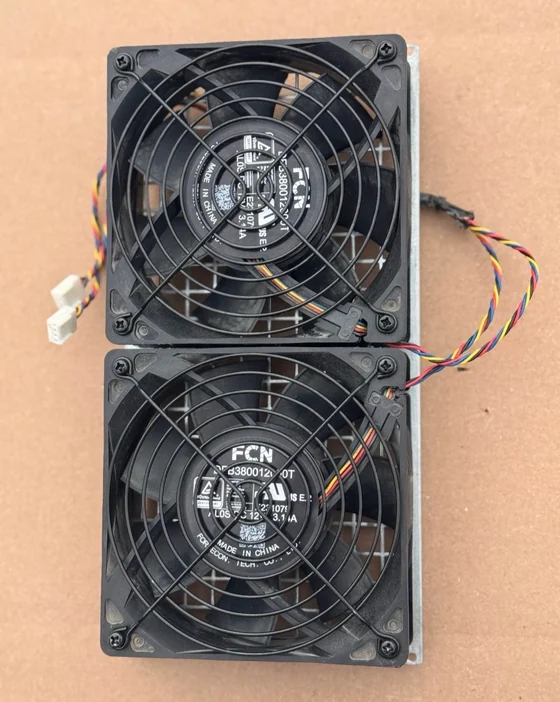
We do not publish a DOA percentage, because we have not measured one we would be willing to defend. A made-up number would be worth less to you than this: settle the DOA window and the replacement policy in writing, before the order goes in. At a hundred units the difference between a five-unit and a fifteen-unit allowance is real money, and it is a conversation that takes ten minutes before the invoice and turns into a dispute after it.
What we can tell you with certainty is what to do on delivery day, because that window is short and it closes whether or not you were busy:
- Photograph the pallet before you cut the wrap. A freight damage claim without a photograph of the packaging as delivered is a much weaker claim.
- Keep the packaging until the machines have run a clean 48 hours.
- Run the acceptance test straight away — the full first-48-hours procedure is written up at acceptance-testing a miner you just received. Physical inspection, PSU check, network and firmware, hashrate against the listing, temperatures, then an extended load run.
- Tell us the same day. And if the delivery is a pallet rather than a box, the lot-scale version of delivery day — the freight receipt, the count, the serial reconciliation and the order you power them up in — is receiving a used miner lot. Call +1 (781) 577-0377 or email ns@ingmining.com while the freight claim window is still open. A fault found on day two is a conversation; the same fault found on day thirty is an argument.
Plan for repairs as an operating cost rather than as an insult. Hashboards, fan assemblies, power supplies and control boards are the four things that fail on an S19 fleet, and we stock all four along with the hashboard testers and fixtures we use ourselves — see repair parts and testers and why mining hardware fails. Keeping a spares float on the shelf is cheaper than a machine sitting idle for a week waiting on a fan assembly we have on the shelf.
What the warranty covers across a lot, and what it does not
Warranty and return terms on this store are stated per unit, not per store, and that is deliberate. The sensible terms on a tested working machine and on a board explicitly sold for parts are not the same terms, so we do not publish one window covering everything and then bury the exceptions.
How to read it on a lot:
- Where a lot carries our 30-day guarantee, its listing names it. Ask us to confirm in writing exactly what that covers on your lot — DOA replacement, a hashrate shortfall, or both — so the expectation is documented rather than assumed.
- Most used and as-is stock carries no stated warranty term, and those listings say so rather than implying one. That is the honest position on hardware this age, and it is priced accordingly.
- Manufacturer warranty is almost always gone. On 2020-era S19s it has lapsed on age alone, and third-party firmware — Braiins OS, VNish — voids whatever remains. Several lots ship on exactly that firmware, because the telemetry and tuning are worth more to an operator than a lapsed warranty. What a mining warranty normally covers goes through the fine print.
- Nothing here covers the things that actually decide whether a fleet makes money: network difficulty, hashprice, your electricity rate, resale value, or a machine run outside its 5–40 °C envelope on a tune you chose. No hardware warranty from anybody covers those, and a seller implying otherwise is not offering you a warranty.
Get the grade, the DOA window, the return terms and what the guarantee covers in one written reply before you order. On used hardware those four sentences move the economics of the deal more than any number on the spec sheet.
Freight, palletising and who arranges it
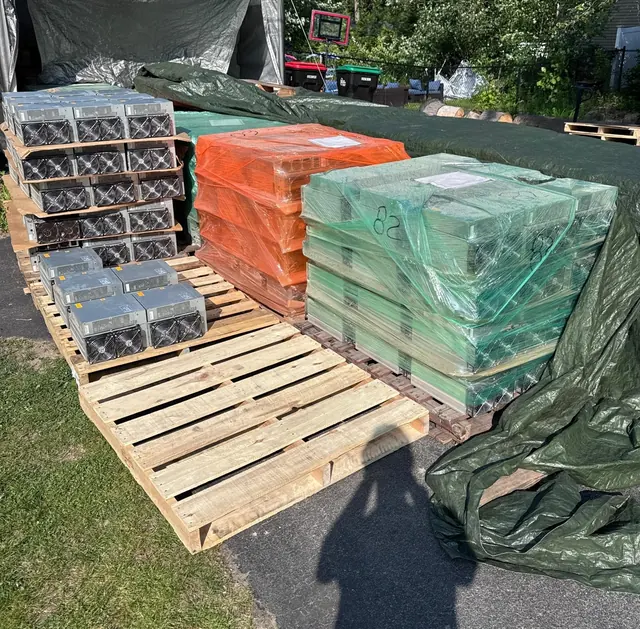
Used mining hardware bought wholesale moves as freight, not as parcels. An Antminer S19 is 14.2 kg net and 16 kg boxed on Bitmain’s own specification, so ten machines is about 160 kg on a pallet and three hundred is roughly 4.8 tonnes across several — LTL at minimum.
| What you are ordering | US freight, as configured |
|---|---|
| A single machine, hashboard, power supply or part | $49.99 per unit |
| A lot of 5 machines | $299.99 configured, not chargeable today |
| A lot of 10 machines | $549.99 configured, not chargeable today |
| A lot of 100 machines | $3,449.99 configured, not chargeable today |
Read from the checkout as this page loaded rather than typed into an article. On a listing that carries a price and an add-to-cart button, the single-unit rate is the number you will be billed. The lot rows are configured rates that no order can currently trigger - every multi-machine listing on this store is quoted rather than sold through the cart, so freight on a lot comes back on the quote with the machines. They stay in the table because they are what the settings hold and because they show the shape of the saving, not because a checkout will charge one today. Outside the United States the checkout applies a per-unit international rate, which is not a freight quote for a pallet - on anything larger than a single machine crossing a border, ask us before you order. The full published detail is on shipping and delivery.
Freight on a lot is quoted, not rated. The checkout carries flat rates for the lot sizes above, but no lot listing is sold through it today, so a 5, 10, 20, 40, 50, 100 or 300-machine order all get a real freight quote from us before you commit - and on a pallet order that is the right way round anyway, because the number depends on your zip code, whether you have a loading dock, and whether the driver needs a liftgate.
We arrange the freight. Palletising, wrapping, and crating where a lot warrants it are ours to organise, and we would rather do it than have a first pallet turn up shrink-wrapped to a broken skid. What we need from you is the receiving end: the delivery address, whether there is a loading dock or the driver needs a liftgate, whether the site can take a full trailer, and who is there to sign. If you would rather use your own carrier or freight account, that is fine too — say so on the quote and we will palletise and hold for collection.
Two things worth working into the decision before you commit. First, on a used machine freight is a large fraction of the landed price — at the cheap end of our used shelf the per-unit shipping is a meaningful share of the machine itself, which is one of the reasons a lot beats ten singles. Second, a pallet crossing a border is a customs job with paperwork, not a flat rate off a web form; ask before you order. The whole subject — landed cost, crating, insurance, and what to do when a pallet arrives damaged — is covered in the mining hardware shipping guide.
The rate card those classes hold is published in full alongside the rest of this shelf’s numbers, and it is not the curve most buyers expect: $49.99 on a single machine, $60.00 a machine on a five and $55.00 on a ten — both worse than one box — and $34.50 only once you are at a hundred. Freight per machine does not fall smoothly with lot size, so it is worth reading before anyone assumes volume buys cheaper freight per box. Those are configured rates rather than a quote, and while the lots are quote-only they are what the settings hold rather than what a checkout can charge.
Lead times
Stock ships from the United States. The store’s published dispatch target is within 7 business days, and that is the figure to hold us to on anything sitting on the shelf.
For a fleet lot, we schedule the delivery window on the quote rather than publishing a number here. That is not evasion — it is that a lot which is boxed and palletised and a lot which needs benching, a firmware pass and a freight booking are genuinely different jobs, and quoting one figure for both would mean being wrong about one of them. Ask for the date on the quote, get it in writing, and hold us to that instead.
Paying for a five-figure order
Two things you should know before you reach for a card, stated plainly:
This website’s checkout cannot currently take card payment. It is a live limitation of the store rather than a policy, and it is why bulk orders here run as a quote and an invoice with terms agreed in writing first. On a five-figure lot that is the honest route anyway; nobody should be buying three hundred used miners through a shopping cart.
Ask for escrow if you want it. On an order this size it is a reasonable request from a buyer who has never met the seller, and it is a request we would rather answer than have you sit on. What we will not do is print a list of payment methods on this page that we have not confirmed we can process for your order — ask on the quote and you get a straight answer about what is available for the amount and the destination involved.
Whoever you end up buying from, the checks in how to vet an ASIC seller: serials, payment and paperwork are the ones worth running before the money moves. We would rather you ran them on us and were satisfied than skipped them. For the record: ING Mining LLC, Hanson, Massachusetts, trading as ING MINING®, a registered U.S. trademark, reachable on a phone number that a person answers.
Trade-ins and fleet buyouts
We buy this hardware — that is half of what this business is. Machines, hashboards, power supplies and whole fleets come in here, get tested and repaired, and go back out on the shelf you are reading.
What we do not have is a published buyback schedule or a valuation formula, and we are not going to fabricate one, because what a fleet is worth depends on the models, the count, their condition, where they are sitting and what week it is. So: send us the list — models, quantities, condition as best you know it, location, and photographs if you have them — and you will get a straight answer, including “we are not a buyer for that” if that is the answer. Upgrading a fleet and trading the old machines against the new ones is the same conversation, run once.
That conversation has a page of its own. We buy used miners sets out the two routes open to a seller — an outright purchase of the whole batch, or consignment at 60/40 where the machines stay yours until they sell — and carries the form that asks for the four things a quote actually needs.
Check any number you are given, including ours. The free way is eBay’s own sold filter — search the model, then tick Sold items — and two things about that view matter before you lean on it. eBay now asks you to sign in before it will show it at all, and it reaches back roughly 90 days. On this hardware that window is not a rounding error: of 460 completed antminer s19 sales sampled from our own sold-comp store, 189 — 41% — were already older than it. Take the free view as the market and you are reading barely six in ten of the sales that happened. How to see sold items on eBay has the click path, the sign-in measurement and what the 90-day cut hides, category by category.
Questions we get asked before a bulk used order
What is your minimum order quantity for used ASIC miners?
There is not a published one. The smallest lot currently listed is on the table near the top of this page, and single machines from the same stock are on the used shelf. If the quantity you want is not listed, ask — that is the normal case, not an exception.
Do you sell used ASIC miners by the pallet?
Yes. The larger lots here are palletised freight by definition — three hundred Antminer S19s is roughly 4.8 tonnes of hardware across multiple pallets and about 975 kW of connected load. Pallet quantities are quoted with freight and a delivery window rather than sold through the cart.
Are all your bulk lots Bitcoin miners?
Every lot on the shelf above is a SHA-256 Bitcoin machine, and all of them are Antminer S19 family — S19, the boosted S19 variants, or the S19k Pro. We do also sell Scrypt hardware for Litecoin and Dogecoin, and Kaspa machines, but those are listed as single units on the main shelf rather than as lots. If you want a lot of something that is not an S19, ask — it is a sourcing question with a real answer, including “no” where we cannot fill it.
What does “tested” mean on your listings, exactly?
That the machine was powered on our bench and hashed at the rate stated in the listing. Refurbished means it was also cleaned, re-pasted or had parts replaced. As-is means it is sold without a working claim. Where a listing states no grade, it says so rather than implying one. The full bench procedure is published.
What happens if a miner in my lot arrives dead?
Photograph the pallet before you unwrap it, keep the packaging, run the 48-hour acceptance test immediately and tell us the same day while the freight claim window is open. The DOA allowance and replacement policy for your specific lot should be agreed in writing before the order goes in — ask for it, and we will put it in writing.
Do you publish a DOA or failure rate?
No, because we have not measured one we would defend in writing. Some units in any used batch will need attention; budget for a spares float and a repair bench rather than for a zero. We would rather tell you that than quote a flattering percentage.
Is there a volume discount schedule?
No. Each lot is priced against what we paid for that batch, so per machine the numbers never descended neatly with quantity — and since 11 August 2026 the lots carry no listed price at all, so there is no ladder to read off even if you wanted one. Ask for a quote on the quantity you actually want.
Can I get PSUs with the lot?
Ask, on the specific lot, and get the answer in writing. Some used stock moves bare. Across a hundred machines that one question is a five-figure difference in what you are buying.
Will you ship a bulk order outside the United States?
Ask before you order. The checkout applies a flat per-unit international rate that is not a freight quote for a pallet; a lot crossing a border is a customs job and needs quoting properly.
Do you buy used miners or take trade-ins?
We buy hardware — machines, boards, supplies and fleets. There is no published buyback price list, so send the models, quantities, condition and location and you will get a straight answer, including no.
Does the warranty cover the whole lot?
Only where that lot’s own listing names ING Mining’s 30-day guarantee, and even then ask us to confirm in writing exactly what it covers on your order — DOA replacement, a hashrate shortfall, or both. Most used and as-is stock carries no stated warranty term and those listings say so rather than implying one. Manufacturer cover on a 2020-era S19 has lapsed on age alone, and third-party firmware voids what is left.
Who books the freight, and can I use my own carrier?
We do. Palletising, wrapping and crating where a lot warrants it are ours to organise, and we would rather do that than have a first pallet turn up shrink-wrapped to a broken skid. What we need from you is the receiving end: the delivery address, whether there is a loading dock or the driver needs a liftgate, whether the site can take a full trailer, and who is there to sign. If you would rather use your own carrier or freight account, say so on the quote and we will palletise and hold for collection.
How soon can a bulk order ship?
Stock ships from the United States, and the store’s published dispatch target is within 7 business days — that is the figure to hold us to on anything sitting on the shelf. For a fleet lot the delivery window is scheduled on the quote instead. A lot that is boxed and palletised and a lot that needs benching, a firmware pass and a freight booking are genuinely different jobs, and one published number would be wrong about one of them.
How do I pay for a five-figure order, and do you accept escrow?
This site’s checkout cannot currently take card payment — a live limitation of the store rather than a policy — so a bulk order runs as a quote and an invoice with the terms agreed in writing first. Ask for escrow if you want it: on an order this size, from a buyer who has never met the seller, it is a reasonable request and one we would rather answer than have you sit on. What we will not do is publish a list of payment methods we have not confirmed we can process for your amount and destination.
What happens after I request a quote?
It is read by a person who has actually seen the hardware, and you get back a price, the condition of the specific machines, the freight, and a delivery window — in writing, so you can hold us to it. The four things we cannot quote without are the model, the quantity, where it is going and roughly when you need it. Everything else on the form is optional, and most enquiries arrive with half of it still unknown.