
There are five measurements worth taking on an ASIC, and a machine can pass a casual look while failing three of them. This page is what to measure, how, and what each result means — per-board hashrate, chip count per board, measured wall power rather than the nameplate figure, hardware error rate, and intake and board temperatures under sustained load.
The reason to measure rather than trust a listing is that the two numbers that decide whether a machine pays — real hashrate and real watts — are exactly the two a seller has an incentive to quote optimistically. Divide them and you get J/TH, and from that the electricity price the machine can survive. That derivation is in our ASIC miner buying guide.
For the buying process around a second-hand purchase, see how to buy a used ASIC miner without getting burned. For diagnosing a machine already in service, see why your miner is earning less. For a whole pallet rather than one unit, see whether a lot of used miners pays for itself.
1. Per-board hashrate: where a fault shows up first
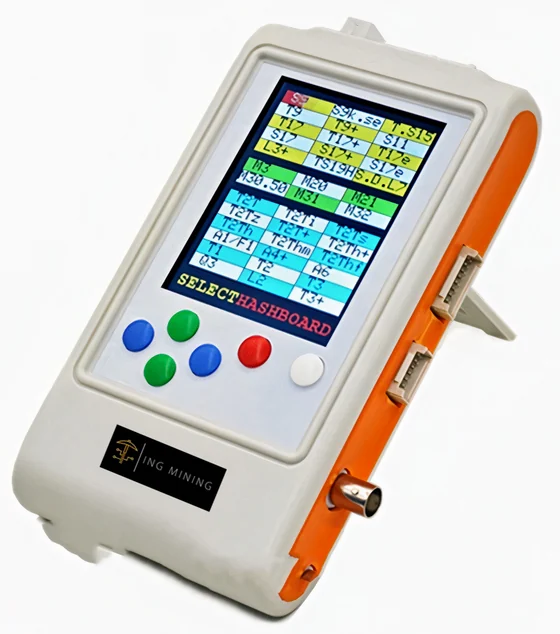
Read the hashrate of each hashboard separately, not the machine total. On a three-board miner the boards should land within a few percent of one another. A machine reporting its full rated hashrate can still have a board 15% down, because the firmware will happily push the other two harder to compensate — and running two boards hot to cover a third is how you turn one repair into three.
What a pass looks like: three boards within roughly 5% of each other, and the sum within 5% of the rating.
What a fail means: one board low is usually failing chips or a bad connection. One board reading zero is a dead board, a PSU cable, or the controller.
This is the single most useful thing you can look at, and it is the measurement most often skipped, because the summary screen shows one number and that number looks fine.
2. Chip count per board: the number that cannot be tuned
Every hashboard reports how many ASIC chips it can see. An S19 hashboard carries 76 chips, so a healthy three-board S19 reports 228. Anything less means chips have dropped off the chain.
Chip count is valuable precisely because no firmware setting changes it. Hashrate can be tuned, wall power can be tuned, temperatures depend on the room — but 228 is 228. A machine advertising full hashrate while reporting 219 chips is being overclocked to hide missing silicon, and it will not hold that number under a warm room.
What a pass looks like: the full complement on every board.
What a fail means: a chain with missing chips will usually keep degrading. Ask what the count was when it was tested, and compare it with what it reports when you receive it.
3. Wall power, measured — not the nameplate
Put a meter between the machine and the socket. The nameplate figure is a factory rating for a new unit at a particular voltage and firmware; what you pay for is what the meter reads, and on used hardware the two diverge.
They diverge in both directions, which is why this matters. A tuned machine may draw less than the plate. An ageing or badly-pasted one draws more for the same work. Either way, the wall figure and the measured hashrate taken at the same moment are what produce a true J/TH:
J/TH = measured watts ÷ measured TH/s
Beware the mixed pair. Quoting a tuned machine’s reduced wattage against its factory hashrate invents efficiency that does not exist. Our own S19 listing spells this out: pulling an S19 from 3,250 W to 2,800 W also pulls the hashrate down, and at 2,800 W the tune only matches the factory 34.2 J/TH if the machine still hashes 81.8 TH/s or better. One number from the meter and one from the box is not a measurement.
Measure at your real supply voltage, too. These machines want 200–277 V, and efficiency at 208 V is not efficiency at 240 V.
4. Hardware error rate: the early warning
Every miner reports rejected or errored shares as a hardware error rate. On a healthy machine this sits at or very near zero. A rising HW error count is the earliest signal you get that a chip is failing or that a board is running too hot to be stable, and it shows up days or weeks before the hashrate drops enough for anyone to notice.
What a pass looks like: a rate that stays flat near zero across a long run.
What a fail means: errors that climb as the machine warms are thermal. Errors that are high from cold are usually a chip or a solder joint.
The reason to care at purchase is that HW errors are invisible in a five-minute test. They need the machine hot and settled, which is the whole argument for a sustained run rather than a power-on check.
5. Intake and board temperature under sustained load
Take two readings, not one: the air going in, and the boards themselves. Intake temperature tells you what the room is doing; board temperature tells you what the machine is doing about it. The gap between them is the health of the cooling — fans, fins, and thermal paste that may be four years old.
An S19 is specified for a 5–40 °C operating range. A machine that is fine at 20 °C intake and unstable at 35 °C has a cooling problem that a winter bench test will never reveal, which is why the test has to be sustained and ideally warm. Rising board temperatures at constant intake, over the length of a run, mean dried paste or blocked fins.
The 48-hour acceptance test
Five measurements taken once tell you the machine powers on. Taken across a sustained run they tell you whether it works. This is the procedure we run before a machine ships, and the one we ask buyers to run when it lands:
- Photograph the packaging before opening it, and keep it. Freight claim windows are short.
- Run the machine for a full 48 hours on the pool and firmware you intend to use.
- Log per-board hashrate, chip count, wall watts, HW error rate and both temperatures — at the start, and again once it is thermally settled.
- Compare against what the listing stated for that unit, not against the model’s factory sheet.
- Raise anything short inside the agreed window, in writing, with the logs attached.
A fault found on day two is a conversation. The same fault found on day thirty is an argument.
What each failure actually costs to fix
Testing is only worth the time if you know what the result is worth, so here is what the common outcomes cost at our own parts prices:
- One weak or dead hashboard — a tested working S19 Pro hashboard is $59.99. That is the difference between a machine worth repairing and one worth stripping.
- A dead controller — a tested control board is $59.99. Often mistaken for a dead machine.
- Firmware trouble — frequently just a card. A Braiins OS+ microSD is $19.99.
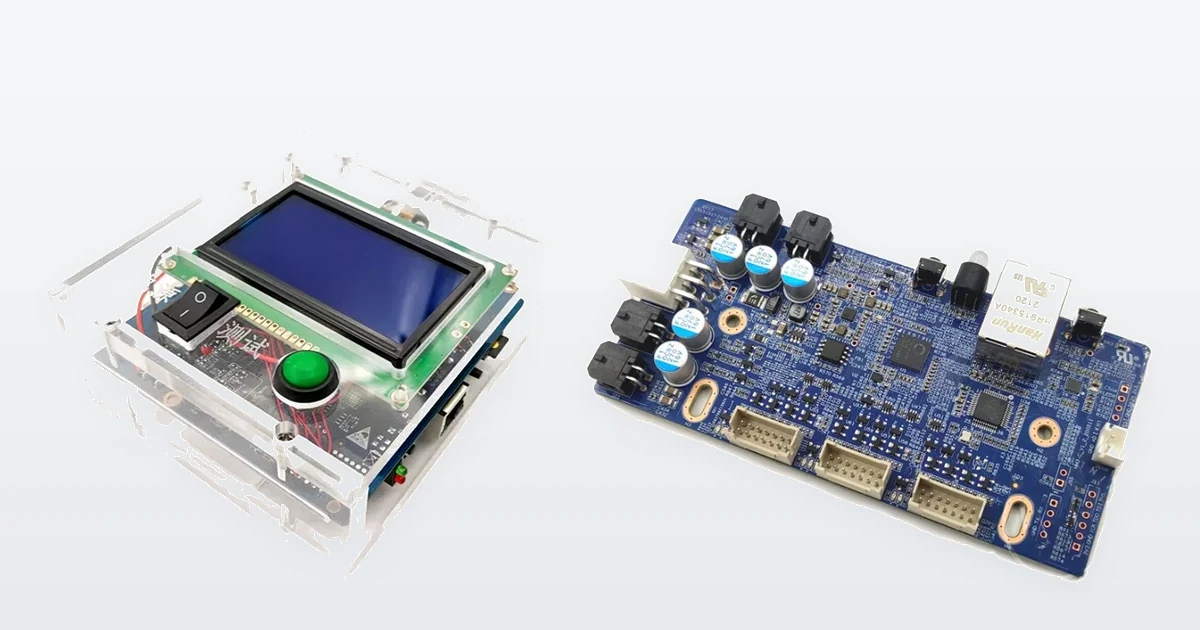
- Chip-level diagnosis — if you are working at fleet scale, a BM1366 chip tester is $599.99 and pays for itself across a pallet. There are board-level fixtures too: a multi-function hashboard tester covering S19, S21, T21, KS3 and KS5, an IceRiver KS-series test fixture, and an E9 / E9 Pro hashboard fixture.
- Not worth repairing — sometimes the honest answer. An as-is hashboard at $24.99 is what a board is worth when it is only good for parts.
Set that against the machine. When a repair costs a meaningful fraction of a used S19k Pro at $379.99, the arithmetic changes, and on a cheap older unit a single board replacement can exceed what the machine is worth. Efficiency decides that: a 34.2 J/TH machine has less economic life to save than a 23 J/TH one, so spend the repair money on the efficient machine. Peer-reviewed work on the energy and cost efficiency of mining reaches the same conclusion from the other direction.
The mistakes that let a bad hashboard through
- Testing cold. Five minutes from power-on, everything passes. Thermal faults need a warm, settled machine.
- Reading the total instead of the boards. The one number that looks fine is hiding the one that is not.
- Trusting the nameplate. If you did not meter it, you do not know it.
- Mixing a tuned wattage with a factory hashrate. The most common way an efficiency figure gets invented.
- Ignoring chip count. The one number firmware cannot fake, and the one most often not looked at.
- Testing at the wrong voltage. 208 V and 240 V are different machines, economically.
- No written record. Without logs there is no claim, only a disagreement.
We run this procedure on every machine before it ships. If you want the measured hashrate and the measured wall draw on a specific unit rather than the number in its title, ask us and we will meter it — the machines are on the used ASIC miner shelf.
Frequently Asked Questions
What should I measure when testing a used ASIC miner?
Five things: per-board hashrate, chip count per board, wall power measured with a meter rather than taken from the nameplate, hardware error rate, and intake and board temperatures under sustained load. Taken together these tell you whether the machine works. Taken once from cold, they only tell you it powers on.
How many chips should an Antminer S19 hashboard have?
76 chips per hashboard, so a healthy three-board S19 reports 228 in total. Chip count is the most useful single check because no firmware setting can change it: a machine advertising full hashrate while reporting fewer than its full complement is being overclocked to cover missing silicon.
Why measure wall power instead of using the nameplate rating?
The nameplate is a factory rating for a new unit at a particular voltage and firmware, and on used hardware the real draw diverges in both directions – a tuned machine can draw less, an ageing or badly-pasted one draws more. Only the measured watts and the measured hashrate, read at the same moment, give a true J/TH.
What is a normal hardware error rate on an ASIC miner?
At or very near zero on a healthy machine. A rising hardware error count is the earliest warning that a chip is failing or that a board is too hot to stay stable, and it appears days or weeks before total hashrate drops enough to notice. Errors that climb as the machine warms are thermal; errors present from cold usually indicate a chip or a solder joint.
How long should a used miner be tested before it is accepted?
48 hours on the pool and firmware you intend to use, with per-board hashrate, chip count, wall watts, error rate and temperatures logged at the start and again once the machine is thermally settled. Short tests miss every thermal fault, and freight claim windows are short – a fault found on day two is a conversation, the same fault on day thirty is an argument.
More on checking hardware before you buy
- How to Buy a Used ASIC Miner Without Getting Burned
- Why Your Miner Is Earning Less: Diagnosing ASIC Faults
- Mining Profitability Metrics: What Each Number Means
- How Mining Hardware Actually Depreciates
- How to Test Mining Hardware for ASIC Performance
- What Actually Moves Mining Margin: Five Levers, With the Arithmetic
Machines we have metered
Ask for the measured pair on any of these and we will read it off the unit:
- Used Antminer S19k Pro 115TH/s – Tested, Braiins OS
- Used Antminer S19 95TH/s – 2,800W Low-Power VNish Tune
- Lot of 10 Used Antminer S19k Pro 115TH/s – Tested, PSUs Included
More in Bitcoin miner, or the full ASIC miner inventory. Spares are on the parts and repair shelf.