
Mining fleet upgrade: when replacing used S19s pays, and when it is a bet
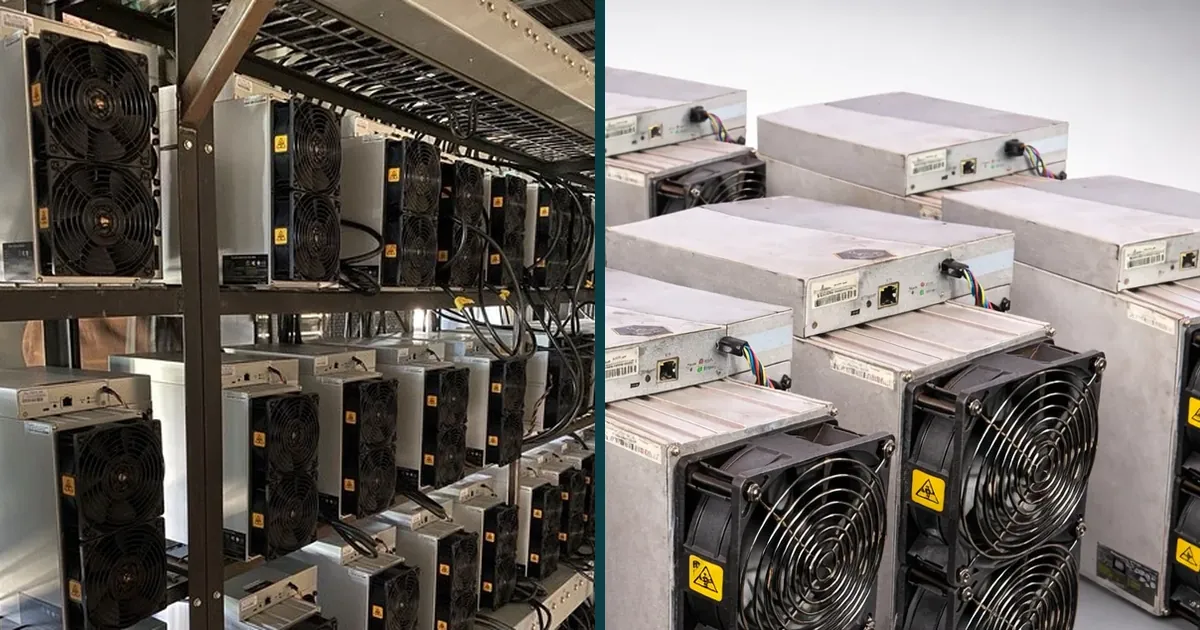
A mining fleet upgrade is usually priced wrong before anyone opens a spreadsheet, because the sticker being argued about is the smallest number in the deal. At the 17 August 2026 hashprice of $31.18 per PH/s per day, replacing one hundred stock used Antminer S19s with new S21 Pros on the same power service costs $386,400.00 in hardware and repays out of extra revenue in about 1,030 days — call it four years once the halving is counted. The half-step almost nobody prices, swapping the same S19s for used S19k Pros, costs about $46,358.78 and repays in roughly 328 days. This page works both swaps out line by line, on our own shelf prices, and says which one we would actually do.
Everything here is the swap decision for a fleet you already run. If you are sizing a first purchase instead, fleet economics against the power service and how many machines an order should be are the pages for that; if one particular machine has stopped covering its power, start with what to do with a miner that stops paying.
A mining fleet upgrade is a swap decision, and the shop price is half of it
Three numbers decide a swap: what the replacement fleet costs, what the extra hashrate earns per day, and what the outgoing machines recover. The shop price is only the first. The second is set by hashprice — revenue per petahash per day — and the third is the number everyone guesses at and nobody publishes. What makes the fleet version of this question different from the single-machine version is the constraint: your power service is fixed. You are not asking “is a new machine better than an old one” — it is, the two gates every machine has to clear settled that — you are asking whether the same kilowatts should be feeding different silicon, and whether the difference pays for itself before the economics change underneath it.
Two of our own comparisons run the per-machine version of this: the S19 against the S19k Pro and the S19 XP against the S21 Pro. And one new machine against nine used ones answers the adjacent purchase question — where the same dollars should go on day one. This page is the third case: the racks are full, the machines are yours, and the question is whether to swap them out.
The arithmetic: one power service, three fleets
The worked example is a hundred stock Antminer S19 95TH/s machines — 325 kW of connected load, the same fleet buying ASIC miners by the pallet uses — because ten of our eleven used lots are S19-class and it is the fleet most operators are actually sitting on. The wattages and hashrates below are the ones printed on our own listings’ spec tables, at the stock tune. All revenue figures are gross of pool fees.
| Fleet in the same 325 kW | Machines | Fleet PH/s | J/TH | Hardware at our list price |
|---|---|---|---|---|
| Used S19 95TH/s (what you have) | 100 | 9.5 | 34.2 | — |
| New S21 Pro 234T at $4,200 | 92 | 21.5 | 15.0 | $386,400.00 |
| Used S19k Pro 115T at $379.99 | 122 | 14.0 | 23 | $46,358.78 |
The basis, so you can re-run it: hashprice $31.18 per PH/s per day, derived at block 962,890 on 17 August 2026 from the subsidy, the last 144 blocks’ fees, the spot price and the network hashrate — the same derivation our other dated pages use. The next halving lands at block 1,050,000, about 605 days out from the derivation date. These figures carry their date and their formula because they move: to reuse this page later, multiply every daily-uplift figure by today’s hashprice divided by 31.18 and the paybacks move inversely.
The full swap: ninety-two S21 Pros in the racks where a hundred S19s were
325 kW of service carries 92 of the S21 Pro 234T at 3,510 W each. Fleet hashrate goes from 9.5 to 21.5 PH/s — 12.0 extra petahash from the same meter, because 15.0 J/TH silicon turns the same kilowatts into 2.3× the hashes of 34.2 J/TH silicon. At $31.18 per PH/s per day the uplift is worth about $375.03 a day, and the power bill does not move: both fleets draw within one percent of the same load, so the bill cancels out of the comparison entirely.
Now the repayment. $386,400.00 of hardware divided by $375.03 a day is 1,030 days — two years and ten months of everything holding still. But everything does not hold still: the halving sits about 605 days out. By then the swap has returned roughly $226,894.99. If the halving cuts hashprice in half and price, fees and network hashrate simply stand where they are — they will not, but the direction is the point — the remaining $159,505.01 repays at half speed, and the whole swap takes about 1,456 days. That is four years, and whether the silicon itself has four working years left is a separate question with its own arithmetic — the two clocks on a machine’s life runs that clock.
Run it backwards and the verdict writes itself: for the full swap to repay its list capex before the halving on uplift alone, hashprice would have to average about $53.10 per PH/s per day — roughly 70 percent above where it stands on the derivation date. That is not a plan, it is a bet on hashprice wearing a hardware invoice. There are honest reasons to make the swap anyway — more revenue per rack forever after, one fleet generation to spare, $375.03 a day more gross — but payback arithmetic is not one of them at today’s numbers, and anyone selling you the swap on payback should show you their revenue assumption first.
The half-step: same racks, 23 J/TH, and it repays before the halving
The swap nobody quotes is used-for-used. A used S19k Pro 115T is $379.99 on our shelf today, runs 2,645 W at its factory 115 TH/s, and 325 kW carries 122 of them — 14.0 PH/s where the S19 fleet made 9.5. The uplift is smaller, about $141.25 a day, but the hardware bill is $46,358.78, not $386,400.00. That repays in about 328 days at the dated hashprice — eleven months, comfortably inside the halving window, and it cuts the fleet’s power per terahash by a third, which lowers the electricity price at which the whole rack stops making sense.
Two honesty notes on that number. First, $379.99 is our single-unit price — buying ASIC miners by the pallet already showed that per-unit pricing at quantity is not a clean curve, ours included, so treat the single price as the ceiling and get a hundred-machine number quoted rather than extrapolated. Second, the shelf: today we stock the S19k Pro as two priced singles — the 115T and the 120T bin at the same $379.99, which is more terahash for the same money — plus one lot of ten on quote. A hundred and twenty-two of them is a sourcing conversation, not an add-to-cart, and we will say what we can actually supply before you plan a fleet around it: request a quote with the count.
Same efficiency, fewer chassis: pick the biggest bin
Inside one model the bins matter more than they look. The S21 Pro 245T costs the same $4,200 as the 234T and runs the same 15.0 J/TH, so at fixed power both bins give you an identical fleet hashrate — 325 kW carries 88 of the 245T for 21.6 PH/s, against 92 of the 234T for 21.5. Same silicon efficiency, same fleet output, but $16,800.00 less hardware spend, four fewer chassis to freight, rack and cable, and the same arithmetic holds down the range: when two bins share a price and an efficiency, the bigger bin is strictly cheaper per petahash because you pay per chassis. The same logic is why the $379.99 S19k Pro 120T beats the 115T at the same price.
What the outgoing S19s are worth, and why it moves less than you hope
Every upgrade plan leans on the trade-out: sell the old fleet, fund the new one. Scale that hope against real prices. For the full swap to repay before the halving, the outgoing machines would have to recover about $1,595.05 each — and our used S19 singles list at $249.99, with the low-power tune at $159.99. Those are retail asks for tested, warrantied singles; a hundred-machine disposal realises less per unit, not more. Salvage softens a swap, it cannot carry one: every $100 per machine you actually recover takes about 27 days off the full swap’s payback and about 71 days off the half-step’s.
What we will not do is print a buyback number here. We do not quote hardware sight unseen — a fleet’s value depends on model and bin, condition, hours, firmware and where it is sitting — and a figure typed into this paragraph would be wrong in both directions within a month. What we can do is real: we buy fleets outright and we sell on consignment, dead units included, and the machines coming out of upgrades like this one are exactly where our used shelf comes from. Send the list through the page where we buy used miners and time the sale with what to do with a miner that stops paying in mind — hardware sells best while it still earns.
Your power rate decides whether to run, not whether to swap
Here is the part of fleet-upgrade arithmetic that surprises people: on a full, fixed service the electricity price is almost irrelevant to the swap itself. Both fleets pull the same kilowatts, so the bill is identical either side and cancels out — the swap is decided by hashprice times extra petahash against net capex, whatever you pay per kilowatt-hour. What your rate does decide is whether either fleet should be drawing those kilowatts at all. At the dated hashprice, a stock S19 stops covering its own power at about 3.8¢/kWh, an S19k Pro at about 5.6¢, and an S21 Pro at about 8.66¢ — the same shut-off arithmetic behind the break-even ranking of everything current.
That splits the decision into three rate regimes. Below about 3.8¢ delivered, both fleets earn and everything above applies as written. Between the S19’s shut-off and the S21 Pro’s, the swap stops being an upgrade and becomes a rescue — the old fleet should not be running, so the comparison is new machines against dark racks, which is a deployment decision: one new machine against nine used ones runs exactly that case. Above the S21 Pro’s shut-off, silicon is not your problem; what those kilowatts cost on a commercial bill and who owns the power problem are where that gets fixed, and no swap on this page will outrun a wrong power contract.
When not to upgrade at all
If your power service is not full, expansion beats replacement and it is not close. Capital per petahash on our shelf today: a used S19 at $249.99 is about $2,631.47 per PH/s ($1,684.11 on the low-power tune at $159.99), a used S19k Pro is $3,304.26, and a new S21 Pro is $17,948.72. Where spare kilowatts exist, the used machine buys hashrate at roughly a sixth of the new machine’s capital cost — the used unit burns 2.28× the power per terahash, which is exactly the trade fleet economics against the power service prices machine by machine. Replacement only wins where the meter is the wall.
Do not upgrade to fix a problem that is not efficiency. A fleet underperforming its rated hashrate needs a bench before it needs an invoice, a fleet tripping breakers needs an electrician, and a fleet that stopped paying last month at the same rate it always ran needs what to do with a miner that stops paying, not new silicon. And do not part-upgrade by accident: swaps at fixed power come in clean tranches — pull ten S19s, free 32.5 kW, seat nine S21 Pros — and each tranche carries the same per-day arithmetic as the whole fleet, but freight minimums and electrician call-outs are per tranche, so fewer, larger tranches beat a machine-a-month drift. A mixed fleet also blends its efficiency, and the blended figure is the one your whole service runs at; fleet economics against the power service shows how to compute it.
What this page will not tell you
No buyback or trade-in figure for your fleet — we quote after we see the list, not before. No volume price for a hundred S19k Pros — the single-unit price is real and printed, the batch number is a quote. No claim that we hold a hundred and twenty-two of anything on the floor — the shelf is two priced k Pro singles and a lot of ten on quote, and larger counts are sourced against your order. No labour line for the swap itself — racking, cabling and freight-out are real costs we have never published rates for, so they appear here as a warning, not a number. And no post-halving hashprice forecast: the four-year figure assumes the uplift halves and nothing else moves, which is a labelled simplification, not a model. Every dollar figure above is either a live shelf price or arithmetic on one, dated 17 August 2026 at block 962,890.
Tell us what is in the racks
Both halves of an upgrade run through this shop. The machines going in: singles and lots on the used shelf and the bulk used miner landing page, with the lot data reference carrying the counted shelf behind them — or request a quote with your service size and target efficiency and we will quote what we can actually deliver. The machines coming out: the page where we buy used miners takes the model list, counts, condition, location and photographs, outright or on consignment. If the two happen in one conversation, the trade-out arrives priced against real hardware instead of hope.
Questions operators ask about upgrading a fleet
When does replacing a fleet of used S19s with S21 Pros pay for itself?
On the 17 August 2026 hashprice of $31.18 per PH/s per day, a like-for-like swap on a full 325 kW service repays its $386,400.00 list capex in about 1,030 days of extra revenue, and about 1,456 days once the halving is counted. It repays materially faster only if hashprice runs well above today or the outgoing fleet recovers serious value, and neither is a number we will promise.
Does my power rate change the swap decision?
Far less than it seems. On a full, fixed service both fleets draw the same kilowatts, so the power bill is identical either side of the swap and cancels out of the comparison. The rate decides whether either fleet should be running at all: at the dated hashprice a stock S19 stops covering its power near 3.8 cents per kWh, an S19k Pro near 5.6 and an S21 Pro near 8.66.
Is a used S19k Pro a real upgrade over a used S19?
Yes, and it is the cheapest real one. It runs 23 J/TH against the S19's 34.2, so the same 325 kW carries about 14.0 PH/s instead of 9.5 — roughly 48 percent more hashrate from the same meter — and at $379.99 a machine the swap repays in about 328 days at the dated hashprice, before the halving rather than after it.
Should I upgrade before or after the halving?
Decide against the halving, not after it. The halving cuts the revenue uplift roughly in half if nothing else moves, so a swap that cannot repay before it needs an explicit revenue recovery to justify itself. The half-step that repays in under a year clears that bar today; the full swap does not at list prices, and buying it anyway is a position on hashprice, which is fine as long as you call it that.
What are the S19s coming out of the racks actually worth?
We will not quote a fleet sight unseen. For scale: our own tested used S19 singles list between $159.99 and $249.99 retail, and a hundred-machine disposal realises less per unit than a warrantied single, not more. Every $100 per machine actually recovered takes about 27 days off the full swap's payback and 71 off the half-step's. Send the model list, counts, condition and photos and we will put a real number on it.
How many S21 Pros replace one hundred S19s on the same service?
Ninety-two of the 234T bin or eighty-eight of the 245T — both fill 325 kW and both deliver about 21.5 PH/s, because the two bins share 15.0 J/TH. The 245T fleet costs $16,800.00 less for the same output since both bins carry the same $4,200 price and you pay per chassis, so at fixed power the bigger bin wins outright.
Can I swap the fleet out a few machines at a time?
Yes, in tranches: pulling ten S19s frees 32.5 kW, which seats nine S21 Pros, and each tranche carries the same per-day arithmetic as the whole fleet. The costs that do not scale down are freight minimums, electrician call-outs and bench time, which are per visit — so fewer, larger tranches beat a machine-a-month drift, and a mixed rack should be judged on its blended efficiency, not its best machine.
Do you buy the fleets that come out of an upgrade?
Yes — outright purchase or 60/40 consignment, any quantity, dead units included. What we need to quote is the model and count, honest condition, where the machines sit and photographs; what we will not do is price hardware we have not seen described. The used side of our own shelf is stocked by exactly these disposals.