
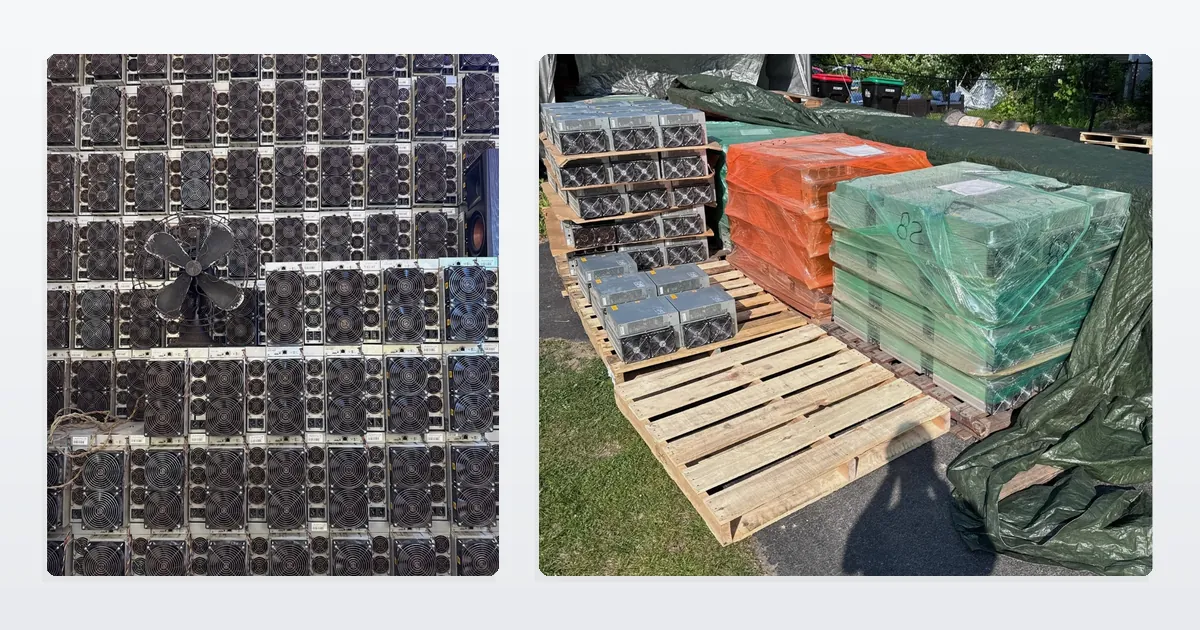
An ASIC almost never dies of old age. Well-kept machines run for many years, and S19-class hardware from 2020 is still hashing today. What ends a miner’s working life is that it stops paying – and those are two completely different clocks.
It is worth correcting a claim that circulates widely, including in an earlier version of this page: the silicon does not become less efficient as it ages. A machine that produced 95 TH/s for 3,250 W when new produces roughly the same figures years later, assuming its fans, thermal interface and power supply have been maintained. What changes is the world around it – network difficulty rises, newer hardware arrives at better J/TH, and hashprice falls after each halving. The machine is unchanged; its margin is not.
So physical lifespan is a maintenance question – fans, PSUs, thermal paste, dust, and whether hot exhaust is being recirculated into the intake. Economic lifespan is the date its break-even electricity rate rises above what you actually pay, and it is usually far shorter. The calculation is in our ASIC miner buying guide; the value side is in ASIC depreciation and US tax treatment.
Mining hardware lifespan: Key concepts explained
Understanding mining hardware lifespan involves analyzing the functional period during which cryptocurrency mining equipment remains economically viable and efficient. Critical hardware performance metrics demonstrate that specialized mining equipment like Application Specific Integrated Circuit (ASIC) miners have relatively short operational lifespans compared to traditional computing hardware.
Mining hardware typically experiences progressive performance degradation influenced by several key factors. These include consistent thermal stress, electrical load, computational workload, and environmental conditions. Professional miners recognize that hardware efficiency declines over time due to microscopic component wear, thermal cycling, and electrical component fatigue. High-performance ASICs designed for intensive cryptocurrency mining might experience significant performance reduction within 18 to 36 months of continuous operation.
The economic implications of hardware lifespan directly impact mining profitability. Miners must consistently evaluate the total cost of ownership, which encompasses initial hardware investment, electricity consumption, cooling requirements, and anticipated replacement cycles. Sustainable mining equipment analysis reveals that proactive maintenance and strategic hardware selection can substantially extend functional lifespan and optimize long-term returns.
Physical vs. economic lifespan for ASIC miners
Mining hardware presents a complex interplay between physical durability and economic viability, where the actual operational period differs significantly from the financially optimal usage timeframe. Physical lifespan represents the total time a mining unit can technically function, while economic lifespan reflects the period during which the hardware generates profitable returns relative to operational expenses and market conditions.
In practice, mining hardware performance typically experiences a rapid decline in profitability long before the physical components completely fail. High-performance ASIC miners might maintain mechanical functionality for 3-5 years, but economic efficiency often drops dramatically within 12-24 months. This rapid depreciation occurs due to increasing network difficulty, technological advancements, and the exponential computational power required to remain competitive in cryptocurrency mining ecosystems.
Economic considerations drive mining hardware replacement strategies more aggressively than pure mechanical limitations. Miners must constantly evaluate the cost-benefit ratio, comparing electricity consumption, maintenance expenses, and potential revenue generation against the current market rate for newer, more efficient hardware. Factors like hash rate, power efficiency, and market cryptocurrency values create a dynamic environment where seemingly functional hardware can become financially unsustainable much faster than its physical components would suggest.
Here’s a concise comparison of physical and economic lifespans for ASIC mining hardware:
| Aspect | Physical Lifespan | Economic Lifespan |
|---|---|---|
| Typical Duration | 3-5 years functioning | 12-24 months profitable |
| Main Limiting Factor | Component wear and fatigue | ROI and market conditions |
| Key Risk | Mechanical failure | Obsolescence, low profit |
| Upgrade Trigger | Irreparable hardware issues | Efficiency drops below 60% |
Main factors influencing miner longevity and wear
Cryptocurrency mining hardware experiences complex degradation processes driven by multiple interconnected variables that systematically impact operational performance and equipment sustainability. Predictive maintenance strategies reveal that understanding these factors is crucial for maximizing hardware investment and minimizing unexpected equipment failures.
Thermal management stands as the most critical factor influencing miner longevity. Continuous high-intensity computational workloads generate substantial heat, which accelerates component wear and potentially compromises critical electrical circuits. Thermal stress causes microscopic material fatigue, leading to gradual performance degradation. Professional miners recognize that ambient temperature, airflow quality, and cooling system efficiency directly correlate with hardware lifespan, with optimal operating temperatures typically ranging between 20-30 degrees Celsius for maximum component preservation.
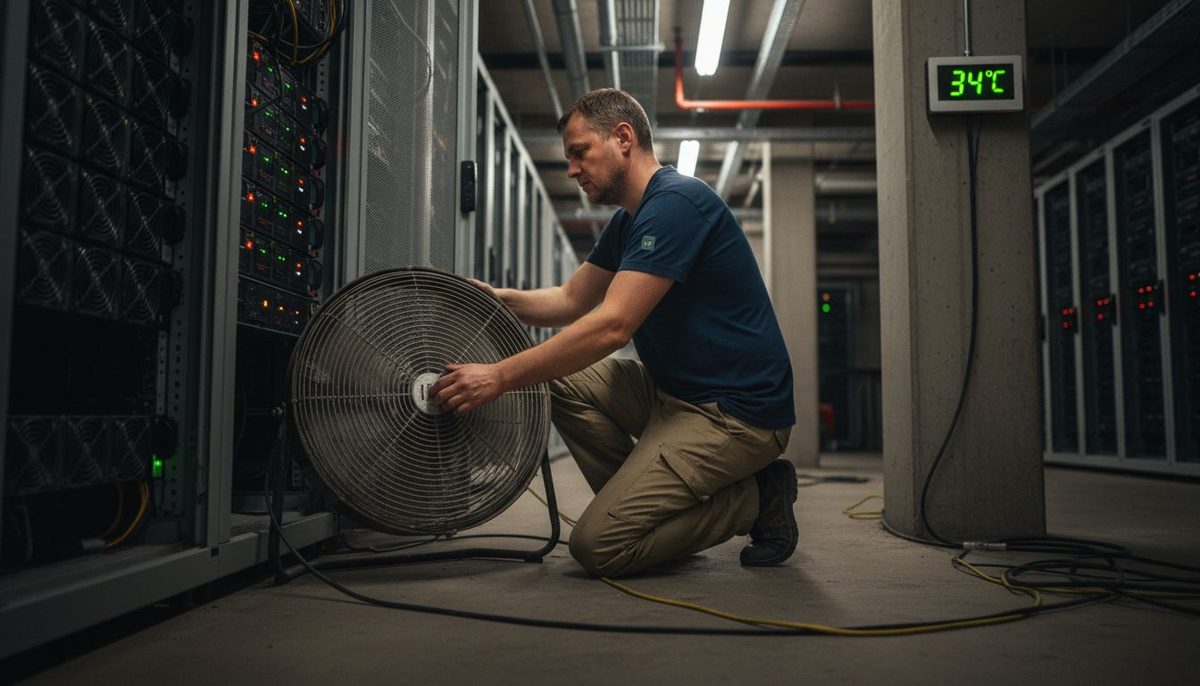
Environmental conditions and operational practices play equally significant roles in determining mining hardware durability. Factors such as electrical stability, dust exposure, humidity levels, and mechanical vibration contribute to incremental equipment deterioration. Mining hardware performance demonstrates that miners operating in controlled, clean environments with consistent power supplies and robust cooling mechanisms can significantly extend their equipment’s functional period compared to those experiencing volatile or harsh operational conditions.
Maintenance, cooling, and operational best practices
Mining hardware maintenance requires a systematic and proactive approach to ensure optimal performance and extended equipment lifespan. Predictive maintenance techniques have revolutionized how miners approach equipment management, transforming reactive repair strategies into intelligent, data-driven monitoring systems that anticipate potential failures before they occur.
Cooling represents a critical component of mining hardware preservation. Effective thermal management involves multiple strategic interventions, including sophisticated airflow design, precision temperature monitoring, and selecting appropriate cooling technologies. Liquid cooling systems offer superior heat dissipation compared to traditional air cooling, reducing thermal stress on critical components and maintaining consistent operating temperatures. Professional miners understand that maintaining ambient temperatures between 20-30 degrees Celsius can significantly extend hardware functionality and reduce the risk of catastrophic component failure.
Mining hardware maintenance emphasizes the importance of comprehensive operational practices beyond temperature control. Routine maintenance should include systematic dust removal, electrical connection inspections, firmware updates, and periodic performance benchmarking. Miners must develop disciplined protocols for cleaning hardware, ensuring unobstructed ventilation, and monitoring electrical load distribution to minimize unexpected equipment degradation and maximize operational efficiency.
Risks, costs, and when to upgrade or sell
Cryptocurrency mining hardware investments involve complex financial calculations that extend far beyond initial purchase price. Depreciation risk represents the most significant financial challenge, with mining equipment losing substantial value rapidly due to technological advancements and increasing network computational requirements. Professional miners must constantly evaluate the delicate balance between continued operation and equipment replacement.
Risk assessment requires a comprehensive analysis of multiple interconnected factors. Mining profitability strategies suggest evaluating hardware through three critical lenses: current hash rate performance, electricity consumption, and comparative efficiency against newer market alternatives. Miners should consider upgrading when their existing equipment’s operational costs exceed potential revenue generation, typically occurring when a unit’s efficiency drops below 60% of its original performance capabilities.
The decision to sell mining hardware involves strategic timing and market understanding. Factors influencing resale value include equipment age, maintenance history, overall operational condition, and current market demand for specific mining models. Successful miners develop a disciplined approach to hardware lifecycle management, recognizing that proactive replacement prevents prolonged periods of diminishing returns. This requires maintaining detailed operational logs, tracking performance metrics, and staying informed about technological developments in mining hardware.
Resale value is the part of that decision with no published number, so here is ours. Pulling every completed sale carrying one byte-identical eBay listing title — a boxed, used Antminer S19 XP 141TH, 3030 W — returned 22 sales between $175.50 and $455.00. Same model, same stated condition, and the top sale cleared the bottom by 159%. Age and maintenance history explain part of that spread; how the machine is described explains more of the rest than most sellers expect. What used miners actually sell for on eBay breaks the band down by model and works out where in it a given unit lands.
Extend Your Mining Hardware Lifespan With Confidence
Understanding the balance between physical and economic lifespan is crucial for maximizing your mining profitability. The challenges of hardware wear, thermal stress, and evolving market conditions mean miners must make smart, data-driven decisions about when to maintain, upgrade, or replace equipment. If you’re looking to minimize costly surprises from rapid miner depreciation or want expert guidance on selecting refurbished units that deliver strong efficiency and reliability, ING Mining is your trusted partner.
Explore our extensive inventory at ING Mining used ASIC miners where every unit is professionally inspected, tested, and verified. Get expert insights on power requirements, operating costs, and long-term performance so you can confidently scale your operation while protecting your investment from early obsolescence. Don’t wait for declining efficiency to eat into your profits. Act now to secure quality mining hardware tailored to your goals with full transparency and support from industry veterans.
Frequently Asked Questions
What is the typical lifespan of mining hardware?
Mining hardware, particularly ASIC miners, can have a physical lifespan of 3-5 years but may experience a significant decline in profitability within 12-24 months due to increasing network difficulty and technological advancements.
How can I extend the lifespan of my mining equipment?
To extend the lifespan of your mining equipment, implement proactive maintenance, use optimal cooling systems to manage thermal stress, and monitor environmental conditions to detect potential hazards.
What factors affect the economic lifespan of mining hardware?
The economic lifespan of mining hardware is influenced by its operational costs, electricity consumption, mining profitability, market conditions, and advancements in newer, more efficient technologies.
When should I consider upgrading my mining hardware?
Consider upgrading your mining hardware when its efficiency drops below 60% of its original performance capabilities, or when operational costs exceed potential revenue generation.
More on when a miner stops paying
- What Actually Moves Mining Margin: Five Levers, With the Arithmetic
- Antminer S19 miners for sale
- Cryptocurrency Mining Tips and High-Performance Hardware
- Why Your Miner Is Earning Less: Diagnosing ASIC Faults
Spares and consumables that keep a machine running
The consumables and spares that keep a machine in service:
- 12KW Intelligent ASIC Water Cooling Radiator 15-Fan Brushless Pump Miner
- Bitmain Antminer Control Board, ctrl_C55 V2.3011 NGSB202101 – Tested, Working
- Bitmain Antminer S19 / S20 / S21 Dual Fan Assembly w/ Backplate – Easy Install
More in Need Parts, or the full ASIC miner inventory.