
Many first-time miners mistakenly buy cheap, outdated ASICs like the Antminer S9, thinking they’ll turn a profit quickly. This leads to mounting electricity bills and disappointing returns. Understanding miner specs, power costs, cooling, and smart setup choices transforms your mining experience from frustrating loss into steady profitability. This guide walks you through selecting efficient hardware, configuring your home rig, managing costs, and avoiding common pitfalls to build a successful mining operation in 2026.
Before you buy anything: the short version
| Point | Details |
|---|---|
| Choose efficient ASICs | Modern entry-level ASIC miners provide hash rates ranging from 50 TH/s to 150 TH/s with power consumption between 250W to 350W, balancing performance with manageable electricity costs. |
| Optimize power and cooling | Stable 220V supply with surge protection, effective ventilation, and reliable broadband prevent hardware damage and downtime. |
| Manage electricity costs | Your rate decides whether there is a payback at all, and the honest number is longer than the guides suggest. At 6¢/kWh a new S21 Pro 245T at $4,200 nets about $74 a month at today’s hashprice — call it four to five years, not six to twelve months. Cheap power shortens it; nothing else does. |
| Join mining pools | Pools trade variance for a fee, typically 0–2% depending on the payout scheme — FPPS charges more and pays smoothly, PPLNS charges less and pays lumpier. Payouts are steadier than solo mining, not steady |
| Secure your earnings | Hardware wallets like Ledger or Trezor protect mined cryptocurrency far better than online wallets vulnerable to hacking. |
How to choose your first ASIC miner: key selection criteria
Selecting the right ASIC miner sets the foundation for profitable mining. Beginners should focus on hash rate, power consumption, efficiency, and firmware reliability rather than chasing the cheapest option.
Target miners delivering hash rates between 50 and 150 TH/s. This range balances strong computational performance with reasonable power demands. Going higher means steeper electricity bills and cooling challenges. Staying lower risks falling behind network difficulty growth. Power consumption ideally sits around 250W to 350W, keeping monthly electricity costs manageable even without industrial-grade infrastructure.
Efficiency measured in joules per terahash (J/TH) directly determines your profitability. Lower J/TH values mean you spend less electricity generating each unit of hash power. Compare J/TH ratings across models before purchasing. Selecting ASIC miners with proven firmware stability and long-term operational reliability ranks equally with hash rate and efficiency in importance for beginners.
Key selection criteria include:
- Hash rate between 50 and 150 TH/s for balanced performance
- Power consumption around 250W to 350W to control electricity costs
- Low J/TH efficiency rating for maximum profitability
- Proven firmware stability to reduce downtime and maintenance
- Avoid outdated models like Antminer S9 that burn power without competitive returns
Check the best asics miners 2026 comparison to see detailed specs and performance ratings before committing to a purchase. Investing in new miners with warranty coverage saves headaches compared to risky used equipment. For comprehensive beginner guidance, explore top bitcoin miners for beginners to understand what separates profitable models from money pits.
Setting up your home mining rig: power, cooling, and network
Once you’ve selected your miner, preparing your home environment correctly prevents costly failures and maximizes uptime. Power supply, cooling, and network connectivity form the operational backbone of any successful mining setup.
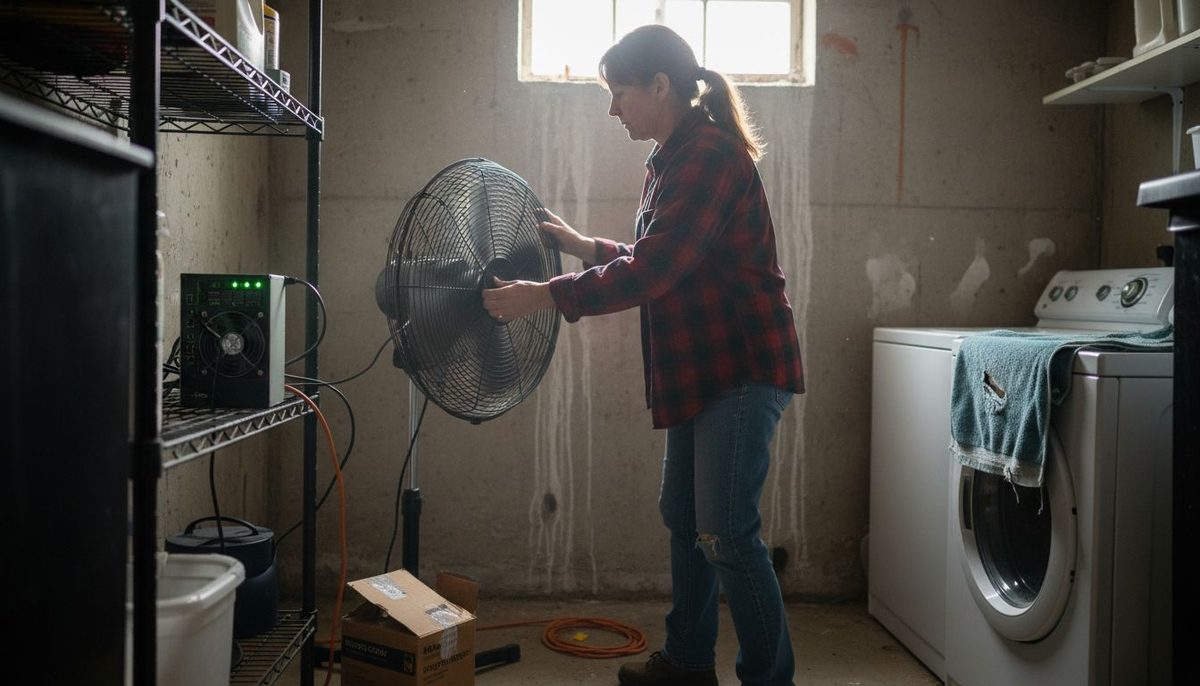
Ensure you have stable 220V electrical supply with dedicated circuits and surge protection. ASIC miners draw continuous high wattage, so plugging them into standard household outlets risks overheating wiring and tripping breakers. Install surge protectors to guard against voltage spikes that can fry sensitive components. If your electrical panel can’t handle the load, hire a licensed electrician to upgrade your infrastructure before powering on miners.
Cooling demands serious attention. ASIC miners generate intense heat during operation, and overheating degrades performance while shortening hardware lifespan. Implement air ventilation by placing miners near windows or exhaust fans. Position intake and exhaust fans strategically to create airflow channels that pull cool air in and push hot air out. Avoid enclosed spaces like closets where heat accumulates dangerously.
Reliable broadband with low latency keeps your miner connected to mining pools without interruptions. Network downtime means lost mining time and missed payouts. Use wired Ethernet connections instead of WiFi for stability. Test your connection speed and latency before launching operations. Some miners benefit from scheduling operations during off-peak electricity hours when utility rates drop, reducing costs significantly over time.
Setup essentials include:
- Stable 220V electrical supply with surge protection and dedicated circuits
- Air ventilation with intake and exhaust fans positioned for optimal airflow
- Reliable wired Ethernet connection for uninterrupted pool communication
- Scheduled mining during off-peak hours to capture lower electricity rates
- Professional electrical inspection if your panel lacks capacity for continuous high loads
Review the cryptocurrency mining safety checklist essential tips to avoid fire hazards and electrical failures. Learn practical strategies with how to start crypto mining home profits to optimize your setup for maximum earnings and minimal risk.
Understanding operating costs and profitability for beginners
Profitability hinges on managing ongoing operating costs, especially electricity. Calculating total expenses and expected revenue helps you set realistic ROI timelines and avoid surprises.
Two things get muddled here constantly, so keep them apart. Gross revenue does not depend on your electricity rate at all — it is hashrate times hashprice. At the hashprice measured on 10 August 2026, a used S19 earns $3.01 a day and a new S21 Pro 245T earns $7.77, whatever you pay for power. What your rate decides is how much of that you keep. At 6¢/kWh the S21 Pro nets about $74 a month against its $4,200 price, which is a four-to-five-year payback rather than the six-to-twelve months the beginner guides advertise — and the used S19 stops making money entirely above 3.9¢/kWh.
Calculate total costs including hardware purchase price, monthly power bills, cooling infrastructure, and occasional maintenance before investing. Factor in network difficulty increases over time, which reduce individual miner output. Profitability depends on balancing power cost, miner efficiency, and evolving network conditions. Use online profitability calculators to model different scenarios with varying electricity rates and Bitcoin prices.
| Electricity Cost (per kWh) | Daily Revenue (approx) | Monthly Profit (approx) | Break-even Timeline |
|---|---|---|---|
| $0.03 | $12-$15 | $250-$350 | 6-9 months |
| $0.05 | $9-$12 | $150-$250 | 9-12 months |
| $0.08 | $5-$8 | $50-$150 | 15-18 months |
| $0.10+ | Negative | Loss | Never |
Cost management priorities:
- Secure electricity rates below $0.06 per kWh for viable profitability
- Calculate hardware, power, cooling, and maintenance costs upfront
- Use profitability calculators to model scenarios with different Bitcoin prices
- Monitor network difficulty trends to anticipate revenue changes
- Track daily earnings and adjust operations if profitability drops
Access the mining profitability calculation guide results for detailed formulas and real-world examples. Explore cryptocurrency mining profitability to understand how market conditions affect your bottom line. For deeper analysis, review the beginner ASIC mining profitability guide for expert breakdowns of cost structures.
Mining pools vs solo mining: what beginners should know
Choosing between mining pools and solo mining impacts your income stability and risk exposure. Beginners typically benefit more from pools, but understanding both approaches helps you make informed decisions.
Mining pools offer steady, predictable earnings with lower payout variance. By pooling hash power with other miners, you share block rewards proportionally based on contributed work. This smooths out income fluctuations and delivers regular payouts instead of waiting months for a solo block discovery. Pool fees typically run 1-2% but offset by more consistent payouts that help with budgeting and cash flow planning.
Solo mining payouts are variable and dependent on luck, often causing long waits for rewards. You receive the entire block reward when you successfully mine a block, but small-scale miners face astronomical odds. Weeks or months can pass without any payout, creating financial strain and uncertainty. For beginners with limited hash power, solo mining resembles a lottery ticket rather than a reliable income stream.
Beginners benefit from joining established pools to reduce income unpredictability. Choosing a pool requires considering fees, payout frequency, pool reputation, and user interface quality. Look for pools with transparent fee structures, regular payout schedules (daily or weekly), strong uptime records, and active community support. Avoid brand-new pools with unproven track records or suspiciously low fees that may indicate hidden costs.
Pool vs solo considerations:
- Mining pools deliver steady income with 1-2% fees and proportional reward sharing
- Solo mining offers full block rewards but requires massive hash power and tolerates long dry spells
- Established pools provide reliable payouts, transparent fees, and strong uptime
- Beginners should prioritize income consistency over chasing rare solo block rewards
- Evaluate pool reputation, payout frequency, and user experience before joining
Learn strategies for reliable home mining profits that emphasize stable income over risky solo approaches.
Installing and managing mining software and secure wallets
Software tools and security measures protect your mining operations and earnings. Selecting reliable mining software and secure wallets ensures you monitor performance effectively while safeguarding rewards from theft.
On a Bitcoin ASIC the monitoring you need is already built in: hash rate, per-board temperature, fan speed and error counts are all reported by the miner’s own web interface, and by your pool’s dashboard. The decision worth making is which firmware runs on the machine — stock manufacturer firmware, or an aftermarket build such as Braiins OS+ or VNish that adds tuning and finer telemetry. CGMiner and BFGMiner are desktop applications from the GPU mining era and are not part of running ASIC hardware today. Regularly update software to protect against vulnerabilities and benefit from performance improvements.
Use hardware wallets such as Ledger or Trezor to securely store mining rewards. Hardware wallets keep private keys offline, protecting cryptocurrency from hacking attempts targeting online wallets and exchanges. They offer robust security features like PIN protection, passphrase encryption, and backup recovery phrases. Transferring mined coins to hardware wallets immediately after pool payouts minimizes exposure to online threats.
A secure wallet setup safeguards earnings from hacking or theft. Never store large amounts on exchanges or software wallets connected to the internet. Backup recovery phrases on paper stored in secure physical locations like safes. Test wallet recovery procedures to ensure you can restore access if devices fail or get lost. Monitor wallet addresses for unexpected transactions that could indicate security breaches.
Software and security essentials:
- Use the miner’s built-in web interface and your pool dashboard for real-time monitoring; alert on hashrate deviation rather than on the machine simply being reachable
- Use hardware wallets like Ledger or Trezor to store rewards offline securely
- Regularly update mining software to patch vulnerabilities and improve efficiency
- Backup wallet recovery phrases on paper stored in secure physical locations
- Transfer mined coins from pools to hardware wallets immediately after payouts
Review cryptocurrency mining security basics for comprehensive guidance on protecting your operations and earnings from common threats.
Avoiding common mistakes: hardware and setup pitfalls
Beginner miners frequently make costly errors that hurt profitability and hardware longevity. Recognizing these pitfalls helps you avoid financial losses and operational headaches.
Beginners buying cheap old ASIC miners like Antminer S9 risk losses due to inefficiency and increasing network difficulty. These outdated models consume excessive power while delivering low hash rates, making them unprofitable even at cheap electricity rates. Sellers often advertise them as affordable entry points, but they become money pits that drain budgets without delivering returns.
Overheating reduces miner lifespan and causes costly failures. Neglecting cooling infrastructure leads to thermal throttling, where miners reduce performance to prevent damage, cutting your effective hash rate. Sustained high temperatures degrade components, triggering expensive repairs or total hardware loss. Investing in proper cooling from day one prevents these failures and protects your investment.
Poor power setups increase fire risk and hardware damage. Overloading circuits, using inadequate wiring, or skipping surge protection creates dangerous conditions. Electrical fires destroy equipment and property while endangering lives. Purchase verified miners from reputable sellers only to avoid counterfeit or damaged units that pose safety and performance risks. Maintain adequate cooling and stable electricity supply from the start to prevent catastrophic failures.
Common mistakes to avoid:
- Buying outdated miners like Antminer S9 that burn power without competitive hash rates
- Neglecting cooling infrastructure, causing overheating and hardware degradation
- Using poor electrical setups that create fire hazards and damage equipment
- Purchasing unverified miners from sketchy sellers, risking counterfeit or broken units
- Skipping surge protection and stable power supply, inviting voltage damage
Follow the cryptocurrency mining safety checklist essential tips to prevent these errors. Understand the risks of old ASIC miners before making purchasing decisions.
Summary comparison and situational recommendations
Choosing the right miner depends on your budget, electricity costs, and available space. Comparing leading beginner ASIC models helps you match hardware to your specific circumstances.
| Model | Hash Rate (TH/s) | Power (W) | Efficiency (J/TH) | Price Range | Best For |
|---|---|---|---|---|---|
| Antminer S19 | 95 | 3250 | 34 | $1,200-$1,800 | Low electricity, serious beginners |
| Whatsminer M30S | 86 | 3344 | 38 | $1,000-$1,500 | Balanced performance and cost |
| AvalonMiner 1246 | 90 | 3420 | 38 | $1,100-$1,600 | Reliable firmware, steady operation |
| Antminer S19j Pro | 100 | 3050 | 30 | $1,500-$2,200 | Maximum efficiency, premium budget |
| Goldshell KD6 | 29.2 | 2630 | 90 | $800-$1,200 | Kadena mining, alternative coins |
For low-cost electricity below $0.04 per kWh, invest in higher-performance models like Antminer S19j Pro to maximize returns. If space is limited, choose compact models with lower power draws that reduce cooling demands. Budget-conscious miners benefit from mid-tier options like Whatsminer M30S that balance cost with decent efficiency. Buying refurbished ASICs cautiously from trusted sources can save money, but verify seller reputation and request detailed testing reports before purchasing.
Emphasize balancing performance and operational cost for best ROI. Higher hash rates mean nothing if electricity costs erase profits. Match miner choice with personal circumstances including power rates, available space, cooling capacity, and budget constraints. Research thoroughly, calculate projected profitability, and avoid impulse purchases of flashy models that don’t fit your situation.
Compare detailed specs with differences asic miner models and review top mining hardware for home comparison to find the perfect match for your setup.
If this is your first machine, the honest shortlist is short: something efficient enough for your actual electricity price, on a circuit you already have or can afford to run. Start with how cryptocurrency mining works if the mechanics are still fuzzy, then the ASIC miner buying guide, then the used ASIC miner shelf for the cheap end.
Frequently asked questions
What is the ideal hash rate range for beginner ASIC miners?
Beginner miners should target ASICs with 50 to 150 TH/s hash rate for balanced performance and power usage. This range delivers competitive mining output without overwhelming home electrical systems or requiring industrial cooling infrastructure.
How much does electricity cost affect mining profitability?
Cheap power decides whether there is a payback at all, but not on that timescale. At the hashprice measured on 10 August 2026, a new S21 Pro 245T at $4,200 nets about $74 a month at 6 cents per kWh, which is a four-to-five-year payback rather than six to twelve months. Above about 8.8 cents per kWh that machine stops earning altogether, and a used S19 stops at about 3.9 cents. Your rate decides whether there is a payback; it does not change what the machine earns.
Should beginners join mining pools or mine solo?
Beginners benefit from joining established mining pools offering steady payouts and lower risk compared to unpredictable solo mining rewards. Pools charge 1-2% fees but deliver consistent income, while solo mining requires massive hash power and tolerates months without payouts.
What cooling solutions are best for home mining rigs?
Air ventilation combined with strategically placed fans provides effective cooling for home ASIC mining setups to prevent overheating. Position intake fans to pull cool air and exhaust fans to push hot air out, creating continuous airflow that protects hardware.
How can I secure my mining rewards against theft?
Using hardware wallets like Ledger or Trezor protects your mined cryptocurrency better than online wallets vulnerable to hacking. Transfer coins from mining pools to hardware wallets immediately after payouts, keeping private keys offline and secure.
More for first-time buyers
- How to Start Crypto Mining for Reliable Home Profits
- What Actually Moves Mining Margin: Five Levers, With the Arithmetic
- Mining 101: A Beginner’s Guide to Cryptocurrency Mining
- Why Your Miner Is Earning Less: Diagnosing ASIC Faults
The machines these numbers get run against
The machines these numbers actually get run against:
- Bitmain Antminer S21 Pro 234T – Efficient SHA-256 ASIC Miner
- Bitmain Antminer S21 Pro 245T – Efficient Bitcoin Miner
- Used Antminer S19k Pro 120TH Bitcoin Miner – VNish 130TH Tune
More in Bitcoin miner, or the full ASIC miner inventory. The arithmetic behind all of this — break-even electricity price from J/TH — is set out in our ASIC miner buying guide.