
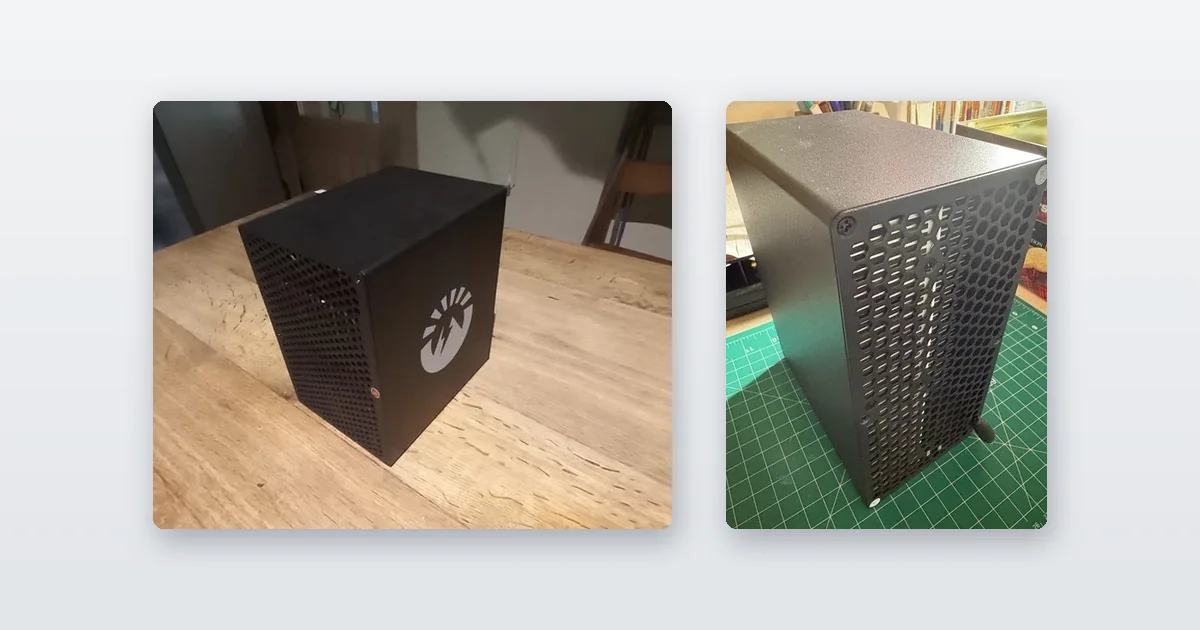
A Bitcoin mining rig in 2026 is one sealed machine and the electrical circuit that feeds it. The open aluminium frame hung with graphics cards that still illustrates most articles on this subject has not mined Bitcoin economically since about 2013, and it stopped mining Ethereum in 2022 when that network abandoned proof-of-work altogether. So the real question is not how to build a rig. It is which single machine belongs in the place you have and at the power price you pay.
Below are five builds we actually assemble and ship, at five different scales, each with the electricity rate it needs to survive. Then the ones that are still recommended everywhere and should not be.
The inputs, and when they were measured
- Hashprice ~$31.8 per PH/s per day, difficulty 126.23 T, network hashrate ~867 EH/s, BTC ~$63,378 — all measured 28 July 2026
- US average residential electricity 18.44¢/kWh (EIA, May 2026)
- Break-even electricity rate = hashprice ÷ (24 × J/TH). The buying guide derives it
Hashprice moves daily. Re-run the arithmetic on the day you buy.
1. One machine in a house: Canaan Avalon Q 90T
90 TH/s at 1,674 W, about 18.6 J/TH, rated near 45 dB. It is the only current machine we sell that a person can reasonably live with. It will start on a 120 V circuit — roughly 14 A at full output, so it needs that circuit to itself — where a full-size miner needs 240 V and an electrician.
Break-even: 7.1¢/kWh. At full output it puts about 5,700 BTU/hr into the room, which is a real space heater running permanently; in winter that is a feature and in July it is a second air-conditioning bill. The head-to-head against the obvious alternative is set out in Avalon Q vs Antminer S19k Pro. Buy: Avalon Q 90T.
2. One machine in a garage or shop: used Antminer S19k Pro 115TH
115 TH/s at 2,645 W, 23 J/TH. This is the most sensible first full-size machine on our shelf and the one we recommend most often. It needs 240 V, a dedicated 20 A circuit, and somewhere that tolerates roughly 75 dB continuously — which is a shop vacuum that never switches off, and travels through walls.
Break-even: 5.8¢/kWh. Around $3 per terahash of capital, against roughly $17 for a new current-generation machine, and it still clears a realistic commercial tariff. Buy: used S19k Pro 115TH.
3. Cheapest hashrate per dollar: used Antminer S19 95TH
95 TH/s at 3,250 W, 34.2 J/TH. In lot pricing this is roughly a dollar or two per terahash — the cheapest hashrate available anywhere, by a wide margin.
Break-even: 3.9¢/kWh, and that number is the whole story. Below it, this is the highest-return machine on the page. Above it, it is scrap that costs you money every day it runs, no matter what you paid. Do not buy this class of hardware on a tariff you have not confirmed in writing. Buy: lot of 40 used S19 95TH.
4. Current generation, highest tolerated power price: S21 Pro or SealMiner A2 Pro Air
The Antminer S21 Pro 245T runs 3,675 W at 15.0 J/TH; the Bitdeer SealMiner A2 Pro Air 255TH/s is a shade better at 14.9 J/TH rated and more hashrate. Break-even 8.8¢ and 8.9¢/kWh respectively, at the hashprice above.
What you are buying at roughly $17 per terahash — ten times the used figure — is not speed. It is the ability to keep earning at a power price that shuts the used machines down, plus a manufacturer warranty. If your rate is between about 6 and 9¢, this is the only band of hardware that works, and the comparison is worked through in S21 Pro vs SealMiner A2 Pro Air.
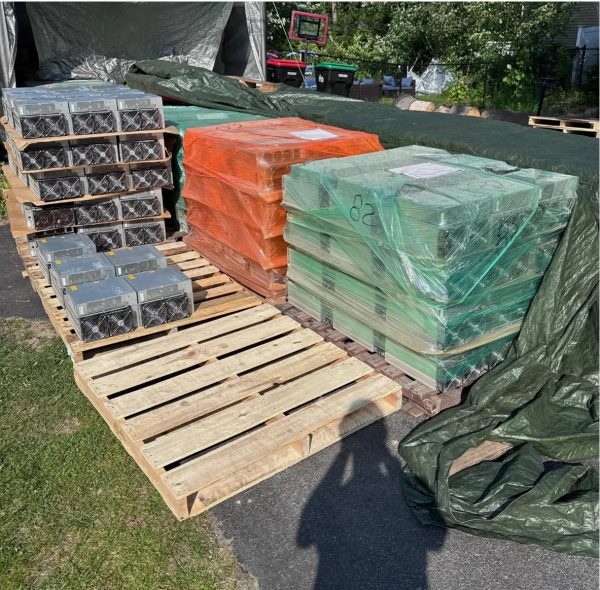
5. Fleet scale: a pallet of the same model
Past roughly ten machines the build stops being about the miner. A hundred used S19s is about 325 kW of continuous load, which needs around 406 kW of breaker capacity once you allow the 80% continuous-load derating, plus about 234 MWh a month and a freight arrangement measured in tons. One model across the whole lot, so every spare part fits every machine.
The power sizing, freight and due-diligence detail is in buying ASIC miners by the pallet. Note that our own per-unit price does not fall smoothly with lot size — divide the lot price by the machine count and compare, every time. Stock: lot of 100 used S19 95TH.
Which is the point where the unit of account changes. At 325 kW you are not really buying a hundred machines — you are buying a third of a megawatt of capacity and deciding what to fill it with, and the number that settles that argument is total fleet J/TH, which appears on no listing anywhere. We run that through on a used S19 fleet in buy the megawatt, not the machine — including the spares float and why your own bench, not the freight, is usually the bottleneck.
What not to build, and why it is still recommended everywhere
An Antminer S9 or anything of that generation. 13.5 TH/s at about 1,350 W is roughly 100 J/TH, which puts break-even near 1.3¢/kWh. There is effectively nowhere in the United States you can buy power at that price. An earlier version of this page recommended the S9 as an entry-level home rig, which was wrong, and we are correcting it in public rather than quietly: it is a machine for a hobbyist who wants to see one work and knows they are paying for the privilege, not an entry point to mining. We do not stock them.
A GPU rig, for Bitcoin. The efficiency gap against an ASIC is several orders of magnitude. GPUs remain relevant on some other chains, but any 2026 guide suggesting a graphics card as a route into Bitcoin is describing hardware from more than a decade ago.
Home immersion. Immersion and hydro cooling are genuinely effective and genuinely industrial. At one to five machines the tank, dielectric fluid, pump, dry cooler and plumbing cost more than the miners and add several failure modes to a system that had one. Air is the right answer until you are running enough machines that heat rejection is already a facility problem.
Any machine at all, at 18.44¢/kWh. Nothing in this catalogue — or anyone else’s — breaks even at the US residential average. That is not a hardware problem and no rig on this page solves it. What solves it is a commercial or time-of-use tariff, a hosting arrangement rather than a cloud contract, or heat you were going to pay to produce anyway.
Choosing between them
The order of decisions is the reverse of how most people make them. Confirm your delivered electricity rate first, including delivery and demand charges rather than the energy line alone. That rate eliminates most of this page immediately. Then confirm what the location tolerates — 240 V, 75 dB, and several thousand BTU an hour are what rule out a spare bedroom, not the price of the miner. Only then choose a model, and choose the cheapest one whose break-even rate clears your tariff with room to spare, because hashprice falls as well as rises.
If you are buying used, verify before you send money: how to buy a used ASIC miner without getting burned covers what to ask for, and acceptance-testing a machine you just received covers the first 48 hours after it arrives.
Frequently Asked Questions
What does a crypto mining rig actually consist of in 2026?
For Bitcoin, one sealed ASIC machine and a dedicated electrical circuit. The miner contains its own controller, power supply and firmware and is configured through a web page on your local network, so there is no PC, no motherboard and no mining software to install. The multi-GPU frame most articles still picture has not been economic for Bitcoin since roughly 2013.
Is an Antminer S9 still worth buying for home mining?
No. At around 13.5 TH/s and 1,350 W it works out near 100 joules per terahash, giving a break-even electricity rate close to 1.3 cents per kilowatt-hour at a hashprice of $31.8 per PH/s per day. Essentially no US power contract reaches that. It is a machine for someone who wants to watch one run and accepts the cost, not a first step into mining, and we do not sell them.
Which mining rig is best for a house rather than a garage?
The Canaan Avalon Q 90T, on the two constraints that actually decide it: about 1,674 W with a 120 V option, and noise rated near 45 dB against roughly 75 dB for a full-size machine. It breaks even near 7.1 cents per kilowatt-hour. It still emits about 5,700 BTU an hour, so plan for where that heat goes before it arrives.
What electrical circuit does a full-size miner need?
A dedicated 240 V circuit. Electrical code treats anything running more than three hours as a continuous load and limits it to 80% of breaker rating, so a 3,250 W machine needs its own 20 A breaker with nothing else on it. Get a quote for that circuit before buying the machine, because it can easily cost more than a used miner does.
How many machines before it is worth thinking about a facility?
Around ten, when heat rejection and breaker capacity stop being solvable by opening a door. A hundred used S19s draw roughly 325 kW continuously, which needs about 406 kW of breaker capacity after derating and consumes on the order of 234 MWh a month. At that point the constraint is the building and the utility, not the hardware.
Should I build a mining rig or use immersion cooling?
Air cooling, until heat rejection is already a facility-scale problem. Immersion works, but the tank, dielectric fluid, pump, dry cooler and plumbing cost more than a handful of miners and introduce leak and pump failures to a system that previously had neither. It earns its place across large deployments where the alternative is expensive air handling, not across one to five machines.
Which rig gives the most hashrate per dollar spent?
A used Antminer S19 95TH bought in a lot, at roughly one to two dollars per terahash against about seventeen for a new S21 Pro. That advantage is entirely conditional on cheap electricity: the S19 stops earning at about 3.9 cents per kilowatt-hour, so above that rate the cheapest hashrate on the market is worth nothing at all.
The machines on this page, on the floor now
- Canaan Avalon Q 90T Home Bitcoin Miner — the house build
- Used Antminer S19k Pro 115TH/s — the garage build
- Bitmain Antminer S21 Pro 245T — the current-generation build
- Lot of 40 Used Antminer S19 95TH/s — the fleet build
More in Used ASIC miners, or the full ASIC miner inventory. Hydro and immersion hardware, for operations already at facility scale, is in hydro cooling.