
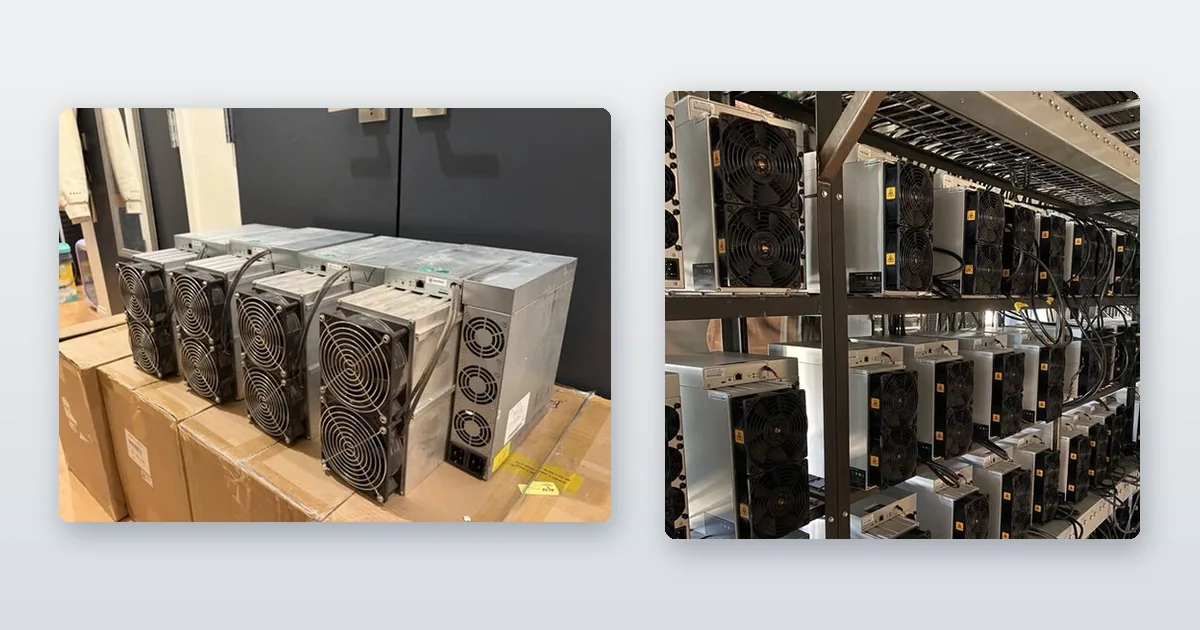
Short answer: on electricity these two machines are a dead heat, and anyone selling you one on efficiency is quoting a rounding error. The Antminer S21 Pro 245T runs at 15.0 J/TH. The Bitdeer SealMiner A2 Pro Air 255T runs at 14.86 J/TH. That is a gap of under 1%. It will not decide anything for you.
What should decide it is what happens when the machine breaks, and what you can sell it for in two years. On those two questions the machines are not close at all. We stock both, we have no reason to push you toward either, and this is the comparison we would give you on the phone.
Buy the Antminer S21 Pro if you self-host, if you intend to run the machine past its warranty, if your site gets hot, or if you care about resale. Buy the SealMiner A2 Pro Air if you are hosting somewhere that handles failures for you and you want the most terahash per dollar on the invoice.
The specs, side by side
| Antminer S21 Pro 245T | SealMiner A2 Pro Air 255T | |
|---|---|---|
| Hashrate | 245 TH/s ±3% | 255 TH/s ±5% |
| Wall power | 3,675 W ±5% | 3,790 W ±5% |
| Efficiency | 15.0 J/TH | 14.86 J/TH |
| Chip | BM1370 | SEAL02, 4 nm, 153 per hashboard |
| Manufacturer | Bitmain | Bitdeer |
| Cooling | Air, 2 fans | Air, 4 fans |
| Noise | ~75–76 dB | ~75 dB |
| Input voltage | 220–277 V AC | 220–277 V AC |
| PSU | Built into the chassis | Built in, rated 97% efficient |
| Max operating temp | 45 °C | 40 °C |
| Published warranty | 365 days from shipment (Bitmain) | 365 days from shipment (Bitdeer) |
| Released | Late 2025 | March 2025 |
One honest note on that table: weights and dimensions are published inconsistently for both machines. We have seen the S21 Pro listed at both 400 × 195 × 290 mm and 450 × 219 × 293 mm, and the SealMiner quoted anywhere from 15.5 kg to 20.5 kg. If you are quoting freight or designing racking, do not take a number off a spec sheet — ask us and we will put the actual unit on a scale and a tape measure.
The efficiency gap is a rounding error
There is one line of arithmetic that turns J/TH into something you can act on, and it is in our ASIC miner buying guide:
Break-even electricity rate ($/kWh) = hashprice ($/PH/day) ÷ (24 × J/TH)
Hashrate cancels out completely. Run it on both machines:
- S21 Pro 245T: 30.88 ÷ (24 × 15.0) = $0.086/kWh
- SealMiner A2 Pro Air: 30.88 ÷ (24 × 14.86) = $0.087/kWh
The difference between those two machines is eight ten-thousandths of a dollar per kilowatt-hour. If your decision hinges on that, your decision does not hinge on that.
Assumptions, and they move every day: hashprice $30.88 per PH/s per day, difficulty 127.17 T, network hashrate ~879 EH/s, BTC $62,042 — all as of 13 July 2026 (Luxor Hashrate Index). Hashprice is quoted before pool fees, so knock 1–2% off. A difficulty retarget was due around 26 July 2026. Re-run this on the day you buy; we are not going to pretend a number from this week will hold.
What the extra 10 TH/s is actually worth
The SealMiner gives you 4.1% more hashrate for 3.1% more power. That is a real edge, just a small one. Here is the whole of it, per machine:
- Extra revenue: 10 TH/s × $30.88/PH/day = $0.31 a day, about $9.30 a month gross
- Extra power: 115 W × 24 h = 2.76 kWh a day
So the answer depends entirely on your power price, and it crosses over at 11.2 ¢/kWh:
- At 4 ¢/kWh, the SealMiner nets about $6 a month more
- At 7.5 ¢/kWh (typical retail hosting), about $3 a month more
- Above 11.2 ¢/kWh, the S21 Pro is ahead — the extra watts cost more than the extra terahash earns
Now the part most comparison articles leave out. That crossover at 11.2¢ sits above both machines’ break-even of roughly 8.6¢. By the time the S21 Pro wins this particular argument, both machines are losing money on electricity alone. The crossover is real arithmetic and it is also irrelevant, because nobody should be running either machine at 11 ¢/kWh.
For scale: at 7.5 ¢/kWh hosted, the S21 Pro clears roughly $29 a month over its power bill and the SealMiner roughly $32, on the July 2026 inputs above and before pool fees, hosting margin, freight and failures. Sit with those numbers before you buy either one. That is the honest picture at this hashprice, and it is why cheap power matters more than any spec on the sheet.
Where they genuinely differ
Parts and repair — this is the real difference
The S21 Pro uses Bitmain’s BM1370. Replacement BM1370 chips are stocked by multiple independent parts vendors. Independent repair shops advertise S21-family hashboard repair as a standard service. Universal Antminer hashboard testers are commodity items — we keep several in repair parts and tools, including a multi-function tester that covers S19, S21 and T21 boards. Antminer fan assemblies and APW17-series replacement power supplies are ordinary stocked parts. There is an entire aftermarket economy around this machine.
The SealMiner uses Bitdeer’s own SEAL02. We could not find an independent supply of SEAL02 chips or a third-party shop advertising A2 hashboard repair. Bitdeer’s own documentation ties warranty coverage to following its procedures exactly. If a SealMiner hashboard fails outside warranty, your realistic options are Bitdeer or the scrap pile.
That is not a knock on the hardware. Bitdeer designs its own silicon and mines with it at scale, which is a far stronger position than a white-label rebadge, and the A2 Pro is a genuinely competitive machine. But an aftermarket takes years to form, and right now the S21 Pro has one and the SealMiner does not. If that changes, this section is the first thing we will update.
Warranty — read the start date, not the length
Both manufacturers publish 365 days. Both count it from the shipment date, not from the day you receive it, and that distinction is where buyers get hurt.
Our SealMiner is a January batch unit. If it shipped in January and you buy it in late July, roughly half of that 365 days is already gone. Bitmain’s terms are stricter still in one specific way: the warranty runs to the original purchaser who bought direct from Bitmain, and once a machine is resold, support becomes the reseller’s responsibility.
Which leads to the thing worth saying plainly: when you buy any current-generation miner from a reseller, the manufacturer warranty is largely theoretical. What you are actually buying is your reseller’s willingness to stand behind the unit. Ask us what we will cover and for how long, and get it in writing before you pay. We would rather answer that question than have you assume.
We also owe a correction here. Our SealMiner listing previously quoted a seven-year manufacturer warranty, a figure that circulates on several reseller sites. Bitdeer’s own store publishes 365 days from shipment, with the buyer paying inbound shipping for repairs and Bitdeer covering the return leg. We have corrected the listing.
Resale
Antminer is the liquid market. When you want out, there is a standing global bid for S21-family hardware, brokers who will quote you inside a day, and buyers who already know what the machine is worth. The SealMiner is a newer name with a thinner secondary market, which means fewer bidders and a wider spread when you sell. If you plan to hold to end-of-life this matters very little. If you expect to trade the fleet as difficulty moves, it matters a lot.
Firmware
Third-party firmware — Braiins OS+, VNish, LuxOS — is mature on Antminer hardware, and we sell used machines already running it. We are not aware of an equivalent ecosystem for the SealMiner. Worth noting either way: Bitdeer’s warranty terms void coverage if you change settings without consent, so firmware tuning and warranty coverage are in tension on that machine regardless.
Fans and heat headroom
Fans are the most common consumable on any ASIC. The SealMiner has four, the S21 Pro has two — more airflow, more things to fail, and Antminer replacement fan assemblies are cheap commodity parts while SealMiner fans are not something we can readily source. Check fitment against your exact unit before ordering any fan assembly; the S21 family is not interchangeable end to end.
On heat, the S21 Pro is rated to 45 °C ambient and the SealMiner to 40 °C. In a well-managed hosting facility that gap never comes up. In a metal building in August, that 5 °C is the difference between running and throttling.
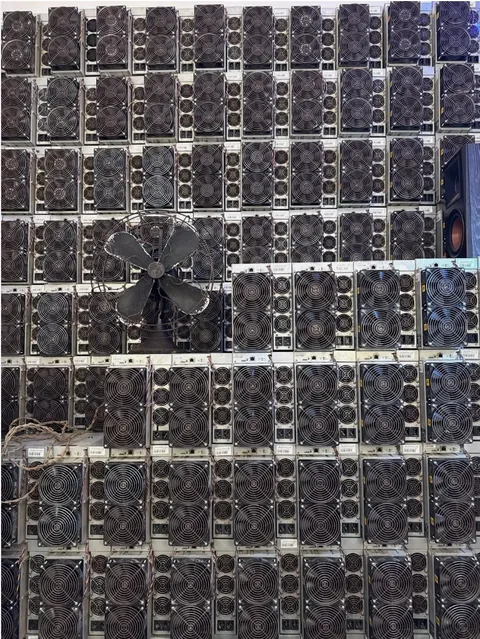
Neither of these belongs in a house
Both machines want 220–277 V on their own circuit, both pull close to 3.8 kW, and both sit around 75 dB. Neither will run on a standard North American 120 V outlet, and neither is something you can live beside. If you are shopping for a home machine, the honest answer is the Canaan Avalon Q — 90 TH/s at 1,674 W, 110–240 V input, rated 45 dB. Less hashrate and worse efficiency, but it is designed for the room you are actually going to put it in.
If neither machine is the right shape for what you are building, the other head-to-head on this site — Avalon Q vs Antminer S19k Pro — covers the far cheaper, far quieter, 110 V-capable end of the market, and the used-miner buying guide covers what to verify before buying second-hand at all.
The number to run on the day you buy
Dollars per terahash is the standard way to compare purchase prices across machines: $/TH = price ÷ hashrate. At any given price, the 255 TH/s SealMiner comes out about 4% cheaper per terahash than the 245 TH/s S21 Pro. As we write this, both carry the same price on our store — but check the live listings, because price is the single input here most likely to have moved.
For a market reference point, Hashrate Index quoted the S21 XP at $25.70/TH on 13 July 2026. More efficient machines carry a higher $/TH, so do not read a lower figure as automatically better value — pair it with the break-even calculation above.
S21 Pro vs SealMiner A2 Pro Air: which should you buy?
The S21 Pro, if: you self-host and fix your own machines; you plan to run past the warranty window; your site runs hot; you want to tune firmware; you expect to resell rather than run to end-of-life. You are paying about 4% more per terahash for an aftermarket, a repair path and a liquid exit.
The SealMiner A2 Pro Air, if: you are hosted somewhere that handles failures under contract; you want maximum hashrate per dollar on the invoice; you are comfortable depending on one manufacturer for service; and you have confirmed the shipment date so you know what warranty you are actually getting.
Neither, if: your power costs more than about 8.6 ¢/kWh and you have no plan to change that. At July 2026 hashprice, neither machine covers its own electricity above that line. If you have genuinely cheap power — flared gas, curtailment, behind-the-meter — but limited capital, look at the used S19 fleet instead: far worse efficiency, but a fraction of the capital per terahash.
Browse both alongside everything else in Antminer and Bitdeer, or the full catalogue at all miners. We buy, repair, host and resell this hardware ourselves, so ask us the awkward questions — measured wall draw, batch and shipment date, what we will cover if a board dies in month four — before you send anyone money.
The wider point behind this particular tie is that a sub-one-percent efficiency gap is ordinary at the top of the market rather than a quirk of these two machines. Sort our full comparison table by J/TH and four machines sit inside a tenth of a joule of each other at 14.9 to 15.0 — this SealMiner, both S21 Pro bins and the hydro A2 Pro. If your shortlist is two other names from that cluster, expect the decision to come apart exactly as this one did: on parts, warranty and resale, not on the spec sheet.
FAQ
Is the SealMiner A2 Pro Air more efficient than the Antminer S21 Pro?
Marginally, and not by enough to matter. The SealMiner is rated 14.86 J/TH against the S21 Pro’s 15.0 J/TH, a difference of under 1%. Both work out to a break-even electricity rate of roughly 8.6 to 8.7 cents per kilowatt-hour at July 2026 hashprice. Choose between them on repairability, warranty and resale instead.
Which machine earns more per month?
At 7.5 cents per kWh, the SealMiner nets roughly $3 a month more than the S21 Pro, using a hashprice of $30.88 per PH/s per day as of 13 July 2026 and before pool fees. Above about 11.2 cents per kWh the S21 Pro pulls ahead, because its lower power draw is worth more than the SealMiner’s extra hashrate. All of these figures move daily with difficulty and Bitcoin price.
Can I get an S21 Pro or a SealMiner repaired out of warranty?
Realistically, the S21 Pro yes and the SealMiner probably not. BM1370 replacement chips and S21-family hashboard repair services are widely available from independent vendors. We could not find an independent supply of Bitdeer SEAL02 chips or third-party SealMiner hashboard repair, so out-of-warranty failures likely mean going back to Bitdeer.
Does the manufacturer warranty transfer when I buy from a reseller?
Do not assume it does. Bitmain’s warranty runs to the original purchaser who bought directly from Bitmain, and once a machine is resold, support becomes the reseller’s responsibility. Both Bitmain and Bitdeer count their 365 days from the shipment date, not from the day you receive the unit, so a machine from an earlier batch has already used part of its coverage. Ask your reseller what they will cover, and get it in writing.
Do either of these need a separate power supply?
No. Both the S21 Pro and the SealMiner A2 Pro Air have their power supply built into the chassis, so there is no PSU to buy separately. Both require 220 to 277 volts AC and will not run on a standard North American 120 volt outlet.
Can I run either of these at home?
Not sensibly. Both draw close to 3.8 kilowatts on a dedicated 240 volt circuit and produce around 75 decibels, which is far too loud for a living space. For a home or small office, the Canaan Avalon Q at 90 TH/s, 1,674 watts and a rated 45 decibels is the machine designed for that job.
What does the extra 10 TH/s on the SealMiner cost in power?
An extra 115 watts, which is 2.76 kilowatt-hours per day. The additional 10 TH/s generates about 31 cents a day in gross revenue at July 2026 hashprice, so the extra hashrate pays for the extra power at any electricity rate below about 11.2 cents per kilowatt-hour.