

Cloud mining promises an easy path to cryptocurrency profits without expensive hardware or technical expertise. Yet, many individuals and small business owners struggle to understand whether renting remote hash power genuinely delivers returns or simply drains capital into opaque contracts. Confusion persists around profitability calculations, hidden fees, and provider legitimacy. This guide clarifies cloud mining fundamentals, evaluates 2026 profitability realities, identifies scam red flags, and offers practical steps for safe exploration. You’ll gain the knowledge needed to make informed decisions about whether cloud mining fits your investment strategy or if alternative approaches better serve your goals.
Key takeaways
| Point | Details |
|---|---|
| Cloud mining rents remote hash power | You purchase contracts specifying hash rate and duration, receiving proportional rewards minus fees |
| Profitability remains challenging in 2026 | Rising difficulty and production costs near $100k per Bitcoin often make contracts unprofitable after deductions |
| Scam risk is substantial | Fraudulent platforms caused over $500 million in losses during 2024, requiring careful provider vetting |
| Start small with reputable providers | Invest $50-100 initially on short contracts to test performance before committing larger capital |
| Direct Bitcoin purchase often outperforms | Holding BTC directly frequently yields better returns than cloud mining for beginners |
What is cloud mining and how does it work?
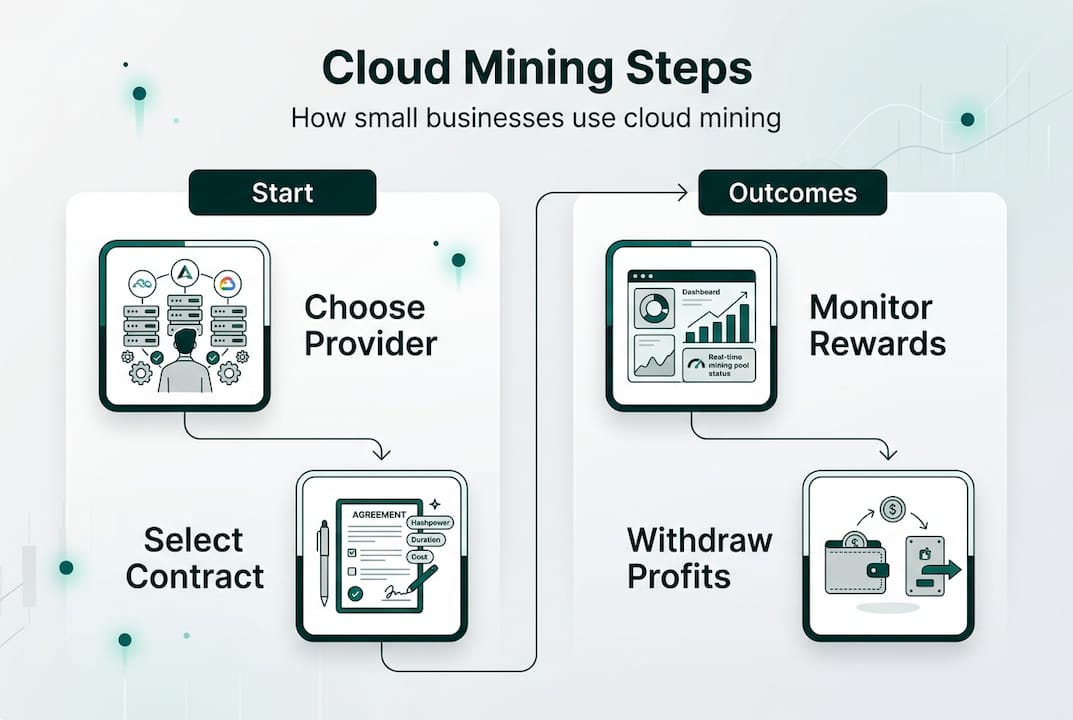
Cloud mining involves renting hashing power from remote data centers, purchasing contracts with specified hash rates and durations, and receiving proportional mining rewards after fees. Instead of buying physical ASIC miners, managing electricity costs, and maintaining hardware, you pay an upfront fee to access computational resources hosted by a third party. The provider operates mining farms, handles technical operations, and distributes earnings based on your contracted share of total hash power.
Two primary methodologies exist within cloud mining. Leased hash power allows you to rent processing capacity measured in terahashes per second (TH/s) for a fixed period, typically 12 to 36 months. You receive daily or weekly payouts proportional to blocks mined by the pool. Hosted mining involves purchasing physical hardware that remains in the provider’s facility, where they manage operations while you retain ownership and collect full rewards minus hosting fees. This cloud mining overview explains these distinctions in greater detail.
Typical contracts specify several key parameters:
- Hash rate allocation (e.g., 10 TH/s, 50 TH/s, 100 TH/s)
- Contract duration (6 months, 12 months, 24 months, lifetime)
- Upfront payment covering hash power rental
- Daily maintenance fees deducted from earnings
- Minimum payout thresholds for withdrawals
Rewards calculation depends on your share of the pool’s total hash rate multiplied by blocks successfully mined. If the pool mines 1 Bitcoin and your contract represents 0.1% of total hash power, you receive 0.001 BTC minus maintenance fees and pool commissions. Most providers offer dashboards showing real-time hash rate performance, accumulated earnings, and withdrawal options. You can typically withdraw funds once your balance exceeds the minimum threshold, often 0.001 to 0.01 BTC.
Understanding these mechanics is foundational before evaluating whether cloud mining aligns with your investment objectives. For deeper technical context, explore this cryptocurrency mining beginner’s guide covering proof-of-work fundamentals and mining economics.
Evaluating profitability of cloud mining in 2026
Profitability depends on Bitcoin price, network difficulty, electricity costs, and provider fees and often falls short compared to holding BTC directly. Multiple variables interact to determine whether contracts generate positive returns. Bitcoin’s market price directly influences mining revenue, as block rewards and transaction fees convert to fiat value at current exchange rates. Network difficulty adjusts every 2,016 blocks to maintain 10-minute block intervals, increasing computational requirements as more miners join the network.
Electricity and operational costs consume significant portions of mining revenue. While cloud mining shifts these expenses to providers, they pass costs through maintenance fees that erode your payouts. Average Bitcoin production costs approach $100k in 2026, making many cloud contracts unprofitable post-fees. Rising difficulty compounds this challenge, requiring more hash power to mine the same amount of Bitcoin over time.

Typical ROI percentages vary dramatically based on contract terms and market conditions:
| Contract Duration | Estimated Annual ROI | Risk Level |
|---|---|---|
| 6 months | 5% to 15% | Medium |
| 12 months | 8% to 20% | Medium-High |
| 24+ months | 10% to 25% | High |
| Lifetime | Variable, often negative | Very High |
These figures assume stable Bitcoin prices and moderate difficulty increases. Market volatility can swing outcomes dramatically. A 30% BTC price drop mid-contract may eliminate profitability entirely, while a 50% surge could double returns. However, comparing cloud mining to direct Bitcoin acquisition reveals an uncomfortable truth: simply buying and holding BTC frequently outperforms contract returns after accounting for fees and difficulty adjustments.
Pro Tip: Use mining profitability calculators to model different scenarios before purchasing contracts, adjusting for realistic difficulty growth (historically 20-40% annually) and conservative price projections.
Profitability calculators help estimate potential outcomes by inputting hash rate, power consumption, electricity costs, pool fees, and Bitcoin price assumptions. Run multiple scenarios with pessimistic, realistic, and optimistic parameters to understand your risk exposure. This cloud mining beginner’s guide offers additional frameworks for financial analysis.
Identifying and avoiding common cloud mining scams
Cloud mining scams caused losses exceeding $500 million in 2024; total crypto fraud hit $35 billion in 2025. Fraudulent platforms exploit newcomers’ desire for passive income, promising unrealistic returns while operating Ponzi schemes that collapse once new capital stops flowing. Recognizing scam tactics protects your investment and preserves trust in legitimate mining operations.
Common scam promises include:
- Guaranteed daily profits of 1-5% regardless of market conditions
- Referral bonuses exceeding reasonable affiliate commissions
- No maintenance fees or operational costs
- Lifetime contracts with zero risk disclosures
- Anonymous ownership with no verifiable company information
Warning signs that indicate potential fraud:
- No evidence of actual mining facilities or equipment
- Unrealistic ROI claims (100%+ annual returns)
- Pressure tactics urging immediate investment
- Lack of transparent fee structures
- Absence of mining pool statistics or blockchain verification
- No customer support or unresponsive communication
- Requests for additional payments to “unlock” earnings
Due diligence requires verifying provider legitimacy through multiple channels. Research company registration, physical address verification, and ownership transparency. Legitimate providers publish mining farm locations, equipment specifications, and real-time pool statistics. Check independent reviews on forums, social media, and specialized crypto communities. Cross-reference cloud mining scam statistics to understand common fraud patterns.
“The most effective defense against cloud mining fraud is skepticism toward extraordinary promises. If returns seem too good compared to direct mining economics, the platform likely operates a Ponzi scheme rather than legitimate hash power rental.”
Reputable providers demonstrate transparency through verifiable mining operations, clear fee disclosures, realistic profitability projections, responsive customer support, and established track records spanning multiple years. They provide blockchain proof of mining activity, publish regular performance reports, and maintain active community engagement. Examples include providers with public mining pool addresses, third-party audits, and regulatory compliance in their operating jurisdictions.
Pro Tip: Before investing, verify the provider’s mining pool address on blockchain explorers to confirm actual mining activity, then cross-reference reported hash rates with pool statistics to detect discrepancies indicating fraud.
Protecting yourself requires combining research, skepticism, and gradual commitment. Start with minimal investments to test provider reliability before scaling capital allocation. For comprehensive security practices, review this mining security basics guide and explore crypto mining risk management strategies.
Practical tips and best practices for individuals and small businesses
Individuals and small businesses are advised to start with small investments ($50-100) on short contracts and select reputable providers to reduce risk. Careful provider evaluation, contract selection, and performance monitoring maximize your chances of positive outcomes while limiting downside exposure. Follow these actionable steps to navigate cloud mining safely.
- Research provider reputation through independent reviews, community forums, and social media feedback spanning at least six months of operations.
- Verify mining facility existence by checking for published farm locations, equipment photos, and third-party facility confirmations.
- Calculate realistic profitability using conservative Bitcoin price assumptions and historical difficulty growth rates of 25-35% annually.
- Start with minimum investment amounts ($50-100) on short-term contracts (3-6 months) to test provider performance before committing larger capital.
- Monitor contract performance weekly, comparing actual payouts against projected earnings to detect underperformance early.
- Diversify across multiple providers if investing significant capital to reduce single-point failure risk.
- Set clear exit criteria defining when you’ll terminate contracts or withdraw from cloud mining entirely.
Short-term contracts offer flexibility advantages over long-term commitments. Three to six month agreements let you reassess market conditions, provider performance, and profitability trends before renewal decisions. You avoid locking capital into multi-year contracts that become unprofitable if difficulty surges or Bitcoin prices collapse. Contract flexibility becomes especially valuable during volatile market periods.
Comparing cloud mining to direct Bitcoin purchase reveals important tradeoffs:
| Factor | Cloud Mining | Direct BTC Purchase |
|---|---|---|
| Upfront Capital | Moderate ($100-$5,000) | Any amount |
| Ongoing Fees | Daily maintenance fees | None |
| Technical Knowledge | Minimal | None |
| Potential Returns | Variable, often negative | Matches BTC price movement |
| Risk Level | High (scams, unprofitability) | Moderate (price volatility) |
| Liquidity | Low (contract locked) | High (instant selling) |
For most beginners, buying Bitcoin directly and holding provides simpler, more transparent exposure to cryptocurrency appreciation without operational complexities or hidden fees. Cloud mining makes sense only when you thoroughly understand the economics, accept higher risk, and find reputable providers offering competitive terms.
Reputable providers worth considering include established platforms with multi-year track records, published mining operations, transparent fee structures, and active customer communities. However, even legitimate providers face profitability challenges in 2026’s competitive environment. Always verify current contract terms, maintenance fees, and minimum payout thresholds before committing funds.
Pro Tip: Compare cloud mining contract costs against purchasing equivalent hash power through used ASIC miners from this best ASIC miners comparison, factoring in electricity costs and resale value to determine the most economical approach.
Regular performance monitoring prevents unpleasant surprises. Log into your dashboard weekly to verify hash rate delivery matches contract specifications, track accumulated earnings against projections, and confirm maintenance fees align with disclosed rates. Document discrepancies and contact support immediately if performance degrades. For deeper profitability analysis frameworks, consult this cryptocurrency mining profitability resource and review cloud mining expert analysis for comparative provider assessments.
Explore cryptocurrency mining hardware and profitability tools at ING MINING™
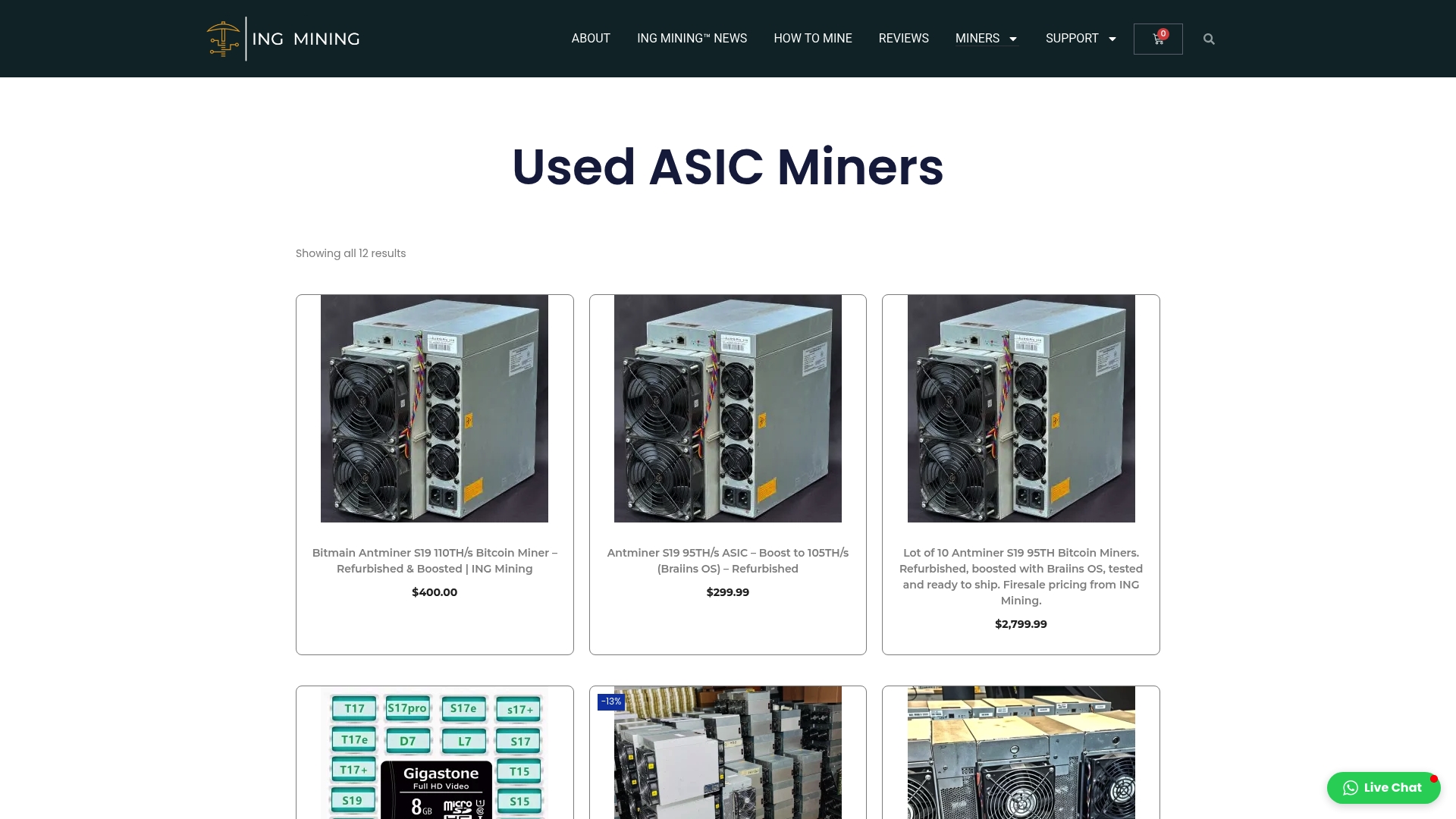
While cloud mining offers one entry point into cryptocurrency mining, owning physical hardware provides greater control, transparency, and long-term profitability potential for serious miners. ING MINING specializes in sourcing, refurbishing, and testing ASIC miners that deliver reliable performance for home miners and commercial operations alike. Every unit undergoes professional inspection and verification, ensuring you receive equipment that meets specifications and operates efficiently from day one.
Explore our cryptocurrency mining hardware 2026 comparison to evaluate current ASIC models, hash rates, power consumption, and profitability projections based on real-world operating conditions. Our detailed guides help you understand miner performance, electricity requirements, cooling needs, and total cost of ownership before making purchase decisions. Access comprehensive mining profitability explained resources that break down revenue calculations, difficulty adjustments, and break-even timelines. Whether you’re considering cloud mining alternatives or ready to build a dedicated mining operation, our cryptocurrency mining beginner’s guide provides the foundational knowledge needed for informed decisions and long-term success.
Frequently asked questions about cloud mining
What is the minimum amount to start cloud mining?
Most reputable cloud mining providers accept initial investments between $50 and $100, allowing beginners to test platform performance without significant capital risk. Some platforms offer contracts as low as $10, though these micro-investments often carry proportionally higher fees that reduce profitability. Starting small helps you evaluate provider reliability, payout consistency, and contract performance before committing larger amounts.
How can I verify if a cloud mining service is legitimate?
Verify legitimacy by researching company registration details, confirming physical mining facility locations through independent sources, and checking blockchain explorers for actual mining pool activity matching claimed hash rates. Review independent community feedback spanning at least six months, examine fee transparency and contract terms clarity, and test customer support responsiveness before investing. Legitimate providers publish verifiable operational data and maintain consistent communication.
Is cloud mining better than owning mining hardware?
Cloud mining eliminates hardware purchase costs, technical maintenance, and electricity management, making it accessible for beginners without technical expertise. However, owning hardware provides greater control over operations, no ongoing maintenance fees beyond electricity, and equipment resale value that partially recovers initial investment. For most serious miners, purchasing refurbished ASIC equipment from reputable suppliers offers better long-term profitability than cloud contracts after accounting for all fees.
Can cloud mining be profitable in volatile markets?
Cloud mining profitability in volatile markets depends heavily on contract terms, maintenance fee structures, and your ability to time entries during favorable conditions. Sharp Bitcoin price increases can boost returns significantly, while prolonged downturns often render contracts unprofitable as maintenance fees consume mining rewards. Fixed-duration contracts lock you into terms regardless of market conditions, while direct Bitcoin ownership provides flexibility to sell during peaks or hold through corrections.
What fees should I expect in cloud mining contracts?
Typical cloud mining fees include upfront contract purchase costs (ranging from $50 to thousands depending on hash rate), daily maintenance fees (usually $0.10 to $0.50 per TH/s covering electricity and operations), pool fees (1-3% of mining rewards), and withdrawal fees (fixed amounts or percentages when transferring earnings). Some providers charge additional administrative fees, upgrade costs, or early termination penalties. Always calculate total fee impact on projected returns before purchasing contracts, as fees often eliminate profitability even when Bitcoin prices rise.