
Mining margin has exactly five levers, and they are not equally powerful. Your electricity rate does more than the other four combined. Everything else on this page is worth doing, but if you get the power price wrong nothing else rescues it. Here is each lever with the arithmetic attached, so you can see the size of it rather than take our word for it.
All figures use a hashprice of about $32.7/PH/day on 27 July 2026, difficulty 126.23 T, network roughly 866 EH/s, Bitcoin near $65,247. Every one of those moves daily — re-run this on the day you buy.
Lever 1: your electricity rate (worth more than everything else)
One line of arithmetic governs the whole business:
Break-even electricity rate ($/kWh) = hashprice ÷ (24 × J/TH)
Hashrate cancels out entirely. Run it for an Antminer S19 at 34.2 J/TH and you get about $0.040/kWh. That is the rate at which the machine earns precisely what it burns — zero margin, before hardware, freight or a single repair.
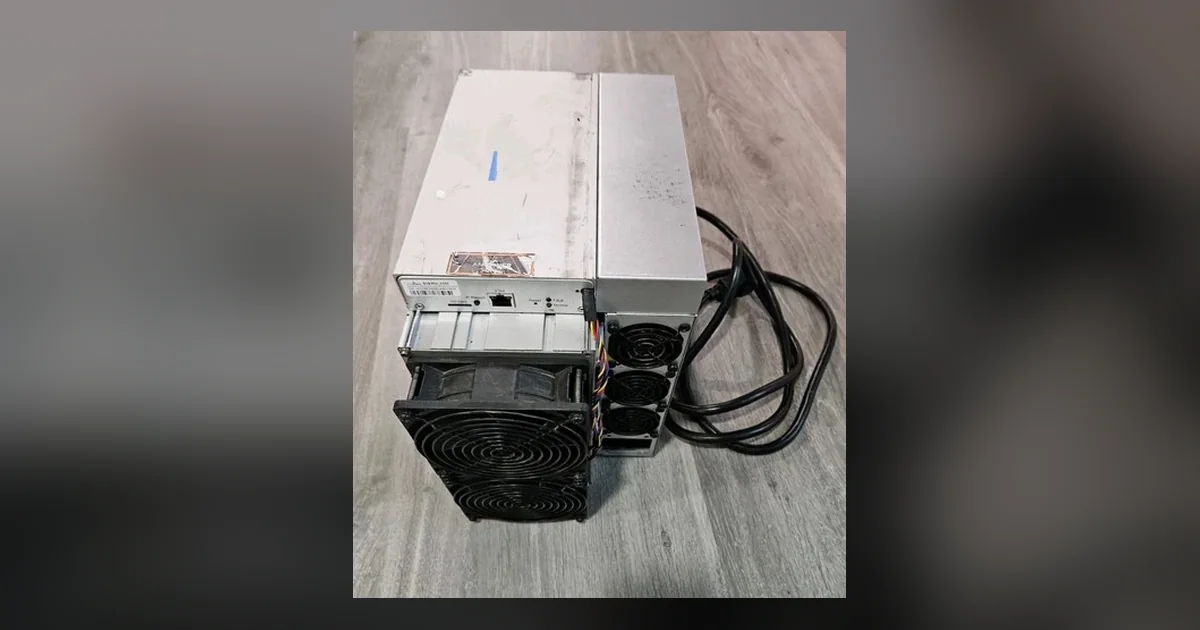
Now move only the power price and hold the machine constant. One S19 consumes 3,250 W, which is 78 kWh a day, or 2,340 kWh a month. At 95 TH/s it grosses roughly $93 a month at today’s hashprice. Against that:
- At 3 ¢/kWh: power costs about $70 a month. Margin ≈ +$23/month.
- At 5 ¢/kWh: power costs about $117 a month. Margin ≈ −$24/month.
- At 18.44 ¢/kWh — the US residential average in May 2026 per the EIA — power costs about $432 a month against $93 of revenue. Margin ≈ −$338/month.
A two-cent move flips the machine from earning to losing, and the household rate loses more per month than the machine grosses in four. Nothing else in this article has that kind of leverage. This is why operators chase hosting contracts, flared gas, curtailed renewables and behind-the-meter generation instead of shopping for better hardware. These figures assume 100% uptime and exclude hardware, freight and repairs, and they move daily.
Lever 2: efficiency, which is the only spec worth comparing
Hashrate is mostly marketing. Two machines at the same hashrate and different power draws are not comparable products. Efficiency — watts divided by terahashes — is the entire argument, and it maps directly onto the electricity price you can survive:
- Antminer S19, 95 TH/s, 3,250 W → 34.2 J/TH → break-even $0.040/kWh
- Antminer S19k Pro, 120 TH/s, 2,760 W → 23.0 J/TH → $0.059/kWh
- Antminer S19 XP, 141 TH/s, 3,010 W → 21.5 J/TH → $0.063/kWh
- Avalon Q, 90 TH/s, 1,674 W → 18.6 J/TH → $0.073/kWh
- Antminer S21 Pro, 245 TH/s, 3,675 W → 15.0 J/TH → $0.091/kWh
Read that column as “the worst power deal this machine can tolerate”. A newer machine is not faster in any way that matters — it is more tolerant of expensive electricity. That is what the premium buys, and it is why the right machine depends entirely on your power situation rather than on which is newest.
The corollary that surprises people: if your power is genuinely cheap, an old inefficient machine can out-earn a new one per dollar invested, because you paid a fraction of the price for the same hashrate. That trade is the whole case for the used market.
Lever 3: uptime, which is quietly worth several percent
A machine that is off earns nothing and a machine that is throttling earns less than its label. Both are invisible unless you monitor for them.
The arithmetic is simple: every 1% of downtime costs 1% of gross revenue, and your electricity bill for the rest of the fleet does not fall to compensate. Over a year, a fortnight of unnoticed downtime is roughly 4% of revenue — comparable to the entire gain from a firmware upgrade, given away for free.
What actually causes it, in rough order of frequency: power supplies failing, intake air recirculating from the exhaust and pushing chips into thermal throttle, dust blocking heatsinks, a pool outage with no backup configured, and a single dead hashboard leaving a machine running at two-thirds hashrate while drawing most of its power. That last one is the expensive one, because the machine looks fine from across the room.
Set a backup pool at a different provider, alert on hashrate deviation rather than on the machine being reachable, and physically separate hot and cold air.
Lever 4: firmware, worth real percentages but not what listings claim
Aftermarket firmware — Braiins OS+, VNish — genuinely helps. Braiins publishes roughly +10–13% hashrate at stock power, or 8–12% lower power at stock hashrate. You pick which end to take. It carries a 2–2.5% development fee, waived when you mine on Braiins Pool, so the net gain is smaller than the headline.
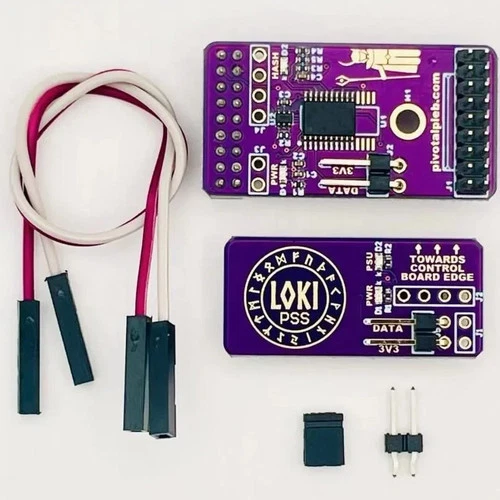
Be sceptical of the numbers on listings, including some of ours. A tuning card advertised as “adds 10–20 TH/s” realistically adds around 10 TH/s to a 95 TH/s S19; treat 20 as a best case on unusually well-binned boards. Underclocking is the underrated direction: dropping power faster than hashrate improves J/TH, which raises the electricity price you can survive. If you are near your break-even rate, a derate can move a machine from loss to margin.
What firmware cannot do is change physics. No firmware and no voltage converter reduces the energy a given amount of hashing requires. Anything promising otherwise is selling you something.
Lever 5: pool fees and payout model
The smallest lever, but free to get right. Pool fees run about 0–3%. On an FPPS pool you are also paid a share of transaction fees, which is typically worth a few percent more than a PPS scheme that pays only the block subsidy — often more than the fee difference between two pools.
Compare total expected payout, not the advertised fee percentage. Also check the minimum payout threshold: a high threshold on a small operation means your earnings sit with the pool for weeks. Details in how to choose a mining pool.
The sixth lever nobody lists: knowing when to stop
Machines depreciate faster than they wear out. The steepest fall happens the week a new generation is announced, not gradually over the life of the unit. If a machine is close to break-even on power, its remaining value is mostly resale value, and resale value is falling on a schedule you do not control.
The two decisions worth making deliberately: shut down rather than mine at a loss — a machine held idle keeps its resale value while a machine mining at negative margin converts your equipment into someone else’s electricity bill; and sell before the next generation ships, not after. Neither is a hardware decision, and both are worth more than any tuning.
If you are buying rather than selling, the same asymmetry works for you: see the case for used hardware when scaling and the ASIC miner buying guide for the full break-even table. Fleet-scale buyers should start at the bulk and pallet buying guide.
Frequently Asked Questions
What is the single biggest factor in mining profitability?
Your electricity rate, by a wide margin. A 3,250 W machine consumes 2,340 kWh a month and grosses roughly $93 at late-July 2026 hashprice. Moving from 3 cents to 5 cents per kilowatt-hour turns about +$23 a month of margin into about −$24. No firmware tune, pool choice or maintenance regime has comparable leverage.
How do I calculate my break-even electricity price?
Divide hashprice by 24 times the machine’s efficiency in joules per terahash. At about $32.7/PH/day in late July 2026, a 34.2 J/TH Antminer S19 breaks even near $0.040/kWh and a 15 J/TH S21 Pro near $0.091/kWh. Hashrate cancels out of the formula entirely, which is why efficiency is the specification that matters.
Is newer hardware always more profitable?
No. Newer hardware tolerates a higher electricity price, which is a different thing. If your power is genuinely cheap, an older machine bought at a fraction of the price can return more per dollar invested for the same hashrate. The premium on a current-generation machine buys resilience to expensive power, not speed.
How much does aftermarket firmware actually add?
Braiins OS+ publishes roughly 10 to 13 percent more hashrate at stock power, or 8 to 12 percent lower power at stock hashrate, with a 2 to 2.5 percent development fee that is waived on Braiins Pool. Listings advertising 20 or more terahashes of gain on a 95 TH/s machine are quoting a best case on well-binned boards rather than a typical result.
Does downtime really matter that much?
Every one percent of downtime is one percent of gross revenue lost, and it compounds quietly. A fortnight of unnoticed downtime over a year is around four percent of revenue, roughly the entire benefit of a firmware upgrade. The most expensive failure is a single dead hashboard, because the machine keeps running at reduced hashrate while still drawing most of its power.
When should I stop mining a machine?
When its margin on power alone goes negative and shows no sign of recovering. An idle machine retains its resale value; a machine mining at a loss is converting your equipment into electricity you paid for. Because the steepest depreciation happens when a new generation is announced rather than gradually, selling ahead of that announcement is usually worth more than any operational improvement.