
We do not publish cryptocurrency price predictions, and this page used to. It carried a table of price targets for Bitcoin, Ethereum, XRP, Dogecoin, Cardano, Radix and Litecoin running from 2023 out to 2040. Several of those deadlines have since passed. The Bitcoin figure for 2025 was several times what Bitcoin actually traded at, and the page was still quoting a 2021 target in 2026 because nobody ever went back to check.
We have replaced it rather than quietly deleting it, because the reason it was wrong is more useful than the forecasts ever were: a miner’s revenue is not driven by the coin price. It is driven by hashprice, and hashprice can fall while the coin price rises. If you are buying hardware, that distinction is the entire game.
Why a price forecast cannot underwrite a mining purchase
The intuition most buyers arrive with is that if Bitcoin goes up, mining gets more profitable. It is half true, and the missing half is what makes people buy machines they cannot run.
What a miner earns per unit of hashrate is:
Hashprice ≈ (block subsidy + fees) × BTC price ÷ network hashrate
Coin price is one of three inputs, and it is the only one working in your favour. The other two move against you:
- Network hashrate rises when price rises. A higher price makes mining profitable for more operators, so more machines switch on, and the same reward is split more ways. The dilution follows the price with a lag of weeks to months.
- The block subsidy falls on a fixed schedule regardless of price. It dropped to 3.125 BTC in April 2024 and halves again around 2028. No market condition alters that.
Put those together and you get the fact that a price prediction can never capture: Bitcoin can double and your machine can earn less, if network hashrate more than doubles over the same period. That has happened repeatedly. A buyer working from a price forecast alone has no way of seeing it coming.
Where the number comes from
You can derive hashprice yourself and it is worth doing once. As of 27 July 2026, with the subsidy at 3.125 BTC and roughly 144 blocks a day, the network issues about 450 BTC per day plus transaction fees, which have lately been a small percentage on top. At a Bitcoin price near $65,247 that is on the order of $29–30 million a day of mining revenue, spread across a network running at roughly 866 EH/s with difficulty at 126.23 T.
Divide the revenue by the hashrate and you land in the low thirties of dollars per petahash per day — close to the quoted figure of about $32.7/PH/day. The arithmetic is approximate because fee share moves constantly, but the structure is exact, and it shows you precisely which lever does what.
What to underwrite on instead
Once revenue is expressed as hashprice, the purchase decision reduces to a single line that contains no forecast at all:
Break-even electricity rate ($/kWh) = hashprice ÷ (24 × J/TH)
Hashrate cancels out. What remains is the electricity price at which a given machine earns exactly what it burns. At about $32.7/PH/day:
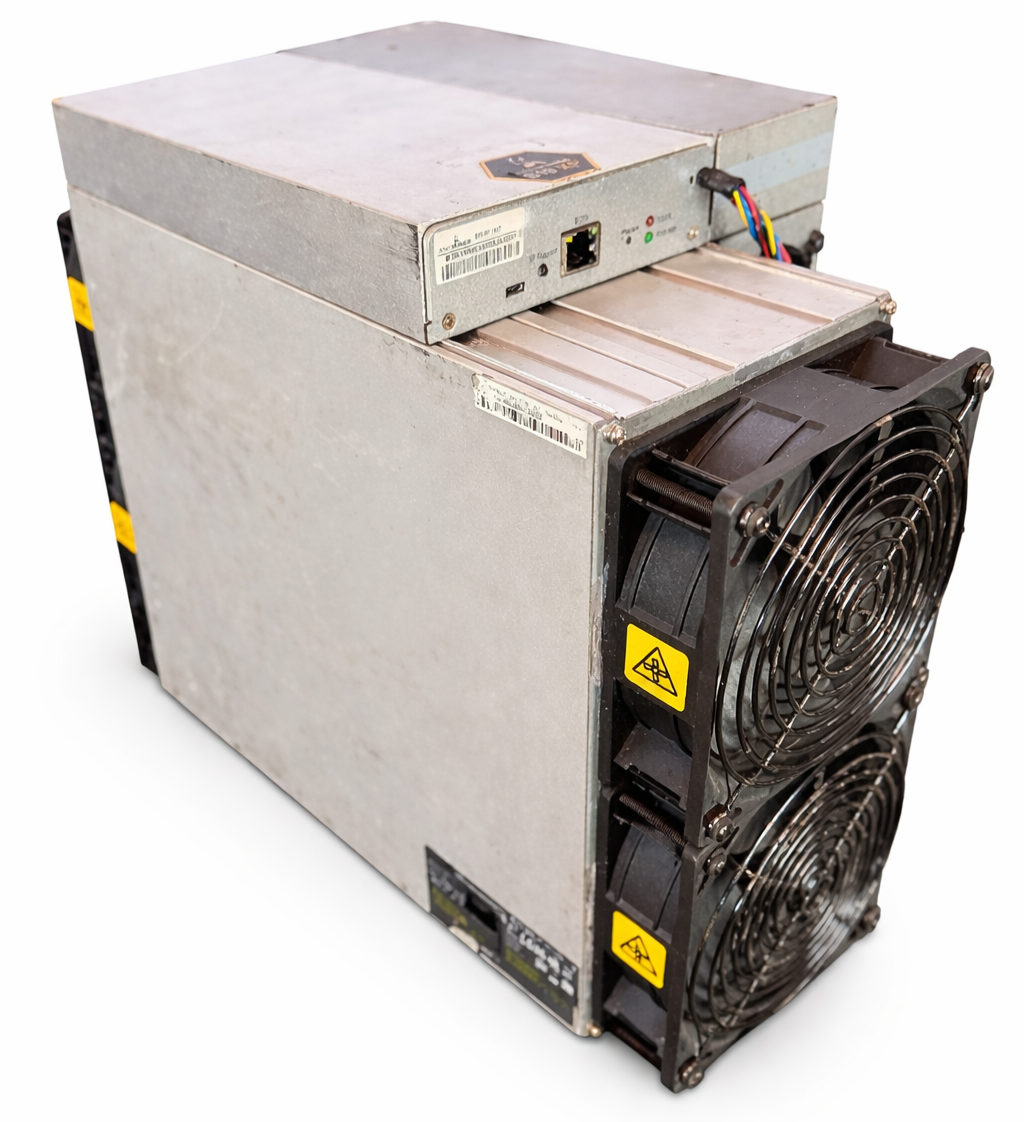
- Antminer S19, 34.2 J/TH → about $0.040/kWh
- Antminer S19k Pro, 23.0 J/TH → about $0.059/kWh
- Avalon Q, 18.6 J/TH → about $0.073/kWh
- Antminer S21 Pro, 15.0 J/TH → about $0.091/kWh
This is not a prediction. It is a description of today, and you re-run it whenever hashprice moves. The useful discipline is to run it at several hashprice levels rather than one: what happens to this machine at half today’s hashprice? At a third? If the answer is that it stops earning at a level the market has visited before, you have found the real risk in the purchase, and no price target would have shown it to you.
For reference, the US residential electricity average was 18.44 ¢/kWh in May 2026 according to the EIA. Every figure in the list above sits below it, which is the honest summary of home mining economics at the moment — and it is a conclusion drawn from arithmetic rather than from a view about where Bitcoin is heading.
What forecasts get wrong, structurally
The forecasts that used to sit on this page were not unusual. They shared the features that make almost all published crypto price targets unusable:
- They were never revisited. A target for 2021 was still on the page in 2026. Nothing in a forecast’s format forces anyone to score it, so nobody does.
- They cited aggregators quoting each other. Several sources reprinted the same algorithmic extrapolation, which reads like independent agreement and is not.
- They extended to 2040. A sixteen-year price target for an asset that regularly moves 50% in a quarter is not analysis.
- They ignored the halving schedule entirely, which is the one thing about Bitcoin’s future that genuinely is known in advance.
None of that is improved by generating them faster. The original version of this page was framed around using an AI chatbot to produce price predictions, which changes the cost of producing forecasts and nothing whatever about their reliability. A model asked for a 2040 price target will always give you one. That is not the same as the number being worth anything.
The one prediction we will make
Difficulty will keep rising over the long run, and your machine’s share of the network will keep shrinking. That is not a market view — it is what happens when hardware improves and more of it is deployed. It means every projection built on today’s difficulty is an overestimate by construction, and it is the correct default assumption when sizing a purchase.
Which leads to the practical rule we would rather publish than a price target: buy the machine that survives your electricity rate at a hashprice materially lower than today’s. If a purchase only works at current hashprice, it is a bet on the market rather than an investment in hardware, and it should be sized accordingly.
The full arithmetic, with the spec decoder and the complete break-even table, is in the ASIC miner buying guide. What hashprice is and why it moves is covered in what a miner actually earns. How coin prices are set — and why we do not forecast them — is in how cryptocurrency prices are actually set. If you are choosing hardware, start at the full ASIC miner inventory or the used ASIC miners category.
Frequently Asked Questions
Why does this page no longer contain price predictions?
Because the forecasts it carried had deadlines that passed without anyone revisiting them, and at least one Bitcoin target was several times the price the market actually reached. More importantly, a coin price forecast cannot tell a hardware buyer what they need to know, since mining revenue depends on network hashrate and the block subsidy as well as on price.
If Bitcoin’s price rises, does my miner earn more?
Not necessarily. Revenue per unit of hashrate depends on the block subsidy plus fees, multiplied by the coin price, divided by total network hashrate. A rising price attracts more machines onto the network, which dilutes everyone’s share. Bitcoin can double while your machine earns less, if network hashrate more than doubles over the same period.
What is hashprice?
Hashprice is mining revenue per unit of hashrate per day, usually quoted in dollars per petahash per day. It combines coin price, the block subsidy, transaction fees and total network hashrate into one figure, which is why miners track it instead of the coin price. In late July 2026 it was around $32.7 per petahash per day.
What should I use instead of a price prediction when buying a miner?
Break-even electricity rate, calculated as hashprice divided by 24 times the machine’s efficiency in joules per terahash. Run it at today’s hashprice and again at half and a third of it. If the machine stops earning at a hashprice the market has seen before, that is the real risk in the purchase, and it is invisible in any price forecast.
Does the halving affect mining revenue regardless of price?
Yes. The block subsidy is written into the protocol and halves roughly every four years independent of market conditions. It fell to 3.125 BTC in April 2024 and is expected to halve again around 2028. Any revenue projection that runs past a halving without stepping down at that point is overstating the result.
Can an AI model produce reliable crypto price forecasts?
It can produce forecasts quickly, which is not the same thing. A language model asked for a price target will always return one, with no mechanism for being uncertain in proportion to the evidence. The forecasts previously on this page were generated that way, extended to 2040, ignored the halving schedule, and were never scored against outcomes.