
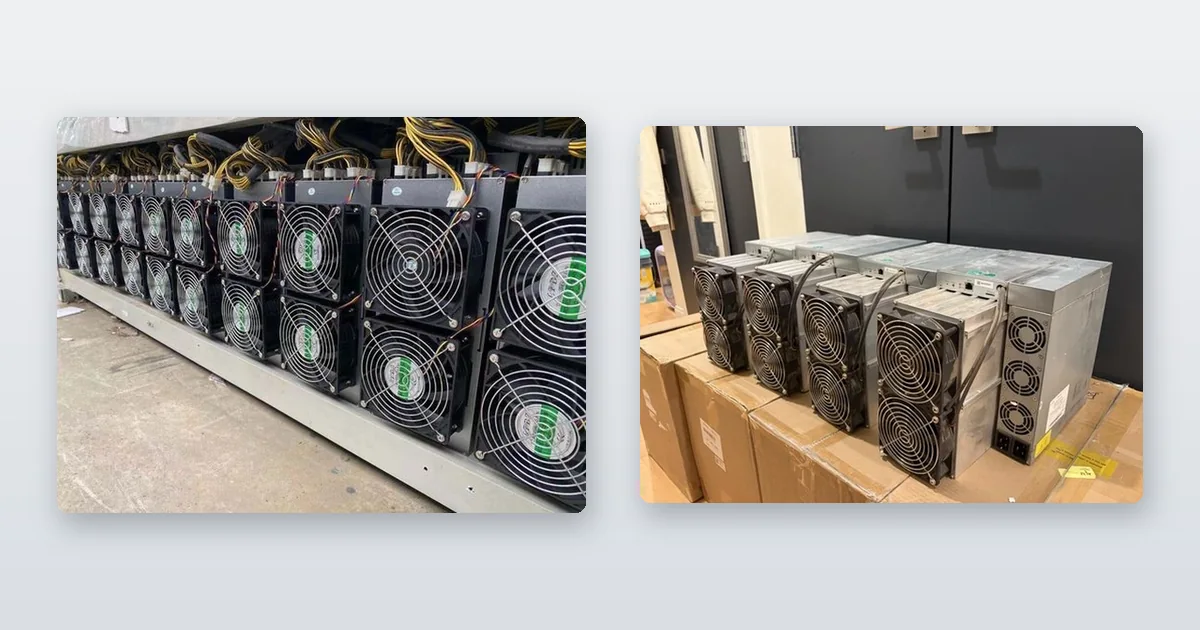
A miner does not earn bitcoin. A miner earns hashprice — the amount the network pays per unit of hashrate per day — and that is a completely different number from the Bitcoin price. It is the reason your revenue can fall in a month when Bitcoin rose, and it is the single figure that turns a spec sheet into a decision. If you only learn one concept before buying mining hardware, learn this one.
We buy, repair, host and resell these machines. Here is what the number is, what moves it, and what it works out to in dollars a day on the machines we actually have on the shelf.
What hashprice is
Hashprice is expressed as dollars per petahash per second per day — $/PH/day. It answers one question: if you point one PH/s of hashrate at the network for twenty-four hours, what do you get paid?
On 30 July 2026 it sat at $32.10 per PH/s per day, with network difficulty at 126.23 T, network hashrate around 917 EH/s, Bitcoin at $63,960 and transaction fees contributing about 0.76% of the block reward. Every one of those figures moves daily, which is exactly the point.
The useful thing about hashprice is that it is revenue per unit of work, so it lets you compare completely different machines, and yourself against the whole industry, on one axis.
The three things that move it
- The Bitcoin price. Rewards are paid in bitcoin and measured in dollars, so a rising BTC price pushes hashprice up. This is the only one of the three that most people think about.
- Network difficulty. Rewards are shared among everyone hashing. When more machines join, difficulty rises at the next retarget and every existing miner’s share shrinks proportionally. This pushes hashprice down, and it is the one people underweight.
- Transaction fees. Fees are on top of the block subsidy. On a normal day they are a small fraction of the reward; in periods of congestion they can spike sharply and briefly. Do not model them as reliable income.
Read those together and the most important consequence appears: Bitcoin rising does not guarantee your revenue rises. If the price climbs and that draws in more hardware faster than the price moves, difficulty rises and hashprice can fall through a bull market. Miners experience this regularly and newcomers find it genuinely surprising.
There is also a step change on top of the drift: at each halving the block subsidy is cut in half, so hashprice falls by roughly half overnight if nothing else changes. That schedule is covered in where new bitcoins come from.
What that is in dollars a day, per machine
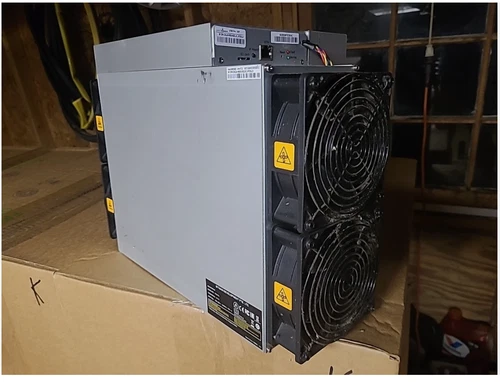
This is the part most explanations of hashprice leave out. Gross revenue per day is hashprice × the machine’s hashrate in PH/s. Power cost per day is its wall draw in kW × 24 × your electricity rate. Everything below is arithmetic on those two figures, both read off each machine’s own listing, at the 30 July 2026 hashprice:
| Machine | Hashrate / wall draw | Gross per day | Net at 5¢/kWh | Net at 10¢/kWh | Net at 18.44¢/kWh |
|---|---|---|---|---|---|
| SealMiner A2 Pro Air 255T | 255 TH/s · 3,790 W | $8.19 | +$3.64 | −$0.91 | −$8.58 |
| Antminer S21 Pro 234T | 234 TH/s · 3,510 W | $7.51 | +$3.30 | −$0.91 | −$8.02 |
| Used S19k Pro 120T | 120 TH/s · 2,760 W | $3.85 | +$0.54 | −$2.77 | −$8.36 |
| Canaan Avalon Q 90T | 90 TH/s · 1,674 W | $2.89 | +$0.88 | −$1.13 | −$4.52 |
| Used S19 95T | 95 TH/s · 3,250 W | $3.05 | −$0.85 | −$4.75 | −$11.33 |
Three things in that table are worth saying out loud.
The gross column is a property of the machine; every other column is a property of your power contract. Nobody sells you the right-hand columns, which is why a listing that quotes daily earnings without quoting an electricity price is quoting nothing.
At the US residential average of 18.44¢/kWh (EIA, May 2026), every machine on this page loses money — the best of them by more than eight dollars a day. That is not a reason not to buy hardware; it is the reason the whole industry is built where power is cheap, and the first question we ask anyone buying more than one machine.
Cheap capital and cheap power are different advantages. At 3¢/kWh the $379.99 used S19k Pro nets $1.86 a day and pays for itself in about seven months, while the $4,200 SealMiner nets $5.46 and takes roughly two years — but push the rate to 6¢ and the used machine is finished while the SealMiner is still earning. Old hardware buys you a fast payback and almost no margin for error. The trade-off is worked through in how to buy a used ASIC miner.
How to actually use it
Hashprice is what makes machine comparison trivial, through one formula in which hashrate cancels out completely:
Break-even electricity rate ($/kWh) = hashprice ($/PH/day) ÷ (24 × J/TH)
Feed in a machine’s efficiency and you get one number: the electricity price at which that machine stops making money. At the 30 July 2026 hashprice:
- A current-generation machine at 15 J/TH breaks even near 8.9 ¢/kWh
- A Canaan Avalon Q at 18.6 J/TH breaks even near 7.2 ¢/kWh
- A used S19k Pro at 23 J/TH breaks even near 5.8 ¢/kWh
- A used Antminer S19 at 34.2 J/TH breaks even near 3.9 ¢/kWh
Compare those with your own all-in delivered electricity rate — total bill divided by total kilowatt-hours, including delivery and fees, not the headline energy rate. If your number is higher than the machine’s, that machine loses money for you, and no purchase price makes it work.
Two mistakes hashprice prevents
- Comparing machines on terahash. Hashrate tells you how big a machine is, not whether it earns. Two machines with identical hashrate and different efficiency are different businesses.
- Trusting a profitability screenshot. A dashboard showing daily earnings reflects someone else’s electricity price on a day with a different difficulty and a different Bitcoin price. Ask for J/TH and measured wall draw instead — those are facts about the hardware, and hashprice supplies the rest.
And one honest warning: because difficulty rises between the day you order hardware and the day it is energised, any calculation you run today is an overestimate by construction. Model conservatively, and re-run the arithmetic on the day you buy.
Further reading: what Bitcoin is and what mining actually does, the full ASIC miner buying guide, and every machine ranked by break-even power price. Our stock is in the miner inventory, and if you tell us your power rate we will run this for you.
Frequently Asked Questions
What is hashprice?
Hashprice is the revenue the Bitcoin network pays per unit of hashrate per day, usually quoted in dollars per petahash per second per day. It answers what one PH/s of hashrate earns over twenty-four hours, which makes it possible to compare completely different machines on a single axis. On 30 July 2026 it was $32.10 per PH/s per day, and it changes every day.
What does one miner actually earn per day in dollars?
Multiply hashprice by the machine’s hashrate in PH/s, then subtract its wall draw times your electricity rate. At the 30 July 2026 hashprice an Antminer S21 Pro 234T grosses $7.51 a day and a Canaan Avalon Q 90T grosses $2.89. Power decides what is left: at 5¢/kWh the S21 Pro nets about $3.30 a day and the Avalon Q about $0.88; at the US residential average of 18.44¢/kWh both lose money, by $8.02 and $4.52 a day respectively. Gross earnings are a property of the machine; net earnings are a property of your power contract.
Why does my mining revenue fall when Bitcoin goes up?
Because revenue depends on network difficulty as well as price. Rewards are shared among everyone hashing, so when a rising Bitcoin price attracts more hardware, difficulty rises at the next retarget and each existing miner’s share shrinks. If hashrate joins the network faster than the price climbs, hashprice falls even during a bull market. This surprises newcomers and is entirely normal.
How do I calculate whether a miner is profitable?
Use break-even electricity rate = hashprice divided by 24 times the machine’s J/TH. Hashrate cancels out completely, leaving one figure in dollars per kilowatt-hour. Compare it against your all-in delivered electricity rate — your total bill divided by total kilowatt-hours, including delivery charges and fees. If your rate is higher than the machine’s break-even figure, that machine loses money regardless of what you paid for it.
What is a good hashprice for mining to be profitable?
There is no universal threshold, because profitability is the relationship between hashprice, your machine’s efficiency and your electricity rate rather than any single figure. At the 30 July 2026 hashprice of $32.10, a 15 J/TH machine needs power below about 8.9 cents per kilowatt-hour and a 34.2 J/TH used machine needs below about 3.9 cents. A hashprice that is comfortable for efficient hardware on cheap power is fatal for old hardware on expensive power.
Does a cheaper used machine pay back faster?
At genuinely cheap power, often yes — and it is the one case where old hardware wins. At 3¢/kWh a $379.99 used S19k Pro 120T nets about $1.86 a day and returns its purchase price in roughly seven months, while a $4,200 SealMiner A2 Pro Air nets $5.46 and takes about two years. Raise the rate to 5¢ and the used machine falls to $0.54 a day; at 6¢ it is finished, while the efficient machine is still earning. Cheap capital buys a fast payback and almost no margin for error.
Do transaction fees make a difference to mining income?
Not reliably, at least not yet. Fees are paid on top of the block subsidy and on an ordinary day contribute a small fraction of the total block reward — about 0.76% on 30 July 2026, across roughly 704,000 transactions. They can spike sharply during periods of network congestion, but those episodes are short and unpredictable, so they should be treated as occasional upside rather than as income you plan around.