
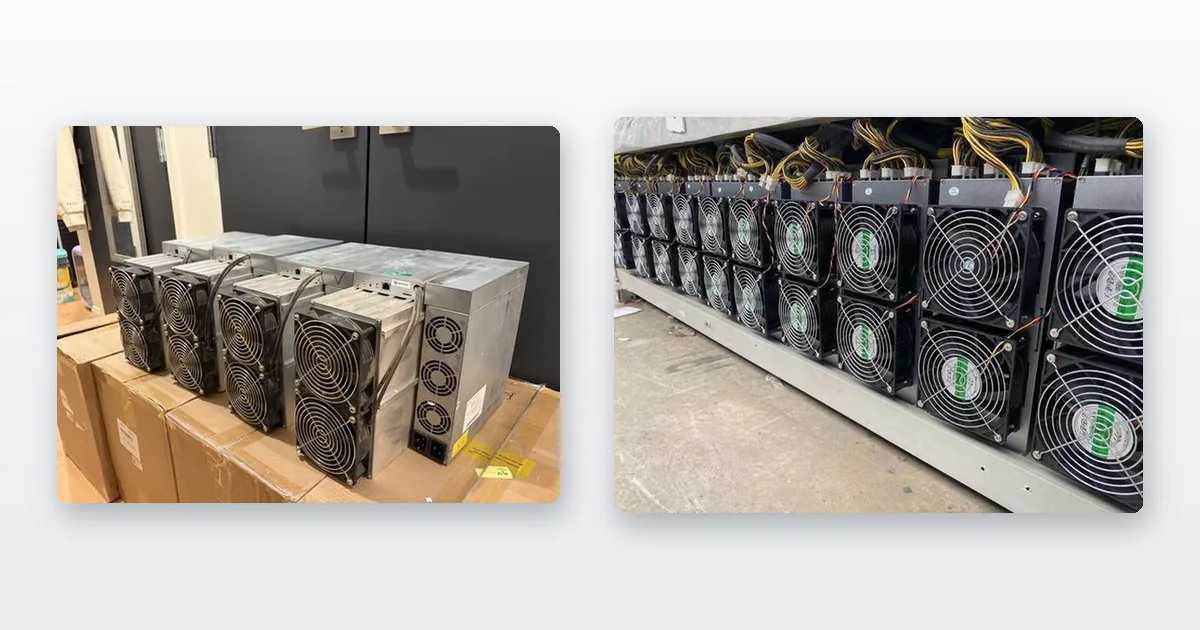
The seven variables that decide whether an ASIC makes money are not worth the same, and the gap between them is enormous. On a used S19k Pro at 5¢/kWh, one cent on your electricity rate moves daily margin by 154%. A 10% move in Bitcoin’s price moves it by 87%. Pool fees move it by 17%, and downtime — the thing most guides open with — moves it by 5%.
That ordering is the useful part, because it tells you what to negotiate and what to stop worrying about. Below is the ranking, the arithmetic behind it, and what each variable is worth in dollars a day on a machine we actually sell.
The numbers this page uses, and when they were measured
Measured 14 August 2026: hashprice $31.19/PH/day, network difficulty 127.48 T, network hashrate 902 EH/s (3-day average), BTC $62,804, transaction fees 0.69% of block reward. The next difficulty retarget is estimated at −3.16% in about 1,224 blocks. The US residential electricity average is 18.44¢/kWh (EIA, May 2026, the latest month published).
The worked machine is a used Antminer S19k Pro at $379.99 — 115 TH/s, 2,645 W, 23.0 J/TH. Re-run everything below with your own rate; these numbers move daily and the ranking is what survives.
The ranking, in one table
Baseline: that S19k Pro at 5.0¢/kWh earns $3.59/day and burns $3.17/day of electricity, for a margin of +$0.41/day. Now change one variable at a time and nothing else:
| Rank by impact | Variable | A realistic move | New margin | Change |
| 1 | Electricity price | 5.0¢ → 6.0¢/kWh | −$0.22/day | −154% |
| 2 | Hashprice (BTC or difficulty) | −10% | +$0.05/day | −87% |
| 3 | Heat and dust | +5% power, same hash | +$0.25/day | −38% |
| 4 | Firmware tuning | −10% power, −5% hash | +$0.55/day | +33% |
| 5 | Difficulty retarget | −3.16% (the one now due) | +$0.53/day | +28% |
| 6 | Pool fee | 0% → 2% | +$0.34/day | −17% |
| 7 | Uptime | 5% downtime | +$0.39/day | −5% |
Efficiency (J/TH) is missing from that table on purpose: it is fixed the day you buy the machine, so it cannot be varied on hardware you already own. It gets its own section below because it is what sets the whole table’s starting point. One number is worth pinning to a wall: a 10% fall in hashprice hurts this machine exactly as much as your power price going from 5.00¢ to 5.57¢. Just over half a cent. That is the whole argument for buying power before you buy hardware.
Electricity price — worth more than everything else on this list combined
It ranks first because it is the only variable that is both large and yours to negotiate. A cent either way on a 2,645 W machine is $0.63 a day, which is more than the machine’s entire margin at 5¢. Move up two cents and the S19k Pro is losing money while running perfectly.
The cliff edge has a name — break-even electricity price — and it is one division: hashprice ÷ (24 × J/TH). At today’s $31.19 hashprice:
| Machine | J/TH | Break-even power price | Margin at 5¢ |
| Used S19 95T, $159.99 | 34.2 | 3.80¢/kWh | −$0.94/day |
| Used S19k Pro 115T, $379.99 | 23.0 | 5.65¢/kWh | +$0.41/day |
| S21 Pro 245T, $4,200 | 15.0 | 8.66¢/kWh | +$3.23/day |
Read that table honestly and it says something a lot of miner shops will not: our own cheapest machine does not pay at 5¢. The $159.99 S19 needs power under 3.80¢ before it earns anything at all, which is a hosted-site, flare-gas or behind-the-meter number, not a house. That is exactly who buys them by the pallet, and it is why we quote the break-even rather than a monthly profit.
At the US residential average of 18.44¢, the S19k Pro loses $8.12 a day — about $2,963 a year on a $379.99 machine. No firmware, pool or cooling decision on this list can rescue that. If your power is retail, the honest answer is that the hardware is not the problem.
Hashprice — the big one you cannot negotiate at all
Hashprice bundles two things a miner has no influence over: what Bitcoin is worth, and how much competing hashrate is pointed at the network. At 902 EH/s and 127.48 T difficulty, a petahash-day pays $31.19 before power.
A 10% move either way is $0.36/day on this machine — about 87% of its margin. Miners tend to watch the BTC price for this and ignore the other half, which is a mistake, because difficulty moves on a schedule you can actually read: the next retarget is estimated at −3.16%, which by itself is worth +$0.12/day here. Difficulty falling is a raise for everyone still running.
What you do about it is a purchasing decision, not an operating one. You buy machines whose break-even price sits far enough below your power rate that a bad quarter does not put them underwater — the ASIC miner buying guide works through how much headroom is enough, and the comparison table ranks the current shelf by exactly that number.
Efficiency (J/TH) — the variable you only get to choose once
Efficiency does not appear in the sensitivity table because you cannot change it on a machine you already own; it is welded in at purchase, and it is what sets the break-even column above. That is precisely why it deserves the third slot: it is the last decision you make with full freedom.
The spread on our own shelf is a factor of 2.3 — 34.2 J/TH on a 2020-era S19, 23.0 on an S19k Pro, 15.0 on an S21 Pro — and it maps directly onto how much power price you can survive. Buying the cheaper machine is buying a lower ceiling on your electricity rate, permanently.
The trap is comparing hashrate instead. A 245 TH/s machine earns more per day than a 115 TH/s one and can still be the worse purchase, because what you are really buying is the ratio between the two columns.
Heat and dust — the 38% you lose without being told
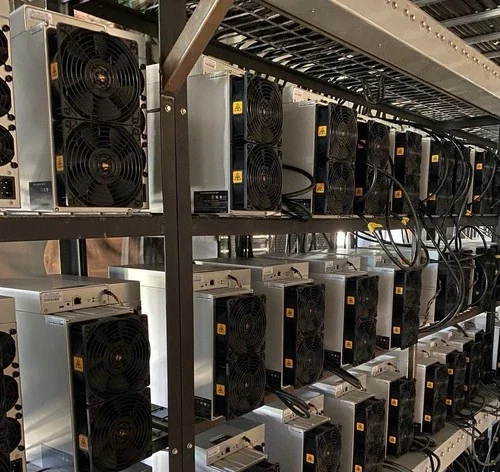
A machine choked with dust, or sitting in its own exhaust, does not usually announce a fault. It draws the same power, throttles slightly, and quietly returns less hash for it. Model that as 5% more power for the same output and you have taken 38% off the margin — the largest item on the table that is nobody’s fault but the operator’s.
This is the cheapest thing on the page to fix: airflow, filtered intake, and a scheduled clean. Where density makes air impossible, the answer is a change of cooling method rather than a bigger fan — hydro-cooled machines and the 12 kW water-cooling radiator exist for exactly that. What heat does over years, rather than over a shift, is covered in physical versus economic lifespan.
Firmware tuning — real, and smaller than the listings claim
Aftermarket firmware earns its place on the table by moving power and hashrate together. A conservative undervolt — 10% less power for 5% less hash — is worth +33% margin here, because you give up revenue at a lower rate than you give up cost.
Note the direction. On a thin margin the winning tune is almost always down, not up: overclocking raises both sides and is only correct when your power is very cheap. That is why our S19 ships on a 2,800 W low-power tune rather than its factory 3,250 W. Vendors quoting “+30% profit” from firmware are usually quoting the hashrate gain and leaving the power bill out.
Pool fees and payout model — 17%, and mostly a solved problem
Two percent of revenue is 17% of margin on this machine, which sounds worse than it is: the range between reputable pools is roughly 0% to 2%, so the decision is worth about a sixth of your margin once, and then never again. Payout model matters more than the headline rate for small fleets — choosing a mining pool covers PPS versus PPLNS and the minimum-payout trap.
The thing worth checking is not the fee. It is whether the pool’s payout threshold and schedule leave you waiting weeks for a balance on a single machine.
Uptime — bottom of the table, which is not the same as unimportant
Five percent downtime costs 5% of margin, not 5% of revenue, because a machine that is off stops buying electricity too. On a thin margin that is $0.02/day, and it ranks bottom of the table honestly.
But notice what that arithmetic depends on. Downtime scales whatever margin you have: at 5¢ on this machine it is trivial, and on a fleet with 3¢ power and fat per-machine margin, the same 5% is real money. It also ignores capital repayment entirely — a machine that is off is not paying itself back, which matters a great deal on a $4,200 S21 Pro and very little on a $159.99 S19. Diagnosing why a machine is down is a different job, covered in why your miner is earning less.
What the ranking actually tells you to do
In order: secure the power price first, buy efficiency second, and treat everything below that as maintenance. A half-cent of electricity outweighs a 10% Bitcoin move; a 2.3× spread in J/TH sets the rate you can survive; dust and firmware are worth a third of your margin between them; pool and uptime are hygiene.
If you cannot get power below the break-even column for the machine you are looking at, the correct decision is not a different pool or a firmware tune. It is a different machine, a hosting contract, or not buying. The step-by-step arithmetic for your own numbers is in how to calculate mining profitability, and the levers for a machine you already own are in what actually moves mining margin.
Machines are on the used ASIC miner shelf, and every listing publishes the J/TH the break-even column is calculated from.
Frequently Asked Questions
Which factor matters most for mining profitability?
Your electricity price, by a wide margin. On a used S19k Pro at 5 cents per kWh, one cent on the rate changes daily margin by 154%, while a 10% move in Bitcoin’s price changes it by 87%. A 10% hashprice fall costs the same as your power going from 5.00 to 5.57 cents — just over half a cent.
What is the break-even electricity price for a mining machine?
Hashprice divided by (24 x J/TH). At a hashprice of $31.19/PH/day that is 3.80 cents/kWh for a 34.2 J/TH S19, 5.65 cents for a 23.0 J/TH S19k Pro, and 8.66 cents for a 15.0 J/TH S21 Pro. Above that rate the machine burns more electricity than it earns, however well it is running.
Can a used miner still be profitable at home?
Usually not at retail power. At the US residential average of 18.44 cents/kWh (EIA, May 2026), an S19k Pro loses about $8.12 a day, or $2,963 a year. Used machines with break-even rates under 6 cents are bought by operators with hosted, industrial or behind-the-meter power, which is why we publish the break-even figure rather than a monthly profit estimate.
How much does aftermarket firmware actually add?
A conservative undervolt trading 10% of power for 5% of hashrate is worth about a third of the margin on a thin-margin machine, because you give up revenue more slowly than cost. On tight margins the profitable tune is downward; overclocking only wins when power is very cheap. Claims of ‘+30% profit’ usually quote the hashrate gain without the extra power bill.
Does downtime really matter that much?
Less than most guides suggest, because a machine that is off stops paying for electricity as well as stopping earning. Five percent downtime costs 5% of margin, which ranked last in our sensitivity test. It matters far more where per-machine margin is fat, and on expensive hardware still repaying its capital.
How often should I re-run these numbers?
The ranking is stable; the figures are not. Hashprice, BTC price and difficulty move continuously — difficulty retargets roughly every two weeks and the next one is estimated at -3.16%. Re-run the break-even division whenever your power contract changes or hashprice moves more than about 10%.
More on what decides profitability
- What Actually Moves Mining Margin: Five Levers, With the Arithmetic
- Why Your Miner Is Earning Less: Diagnosing ASIC Faults
- Optimal Mining Pool Selection for Crypto Miners: Key Factors
- Mining 101: A Beginner’s Guide to Cryptocurrency Mining
The machines this ranking was run against
The three machines the break-even table above is calculated from:
- Used Antminer S19 95TH/s Bitcoin Miner – 2,800W Low-Power VNish Tune
- Used Antminer S19k Pro 115TH/s – Tested, Braiins OS Boost to ~125TH/s
- Bitmain Antminer S21 Pro 245T – Efficient Bitcoin Miner
More in Bitcoin miner, or the full ASIC miner inventory. The arithmetic behind all of this — break-even electricity price from J/TH — is set out in our ASIC miner buying guide.