
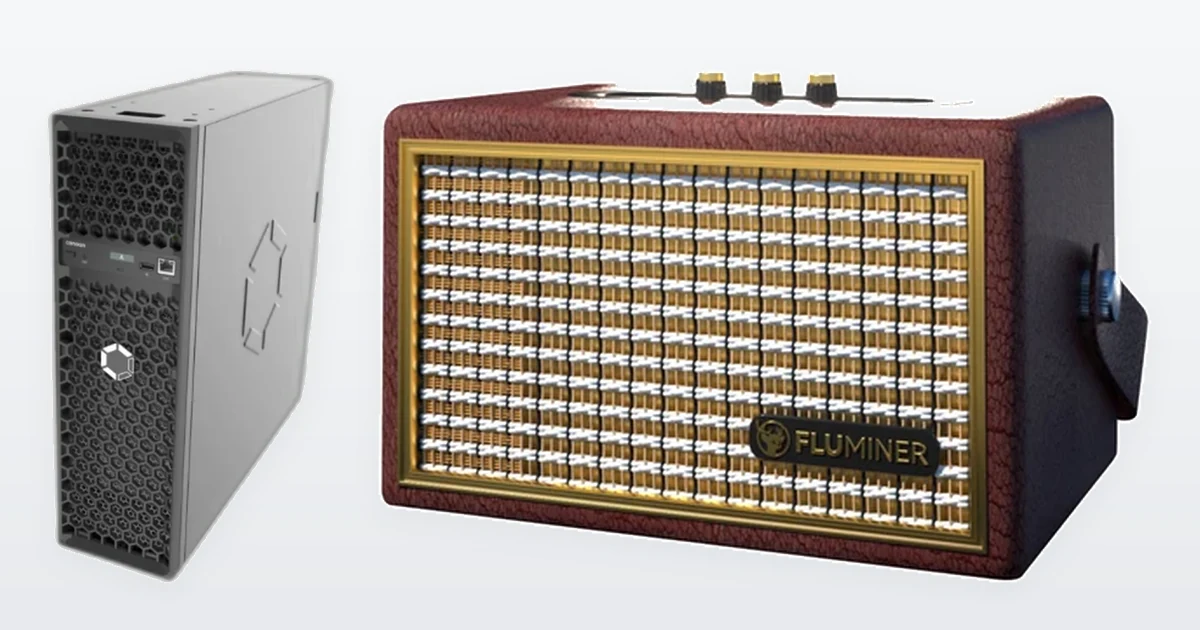
An ASIC does one arithmetic operation, SHA-256, and does nothing else at all. That is the whole reason it displaced graphics cards: a chip that cannot be repurposed can be optimised without compromise, and the efficiency gap ended up being three orders of magnitude rather than a few percent. The trade-off is that the machine has no second life. When it stops paying, it stops being worth owning.
This page is about running one at home — the circuit, the heat, the noise and the legal position — rather than about choosing between models. For grading and condition on used stock see how ASIC grades are assigned; for the purchase itself see the buying guide.
Table of Contents
- Defining ASIC Mining and Its Purpose
- How ASIC Miners Operate in Practice
- Comparing ASIC Miners to Other Hardware
- Upfront Costs, Operating Risks, and Profitability
- Legal and Safety Considerations for U.S. Miners
What running an ASIC at home involves
Three things decide whether an ASIC belongs in your house, and none of them is the machine. Voltage: an S19- or S21-class miner needs 200–240 V on a dedicated circuit and will not run on a US 120 V outlet. Noise: about 75 dB, which is a conversation you have with the household before the purchase, not after. Rate: at the 18.44¢/kWh US residential average every machine we sell loses money; the band where they work is roughly 3.9¢ to 9.0¢/kWh. The one machine here that is genuinely house-shaped is the Avalon Q, at household voltage and about 45 dB.
Defining ASIC Mining and Its Purpose
ASIC mining represents a specialized approach to cryptocurrency mining that leverages purpose-built hardware designed exclusively for mining digital currencies. Unlike general-purpose computing devices, these dedicated mining machines are engineered with extraordinary precision to solve complex computational problems required for blockchain validation and transaction processing.
At its core, ASIC (Application-Specific Integrated Circuit) mining involves using hardware that performs one specific computational task with maximum efficiency. While traditional computer processors handle multiple tasks, ASIC miners are laser-focused on generating cryptocurrency through solving cryptographic puzzles. This specialization translates into dramatically higher performance compared to CPUs or GPUs, enabling miners to process blockchain transactions significantly faster and with substantially lower electricity consumption.
The purpose of ASIC mining extends beyond mere computational power. These devices play a critical role in maintaining blockchain network security by providing the computational work necessary to validate transactions and create new blocks. For home miners, ASIC hardware offers an accessible entry point into cryptocurrency mining, allowing individuals to participate in blockchain networks with relatively straightforward equipment and minimal technical expertise.
How ASIC Miners Operate in Practice
ASIC miners function through a highly specialized computational process designed to solve complex blockchain algorithms. These sophisticated devices perform intricate mathematical calculations that validate and process cryptocurrency transactions with unprecedented efficiency. Unlike general-purpose computing hardware, ASIC miners are engineered to execute a single, specific cryptographic task with maximum precision and speed.
The operational mechanism of an ASIC miner revolves around hashing, a computational process where the device attempts to solve complex mathematical puzzles by generating multiple potential solutions rapidly. Each attempt involves creating a unique numerical output that meets specific blockchain network requirements. For Bitcoin and similar proof-of-work cryptocurrencies, this means generating a hash that falls below a predetermined target value, which requires immense computational power and multiple iterative attempts.
When an ASIC miner successfully solves these cryptographic challenges, it receives a reward in the form of newly minted cryptocurrency tokens. This process not only generates new coins but also maintains the blockchain’s security and integrity by verifying transaction blocks. Home miners using ASIC equipment contribute to network decentralization, helping validate and record transactions across the distributed ledger while potentially earning cryptocurrency as compensation for their computational contributions.
Readers arriving at ASIC hardware without the background underneath it may want the wider explainer on Bitcoin mining first — it covers the common misconceptions, the three ways people actually mine, and the tax, zoning and safety questions that come with running a machine at home.
Comparing ASIC Miners to Other Hardware
When evaluating cryptocurrency mining hardware, ASIC miners stand out as the most powerful and efficient solution compared to traditional computing devices. High-performance ASIC devices can deliver hash rates up to 100 terahashes per second, dramatically outperforming general-purpose hardware like CPUs and GPUs. This extraordinary computational capability means home miners can achieve significantly higher mining productivity with a single specialized device.
The key differences between ASIC miners and other mining hardware become apparent through performance metrics. Central Processing Units (CPUs) represent the most basic mining option, offering minimal computational power and extremely low efficiency for cryptocurrency mining. Graphics Processing Units (GPUs) provide a moderate improvement, featuring more versatile processing capabilities that allow mining multiple cryptocurrency types. However, ASIC miners eclipse both by being engineered specifically for a single blockchain algorithm, resulting in unprecedented computational precision and energy optimization.
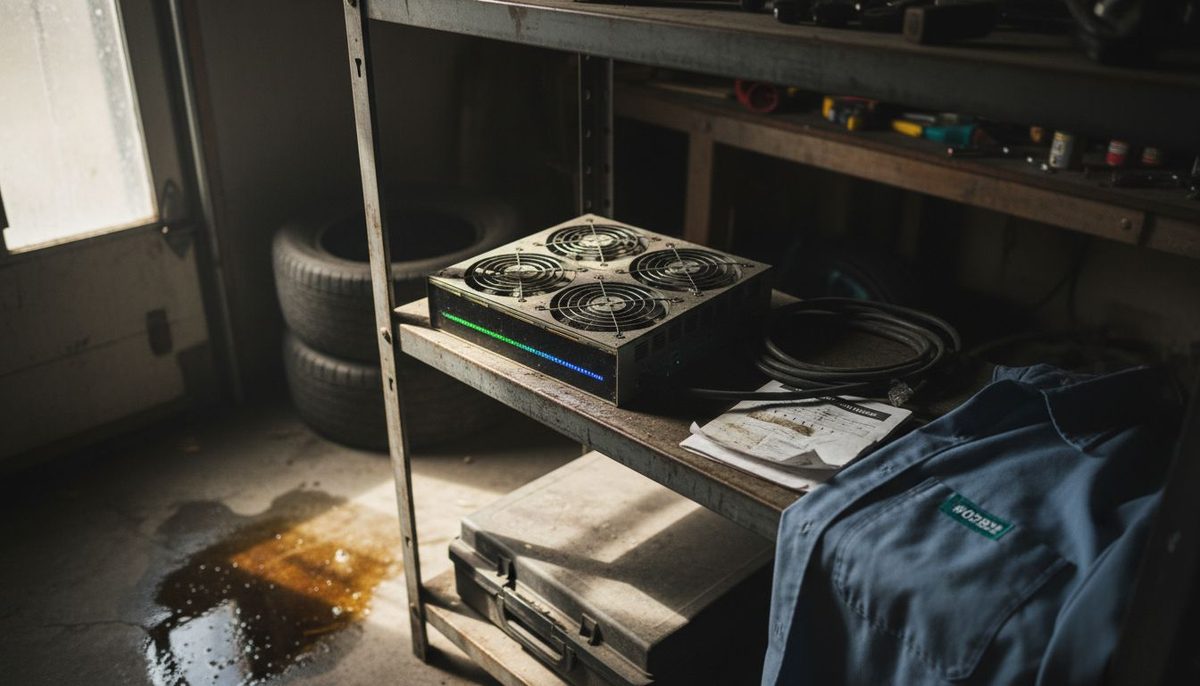
Each hardware type comes with distinct advantages and limitations. While CPUs and GPUs offer flexibility for multiple computing tasks, ASIC miners are laser-focused on cryptocurrency mining, delivering superior hash rates and energy efficiency. Some ASIC models can generate up to 110 terahashes per second while consuming approximately 3250 watts, a performance benchmark that makes alternative hardware configurations appear obsolete for serious mining operations. This specialization means home miners can achieve professional-grade mining results without requiring extensive technical expertise or complex multi-device setups.
Here’s a summary comparing popular mining hardware types:
Upfront Costs, Operating Risks, and Profitability
Cryptocurrency mining hardware represents a significant financial investment that requires careful strategic planning. Bitcoin mining hardware acquisition demands sophisticated economic analysis due to volatile market conditions and technological disruption, making profitability a complex calculation for home miners. The initial purchase price of an ASIC miner represents just the first layer of potential expenses, with ongoing operational costs playing a critical role in determining long-term financial success.
The primary financial risks associated with ASIC mining stem from rapid technological obsolescence and fluctuating cryptocurrency market dynamics. Modern ASIC miners can cost between $2,000 and $10,000, with their economic viability dependent on multiple interconnected factors. Electricity expenses, cryptocurrency market prices, network mining difficulty, and the specific hardware’s computational efficiency all contribute to determining whether a mining operation generates profit or becomes a financial burden. Home miners must continuously monitor these variables to maintain a profitable mining strategy.
Profitability calculations require a comprehensive approach that goes beyond simple hardware costs. Miners need to consider factors such as local electricity rates, potential cryptocurrency value fluctuations, mining pool fees, and the specific blockchain network’s current mining difficulty. Some miners achieve breakeven points within 12-18 months, while others may face extended periods before recovering their initial hardware investment. The most successful home miners approach ASIC mining as a long-term investment strategy, maintaining flexibility and a willingness to adapt to changing technological and market conditions.
Here is a table outlining major profitability factors for home ASIC miners:
Legal and Safety Considerations for U.S. Miners
Cryptocurrency mining in the United States involves a complex landscape of legal and regulatory considerations that home miners must carefully navigate. Mining practices require attention to specific algorithmic and safety protocols, with potential implications for tax reporting, electrical infrastructure, and local zoning regulations. Cryptocurrency mining is legal at the federal level, but miners must be aware of state-specific regulations that can significantly impact their operations.
Electrical safety represents a critical concern for home miners utilizing high-powered ASIC equipment. These devices generate substantial heat and consume significant electrical resources, requiring robust home electrical systems capable of handling consistent high-load operations. Miners must ensure their home’s electrical infrastructure can support continuous mining without risking circuit overloads, potential fire hazards, or unexpected equipment damage. Additionally, some residential insurance policies may have specific clauses regarding commercial-grade electrical equipment, making it essential to consult with insurance providers about potential coverage limitations.
Tax compliance emerges as another crucial legal consideration for U.S. miners. The Internal Revenue Service (IRS) treats cryptocurrency mining rewards as taxable income, requiring miners to report the fair market value of mined cryptocurrencies at the time of receipt. Home miners must maintain meticulous records of mining activities, including equipment costs, electricity expenses, and cryptocurrency values. A tax professional is worth the fee here, because mining is taxed twice: the reward is ordinary income at the moment you receive it, and the same coin is taxed again as a capital gain when you sell it.
At the US residential average of 18.44¢/kWh (EIA, May 2026) no machine we sell breaks even in a house — the best of them needs power under about 9¢. That is the number to settle before you buy, not after; the working is in the ASIC miner buying guide, and the machines themselves are on the used ASIC miner shelf.
Frequently Asked Questions
What is ASIC mining, and why is it important for home miners?
ASIC mining uses specialized hardware designed exclusively for mining cryptocurrencies, which provides higher performance and efficiency compared to traditional hardware like CPUs and GPUs. It performs the SHA-256 hashing that secures the network and wins block rewards, and nothing else — it cannot be repurposed for any other workload.
How do ASIC miners operate to solve cryptocurrency algorithms?
ASIC miners perform a specialized computational process called hashing, generating unique numerical outputs to solve complex mathematical puzzles. This process allows them to verify transactions and create new blocks in the blockchain efficiently.
How do ASIC miners compare to other mining hardware like CPUs and GPUs?
ASIC miners are significantly more efficient than CPUs and GPUs in terms of hash rates and energy consumption. While CPUs have very low mining efficiency and GPUs offer moderate improvements, ASIC miners are specifically engineered for cryptocurrency mining, boasting extremely high efficiency and performance for a single algorithm.
What factors should I consider for ASIC mining profitability?
Key factors impacting ASIC mining profitability include electricity rates, cryptocurrency market volatility, mining difficulty, and the hardware’s efficiency. Home miners need to monitor these variables continually to maintain a profitable mining operation.
More on running an ASIC at home
- Mining 101: A Beginner’s Guide to Cryptocurrency Mining
- What Actually Moves Mining Margin: Five Levers, With the Arithmetic
- Antminer S19 miners for sale
- Cloud Mining vs Buying Your Own Miner: An Honest Comparison
Power supplies, converters and cabling in stock
The power-side hardware this comes down to, all of it in stock:
- Bitaxe NerdQaxe++ 4.8TH/s Bitcoin Solo Miner BM1370 ASIC Fan 12V PSU New
- IceRiver KS Series Tester Test Fixture ASIC Miner Diagnostic Tool Kit
- 110V to 240V Antminer Power Kit – Run a 240V Miner at Home
More in Need Parts, or the full ASIC miner inventory.