
Kim Yo-jong, the sister of North Korean leader Kim Jong-un, has rejected the FBI claim that North Korea is behind the Binance hack. Her statement was reported by The Block, citing Yonhap, on Monday, November 2 (Tuesday in Korea). Here is the North Korea Binance hack denial in plain terms: what she said, what the FBI said, and what is still unproven.
What North Korea said about the Binance hack
According to The Korea Times, which credits Yonhap, she called the FBI probe a “political provocation”. Reuters, as syndicated by Yahoo, reports that state media KCNA called the claims “absurd rhetoric”.
The Block quotes her as saying the FBI is trying to brand the DPRK a “cyber criminal state”. Furthermore, she disputed the FBI claim that it had information that a group “supported” by the DPRK was involved. The statement, as reported, does not address the amount stolen or give any alternative explanation.
North Korea Binance hack: what the FBI and analysts said
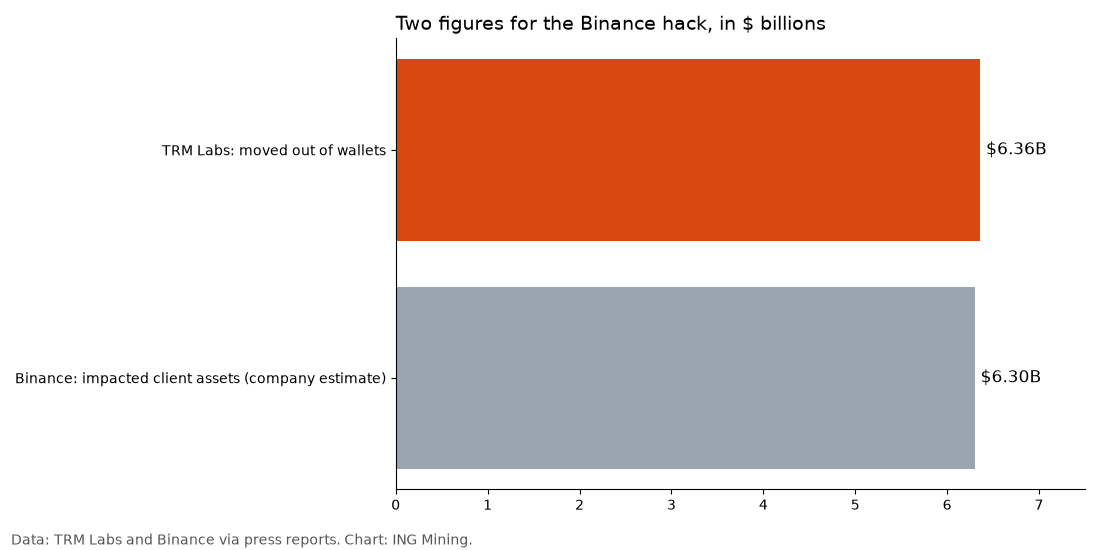
The FBI named the activity “TraderTraitor” and pointed to North Korea. The Block says TRM Labs and two other firms had already attributed the attack to North Korean actors. TRM puts the amount moved out of Binance wallets at $6.36 billion, most of it in about 20 minutes. Binance itself estimates impacted client assets at about $6.3 billion. Those are two different measures, so do not add them up.
The FBI did not immediately respond to the request from The Block for comment on the denial. We have not seen the FBI evidence, only the public attribution. However, a denial alone settles nothing either way.
What is still unproven
Nobody outside the investigation can check the link yet. The attribution rests on on-chain analysis and what the FBI says it knows. In contrast, the denial rests on a political statement. Until more evidence is published, treat both as claims.
What it means for miners
Not much, directly. A denial does not move hashrate or block rewards. Bitcoin is near $76,808 and the network runs about 1,038 EH/s. The indirect risk is sanctions: if stolen coins are tied to a sanctioned state, exchanges and pools may screen deposits harder. To be clear, that is our reading, not something any source has announced.
Miner math: what hashprice pays today
Here is the live maths on November 2. Bitcoin is $76,808 and the network is 1038 EH/s, so hashprice is about $33.53 per petahash per day. That is what one PH/s of hashing earns before power.
| Machine | 5c/kWh | 8c/kWh | 12c/kWh | Break-even |
|---|---|---|---|---|
| Antminer S19 (95 TH/s, 3250 W) | -$0.71 | -$3.05 | -$6.17 | 4.1c |
| Antminer S19k Pro (115 TH/s, 2645 W) | $0.68 | -$1.22 | -$3.76 | 6.1c |
| Antminer S19 XP (141 TH/s, 3010 W) | $1.12 | -$1.05 | -$3.94 | 6.5c |
| Antminer S21 Pro (234 TH/s, 3510 W) | $3.63 | $1.11 | -$2.26 | 9.3c |
Numbers are profit per day after electricity, at the three power prices shown. Break-even is the most you can pay per kilowatt-hour before the machine loses money. Specs are the manufacturer ratings; network data comes from mempool.space. Try your own power price in our free bitcoin mining profit calculator. See what these machines really sold for in our used ASIC miner price index. Want to run the same numbers on a machine you can buy today? See our used ASIC miners, or buy several at once through bulk lots.
The denial itself does not move hashprice. For scale, if bitcoin fell 10% on more exchange fear: the break-even power price on an S19k Pro falls from 6.1 to 5.5 cents per kilowatt-hour. At 8 cents, daily profit goes from -$1.22 to -$1.61.
Our blunt view: get paid to your own wallet and keep little on any exchange, whoever turns out to be behind the theft.
For the maths behind break-evens, see our mining economics guides. You can also browse every miner in stock, or check where bitcoin may go next.
-Nick
ING Mining
This is general information, not financial advice. Crypto is volatile, and exchanges can fail. Please do your own research.