
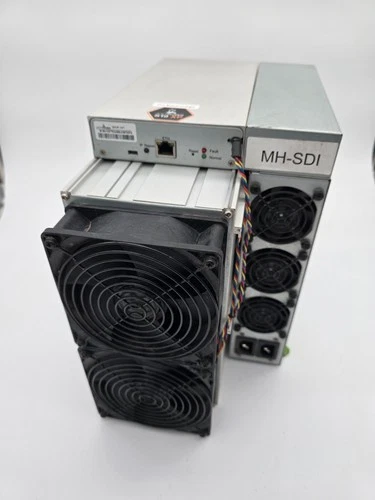
Bitcoin is a ledger that nobody owns, kept honest by machines competing to guess numbers. That sentence contains everything that matters if you are about to buy mining hardware, because the machines doing the guessing are the product, the guessing is the job, and the electricity the guessing consumes is what decides whether you make money. This page explains what Bitcoin actually is and what mining actually does — written for someone considering a miner, not for a finance blog.
We buy, repair, host and resell mining hardware, so this is the version we give people before they spend money.
What Bitcoin is
Bitcoin (BTC) is a decentralised digital currency introduced in 2009 by the pseudonymous Satoshi Nakamoto. It has no central authority: no bank issues it, no government administers it, and no company can freeze it. What exists instead is a shared public record — the blockchain — that thousands of independent computers hold copies of and agree on.
Three properties follow from that, and each one matters to a miner:
- It is open and verifiable. Anyone can read every transaction ever made and check the rules are being followed. You do not have to trust an operator; you can check.
- Its supply is fixed at 21 million coins, released on a schedule written into the software. No one can decide to issue more. This is what the issuance schedule is about, and it is the single largest long-run input to mining economics.
- It is peer-to-peer. Value moves directly between parties. There is no intermediary to ask permission from, and equally no intermediary to reverse a mistake.
What mining actually does
Mining is usually described as “solving complex maths”. That is misleading — it makes it sound clever. It is not clever, it is brute force, and understanding that is what makes the hardware decisions obvious.
Miners take a batch of pending transactions, add a number to it, and run the whole thing through the SHA-256 hash function. The output is a fixed-length string that looks random. The network requires that output to start with a certain number of zeros. There is no way to work backwards to a number that produces such an output — so miners simply try, change the number, and try again, trillions of times per second.
Whoever finds a valid answer first announces the new block, everyone else verifies it in a fraction of a second, and the winner receives newly issued bitcoin plus the transaction fees in that block. Then it starts again.
Two consequences of this design that beginners rarely absorb:
- Mining is a lottery, not a wage. Each attempt has the same tiny chance of winning. Buying more hashrate buys more tickets, not a guaranteed rate of return. This is why almost everyone mines in a pool, which spreads one large stream of winnings across many participants in proportion to the work they contributed.
- The difficulty adjusts. Roughly every two weeks the network measures how fast blocks are being found and retunes the number of leading zeros required, targeting one block every ten minutes on average. So if more machines join, everyone’s share shrinks. Your competition is not another company, it is every other miner on Earth, in aggregate. Worth knowing, though, that this has not been a one-way ratchet lately: difficulty is 127.48 T today, essentially flat on a year ago and 18.3% below its October 2025 peak of 155.97 T. A machine bought today is not automatically obsolete in eighteen months, which is why used hardware holds value better than the rule of thumb suggests.
What this means if you are buying a miner
The design above produces one blunt economic fact: you are converting electricity into bitcoin, and the exchange rate is set by the whole network, not by you. That is why the specification that decides a purchase is not hashrate. It is efficiency — joules per terahash, J/TH — because it tells you how much electricity each unit of lottery ticket costs.
The whole comparison collapses into one line, and hashrate cancels out of it entirely:
Break-even electricity rate ($/kWh) = hashprice ($/PH/day) ÷ (24 × J/TH)
Hashprice is what the network currently pays per unit of hashrate per day. Work through that formula and you get a single number in cents per kilowatt-hour: the price of electricity at which your machine stops making money. Hold it against your actual power bill and the decision makes itself. We explain hashprice in what a miner actually earns, and the full method in the ASIC miner buying guide.
The uncomfortable answer that arithmetic gives right now: at the US average residential electricity rate, no ASIC on the market is profitable. The most efficient machine we list — a hydro-cooled S23 at 9.5 J/TH — breaks even near 13.7¢/kWh, and the best air-cooled machines around 8.7¢. Against a US residential average of 18.44¢ (EIA, May 2026), none of them clears it. That is not a sales pitch, it is what the formula says, and we would rather you knew it before buying than after. (Figures at a hashprice of $31.27/PH/day, 15 August 2026 — they move daily.)
Why the machines are specialised
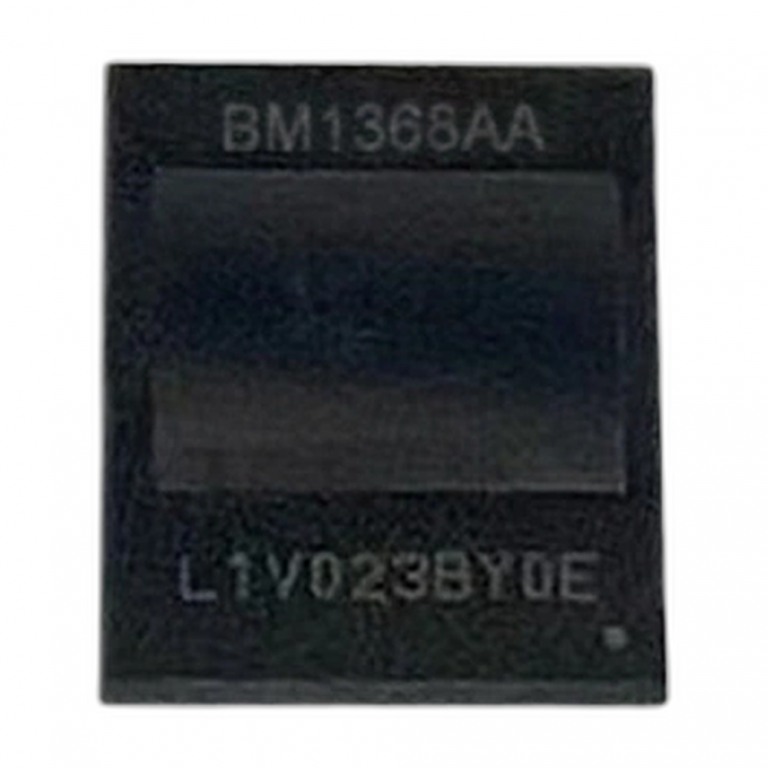
Because the task is one narrow calculation repeated endlessly, general-purpose processors are hopelessly uncompetitive at it. An ASIC — an application-specific integrated circuit — is silicon that can do SHA-256 and essentially nothing else, which is exactly why it does it thousands of times more efficiently than a CPU or a graphics card.
That specialisation is also the risk. An ASIC has no second use. If you buy a machine for a coin whose network stops, you own a heavy object. A SHA-256 machine will always be able to mine Bitcoin, which puts a floor under its value — a floor that single-coin altcoin hardware does not have.
Where to go from here
- Where new bitcoins come from — the block subsidy, the halving schedule and the 21 million cap
- What a miner actually earns — hashprice, and why it falls even when Bitcoin rises
- How cryptocurrency prices are actually set
- The ASIC miner buying guide — the arithmetic, the specs and the running costs
- Every machine ranked by break-even power price, and what actually works at home
- Does quantum computing break Bitcoin? — what is actually at risk, what is not, and how far away it is
- A beginner’s guide to DeFi — the other half of the ecosystem the coin you mine trades in
Everything we sell is in the miner inventory. If you want a straight answer about whether mining makes sense for you, tell us what you pay for electricity — that one number decides it.
Frequently Asked Questions
What is Bitcoin in simple terms?
Bitcoin is a digital currency recorded on a shared public ledger that no single company, bank or government controls. Thousands of independent computers hold copies of that ledger and agree on its contents, so anyone can verify every transaction rather than trusting an operator. Its supply is capped at 21 million coins on a schedule fixed in the software, and value moves directly between people without an intermediary.
What does Bitcoin mining actually do?
Mining machines take a batch of pending transactions, add a number, run it through the SHA-256 hash function, and check whether the result starts with enough zeros. There is no shortcut, so they simply guess trillions of times per second. Whoever finds a valid answer first publishes the new block and receives newly issued bitcoin plus that block’s transaction fees. The work both orders transactions and issues new coins.
Is Bitcoin mining profitable?
It depends almost entirely on your electricity price. Break-even rate equals hashprice divided by 24 times the machine’s J/TH, which gives a single figure in dollars per kilowatt-hour to hold against your bill. At the US average residential rate no machine on the market currently breaks even; the most efficient hardware available clears roughly ten cents per kilowatt-hour. Cheap power, not a better machine, is what makes mining work.
Why do miners use ASICs instead of graphics cards?
Because Bitcoin mining is one narrow calculation repeated endlessly, so silicon built to do only SHA-256 performs it thousands of times more efficiently than a general-purpose processor. That specialisation is also the risk: an ASIC has no alternative use. A SHA-256 machine can always mine Bitcoin, which puts a floor under its resale value, whereas hardware built for a single small altcoin has no fallback if that chain stops.
Why does mining get harder over time?
The network measures how quickly blocks are being found roughly every two weeks and adjusts the difficulty to keep the average at one block every ten minutes. When more machines join, difficulty rises and every existing miner’s share of the rewards shrinks proportionally. Your competition is the entire global network in aggregate, which is why a return calculated at today’s difficulty is optimistic by the time hardware is delivered and running.