
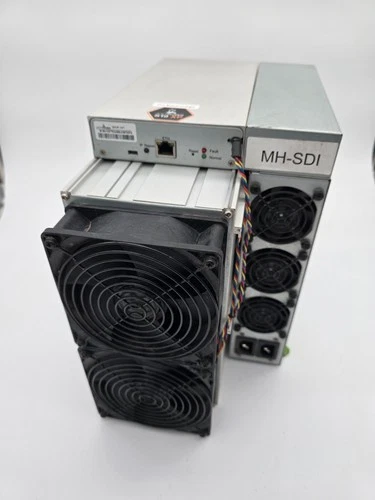
What sinks a first mining setup is almost never the machine. It is a 15-amp circuit that cannot carry it, a lease clause or county ordinance nobody checked, an electricity rate that was never going to clear break-even, or a seller who shipped a cosmetic shell with no hashboards in it. The hardware is the one part of this you can inspect, test and send back.
So the risk work happens before the money moves, in this order: confirm the circuit, confirm you are allowed to run it, confirm your rate clears break-even, then confirm the unit itself. Five checks follow. Each costs nothing, and each one has stopped a purchase that would have gone wrong.
The single largest risk on this list is buying the unit itself, and it has its own checklist: how to buy a used ASIC miner.
Step 1: Assess mining environment and regulatory risks
Before you invest in ASIC hardware, you need to understand what mining looks like in your specific location and how regulations might affect your operations. This step determines whether your mining setup is even legal where you are, how much it might cost to stay compliant, and what changes could impact your profitability down the road.
Start by researching your local and state regulations. Mining sits at the intersection of multiple regulatory concerns. Global regulatory frameworks address energy consumption, environmental impacts, financial transparency, and licensing requirements that vary significantly by jurisdiction. Check whether your state or locality requires mining licenses, permits, or business registration. Some jurisdictions have banned mining entirely, while others actively welcome it. Contact your local utility company and ask about their policies on high-electricity-consumption operations. Many utilities have started monitoring for mining activity and some have restrictions on residential mining due to power demands.
Next, evaluate your physical environment for mining feasibility. Noise is a real issue. A single ASIC miner produces 70-90 decibels of noise continuously, which is comparable to a busy highway. If you’re in a residential area with close neighbors, that matters legally and practically. Check your local noise ordinances, which often cap sound levels at 50-60 decibels during evening hours. Heat dissipation is another environmental factor. A single miner generates 2,000-3,000 watts of heat, and multiple units compound this quickly. Your cooling solution must handle this load without violating ventilation codes or creating hazardous conditions in your space. Poor heat management also accelerates hardware degradation, which directly impacts how long your equipment remains profitable.
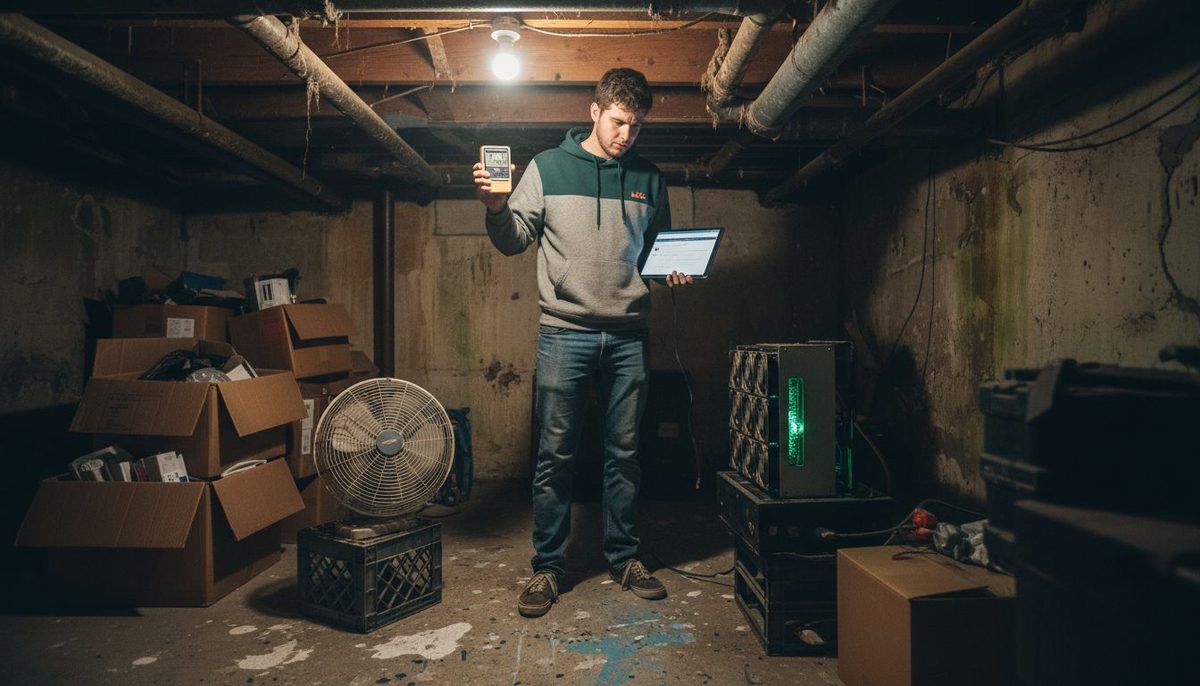
Document everything you find. Keep records of regulations, zoning restrictions, utility policies, and environmental constraints specific to your location. This documentation protects you if questions arise and helps you understand the true operational costs of mining where you are. Some miners have invested thousands in equipment only to discover their mining violates local ordinances or utility agreements, forcing them to shut down operations entirely. That’s an avoidable mistake.
Contact your county assessor and zoning office directly to ask about any restrictions on commercial electrical usage in residential zones, as mining operations often trigger commercial classification even if run from home.
Step 2: Evaluate ASIC miner reliability and lifespan
Not all ASIC miners are created equal, and understanding which hardware will actually perform reliably over time is crucial to your investment success. This step helps you identify miners that will last long enough to generate profit before they fail or become obsolete.
Start by researching the specific miner models you’re considering. Look at manufacturer specifications for hash rate, power consumption, and efficiency metrics, but don’t stop there. Check online forums, mining communities, and real-world user reports to see how these machines perform after months of continuous operation. Pay attention to failure patterns. Some models have widespread reports of power supply failures after 6 months, while others run stable for years. The technical specifications tell you what a miner should do in ideal conditions. User experiences tell you what actually happens when miners run 24 hours a day in real mining environments. You’ll find that reputable sellers often test and inspect used hardware before reselling it, which gives you additional assurance about actual condition rather than just manufacturer claims.
Understand the relationship between usage intensity and hardware degradation. How mining hardware fails directly ties to operating conditions, component quality, and maintenance frequency. A miner running at full capacity in a poorly ventilated, hot space will fail far faster than one in a climate-controlled environment with proper airflow. Most ASIC miners have an economic lifespan of 2 to 4 years before they become unprofitable due to efficiency decline or increased difficulty on the network. However, actual hardware failure can happen much sooner if cooling, power delivery, or component quality is inadequate. Look for miners with redundant power supplies, better capacitor quality, and proven thermal designs. These features cost more upfront but extend reliable operation and protect your investment.
Request detailed information about any used hardware before purchasing. Ask the seller about the unit’s power history, environmental conditions it operated in, any repairs or replacements made, and why it’s being sold. Transparent sellers who know the history of their equipment are more trustworthy than those offering vague descriptions. New miners come with manufacturer warranties that protect you if components fail within the warranty period, typically 6 to 12 months. Used miners may have remaining warranty coverage or may be sold as-is. Factor warranty coverage into your reliability assessment. A slightly older model with remaining warranty might be safer than a newer model without coverage.
Here’s a quick comparison of factors that influence ASIC miner lifespan and profitability:
Request a power-on test video from the seller before purchase, showing the miner running for at least 30 minutes with hash rate displays visible, which confirms the unit actually functions and isn’t a cosmetic-only device.
Step 3: Calculate power needs and cost projections
Power consumption is the single biggest operating expense in cryptocurrency mining, and miscalculating your electrical requirements can turn a profitable operation into a money-losing venture. This step walks you through determining exactly how much power your mining setup will draw and what that costs you monthly.
Start with the hardware specifications. Every ASIC miner has a power consumption rating listed in watts. An Antminer S19 Pro, for example, draws approximately 1,450 watts at full operation. If you’re running five of these miners, that’s 7,250 watts or roughly 7.25 kilowatts. Don’t just multiply the number of miners by their rated power though. Account for inefficiency losses in your power supply. Most quality power supplies operate at 85 to 92 percent efficiency, meaning you lose 8 to 15 percent of input power as heat. A 1,450-watt miner might actually draw 1,560 to 1,710 watts from your wall outlet. This difference matters significantly over months of operation. Also consider whether you’re running cooling fans, ventilation systems, or other auxiliary equipment. A single exhaust fan might consume 200 to 400 watts continuously, and that compounds across multiple units.
Next, calculate your actual electricity costs. Contact your utility provider and get your exact rate per kilowatt-hour (kWh). Residential rates typically range from 10 cents to 25 cents per kWh depending on your location and season, while commercial rates vary widely. Run a realistic calculation. If your total mining load is 10 kilowatts and your electricity rate is 15 cents per kWh, operating 24 hours per day costs you approximately 36 dollars daily or about 1,080 dollars monthly. That’s 12,960 dollars annually. You need to know this number before you invest a single dollar in hardware because electricity costs will consume the majority of your mining revenue. Compare this to your expected hash output and the current network difficulty to understand whether you’re operating at a profit or a loss.
Consider variable costs beyond just per-unit electricity rates. Summer cooling often costs more than winter operation. Some regions have time-of-use pricing where electricity costs more during peak hours. If you can run miners during off-peak hours, your costs drop significantly. Understanding how hardware maintenance impacts reliability also factors into total cost projections because well-maintained equipment experiences fewer failures and replacement costs. Build a spreadsheet or use mining calculators to project your monthly and annual costs against your expected revenue. Include a buffer for unexpected expenses like cooling system repairs or utility rate increases.
Consider these key cost variables when projecting mining expenses:
Run the miner on a 240-volt circuit, not 120. This is usually not optional: the PSU on an S19- or S21-class machine will not start on 120 V, and the ones that do run derate hard. At 240 V the same machine draws half the current, so the wiring runs cooler and the supply sits nearer its efficient band. Treat it as a requirement to check before you buy, not a tuning trick.
Step 4: Mitigate financial risks with strategic purchasing
How you buy your hardware directly impacts your financial exposure. This step teaches you to structure your purchases strategically so that a single failed miner or market shift doesn’t derail your entire investment.
Start by resisting the urge to buy all your hardware at once. Many new miners get excited about a particular model and purchase five or ten units immediately. This creates massive concentrated risk. If that model has a hidden defect you didn’t catch, you’ve just locked yourself into losses across multiple units. If the market shifts and that hardware becomes unprofitable faster than expected, you’ve overcommitted capital. Instead, buy one or two units first. Run them for 2 to 4 weeks in your actual mining environment. Monitor their performance, heat output, noise levels, and stability. Document how they actually behave once they’re hashing 24 hours a day in your space. Only after you’ve confirmed they perform as expected should you consider scaling up to additional units. This staged approach costs you a few weeks of potential mining revenue but protects you from catastrophic financial mistakes.
Consider purchasing used or refurbished hardware alongside new equipment. New miners offer manufacturer warranties and predictable specifications. Used miners are significantly cheaper but carry uncertainty about remaining lifespan. Mixing both lets you diversify. You get warranty protection from new units while capturing cost savings from used hardware. Reputable sellers test mining hardware quality before resale, which means refurbished equipment from trusted sources often performs as reliably as new units at a fraction of the cost. Compare the total cost of ownership, not just the purchase price. A used miner that costs 40 percent less but has only 12 months of reliable operation remaining may actually cost more per month of operation than a new unit with a 3 year lifespan.
Build cash reserves for unexpected expenses before you buy. Mining hardware fails. Power supplies die. Cooling systems break. Shipping delays happen. If you spend every dollar on miners with nothing left for repairs or replacement parts, a single failure forces you to shut down while waiting for funds. Financial professionals recommend keeping 3 to 6 months of operational costs in reserve. For a 10 kilowatt operation running at 15 cents per kWh, that’s 10,800 to 21,600 dollars. This sounds substantial, but it’s the difference between weathering a equipment failure and losing money while waiting to fix it.
Purchase your first batch of miners from sellers with clear return policies that allow 7 to 14 days for testing, so you can verify performance and compatibility with your cooling and power infrastructure before you commit to larger quantities.
Step 5: Verify performance and monitor ongoing operations
Once your miners are running, verification doesn’t stop. This step shows you how to monitor performance continuously so you catch problems early and confirm your investment is actually generating the returns you projected.
Begin by establishing baseline performance metrics for each miner within the first 48 hours of operation. Log into your miner’s web interface and record the hash rate, power consumption, temperature readings, and rejection rate. Most ASIC miners display these metrics on their dashboard. Hash rate tells you how much computational work the miner is performing. Compare this to the manufacturer specification to confirm it matches expectations. Power consumption should align with rated specs unless your electrical setup introduces voltage drops. Temperatures should stabilize within the normal range for that model, typically 40 to 65 degrees Celsius depending on ambient conditions and cooling design. Rejection rate shows how many invalid shares your miner submitted to the pool, ideally below 1 percent. Any metric significantly outside normal ranges suggests cooling problems, power delivery issues, or hardware defects. Document these baseline numbers in a spreadsheet so you can compare them against future readings and spot degradation early.
Set up remote monitoring software to track your miners continuously. Most mining pools provide dashboards that show real-time performance for all your connected devices. Standalone monitoring tools allow you to log historical data and set alerts when miners go offline or performance drops below thresholds. Check your miners at minimum once daily, preferably twice. This catches failures quickly. A miner that stops hashing silently costs you revenue every hour it’s down. Early detection lets you troubleshoot or replace it before significant losses accumulate. Essential maintenance practices directly support long-term performance verification because regular cleaning and component inspection prevent many failure modes from developing. Dust buildup reduces cooling efficiency, which raises temperatures and degrades performance. Regular visual inspection catches loose fans, damaged connectors, or corrosion before they cause complete failures.
Track profitability metrics monthly. Compare your actual electricity costs against your mining pool rewards. If network difficulty increases significantly or market conditions change, your profitability margin shrinks. By monitoring this actively, you can decide whether to continue operating at current levels, upgrade to more efficient hardware, or shift mining focus to different coins. Many miners miss this step and continue running unprofitable operations, bleeding money for months without realizing it.
Set daily alerts on your phone for any offline miners or hash rate drops above 20 percent, so you know about problems immediately instead of discovering them when reviewing weekly reports.
Buying in a way that limits the downside
The challenge of navigating complex mining regulations and ensuring ASIC hardware reliability is real for every miner. This article highlights critical pain points like unpredictable hardware lifespan, costly power consumption, and the necessity of strategic purchasing to avoid financial setbacks. At ING Mining, we understand these hurdles and offer a solution that puts you in control with thoroughly inspected, tested, and performance-verified ASIC miners. Whether you face regulatory uncertainty or want to protect your investment from unexpected failures, our hands-on guidance and robust testing ensure you only buy miners that meet your needs.
Discover our wide selection of Used ASIC Miners that come with detailed performance histories and support from experts who help you calculate power costs and assess operational risks. Don’t wait until costly mistakes happen. Act now to secure reliable mining hardware and get insights into long-term profitability from a trusted American source.
Ready to minimize risks and maximize your mining success? Visit ING Mining’s Used Miners today and start your journey toward safer and more profitable ASIC mining with expert support every step of the way.
At volume the same principle pulls different levers. What limits the downside on a five-figure order is not what limits it on one machine: what the grade actually commits the seller to, what happens to a unit that arrives dead, whether a warranty runs across the lot or per unit, and how the money moves before anything ships. Our page on what a used batch is graded on before it ships answers those four in writing, which is the entire reason for putting them on a page instead of settling them in an email thread after the wire has cleared.
Frequently Asked Questions
What regulatory risks should I assess before starting crypto mining?
Understanding local and state regulations is crucial before investing in ASIC hardware. Research whether your area requires mining licenses or permits, and check for limitations on energy consumption and environmental impact. Document your findings to ensure compliance and protect your investment.
How can I evaluate the reliability of ASIC miners before purchasing?
Assess ASIC miners by reviewing manufacturer specifications and researching user experiences in mining communities. Look for consistent performance reports and focus on miners with proven durability and good thermal management. Collect this information to select hardware that will last longer and perform reliably.
What are the key factors to estimate my mining power needs?
Start by determining the power consumption of your miners, factoring in losses from inefficiency in power supplies. Calculate your total electricity costs by multiplying your mining load by your local utility rate per kilowatt-hour, ensuring you understand how these expenses impact your profitability in both daily and monthly terms.
How can I strategically purchase mining hardware to mitigate financial risk?
Avoid buying all your hardware at once; instead, start with a few units to test their performance in your environment. Monitor how each miner operates for a few weeks before deciding to scale, which minimizes your exposure to costly mistakes from faulty equipment or market shifts.
What ongoing monitoring practices should I implement for my mining operations?
Establish baseline performance metrics for each miner within the first 48 hours of operation, including hash rate and power consumption. Set up remote monitoring to track these metrics continuously and review them at least daily to catch issues early, preserving your mining revenue.
How can I maintain the profitability of my mining setup?
Track your monthly profitability metrics by comparing actual electricity costs against mining rewards. If conditions change, be prepared to adjust your operations or explore more efficient hardware to stay ahead of increasing network difficulty or operational costs.
Related reading
- Cryptocurrency Mining Security Basics for New Miners
- ASIC Mining: Why It Matters for Home Miners
- 7 Key Mining Profitability Factors Every Miner Must Know
- How to Choose ASIC Miner for Profitable Crypto Mining
Used and refurbished stock on the floor now
If you are shopping this way, here is what is on the floor right now:
- Lot of 10 Refurbished Bitmain Antminer S19 110TH/s Miners – Boosted, Braiins OS
- Lot of 5 Refurbished Bitmain Antminer S19 110TH/s Miners – Boosted, Braiins OS
- Refurbished Bitmain Antminer S19 XP 141TH/s Bitcoin Miner – BraiinsOS Capable
More in Used ASIC miners, or the full ASIC miner inventory. Whether a used machine still earns comes down to your power price; the buying guide has the formula.