
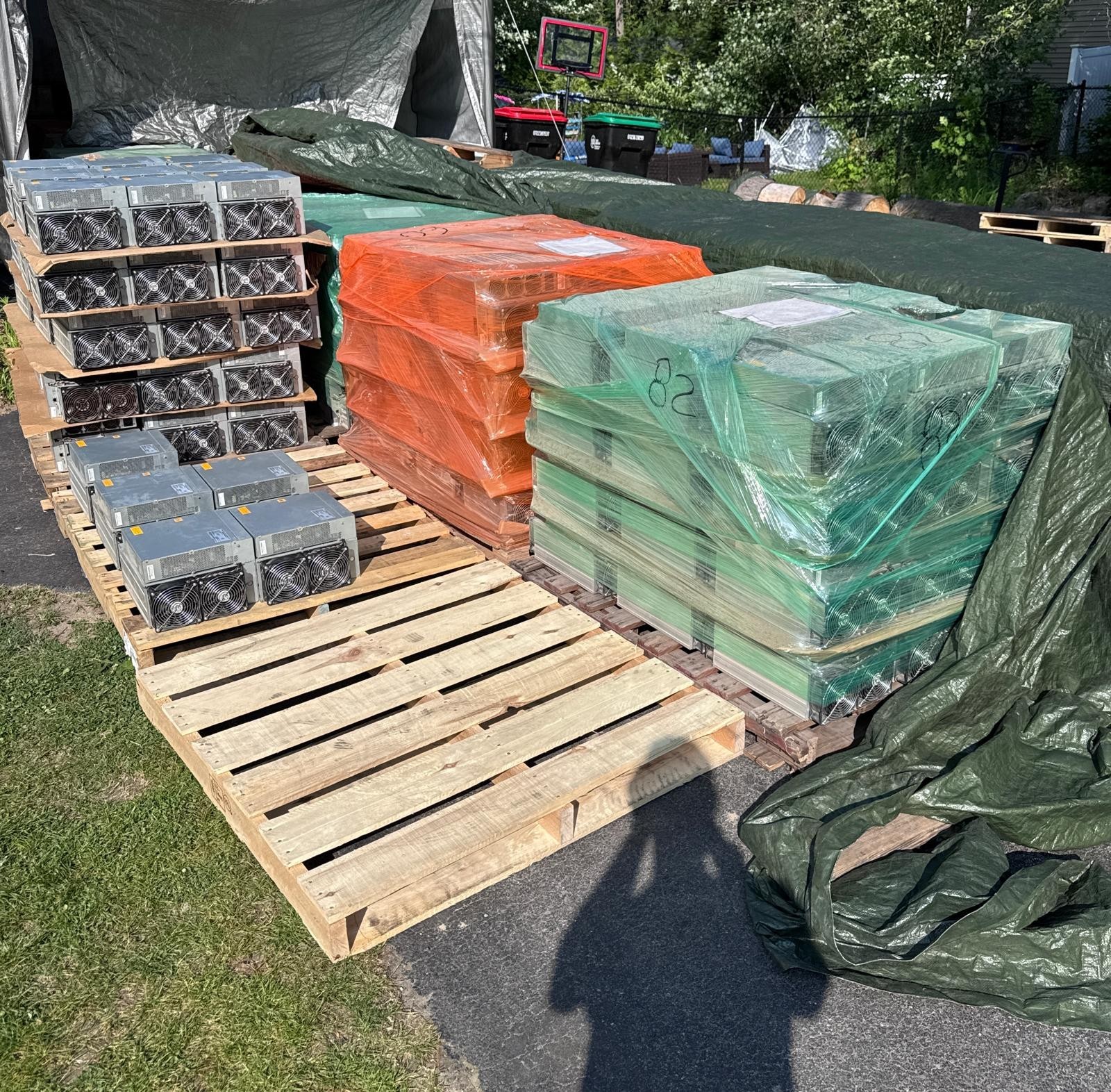
Finding the right ASIC miner model can make the difference between steady profits and disappointing losses. With so many options available and new hardware released every cycle, American operators face real challenges in deciding which machines deliver the best results for their unique setups. This guide cuts through the confusion by breaking down how ASIC miner models work, exposing common myths, and highlighting the factors that matter most for consistent and profitable mining.
ASIC Miner Models Explained and Common Myths
ASIC stands for “Application-Specific Integrated Circuit,” and these devices are purpose-built machines designed to solve one specific mathematical problem repeatedly and efficiently. Unlike general-purpose computers, ASIC miners work by solving cryptographic puzzles on Proof of Work blockchains like Bitcoin. This specialization is their defining strength. A Bitcoin ASIC cannot mine Litecoin, and a Litecoin ASIC cannot mine Bitcoin. (Ethereum is not an option at all — it moved to proof-of-stake in September 2022 and is no longer mined on any hardware.) The trade-off is worth it: this focused design makes ASICs dramatically faster and more power-efficient than trying to mine with a CPU or GPU. When ASIC technology arrived in 2012, it fundamentally changed mining because nothing else could compete on speed or energy consumption. Today, if you want to mine Bitcoin or similar coins profitably, you need an ASIC miner. There’s no way around it.
Understanding the most common myths about ASIC miners helps you make informed decisions without chasing unrealistic expectations. Myth One: All ASIC miners are essentially the same. This couldn’t be further from reality. Different ASIC models vary dramatically in power consumption, hash rate, noise levels, cooling requirements, and failure rates. A 2021 Antminer S19 Pro and a newer 2024 S21 Pro are both Bitcoin ASICs, but they operate at different efficiency levels, require different electrical infrastructure, and depreciate at different rates. Some models are known for hardware reliability while others develop consistent failure patterns after 18 months of continuous operation. When choosing an ASIC miner for profitable mining, you need to compare the specific hardware specifications, not just the name. Myth Two: Higher hash rate means higher profit. Raw hash rate alone tells you nothing about real-world profitability. A machine that hashes faster but consumes 40% more electricity could actually generate less profit than a slightly slower, more efficient model. Power draw and energy cost in your location matter more than the headline numbers. Myth Three: ASIC miners are plug-and-play devices. In reality, they require proper power delivery, cooling management, adequate space, noise considerations, and electrical infrastructure planning. Home miners often underestimate these requirements and discover problems after the hardware arrives.
Think of ASIC miners like industrial equipment rather than consumer electronics. You wouldn’t install a commercial HVAC unit without considering your building’s electrical capacity and ventilation. ASIC miners demand the same level of planning. Some models require 208-volt or 240-volt dedicated circuits. Others generate 75-90 decibels of noise continuously, creating real issues with neighbors and family. Cooling is critical: machines running hot fail prematurely, sometimes within months. The model you choose directly impacts your facility requirements, operating costs, and long-term maintenance burden. This is why operators at ING Mining spend time understanding each miner’s specifications before recommending hardware. You’re not just buying processing power; you’re taking on operational responsibility.
Before purchasing any ASIC model, verify its power requirements against your available electrical service, research the specific failure rates for that hardware generation, and calculate whether the energy cost in your location actually supports profitability for that particular machine.
Major Types and Leading ASIC Manufacturers
The ASIC mining market divides into two main categories based on the cryptocurrencies they target. Bitcoin ASICs represent the largest segment, dominated by machines like the Antminer S-series and WhatsMiner M-series. These devices hash using the SHA-256 algorithm and comprise the vast majority of mining operations globally. Altcoin ASICs are specialized for other cryptocurrencies like Litecoin, Dash, Kaspa, and various newer coins. Each altcoin ASIC requires completely different chip architecture because each coin uses a different hashing algorithm. The distinction matters operationally because swapping from Bitcoin mining to altcoin mining isn’t a software update. You’re purchasing entirely different hardware with different power requirements, different profitability curves, and different depreciation timelines. An operator running Bitcoin ASICs cannot pivot to Kaspa mining without liquidating existing equipment and buying new machines. This lock-in effect shapes hardware selection strategy from day one.
When examining leading ASIC manufacturers and their capabilities, you’ll notice that the industry concentrates heavily around a few dominant players. Bitmain, MicroBT (maker of WhatsMiner), and Canaan are the primary Bitcoin ASIC manufacturers. For altcoins, the landscape fragments across multiple smaller fabricators, each focusing on specific coin algorithms. These manufacturers compete on several fronts: energy efficiency measured in joules per terahash, heat dissipation performance, chip reliability over time, software stability, and customer support responsiveness. The manufacturing process requires expertise in chip design, fabrication partnerships with advanced semiconductor foundries, rigorous testing protocols, and the ability to iterate quickly as mining difficulty changes. Not every manufacturer maintains equal quality standards, and the gap never appears on the spec sheet: it shows up later, in failure rates nobody publishes, in warranty service that does or does not answer, and in whether spare boards still exist when you need one. When you’re purchasing equipment representing tens of thousands of dollars in capital investment, manufacturer track record directly impacts your bottom line.
The relationship between manufacturer and operator isn’t transactional. You need to research warranty policies, firmware update frequency, technical support availability, and whether replacement parts remain available for older models. Some manufacturers stop supporting hardware after 18 months, leaving operators with non-functional equipment and no repair path. Others maintain long-term support across multiple product generations. Understanding the manufacturer’s business model and commitment to product longevity becomes as important as the initial specifications — and so does the person selling you the unit: how to vet an ASIC seller covers that half of the purchase. Used and refurbished ASIC markets exist precisely because of these manufacturer support gaps. Operators often sell slightly older models as manufacturers release new generations, creating opportunities for cost-conscious miners to acquire functional hardware at discounts. However, buying used machines requires careful inspection and verified testing to avoid purchasing equipment with hidden failure modes or previous damage. The key distinction is between a properly refurbished unit from a reputable source and an untested machine from an unknown seller.
Operators should know what differentiates leading ASIC manufacturers:
| Manufacturer | What we stock | What the machines are for | What to check before you buy |
|---|---|---|---|
| Bitmain (Antminer) | 78 listings, $16.50 to $49,999.99 | SHA-256 and Scrypt; the deepest secondhand and parts market there is | the silkscreen code on the hashboard, not the model on the lid |
| MicroBT (WhatsMiner) | 15 listings | SHA-256, hydro and air | which M-series generation it actually is; the notation differs from Bitmain’s |
| Canaan (Avalon) | 8 listings, including the Avalon Q at $1,999 | SHA-256; the Q is the one machine here that runs on household voltage | the control board revision, and whether the PSU is included |
| Bitdeer (SealMiner) | 5 listings at $4,200 | SHA-256, current generation, 14.9 J/TH | the batch date — it sets the factory warranty window |
| IceRiver, ElphaPex, Goldshell, VolcMiner | 15 listings between them | kHeavyHash, Scrypt and the smaller algorithms | that a repair path exists at all; these have almost no secondhand board market |
Manufacturer reliability can affect your mining uptime and equipment value over time.
Before committing to any ASIC manufacturer or model, contact their support team directly with technical questions and request verifiable failure rate data and warranty terms; their responsiveness reveals how much they actually support customers beyond the initial sale.
Performance Metrics: Hashrate, Efficiency, and Cooling
Hashrate measures raw computational output, typically expressed in terahashes per second (TH/s) for Bitcoin ASICs. A machine with 140 TH/s processes roughly double the cryptographic calculations per second compared to a 70 TH/s model. Higher hashrate directly translates to more frequent block solutions and increased mining rewards. But hashrate alone is deceiving as a selection criterion. A 150 TH/s machine that consumes 3,500 watts generates less profit than a 120 TH/s model drawing only 1,800 watts if electricity costs exceed $0.08 per kilowatt-hour in your region. This is why efficiency matters more operationally than raw hashrate. Efficiency is measured in joules per terahash, representing energy consumption relative to computational output. Lower joules per terahash means lower electricity costs per unit of work performed. When evaluating power consumption across different ASIC models, you’re essentially comparing their ability to convert electrical input into mining output. A newer generation ASIC with advanced semiconductor process technology often achieves 25 to 35 percent better joules per terahash compared to models from two years prior. This efficiency advantage compounds over thousands of operating hours, making the difference between breaking even and generating consistent returns.
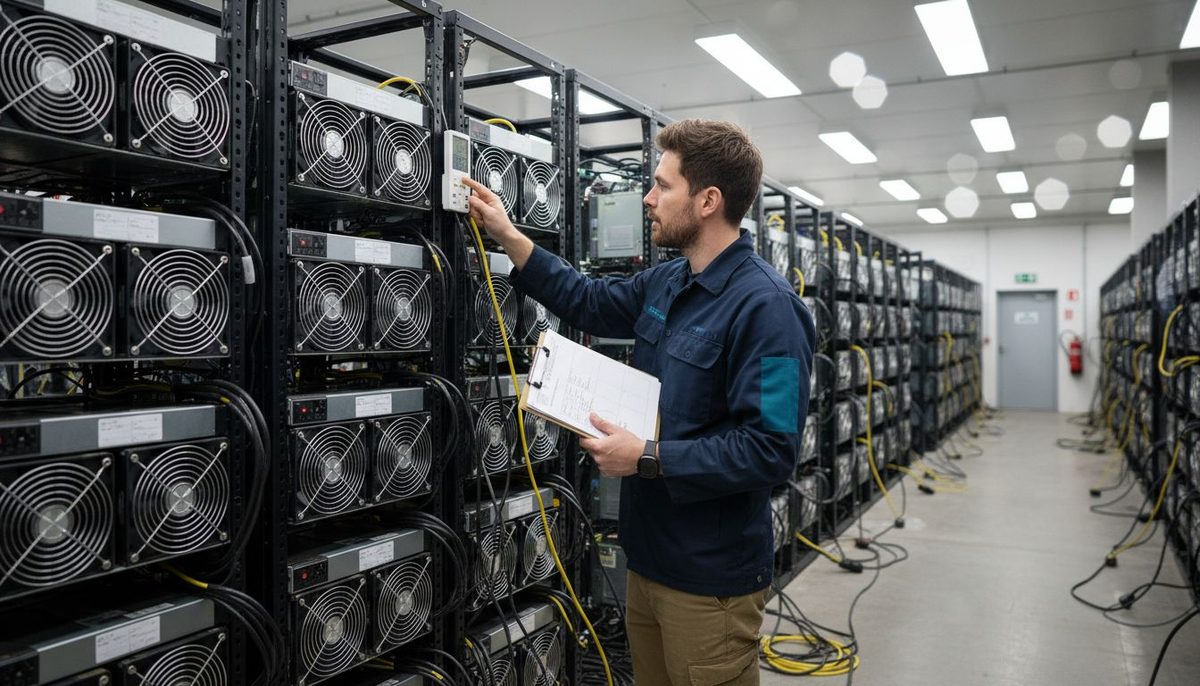
Cooling performance determines whether your hardware actually operates at rated specifications or throttles down due to heat stress. ASICs generate intense heat concentrated in a small area. Without proper thermal management, internal temperatures exceed safe thresholds within minutes, forcing the machine to reduce hashrate and protect itself. Air cooling using standard fans works adequately for home setups with proper spacing and ventilation, typically removing 15 to 25 kilowatts of heat per unit. Advanced cooling techniques including liquid cooling and immersion have become standard at commercial operations because they enable higher hardware density and extend operational lifespan significantly. Immersion cooling submerges the entire ASIC in specially formulated dielectric fluid that absorbs heat far more efficiently than air. This approach reduces component stress, lowers failure rates, and enables stacking equipment more densely than air cooled systems allow. The trade-off is cost and complexity. Immersion systems require specialized facility infrastructure and ongoing coolant management. For small operators, standard air cooling remains practical, but understanding the thermal limitations of your specific machine matters tremendously. A Bitcoin S19 Pro running continuously in a room without adequate ventilation will overheat and fail within weeks. The same machine in a properly cooled space operates reliably for years.
These three metrics interact dynamically. A high hashrate machine with poor efficiency becomes expensive to operate. Efficient hardware with inadequate cooling throttles and never reaches peak performance. When selecting an ASIC, you must evaluate all three together within your specific operational constraints. Your facility’s cooling capacity, available electrical service, and local electricity rates determine which metrics matter most. A machine rated at 150 TH/s and 3,200 watts in optimal conditions might perform at 125 TH/s and 2,900 watts in your real environment if cooling isn’t perfect. Realistic performance estimation requires understanding these interdependencies rather than relying on manufacturer specification sheets alone.
Here’s a concise comparison of key ASIC miner performance metrics and why each matters for mining profitability:
Understanding these factors helps operators optimize hardware selection and facility design.
Compare machines on cost per terahash, not on headline hashrate. The break-even electricity price for any miner is its hashprice divided by 24 times its efficiency in J/TH — at the $32.10/PH/day hashprice measured on 30 July 2026, a 14.9 J/TH machine breaks even at about 9.0¢/kWh and a 34.2 J/TH machine at about 3.9¢/kWh. Run that number for every model you are weighing and the lowest operating cost, not the biggest hashrate, is the one that survives a difficulty increase.
Understanding Upfront Costs and Depreciation
The purchase price of an ASIC miner represents only the first component of your total investment. A new current-generation machine such as an S21 Pro is a four-figure purchase, and street prices move sharply with each product cycle and with hashprice — check the current listing rather than any figure quoted in an article, including this one. But that upfront hardware expense is just the beginning. You must factor in electrical infrastructure upgrades, facility modifications, cooling equipment, power distribution hardware, network setup, monitoring software licenses, and shipping costs. Those ancillary costs commonly add roughly a third to a half again on top of the machine price by the time a single unit is actually running, and they vary enormously with the site — price your own electrical work rather than assuming a rule of thumb. Many operators underestimate these ancillary costs and run out of capital before their setup becomes operational. Building accurate financial models requires itemizing every expense category rather than focusing solely on the machine price tag.
Depreciation accelerates faster than most operators anticipate. New ASIC models release roughly every 12 to 18 months, each generation offering 20 to 35 percent better efficiency than the previous version. When manufacturers announce a new generation, used prices for older models collapse within weeks. A machine purchased for $10,000 may fetch only $4,000 to $5,000 on the secondary market just 14 months later. This depreciation isn’t linear. The steepest price decline occurs immediately after new model announcements. Machines from three to four years ago become nearly worthless because their power consumption relative to hashrate makes them uneconomical to operate. Understanding mining hardware depreciation patterns helps you structure realistic payback period calculations. If you expect a machine to generate positive returns over 36 months, you must account for the fact that its residual value after 24 months may be minimal. Some operators factor in potential resale value when projecting cash flows, but purchasing used equipment from questionable sources or accepting refurbished units with undisclosed defects can create losses exceeding the depreciation itself.
The depreciation math directly impacts ROI calculations. Consider two scenarios: Scenario A involves purchasing a brand-new, latest-generation ASIC at premium price with full warranty and manufacturer support. Scenario B involves purchasing a machine from the previous generation at a 40 percent discount. In Scenario A, you benefit from maximum efficiency and warranty protection, but your depreciation starting point is higher. In Scenario B, you save upfront capital but inherit a machine with less operational life remaining and higher failure risk. The correct choice depends entirely on your facility conditions, electrical costs, available capital, and operational expertise. A sophisticated operator with industrial-grade cooling and cheap electricity might extract profitability from older hardware that destroys returns for a home miner with standard cooling.
Accounting for depreciation requires honest assessment of your hardware’s useful operational lifespan. Most ASIC miners remain technically functional for four to five years but become uneconomical well before that because newer machines operate so much more efficiently. Plan conservatively and assume your machine will have minimal resale value after 24 to 30 months of continuous operation. This doesn’t mean the hardware is broken. It means the market for used models becomes saturated and buyer demand evaporates as newer generations dominate mining pools. If your business model depends on selling the hardware after two years to recover capital for purchasing replacement machines, you’re entering a risky market with unpredictable prices.
When evaluating ASIC purchase decisions, calculate your minimum operational lifespan assuming zero residual value at year two, then determine what electricity rate per kilowatt-hour you need to break even over that conservative timeframe rather than projecting optimistic long-term scenarios.
Common Pitfalls and How to Avoid Them
Operators consistently make predictable mistakes when entering ASIC mining, often with expensive consequences. The first major pitfall is underestimating infrastructure requirements. You cannot simply plug an ASIC into a standard household outlet and expect reliable operation. Standard residential circuits deliver 15 to 20 amps at 120 volts, totaling roughly 1,800 to 2,400 watts maximum. A Bitcoin S21 Pro draws 3,200 watts continuously. Connecting it to inadequate electrical service overloads circuits, triggers breakers, and risks fire hazards. Professional mining requires dedicated 240-volt circuits with proper gauge wiring, dedicated breakers, and potentially upgraded service from your utility company. Installing this infrastructure costs $2,000 to $5,000 depending on your existing electrical panel capacity. Operators who skip this step experience constant equipment failures, blown power supplies, and destroyed miners within weeks. Second, many operators purchase used equipment without proper inspection. A machine that appears functional at first glance may have failing capacitors, corroded connectors, or fans on their way out. When selecting mining hardware for long-term reliability, verification through testing is non-negotiable. Purchasing untested used equipment from unknown sellers ranks among the fastest ways to lose capital.
The third pitfall is ignoring thermal management completely. Operators set up machines in enclosed spaces, basements without ventilation, or cramped closets. ASIC miners generate 1,500 to 3,500 watts of heat depending on the model. That heat must go somewhere. Without proper airflow, the machine throttles itself or shuts down entirely to protect internal components. Some operators discover only after weeks of operation that their setup generates temperatures exceeding 80 degrees Celsius, destroying efficiency and shortening hardware lifespan dramatically. Planning cooling before installation prevents this expensive lesson. Fourth, many operators fail to account for noise. Bitcoin ASICs produce 75 to 90 decibels of continuous noise, equivalent to a vacuum cleaner running 24/7. Home miners discover quickly that neighbors complain, family members refuse to tolerate the sound, and operating the equipment becomes socially impossible. Apartment dwellers sometimes face lease violations or eviction notices. Commercial-grade soundproofing adds $1,000 to $3,000 per machine but becomes essential for sustainable operations.
The fifth pitfall involves poor electricity cost planning. Operators purchase equipment without confirming their actual kilowatt-hour rates or fail to account for seasonal electricity price fluctuations. Mining becomes unprofitable if your electricity cost exceeds the Bitcoin network difficulty and reward structure. Running machines at a loss hoping for price improvements is financial suicide. Calculate breakeven electricity rates before purchasing hardware, and verify those rates in writing with your utility company. Sixth, operators often chase older hardware at bargain prices without understanding why prices collapsed. That $2,000 machine once cost $8,000 not because it is a steal, but because its energy efficiency makes it economically dead. Operating it costs more in electricity than any mining rewards it generates. Price history reveals the real story about hardware viability.
Before purchasing any ASIC, spend three hours researching the specific failure rate data for that model generation, calculating your actual electricity cost per kilowatt-hour, and planning your cooling infrastructure in detail rather than making assumptions about what “should” work.
The model differences that matter are the ones on the spec sheet you can check: hashrate, wall draw and the J/TH those two imply. Everything we stock is ranked by that in the comparison table, and where a listing does not state a figure, it says so rather than borrowing one.
Frequently Asked Questions
What are the main factors to consider when choosing an ASIC miner for profitability?
When selecting an ASIC miner, key factors include power consumption, hash rate, efficiency (measured in joules per terahash), cooling requirements, and potential failure rates. Comparing these specifications helps ensure your choice aligns with your operational constraints and profitability goals.
How does hash rate affect mining profitability?
Hash rate measures the computational power of an ASIC miner. While a higher hash rate can lead to more frequent block solutions, it’s essential to consider the efficiency of the miner as well. A machine with a higher hash rate but significantly higher energy consumption may not be more profitable overall compared to a more efficient model.
Why do different ASIC models have varying power requirements?
Different ASIC miner models are designed with varying architectures and technologies that affect their power consumption. Some models may require specialized electrical setups, such as dedicated circuits, to operate effectively, which is crucial for reliable performance and avoiding equipment failures.
What role does cooling play in the performance of ASIC miners?
Effective cooling is vital for maintaining ASIC miner performance. Proper thermal management prevents overheating, which can lead to reduced hash rate, operational inefficiencies, and premature equipment failure. Ensuring adequate ventilation or employing advanced cooling systems is necessary for optimal operation.
More on comparing models
- How to Choose ASIC Miner for Profitable Crypto Mining
- How to Vet an ASIC Seller: Serials, Payment and Paperwork
- ASIC Mining: Why It Matters for Home Miners
- the mining workflow, power first
Used and refurbished stock on the floor now
If you are shopping this way, here is what is on the floor right now:
- 1200W HP power supply for Goldshell box miners
- Lot of 100 Refurbished Bitmain Antminer S19 110TH/s Miners – Boosted, Braiins OS
- Lot of 10 Refurbished Bitmain Antminer S19 110TH/s Miners – Boosted, Braiins OS
More in Used ASIC miners, or the full ASIC miner inventory. Whether a used machine still earns comes down to your power price; the buying guide has the formula.